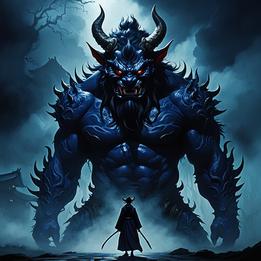
Oni Demon
A fearsome Japanese ogre or demon representing inner turmoil, repressed instincts, and shadow aspects of the self.
Oni Demon Dream Meaning
A fearsome Japanese ogre or demon representing inner turmoil, repressed instincts, and shadow aspects of the self.
Interpretive Themes
Shadow Confrontation
highOni often embodies what we fear to acknowledge.
Uncontrolled Instincts
highRepresents animalistic drives and passions.
Externalized Fear
mediumDreamer's fears given monstrous form.
Spiritual Trial
mediumChallenges that force growth through adversity.
Cultural Heritage
lowMay reflect engagement with cultural mythology.
Mythological Resonance
Typhon
GreekThe monstrous father of all monsters who challenged Zeus, representing the chaotic forces of nature and the unconscious that must be confronted and integrated.
Fenrir
NorseThe giant wolf bound by the gods, symbolizing the destructive potential of untamed instincts that must be acknowledged and contained rather than denied.
Cultural Lenses
Jungian Perspective
View Context →Archetype of the Shadow - repressed aspects of personality demanding integration. Historically seen in myths worldwide; modern context involves individuation through shadow work.
Freudian Perspective
View Context →Representation of repressed id impulses, particularly aggressive or sexual drives. Historically demonized instincts; modern context suggests unresolved childhood conflicts manifesting.
Gestalt Perspective
View Context →Projection of disowned self-parts. Historically externalized fears; modern context involves reclaiming these projections for wholeness and self-acceptance.
Cognitive Perspective
View Context →Cognitive distortion made manifest - catastrophic thinking or threat magnification. Historically feared entities; modern context reflects anxiety schemas and irrational beliefs.
Evolutionary Perspective
View Context →Threat-detection mechanism visualizing dangers. Historically protective against predators; modern context misfires against psychological or social threats.
East Asian Perspective
View Context →Japanese ogres punishing evil but also protectors in some contexts. Historically ward off misfortune in rituals; modern pop culture villains with complex morality.
Modern Western Perspective
View Context →Metaphor for personal demons or addictions. Historically absent from Western myth; modern therapeutic symbol for mental health struggles and recovery.
European Perspective
View Context →Parallel to trolls or ogres in folklore. Historically forest-dwelling threats; modern context as symbols of brute force or ignorance to overcome.
South Asian Perspective
View Context →Similar to Rakshasas - shape-shifting demons. Historically enemies of gods in epics; modern context as manifestations of negative karma or attachments.
Global/Universal Perspective
View Context →Cross-cultural monster archetype representing human fears. Historically appears in most mythologies; modern context as universal symbol of inner darkness.
African Perspective
View Context →Comparable to trickster spirits or malevolent entities. Historically boundary-crossers between worlds; modern context as disruptors of social or psychological order.
Middle Eastern Perspective
View Context →Similar to jinn or ifrit - fiery spirits. Historically created from smokeless fire; modern context as tempters or testers of faith and will.
Historical Authorities
Want a deeper analysis?
Get a personalized interpretation of your entire dream including this symbol.
Interpret My DreamThe Oracle's Prediction
Combine multiple symbolsA profound confrontation with repressed aspects of the self will lead to significant psychological transformation.
Timeframe
Seasonal (~3 Months)
Intensity
Deep
Unacknowledged anger or resentment may erupt in destructive ways.
Timeframe
Immediate (Next 48h)
Intensity
Deep
Common Appearances & Contexts
| Context | Emotion | Interpretation |
|---|---|---|
| Context Being chased by Oni | Emotion Terror | Interpretation Avoiding confrontation with a powerful aspect of self. |
| Context Fighting Oni | Emotion Determination | Interpretation Actively struggling against inner demons or challenges. |
| Context Conversing with Oni | Emotion Curiosity | Interpretation Attempting to understand or integrate shadow aspects. |
| Context Oni protecting you | Emotion Relief | Interpretation Shadow aspects serving as unexpected guardians. |
| Context Transforming into Oni | Emotion Horror | Interpretation Fear of losing control or becoming monstrous. |
| Context Oni in childhood home | Emotion Vulnerability | Interpretation Early psychological wounds manifesting as demons. |
| Context Multiple Oni attacking | Emotion Overwhelm | Interpretation Feeling besieged by multiple internal conflicts. |
| Context Defeating Oni with ritual | Emotion Empowerment | Interpretation Using structured methods to overcome inner turmoil. |
| Context Oni as teacher | Emotion Awe | Interpretation Shadow aspects offering difficult but valuable lessons. |
| Context Oni in workplace | Emotion Stress | Interpretation Professional pressures taking monstrous form. |
| Context Oni fading away | Emotion Peace | Interpretation Resolution or acceptance of inner conflicts. |
| Context Oni with family members | Emotion Guilt | Interpretation Projecting shadow aspects onto close relationships. |
Interpret Your Full Dream
Beyond this symbol, every dream carries a unique story. Share your dream for a personalized AI-powered interpretation.