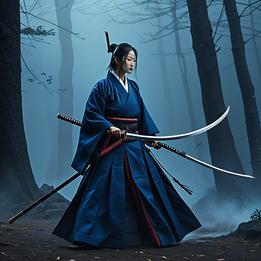
Naginata
A traditional Japanese pole weapon with a curved blade, historically wieldled by samurai and warrior monks. It symbolizes disciplined power, feminine martial arts, and spiritual defense.
Naginata Dream Meaning
A traditional Japanese pole weapon with a curved blade, historically wieldled by samurai and warrior monks. It symbolizes disciplined power, feminine martial arts, and spiritual defense.
Interpretive Themes
Cultural Lenses
Jungian Perspective
View Context →An archetype of the anima (feminine aspect) integrated with the warrior spirit, representing the union of grace and power in the individuation process. It may symbolize a tool for psychological defense or cutting through unconscious material.
Freudian Perspective
View Context →A phallic symbol representing sublimated aggression or sexual energy, particularly in a disciplined, socially acceptable form. The pole suggests extension of power, while the blade may relate to castration anxiety or controlled penetration.
Gestalt Perspective
View Context →A projection of the dreamer's own 'cutting edge' or ability to 'keep things at a distance.' The dreamer is the naginata—explore what part of you feels like a long-reach weapon, graceful yet defensive.
Cognitive Perspective
View Context →May represent a mental 'tool' for problem-solving—a strategy that keeps threats at bay while allowing precise action. Could symbolize rehearsed responses to conflict or the brain's way of processing threat assessment.
Evolutionary Perspective
View Context →Taps into deep-seated adaptations for tool use, territorial defense, and social hierarchy. The pole weapon extends personal space; dreaming of it may activate neural pathways related to threat management and skilled survival techniques.
East Asian Perspective
View Context →In Japan, historically used by samurai and later by women (onna-bugeisha) for home defense. Symbolizes bushido virtues, spiritual discipline in martial arts like naginatajutsu, and is a cultural icon of graceful, strategic strength.
Global/Universal Perspective
View Context →A polearm archetype found worldwide, representing the human innovation of extending reach and power. Universally, it symbolizes the mastery of distance in conflict, combining the primal club (pole) with the cutting tool (blade).
Modern Western Perspective
View Context →Often viewed through pop culture (anime, games) as an exotic, elegant weapon. Can symbolize niche expertise, feminist empowerment reclaimed from history, or an aesthetic appreciation for Japanese craftsmanship and martial philosophy.
European Perspective
View Context →Analogous to the glaive or halberd in medieval warfare—a symbol of infantry power and knightly duty. In dream context, may connect to chivalric codes, class struggle, or the historical blending of peasant tools with weapons of war.
South Asian Perspective
View Context →Resonates with weapons like the guandao or lathi in martial traditions, symbolizing divine warrior energy (e.g., Kali's sword). Can represent dharma (righteous duty) in battle, spiritual discipline, or the cutting away of illusion (maya).
African Perspective
View Context →Parallels to throwing spears or assegais used in hunting and warfare, embodying communal defense, initiation rites, and ancestral spirit connection. May symbolize elongated reach in social conflict or the balance of agility and force.
Middle Eastern Perspective
View Context →Echoes polearms like the zaghnol used historically, often linked to desert warfare and caravan protection. Can symbolize the extension of authority, the defense of faith or tribe, and the elegance of martial skill in Persian or Ottoman contexts.
Want a deeper analysis?
Get a personalized interpretation of your entire dream including this symbol.
Interpret My DreamCommon Appearances & Contexts
| Context | Emotion | Interpretation |
|---|---|---|
| Context Wielding in battle | Emotion Empowered | Interpretation Asserting personal strength. |
| Context Training with it | Emotion Focused | Interpretation Seeking self-mastery. |
| Context Seeing it displayed | Emotion Awed | Interpretation Respecting tradition. |
| Context Broken naginata | Emotion Vulnerable | Interpretation Loss of defense. |
| Context Gifted a naginata | Emotion Honored | Interpretation Receiving responsibility. |
| Context Cleaning the blade | Emotion Calm | Interpretation Mental purification. |
| Context Facing an opponent | Emotion Anxious | Interpretation Inner conflict. |
| Context Teaching naginata | Emotion Proud | Interpretation Sharing wisdom. |
| Context In a shrine | Emotion Reverent | Interpretation Spiritual protection. |
| Context Forging a naginata | Emotion Determined | Interpretation Crafting identity. |
| Context Dropping the naginata | Emotion Ashamed | Interpretation Failure in discipline. |
| Context Ancient warrior wields | Emotion Inspired | Interpretation Ancestral connection. |
Interpret Your Full Dream
Beyond this symbol, every dream carries a unique story. Share your dream for a personalized AI-powered interpretation.