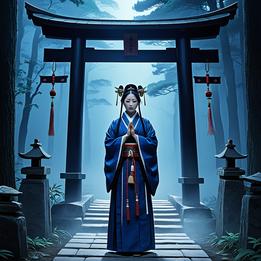
Miko Priestess
A female shrine attendant in Shinto, serving as a sacred intermediary between the human and spiritual realms through ritual purity and ceremonial duties.
Miko Priestess Dream Meaning
A female shrine attendant in Shinto, serving as a sacred intermediary between the human and spiritual realms through ritual purity and ceremonial duties.
Interpretive Themes
Divine Presence
highEmbodies spiritual wisdom and nurturing.
Spiritual Awakening
highSymbolizes inner purification and order.
Divine Communication
highRepresents guidance and higher messages.
Tradition and Duty
mediumConnects to personal responsibilities.
Mystical Insight
mediumSuggests intuitive awakening.
Mythological Resonance
Ame-no-Uzume
ShintoThe celestial goddess who performed a sacred dance to lure Amaterasu from her cave, restoring light to the world through ritual performance.
Pythia
GreekThe Oracle of Delphi who served as intermediary between mortals and Apollo, delivering prophecies while in trance states induced by sacred vapors.
Cultural Lenses
Jungian Perspective
View Context →Represents the anima, the feminine aspect of the psyche, symbolizing intuition, spiritual connection, and the mediator between conscious and unconscious realms, often appearing during individuation.
Freudian Perspective
View Context →May symbolize repressed sexual or spiritual desires, with ritual purity reflecting superego constraints, and the intermediary role representing unresolved parental or authority figure dynamics.
Gestalt Perspective
View Context →A projection of the dreamer's own qualities—purity, wisdom, or spiritual authority—inviting integration of these aspects into the self for wholeness and personal growth.
Cognitive Perspective
View Context →A mental schema for processing themes of tradition, spirituality, or gender roles, possibly triggered by cultural exposure or personal reflections on identity and purpose.
Evolutionary Perspective
View Context →Taps into adaptive traits related to social cohesion, ritual behavior for group bonding, and the role of spiritual intermediaries in reducing anxiety and enhancing community survival.
East Asian Perspective
View Context →In Shinto, Miko are shrine maidens performing rituals, kagura dances, and divination, historically seen as shamans; modernly, they symbolize cultural heritage and spiritual service.
Modern Western Perspective
View Context →Often viewed through pop culture lenses as a mystical or exotic archetype, blending spirituality with fantasy, and sometimes associated with neo-pagan or New Age practices.
European Perspective
View Context →Parallels figures like priestesses, nuns, or wise women in pagan and Christian traditions, representing sacred femininity, ritual purity, and roles as spiritual healers or oracles.
Perspective
View Context →A cross-cultural archetype of the female spiritual intermediary, found in shamanic, priestly, or oracle roles worldwide, symbolizing the human quest for divine connection and ritual order.
South Asian Perspective
View Context →Resembles devadasis or female temple attendants in Hinduism, who serve deities through dance and ritual, embodying devotion, artistry, and a bridge between earthly and divine realms.
African Perspective
View Context →Echoes roles like sangomas or female diviners in indigenous traditions, who mediate with ancestors and spirits, using ritual, healing, and community guidance in sacred practices.
Latin American Perspective
View Context →Similar to curanderas or spiritual healers in mestizo and indigenous cultures, blending pre-Columbian and Catholic elements, serving as mediators for healing, rituals, and community wisdom.
Historical Authorities
Want a deeper analysis?
Get a personalized interpretation of your entire dream including this symbol.
Interpret My DreamThe Oracle's Prediction
Combine multiple symbolsA significant spiritual initiation or deepening of practice will occur.
Timeframe
Seasonal (~3 Months)
Intensity
Deep
Common Appearances & Contexts
| Context | Emotion | Interpretation |
|---|---|---|
| Context Performing a ritual | Emotion Focused | Interpretation Seeking spiritual clarity. |
| Context Cleansing a shrine | Emotion Peaceful | Interpretation Inner purification process. |
| Context Receiving a vision | Emotion Awestruck | Interpretation Divine guidance emerging. |
| Context Wearing ceremonial robes | Emotion Empowered | Interpretation Embracing sacred role. |
| Context Offering prayers | Emotion Reverent | Interpretation Connecting with higher power. |
| Context Dancing kagura | Emotion Joyful | Interpretation Celebrating spiritual harmony. |
| Context Divining the future | Emotion Curious | Interpretation Seeking life direction. |
| Context Guiding a pilgrim | Emotion Compassionate | Interpretation Mentoring or helping others. |
| Context Confronting a spirit | Emotion Courageous | Interpretation Facing inner shadows. |
| Context Leaving the shrine | Emotion Nostalgic | Interpretation Transition or change. |
| Context Training an apprentice | Emotion Patient | Interpretation Passing on wisdom. |
| Context Breaking a taboo | Emotion Guilty | Interpretation Violating personal integrity. |
Interpret Your Full Dream
Beyond this symbol, every dream carries a unique story. Share your dream for a personalized AI-powered interpretation.