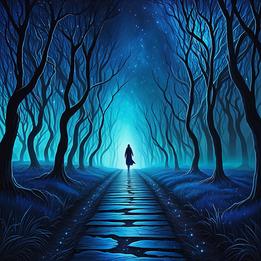
Meridian
A spiritual or energetic pathway representing life force, balance, and connection between cosmic and earthly realms.
Meridian Dream Meaning
A spiritual or energetic pathway representing life force, balance, and connection between cosmic and earthly realms.
Interpretive Themes
Mythological Resonance
Jingluo System
ChineseThe network of channels through which Qi flows, mapped over millennia in Traditional Chinese Medicine.
Nadis
HinduThe 72,000 subtle energy channels described in yoga and tantra, with three main nadis governing consciousness.
The Golden Mean
GreekThe ideal balanced proportion in architecture and art, reflecting cosmic harmony in earthly forms.
Cultural Lenses
Jungian Perspective
View Context →Represents the Self's organizing principle, connecting conscious and unconscious. Symbolizes individuation process where psychic energy flows toward wholeness and integration of opposites.
Freudian Perspective
View Context →May symbolize libidinal energy channels or repressed desires flowing through the psyche. Could represent sublimated sexual energy finding acceptable expression through creative or spiritual outlets.
Gestalt Perspective
View Context →Represents the figure-ground relationship in awareness. The meridian is the foreground of energy flow against the background of potential, highlighting what needs attention for completion.
Cognitive Perspective
View Context →Metaphor for neural pathways or thought patterns. Represents how ideas and emotions flow through mental networks, with blockages indicating cognitive distortions or rigid thinking.
Evolutionary Perspective
View Context →May represent ancient survival mechanisms for energy conservation. Symbolizes optimal pathways for resource allocation developed through evolutionary pressures for efficiency and balance.
East Asian Perspective
View Context →In Traditional Chinese Medicine, meridians (jingluo) are channels for qi (vital energy) connecting organs. Blockages cause illness; acupuncture restores flow. Modern practice blends ancient theory with contemporary health approaches.
South Asian Perspective
View Context →Similar to nadis in yoga and Ayurveda—subtle energy channels carrying prana. The sushumna nadi runs along the spine, connecting chakras. Modern yoga emphasizes balancing these pathways for wellbeing.
Middle Eastern Perspective
View Context →In Islamic mysticism (Sufism), represents spiritual pathways (tariqah) to divine connection. Historical practices include dhikr (remembrance) to clear energy blockages; modern interpretations focus on inner journey.
European Perspective
View Context →In medieval alchemy, represented the philosophical mercury—the medium connecting opposites. Historical rituals sought to balance elements; modern esoteric traditions view it as consciousness streams.
African Perspective
View Context →In many traditions, represents life force (like nyama or ashe) flowing through all things. Rituals maintain balance between human and spirit worlds; modern interpretations emphasize ancestral connections.
North American Perspective
View Context →In various Indigenous traditions, represents medicine lines or spirit paths connecting sacred sites. Historical rituals honored these pathways; modern interpretations focus on environmental harmony.
Latin American Perspective
View Context →In Mesoamerican traditions, represented sacred alignments (like Mayan sacbeob) connecting temples. Modern curanderismo incorporates energy pathways in healing rituals blending Indigenous and Spanish influences.
Historical Authorities
Want a deeper analysis?
Get a personalized interpretation of your entire dream including this symbol.
Interpret My DreamThe Oracle's Prediction
Combine multiple symbolsImproved energy flow resolving chronic minor ailments.
Timeframe
Seasonal (~3 Months)
Intensity
Deep
Deeper connection through improved emotional attunement.
Timeframe
Lunation (~29 Days)
Intensity
Deep
Common Appearances & Contexts
| Context | Emotion | Interpretation |
|---|---|---|
| Context Flowing river | Emotion Peaceful | Interpretation Harmonious energy flow |
| Context Blocked path | Emotion Frustrated | Interpretation Energy stagnation |
| Context Golden light | Emotion Awe | Interpretation Divine connection |
| Context Map lines | Emotion Curious | Interpretation Life direction |
| Context Broken circuit | Emotion Anxious | Interpretation Disconnection |
| Context Pulsing network | Emotion Connected | Interpretation Universal harmony |
| Context Fading lines | Emotion Lost | Interpretation Purpose fading |
| Context Intersecting paths | Emotion Conflicted | Interpretation Decision points |
| Context Radiant center | Emotion Empowered | Interpretation Core vitality |
| Context Tangled threads | Emotion Overwhelmed | Interpretation Complex connections |
| Context Guiding line | Emotion Hopeful | Interpretation Clear direction |
| Context Shattered glass | Emotion Shocked | Interpretation Balance broken |
Interpret Your Full Dream
Beyond this symbol, every dream carries a unique story. Share your dream for a personalized AI-powered interpretation.