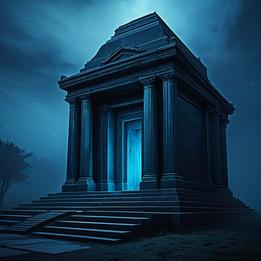
Mausoleum
A monumental tomb representing the preservation of memory, legacy, and the journey between life and death.
Mausoleum Dream Meaning
A monumental tomb representing the preservation of memory, legacy, and the journey between life and death.
Interpretive Themes
Cultural Lenses
Jungian Perspective
View Context →Represents the collective unconscious's repository of ancestral wisdom and archetypes; a symbolic container for the psyche's historical layers and the process of individuation through confronting mortality.
Freudian Perspective
View Context →Symbolizes repressed memories or unresolved conflicts with parental figures; the tomb as a womb-like structure representing regression or death wishes masked as preservation.
Gestalt Perspective
View Context →Represents unfinished business with the past; the dreamer's projection of their need for closure, structure, or how they memorialize experiences in their present awareness.
Cognitive Perspective
View Context →Reflects schemas about death, memory, or legacy; may indicate cognitive processing of loss, existential thoughts, or mental organization of personal history during sleep.
Evolutionary Perspective
View Context →Taps into adaptive concerns about mortality, group memory, and social legacy; symbolizes evolved mechanisms for coping with death anxiety and preserving kin or cultural identity.
Global/Universal Perspective
View Context →A cross-cultural symbol of memorialization and the human desire to transcend death through lasting monuments, reflecting universal themes of legacy and remembrance.
East Asian Perspective
View Context →Influenced by Confucian filial piety and ancestral veneration; mausoleums serve as sites for ritual offerings and maintaining harmony between living and deceased, emphasizing continuity.
Middle Eastern Perspective
View Context →Often associated with Islamic or ancient Persian traditions, symbolizing eternal rest and architectural grandeur; reflects spiritual journeys and historical preservation in arid landscapes.
European Perspective
View Context →Draws from Gothic, Classical, and Christian traditions; represents historical lineage, artistic achievement, and the medieval memento mori, blending mortality with cultural pride.
African Perspective
View Context →Varies by region but often emphasizes communal memory and ancestral connection; may symbolize the dwelling of spirits or the preservation of oral histories in tangible form.
Modern Western Perspective
View Context →Viewed through lenses of heritage tourism, grief psychology, and architectural conservation; symbolizes both personal loss and public history in secular, memorial contexts.
Latin American Perspective
View Context →Blends indigenous, colonial, and Catholic influences; mausoleums reflect Day of the Dead traditions, vibrant memorialization, and social status in communal cemeteries.
Want a deeper analysis?
Get a personalized interpretation of your entire dream including this symbol.
Interpret My DreamCommon Appearances & Contexts
| Context | Emotion | Interpretation |
|---|---|---|
| Context Entering mausoleum | Emotion Curiosity | Interpretation Exploring hidden aspects. |
| Context Leaving mausoleum | Emotion Relief | Interpretation Release from past burdens. |
| Context Building mausoleum | Emotion Purpose | Interpretation Creating lasting legacy. |
| Context Mausoleum collapsing | Emotion Anxiety | Interpretation Fear of forgotten history. |
| Context Guarding mausoleum | Emotion Duty | Interpretation Protecting memories. |
| Context Lost in mausoleum | Emotion Confusion | Interpretation Identity crisis. |
| Context Mausoleum at sunrise | Emotion Hope | Interpretation Renewal after loss. |
| Context Mausoleum in storm | Emotion Fear | Interpretation Emotional turmoil. |
| Context Empty mausoleum | Emotion Loneliness | Interpretation Abandoned memories. |
| Context Ornate mausoleum | Emotion Awe | Interpretation Grand legacy. |
| Context Family mausoleum | Emotion Nostalgia | Interpretation Ancestral connection. |
| Context Ancient mausoleum | Emotion Reverence | Interpretation Timeless wisdom. |
Interpret Your Full Dream
Beyond this symbol, every dream carries a unique story. Share your dream for a personalized AI-powered interpretation.