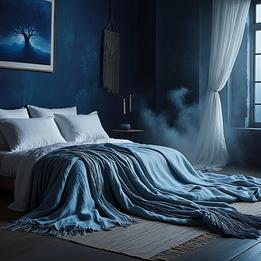
Linen
A natural fiber symbolizing purity, refinement, and connection to the earth. Often represents simplicity, authenticity, and ritual cleanliness.
Linen Dream Meaning
A natural fiber symbolizing purity, refinement, and connection to the earth. Often represents simplicity, authenticity, and ritual cleanliness.
Interpretive Themes
Purification
highLinked to ritual garments and burial shrouds.
Authenticity and Simplicity
highContrasts with artificial complexity.
Refinement and Status
mediumAncient symbol of wealth and nobility.
Mortality and Transition
mediumUsed in burial practices cross-culturally.
Natural Harmony
lowPlant-based origin suggests growth cycles.
Mythological Resonance
Osiris
EgyptianWrapped in linen mummy cloths symbolizing purity, rebirth, and connection to the earth in the afterlife.
High Priest's garments
BiblicalMade of fine linen to signify ritual cleanliness, holiness, and separation from the profane.
Cultural Lenses
Jungian Perspective
View Context →Represents the persona's authentic layer—the natural self beneath social masks. As a plant-based material, it connects to vegetative soul and organic growth patterns in the unconscious.
Freudian Perspective
View Context →Symbolizes repressed desires for cleanliness and order, possibly relating to toilet training or anal-retentive tendencies. The texture may evoke sensual memories of childhood bedding or maternal care.
Gestalt Perspective
View Context →What part of you is this 'linen'? It may represent your natural state before social conditioning—the authentic self that wrinkles but remains strong. How do you relate to its texture and simplicity?
Cognitive Perspective
View Context →Activates schemas related to natural materials, simplicity, and historical contexts. May reflect waking concerns about authenticity, environmental values, or minimalist lifestyle choices.
Evolutionary Perspective
View Context →Taps into ancient preferences for natural fibers indicating resource quality and social status. May signal adaptive concerns about cleanliness, mate selection, or group belonging through material display.
Middle Eastern Perspective
View Context →Ancient Egyptian linen (from flax) was used for mummification and priestly garments, symbolizing purity and connection to the divine. Modern associations retain ceremonial importance in religious contexts.
European Perspective
View Context →Medieval linen symbolized wealth and social status, used for undergarments and altar cloths. Celtic traditions associated flax with protection. Modern luxury linen evokes heritage craftsmanship.
East Asian Perspective
View Context →In traditional Chinese culture, linen (especially hemp) represented scholar's simplicity and connection to nature. Japanese use in Shinto rituals for purification, with modern appreciation for textured aesthetics.
African Perspective
View Context →Ancient Egyptian linen production was highly developed for burial shrouds. West African traditions use woven strips symbolizing community bonds. Modern African designers celebrate linen's breathability in hot climates.
South Asian Perspective
View Context →In Hindu rituals, unbleached linen represents purity and simplicity, used in ceremonies and as ascetic clothing. Traditional Ayurvedic texts note linen's cooling properties for meditation garments.
Latin American Perspective
View Context →Pre-Columbian cultures used plant fibers for ritual textiles. Colonial introduction of European linen for religious vestments. Modern associations with handmade craftsmanship and natural living movements.
Modern Western Perspective
View Context →Symbol of sustainable luxury and minimalist aesthetics. Associated with slow fashion, artisanal quality, and natural living. Contrasts with fast fashion's synthetic materials, representing ethical consumption.
Historical Authorities
Want a deeper analysis?
Get a personalized interpretation of your entire dream including this symbol.
Interpret My DreamThe Oracle's Prediction
Combine multiple symbolsA deepening of personal authenticity and connection to natural rhythms.
Timeframe
Seasonal (~3 Months)
Intensity
Deep
Common Appearances & Contexts
| Context | Emotion | Interpretation |
|---|---|---|
| Context Wearing linen | Emotion peaceful | Interpretation Authentic self-expression. |
| Context Tearing linen | Emotion anxious | Interpretation Rupture in purity. |
| Context Folding linen | Emotion content | Interpretation Order and care. |
| Context Dirty linen | Emotion ashamed | Interpretation Corrupted integrity. |
| Context Buying linen | Emotion hopeful | Interpretation Seeking refinement. |
| Context Ancient linen | Emotion reverent | Interpretation Connection to ancestors. |
| Context Linen in water | Emotion calm | Interpretation Cleansing process. |
| Context Burning linen | Emotion fearful | Interpretation Purification through destruction. |
| Context Gifting linen | Emotion loving | Interpretation Offering purity. |
| Context Linen thread | Emotion focused | Interpretation Delicate connection. |
| Context Linen altar cloth | Emotion sacred | Interpretation Divine interface. |
| Context Linen sails | Emotion adventurous | Interpretation Natural journey. |
Interpret Your Full Dream
Beyond this symbol, every dream carries a unique story. Share your dream for a personalized AI-powered interpretation.