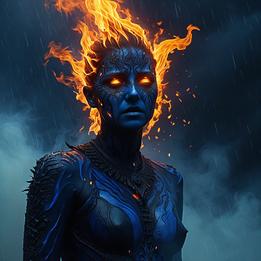
Scorch
A mark of intense heat or burning, often representing irreversible damage, purification, or transformative destruction.
Scorch Dream Meaning
A mark of intense heat or burning, often representing irreversible damage, purification, or transformative destruction.
Interpretive Themes
Cultural Lenses
Jungian Perspective
View Context →Represents the destructive aspect of the Shadow archetype or the transformative fire of individuation. Scorching can symbolize the necessary burning away of ego attachments to achieve psychological wholeness.
Freudian Perspective
View Context →Often represents repressed sexual energy (libido) turned destructive, or punishment fantasies related to taboo desires. The scorch mark may symbolize castration anxiety or aggressive impulses.
Gestalt Perspective
View Context →The scorch represents an unfinished situation or unresolved conflict that has left a 'burning' impression. It asks what aspect of the self feels damaged or what needs to be 'burned away' for completion.
Cognitive Perspective
View Context →Represents cognitive 'burnout' from excessive mental processing or traumatic memories that have left neural 'scorch marks.' May indicate catastrophic thinking patterns or overheating of cognitive systems.
Evolutionary Perspective
View Context →Taps into primal fear of fire and its destructive capacity, which was essential for survival. Scorch marks trigger threat detection systems and memories of fire's dual nature as both danger and tool.
Middle Eastern Perspective
View Context →In desert cultures, scorching represents divine judgment (as in Sodom) or purification. The scorching sun is both life-giver and destroyer, with scorched earth symbolizing both punishment and preparation for renewal.
East Asian Perspective
View Context →In Taoist and Buddhist traditions, scorching represents the fire element's destructive aspect, but also purification. In Japanese kintsugi, scorch marks (yakisugi) preserve wood, showing beauty in imperfection and transformation.
European Perspective
View Context →In medieval Christian symbolism, scorching represents hellfire and divine punishment. In alchemical tradition, it's the 'calcinatio' stage where base matter is burned to reveal its essence for transformation.
African Perspective
View Context →In many traditions, controlled scorching (like slash-and-burn agriculture) represents cyclical renewal. Scorch marks in rituals may symbolize the burning away of evil spirits or the transformative power of ancestral fire.
South Asian Perspective
View Context →In Hindu tradition, scorching relates to Agni (fire god) who both destroys and purifies. Scorched offerings reach the gods, and scorched earth after forest fires allows for agricultural renewal in monsoon cycles.
Latin American Perspective
View Context →In Mesoamerican traditions, scorching relates to solar deities' destructive power and ritual burning. In modern contexts, it often symbolizes political 'burning' of bridges or the scorched earth of deforestation.
Modern Western Perspective
View Context →Often represents environmental damage (climate change), career burnout, or the 'scorched earth' tactics in relationships or business. Also appears in gaming/media as post-apocalyptic imagery of scorched landscapes.
Want a deeper analysis?
Get a personalized interpretation of your entire dream including this symbol.
Interpret My DreamCommon Appearances & Contexts
| Context | Emotion | Interpretation |
|---|---|---|
| Context Forest fire | Emotion Terror | Interpretation Uncontrollable destruction. |
| Context Burned document | Emotion Regret | Interpretation Lost information. |
| Context Scorched earth | Emotion Despair | Interpretation Barren future. |
| Context Sun-scorched skin | Emotion Pain | Interpretation Physical damage. |
| Context Scorched metal | Emotion Awe | Interpretation Transformed material. |
| Context Scorched relationship | Emotion Anger | Interpretation Broken bond. |
| Context Scorched food | Emotion Frustration | Interpretation Wasted effort. |
| Context Scorched painting | Emotion Grief | Interpretation Lost beauty. |
| Context Scorched path | Emotion Determination | Interpretation Clear direction. |
| Context Scorched ritual | Emotion Reverence | Interpretation Sacred cleansing. |
| Context Scorched memory | Emotion Confusion | Interpretation Altered past. |
| Context Scorched opportunity | Emotion Resignation | Interpretation Missed chance. |
Interpret Your Full Dream
Beyond this symbol, every dream carries a unique story. Share your dream for a personalized AI-powered interpretation.