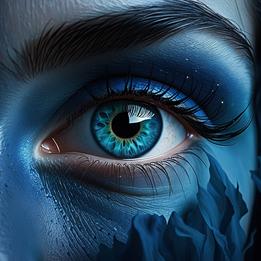
Iris
The colored part of the eye, representing perception, identity, and emotional vulnerability.
Iris Dream Meaning
The colored part of the eye, representing perception, identity, and emotional vulnerability.
Interpretive Themes
Cultural Lenses
Jungian Perspective
View Context →Represents the Self's center of consciousness and individuality. The iris as a mandala symbolizing wholeness and the psyche's organizing principle, with patterns reflecting unique soul configurations.
Freudian Perspective
View Context →Symbolizes voyeuristic desires and exhibitionism. The iris as a sexual organ representing scopophilia (pleasure in looking) and fear of being seen in vulnerable states during childhood development.
Gestalt Perspective
View Context →Represents how one 'sees' their life situation. The iris as part of the whole eye system, indicating unfinished business in perception or avoidance of seeing uncomfortable truths in waking life.
Cognitive Perspective
View Context →Reflects information processing about self-identity. The iris as a metaphor for attention mechanisms and schema activation related to personal authenticity and social perception biases.
Evolutionary Perspective
View Context →Represents threat detection and social bonding adaptations. Iris patterns evolved for individual recognition, with dilation signaling emotional states crucial for survival and group cohesion.
Middle Eastern Perspective
View Context →The 'evil eye' protection symbol. Historically, iris patterns were believed to reveal destiny, with blue irises considered protective against envy in ancient Egyptian and Islamic traditions.
East Asian Perspective
View Context →In Chinese medicine, iris condition reflects liver health and emotional balance. Japanese culture sees iris patterns as unique as fingerprints, representing individual destiny in Shinto beliefs.
European Perspective
View Context →Greek mythology's Iris was messenger goddess linking gods to humans. Renaissance art used iris color symbolically - blue for divinity, brown for earthliness, reflecting class and spiritual status.
African Perspective
View Context →In many traditions, the iris contains ancestral wisdom. Some West African cultures believe iris patterns reveal spiritual gifts, with certain markings indicating shamanic or healing abilities.
South Asian Perspective
View Context →In Ayurveda, iris examination (iridology) diagnoses dosha imbalances. Hindu philosophy associates the iris with the third eye's physical manifestation, representing inner vision and intuition.
Modern Western Perspective
View Context →Biometric identification symbol and authenticity metaphor. Iris scanning represents privacy concerns, while 'window to the soul' cliché persists in psychology and relationship discourse.
Global/Universal Perspective
View Context →Cross-cultural symbol of identity and perception. Nearly all human cultures recognize eyes as emotional communicators, with iris specifically representing individual uniqueness and truth perception.
Want a deeper analysis?
Get a personalized interpretation of your entire dream including this symbol.
Interpret My DreamCommon Appearances & Contexts
| Context | Emotion | Interpretation |
|---|---|---|
| Context Damaged iris | Emotion Fear | Interpretation Identity under threat. |
| Context Changing iris color | Emotion Confusion | Interpretation Shifting self-perception. |
| Context Someone staring | Emotion Vulnerability | Interpretation Feeling exposed. |
| Context Bright iris | Emotion Awe | Interpretation Clarity achieved. |
| Context Iris reflection | Emotion Curiosity | Interpretation Self-examination. |
| Context Medical examination | Emotion Anxiety | Interpretation Fear of judgment. |
| Context Iris patterns | Emotion Fascination | Interpretation Unique identity. |
| Context Covered iris | Emotion Secrecy | Interpretation Hiding true self. |
| Context Iris dilation | Emotion Excitement | Interpretation Emotional arousal. |
| Context Shared gaze | Emotion Intimacy | Interpretation Deep connection. |
| Context Iris photography | Emotion Pride | Interpretation Identity captured. |
| Context Blurred iris | Emotion Uncertainty | Interpretation Lack of clarity. |
Interpret Your Full Dream
Beyond this symbol, every dream carries a unique story. Share your dream for a personalized AI-powered interpretation.