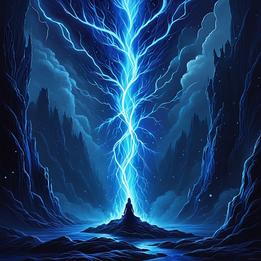
Plasma
Plasma represents the life force, vitality, and raw emotional energy flowing through the body. It symbolizes the essential fluid of existence and emotional intensity.
Plasma Dream Meaning
Plasma represents the life force, vitality, and raw emotional energy flowing through the body. It symbolizes the essential fluid of existence and emotional intensity.
Interpretive Themes
Mythological Resonance
Prometheus
GreekPrometheus stole fire from the gods to give to humanity, symbolizing plasma as the divine, life-giving energy that fuels civilization and rebellion.
Prima Materia
AlchemicalThe prima materia is the chaotic, formless base substance from which all creation arises, mirroring plasma's role as the essential, energetic essence of existence.
Cultural Lenses
Jungian Perspective
View Context →Plasma symbolizes the anima/animus or life force connecting conscious and unconscious. It represents psychic energy flow and the transformative potential of the collective unconscious in modern psychological frameworks.
Freudian Perspective
View Context →Plasma represents libidinal energy or life drive (Eros). It may symbolize sexual fluids, primal urges, or the hydraulic model of psychic energy seeking discharge in psychoanalytic theory.
Gestalt Perspective
View Context →Plasma represents the fluid background of experience—the 'ground' against which figures emerge. It symbolizes the ever-present life context and the flow of awareness in phenomenological approaches.
Cognitive Perspective
View Context →Plasma symbolizes the neural activation patterns or 'wetware' of consciousness. It represents the biological substrate of thought processes and emotional regulation in cognitive science perspectives.
Evolutionary Perspective
View Context →Plasma represents ancient biological survival mechanisms—the vital fluids that sustained early life. It symbolizes adaptive physiological responses and the deep evolutionary history of bodily systems.
Global/Universal Perspective
View Context →Across cultures, plasma-like substances (blood, sap, rivers) symbolize life force. Historically seen as magical or divine essence; modernly as scientific biological fluid with universal physiological functions.
East Asian Perspective
View Context →Similar to 'qi' or vital energy in Traditional Chinese Medicine. Historically part of humoral theory; modernly viewed as essential fluid balancing yin-yang energies in holistic health practices.
South Asian Perspective
View Context →Relates to 'rasa' (essence) in Ayurveda and 'ojas' (vitality). Historically part of dosha theory; modernly represents pranic energy flow in yoga and meditation traditions.
Middle Eastern Perspective
View Context →Historically associated with 'nafs' (life principle) in Islamic philosophy and vital humors in Greco-Arabic medicine. Modernly viewed through both religious and medical lenses as life essence.
European Perspective
View Context →Historically linked to humoral theory's four bodily fluids. Modern European view combines medical science (plasma biology) with folk traditions of vital essences in healing practices.
African Perspective
View Context →Often associated with ancestral life force in many traditions. Historically part of ritual practices; modernly viewed through both traditional spiritual frameworks and contemporary medical understanding.
Modern Western Perspective
View Context →Dual view: medical/scientific (blood component for transfusions) and metaphorical (emotional 'lifeblood'). Represents both clinical reality and poetic symbolism of vitality in contemporary culture.
Historical Authorities
Want a deeper analysis?
Get a personalized interpretation of your entire dream including this symbol.
Interpret My DreamThe Oracle's Prediction
Combine multiple symbolsA surge of physical or emotional energy leading to recovery or breakthrough.
Timeframe
Immediate (Next 48h)
Intensity
Deep
Common Appearances & Contexts
| Context | Emotion | Interpretation |
|---|---|---|
| Context Plasma transfusion | Emotion Hope | Interpretation Healing or renewal process. |
| Context Plasma leaking | Emotion Fear | Interpretation Loss of vital energy. |
| Context Plasma glowing | Emotion Awe | Interpretation Inner power revelation. |
| Context Plasma boiling | Emotion Anger | Interpretation Emotional overheating. |
| Context Plasma freezing | Emotion Despair | Interpretation Emotional stagnation. |
| Context Plasma flowing | Emotion Calm | Interpretation Harmonious emotional state. |
| Context Plasma contaminated | Emotion Disgust | Interpretation Emotional pollution. |
| Context Plasma in space | Emotion Wonder | Interpretation Cosmic connection. |
| Context Plasma donation | Emotion Generosity | Interpretation Giving life energy. |
| Context Plasma evaporating | Emotion Anxiety | Interpretation Vitality depletion. |
| Context Plasma transforming | Emotion Curiosity | Interpretation Personal metamorphosis. |
| Context Plasma connecting | Emotion Love | Interpretation Emotional bonding. |
Interpret Your Full Dream
Beyond this symbol, every dream carries a unique story. Share your dream for a personalized AI-powered interpretation.