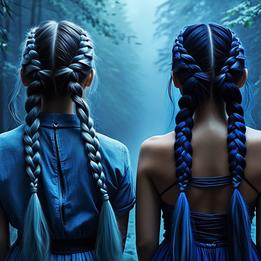
Interlaced Braids
Interlaced braids often represent unity, strength, and the harmony of diverse elements coming together.
Interlaced Braids Dream Meaning
Interlaced braids often represent unity, strength, and the harmony of diverse elements coming together.
Interpretive Themes
Cultural Identity
highBraiding is a powerful symbol across various cultures, showcasing tradition.
Strength in Unity
highEmphasizes social bonds and community support.
Creative Expression
mediumFeatures individuality within a unified appearance.
Tradition vs. Modernity
mediumReflected in how braiding evolves over generations.
Connection
lowA reminder of the importance of bonds in life.
Mythological Resonance
The Norns
NorseFemale beings who weave the fate of gods and men at the base of Yggdrasil, their weaving determining the destiny of all.
The Gordian Knot
GreekAn intricately tangled knot, symbolizing a complex problem; Alexander cut it, representing decisive action over patient unweaving.
Cultural Lenses
African Perspective
View Context →Braiding has deep roots in African traditions, evolved into significant cultural expression. Celebrations and community events often feature elaborate braiding. [African American] Reflects pride in heritage and identity.
East Asian Perspective
View Context →Braid styles signify marital status and community roles. Common in weddings and festivals to denote purity and beauty. [South Asian] [Hindu] Emphasizes individuality within societal roles.
East Asian Perspective
View Context →Braid styles often correlated with status and age in traditional cultures. Significant in cultural ceremonies celebrating heritage. Underlines the balance between personal and cultural identity.
Jungian Perspective
View Context →Represents the weaving of archetypes within the individual's psyche. Explored within analytical psychology for self-discovery. Signifies pathways to understanding oneself through relationships.
Historical Authorities
Want a deeper analysis?
Get a personalized interpretation of your entire dream including this symbol.
Interpret My DreamThe Oracle's Prediction
Combine multiple symbolsA new partnership or collaborative project will form, bringing together diverse skills or backgrounds successfully.
Timeframe
Seasonal (~3 Months)
Intensity
Deep
Common Appearances & Contexts
| Context | Emotion | Interpretation |
|---|---|---|
| Context Braiding hair with someone else | Emotion Joy | Interpretation Indicates forming deeper connections with others. |
| Context Seeing a complex braid | Emotion Admiration | Interpretation Conveys respect for complexity in relationships and life. |
| Context Untangling a braid | Emotion Frustration | Interpretation Highlights struggles in relationships or personal issues needing attention. |
| Context Wearing an elaborate braid | Emotion Pride | Interpretation Symbolizes confidence in one's heritage and individuality. |
| Context Braiding one's hair with a loved one | Emotion Comfort | Interpretation Represents intimacy and mutual support. |
| Context Watching someone braid hair | Emotion Nostalgia | Interpretation Brings back memories of community and tradition. |
| Context Cutting a braid | Emotion Sadness | Interpretation Represents loss of identity or letting go of past relationships. |
| Context Finding a braided item (e.g., bracelet) | Emotion Curiosity | Interpretation Suggests the discovery of forgotten connections. |
| Context Braiding with various colors of hair | Emotion Excitement | Interpretation Symbolizes diversity and celebration of differences. |
| Context Seeing an unkempt braid | Emotion Concern | Interpretation Indicates neglect or disarray in one’s life or relationships. |
| Context Receiving a braid as a gift | Emotion Gratitude | Interpretation Indicates appreciation for connections and relationships. |
| Context Braiding a loved one's hair | Emotion Affection | Interpretation Highlights nurturing aspects in relationships. |
| Context Braiding hair in a rush | Emotion Anxiety | Interpretation Reflects pressure and urgency in social situations. |
| Context Discovering a family heirloom braid | Emotion Legacy | Interpretation Emphasizes the importance of ancestry and heritage. |
| Context Seeing hair braids in nature (e.g., vines) | Emotion Wonder | Interpretation Represents the beauty of natural connections extending beyond humanity. |
| Context Sharing a braid with the community | Emotion Unity | Interpretation Symbolizes the communal aspect of life and relationships. |
Interpret Your Full Dream
Beyond this symbol, every dream carries a unique story. Share your dream for a personalized AI-powered interpretation.