Spiritual & Myth

Golem Dream Meaning

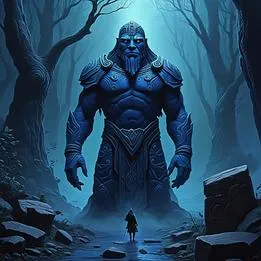
A mystical clay creature from Jewish folklore, animated through sacred rituals to serve as a protector or servant, representing humanity's attempt to harness divine creative power.

Common Appearances & Contexts

Context Emotion Interpretation
Creating a golem Pride Creative power unleashed.
Golem attacking Terror Creation turns destructive.
Golem protecting Security Artificial guardian presence.
Golem disobeying Frustration Loss of control.
Golem decaying Sadness Temporary power fading.
Golem speaking Awe Inanimate becoming conscious.
Multiple golems Overwhelm Power multiplying uncontrollably.
Golem in water Anxiety Creation dissolving away.
Golem growing Fear Power expanding dangerously.
Golem helping Gratitude Artificial aid received.
Golem staring Unease Silent judgment felt.
Golem crumbling Relief Burden finally released.

Interpretive Themes

Cultural Lenses

Jungian Perspective

View Context →

Represents the shadow self or the unconscious mind given form—raw psychic energy that must be integrated rather than controlled, symbolizing the dangers of unacknowledged aspects of personality.

Freudian Perspective

View Context →

Manifestation of repressed desires or paternal authority issues—the creation represents sublimated sexual energy or fear of father figures, with the golem's rebellion symbolizing Oedipal conflict.

Gestalt Perspective

View Context →

Projection of the dreamer's own sense of being controlled or being a controller—the golem represents unfinished business with authority, responsibility, or creative expression needing completion.

Cognitive Perspective

View Context →

Mental model of artificial agency—the brain processing concepts of creation, control, and consequence, reflecting anxiety about technology or problem-solving approaches that might backfire.

Evolutionary Perspective

View Context →

Deep-seated fear of creating competitors—an ancient survival mechanism warning against empowering potential threats, reflecting tribal anxieties about tools or allies turning dangerous.

Middle Eastern Perspective

View Context →

In Jewish Kabbalah, represents the ultimate human imitation of divine creation through sacred letters and rituals—historically a protector of persecuted communities, now a metaphor for ethical creation limits.

European Perspective

View Context →

Medieval alchemical homunculus tradition merging with Jewish folklore—symbol of Renaissance scientific ambition and Faustian overreach, warning against playing God through unnatural creation.

Modern Western Perspective

View Context →

AI and robotics metaphor—represents anxiety about technological singularity, ethical creation, and artificial consciousness, appearing in films and literature as cautionary tales about innovation.

East Asian Perspective

View Context →

Parallels with Taoist paper servants and Japanese tsukumogami—objects gaining spirit through age and care, emphasizing different animation philosophies where intention rather than command gives life.

Global/Universal Perspective

View Context →

Archetype of artificial beings across cultures—from Pygmalion's statue to Frankenstein's monster, representing universal human fascination and fear about creating life and losing control over it.

South Asian Perspective

View Context →

Relates to Hindu murti (sacred statues) receiving divine presence through prana pratishtha rituals—different philosophical context where animation is invitation rather than creation, with permanent sacred purpose.

African Perspective

View Context →

Connects to West African nkisi power figures and Central African minkisi—containers for spiritual forces activated for protection, emphasizing communal rather than individual creation with ongoing ritual maintenance.

AI-Powered

Interpret Your Full Dream

Beyond this symbol, every dream carries a unique story. Share your dream for a personalized AI-powered interpretation.