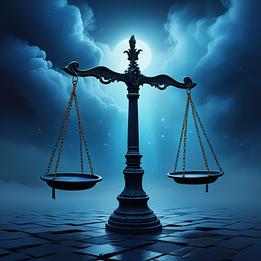
Equity
A principle of fairness, justice, and balance in distribution, rights, or ownership, often representing moral or social harmony.
Equity Dream Meaning
A principle of fairness, justice, and balance in distribution, rights, or ownership, often representing moral or social harmony.
Interpretive Themes
Mythological Resonance
Maat
EgyptianGoddess of truth, justice, and cosmic order who weighed hearts against the feather of truth in the afterlife judgment.
Themis
GreekTitaness of divine law and order who held the scales of justice, representing natural law rather than human legislation.
Cultural Lenses
Jungian Perspective
View Context →Represents the Self's striving for wholeness and balance between conscious and unconscious, often through archetypes like Justice, symbolizing inner moral equilibrium and integration of opposites.
Freudian Perspective
View Context →May symbolize repressed desires for fairness from childhood, such as sibling rivalry or parental favoritism, reflecting unconscious conflicts over love, attention, or resources in early development.
Gestalt Perspective
View Context →Seen as a projection of the dreamer's unmet needs for fairness in relationships or self-treatment, urging awareness of imbalances in current life situations to achieve holistic resolution.
Cognitive Perspective
View Context →Reflects mental schemas about fairness and justice, processing real-world inequities or decision-making, often tied to problem-solving during sleep to address perceived imbalances in waking life.
Evolutionary Perspective
View Context →Rooted in survival mechanisms for resource distribution in groups, promoting cooperation and reducing conflict; dreams may rehearse scenarios to navigate social hierarchies and ensure fair treatment.
Global/Universal Perspective
View Context →A cross-cultural symbol of moral balance and justice, found in myths, laws, and spiritual teachings worldwide, often associated with divine order, karma, or natural law to maintain societal harmony.
East Asian Perspective
View Context →Influenced by Confucian and Daoist ideals of social harmony and balance (e.g., yin-yang), equity emphasizes righteous conduct and merit-based systems, with modern contexts including corporate ethics and familial duties.
South Asian Perspective
View Context →Tied to concepts like dharma (duty/justice) and karma in Hinduism and Buddhism, equity reflects cosmic balance and moral retribution, with historical caste systems and modern social reforms addressing fairness.
Middle Eastern Perspective
View Context →Rooted in Islamic principles of adl (justice) and zakat (charity), equity involves divine fairness and social welfare, with historical caliphates and modern movements emphasizing economic and legal justice.
European Perspective
View Context →Derived from Greco-Roman ideals of justice (e.g., Lady Justice) and Enlightenment philosophies, equity evolved through legal systems and social contracts, influencing modern democracy, human rights, and welfare states.
African Perspective
View Context →Emphasizes communal fairness and restorative justice in traditions like Ubuntu, with equity involving kinship networks and resource sharing, adapted in modern post-colonial contexts for social and economic balance.
North American Perspective
View Context →Shaped by indigenous concepts of balance and colonial histories, equity focuses on civil rights, diversity, and inclusion in modern society, often addressing historical injustices through legal and social movements.
Historical Authorities
Want a deeper analysis?
Get a personalized interpretation of your entire dream including this symbol.
Interpret My DreamThe Oracle's Prediction
Combine multiple symbolsA relationship imbalance will be corrected through honest communication.
Timeframe
Immediate (Next 48h)
Intensity
Deep
You will be called to mediate a workplace conflict.
Timeframe
Seasonal (~3 Months)
Intensity
Deep
Common Appearances & Contexts
| Context | Emotion | Interpretation |
|---|---|---|
| Context Receiving fair share | Emotion Satisfaction | Interpretation Justice achieved. |
| Context Being denied rights | Emotion Anger | Interpretation Injustice felt. |
| Context Dividing resources | Emotion Anxiety | Interpretation Fear of unfairness. |
| Context Legal dispute | Emotion Stress | Interpretation Seeking resolution. |
| Context Community sharing | Emotion Hope | Interpretation Collective fairness. |
| Context Financial investment | Emotion Greed | Interpretation Desire for gain. |
| Context Correcting wrongs | Emotion Determination | Interpretation Righting imbalances. |
| Context Unequal treatment | Emotion Resentment | Interpretation Feeling slighted. |
| Context Balancing scales | Emotion Relief | Interpretation Harmony restored. |
| Context Ownership dispute | Emotion Conflict | Interpretation Struggle for rights. |
| Context Fair competition | Emotion Pride | Interpretation Earned success. |
| Context Systemic bias | Emotion Frustration | Interpretation Structural unfairness. |
Interpret Your Full Dream
Beyond this symbol, every dream carries a unique story. Share your dream for a personalized AI-powered interpretation.