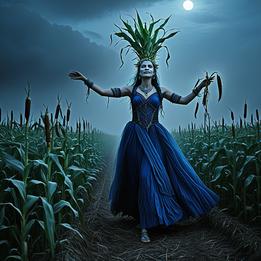
Corn Maiden
A spiritual figure representing agricultural fertility, life-sustaining nourishment, and the sacred feminine principle in nature's cycles.
Corn Maiden Dream Meaning
A spiritual figure representing agricultural fertility, life-sustaining nourishment, and the sacred feminine principle in nature's cycles.
Interpretive Themes
Abundance & Provision
highDreams may reflect needs for security.
Cyclical Renewal
highPoints to life transitions or phases.
Sacrifice & Reciprocity
mediumCould indicate personal cost for growth.
Feminine Power
highConnection to inner creativity or nurture.
Connection to Ancestors
mediumMay signal seeking guidance or roots.
Mythological Resonance
Corn Maiden
Native American (Pueblo)A central figure in Pueblo mythology, she embodies the spirit of corn, teaching agriculture and symbolizing the sacrifice of her body to feed the people, ensuring cyclical renewal.
Demeter
GreekAs goddess of the harvest, Demeter's grief and joy directly influence agricultural cycles, representing the motherly nourishment of the earth.
Cultural Lenses
Jungian Perspective
View Context →An archetype of the Great Mother or Anima, representing the unconscious feminine principle of nourishment, fertility, and the cyclical nature of psychic life and transformation.
Freudian Perspective
View Context →May symbolize latent sexual or reproductive desires, with corn representing phallic imagery and the maiden embodying maternal or object-cathexis wishes, often tied to oral-stage nourishment needs.
Gestalt Perspective
View Context →A projection of the dreamer's own nurturing or fertile aspects. The Corn Maiden is the dreamer—explore what part of yourself feels abundant, sacrificial, or in need of harvest and integration.
Cognitive Perspective
View Context →A mental schema for processing themes of growth, reward, and security. The symbol may emerge during stress about resources or planning, serving to organize thoughts about provision and outcomes.
Evolutionary Perspective
View Context →Taps into deep-seated adaptive concerns about food security, seasonal prediction, and social cooperation for harvest. Symbolizes successful resource acquisition and group survival strategies.
North American Perspective
View Context →Central to many Indigenous traditions (e.g., Pueblo, Hopi, Cherokee) as a life-giving deity or spirit (like Selu). Embodies agricultural wisdom, ritual sacrifice for community survival, and deep ecological reciprocity.
Latin American Perspective
View Context →Linked to maize deities like Chicomecóatl (Aztec) or Mama Sara (Incan), blending pre-Columbian reverence for maize as sacred sustenance with colonial and modern identities centered on cultural resilience and land.
African Perspective
View Context →In agrarian societies, represents ancestral spirits or earth goddesses ensuring crop fertility. Rituals honor her for bounty, reflecting community interdependence and the sacred duty to feed the living and the dead.
European Perspective
View Context →Echoes in harvest goddesses like Demeter/Ceres and folk figures (Corn Dollies). Historically tied to pagan harvest rites Christianized into festivals, symbolizing thanksgiving, prosperity, and the waning of the fertile year.
Modern Western Perspective
View Context →Reclaimed in neo-pagan and eco-feminist contexts as an icon of sustainable living and feminine divinity. Also appears in media as a metaphor for nature's generosity or warnings about industrial agriculture's disconnection.
Global/Universal Perspective
View Context →A cross-cultural archetype of the nourishing earth mother, appearing wherever agriculture is central. Universally signifies the hope for, and vulnerability of, the food supply that sustains human life and culture.
East Asian Perspective
View Context →Parallels exist in rice or grain goddesses (e.g., Inari, Shennong), emphasizing gratitude, hard work, and the Confucian or Daoist ideal of harmony with natural cycles to ensure communal wellbeing and ancestral favor.
Historical Authorities
Want a deeper analysis?
Get a personalized interpretation of your entire dream including this symbol.
Interpret My DreamThe Oracle's Prediction
Combine multiple symbolsA period of physical or emotional nourishment and renewal will begin.
Timeframe
Seasonal (~3 Months)
Intensity
Deep
Common Appearances & Contexts
| Context | Emotion | Interpretation |
|---|---|---|
| Context Planting seeds | Emotion Hopeful | Interpretation Beginning new ventures. |
| Context Harvesting corn | Emotion Fulfilled | Interpretation Reaping rewards of labor. |
| Context Maiden weeping | Emotion Sorrowful | Interpretation Grief over loss or sacrifice. |
| Context Offering corn | Emotion Reverent | Interpretation Act of gratitude or devotion. |
| Context Dancing in field | Emotion Joyful | Interpretation Celebration of abundance. |
| Context Withering stalks | Emotion Anxious | Interpretation Fears of scarcity or neglect. |
| Context Feeding community | Emotion Nurturing | Interpretation Desire to care for others. |
| Context Burial ritual | Emotion Resigned | Interpretation Accepting an ending for renewal. |
| Context Golden light aura | Emotion Awestruck | Interpretation Encounter with the sacred. |
| Context Storm approaching | Emotion Fearful | Interpretation Anxiety about security threatened. |
| Context Teaching children | Emotion Patient | Interpretation Passing on knowledge or tradition. |
| Context Empty granary | Emotion Desolate | Interpretation Feelings of emptiness or lack. |
Interpret Your Full Dream
Beyond this symbol, every dream carries a unique story. Share your dream for a personalized AI-powered interpretation.