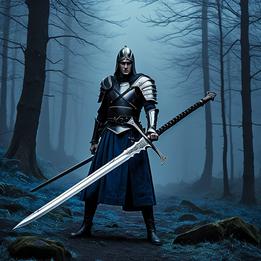
Claymore
A large two-handed Scottish sword symbolizing raw power, ancestral heritage, and decisive conflict resolution.
Claymore Dream Meaning
A large two-handed Scottish sword symbolizing raw power, ancestral heritage, and decisive conflict resolution.
Interpretive Themes
Ancestral Power
highSuggests family legacy or cultural roots.
Overwhelming Force
highMay indicate brute-force approach.
Protection
mediumCould represent personal defense mechanisms.
Archaic Solutions
mediumSuggests traditional but inefficient approaches.
Heroic Identity
lowMay indicate idealized self-image.
Cultural Lenses
Jungian Perspective
View Context →Archetype of the warrior or hero, representing the shadow's aggressive potential or the Self's integrating power. Historically linked to Celtic warrior traditions, now symbolizes individuation through conflict resolution.
Freudian Perspective
View Context →Phallic symbol representing masculine power, aggression, or sexual potency. May indicate repressed aggressive impulses or power struggles in relationships, with historical context of patriarchal authority structures.
Gestalt Perspective
View Context →Projection of personal power or aggression. The claymore represents aspects of self that feel overwhelming or protective. Modern context: how one 'wields' personal authority in relationships.
Cognitive Perspective
View Context →Mental schema for problem-solving through force. Represents cognitive approach to conflict: direct confrontation versus subtlety. Historically effective for physical threats, less so for social complexities.
Evolutionary Perspective
View Context →Symbol of physical dominance and resource protection. Represents ancestral survival strategies for territory defense. Modern manifestation: competitive drive in career or social status.
European Perspective
View Context →Specifically Scottish Highland heritage symbol representing clan loyalty, independence, and martial prowess. Historically used against English forces, now romanticized in cultural identity and tourism.
Modern Western Perspective
View Context →Fantasy trope representing heroic strength in media like games and films. Often divorced from historical violence, becoming power fantasy symbol for overcoming obstacles through sheer force.
East Asian Perspective
View Context →Foreign weapon representing barbaric strength versus refined skill. Contrasts with katana's spiritual craftsmanship. Modern view: Western brute force versus Eastern discipline in business/conflict approaches.
Middle Eastern Perspective
View Context →Crusader weapon symbolizing foreign invasion and religious conflict. Historically feared, now represents Western military intervention. Can symbolize overwhelming external forces threatening cultural identity.
African Perspective
View Context →Colonial weapon representing imposed power structures. Historically used in slave trade suppression, now symbolizes struggle against external control. Also appears in liberation movement iconography.
Global/Universal Perspective
View Context →Archetypal two-handed sword representing ultimate physical power across cultures. Appears in mythology worldwide as hero's weapon. Modern universal symbol for decisive action and overwhelming force.
South Asian Perspective
View Context →Foreign weapon contrasting with curved blades like talwar. Represents direct linear force versus circular energy. In modern context, symbolizes Western business approaches versus traditional negotiation styles.
Want a deeper analysis?
Get a personalized interpretation of your entire dream including this symbol.
Interpret My DreamCommon Appearances & Contexts
| Context | Emotion | Interpretation |
|---|---|---|
| Context Wielding in battle | Emotion Empowered | Interpretation Feeling of control. |
| Context Carrying sheathed | Emotion Prepared | Interpretation Readiness for conflict. |
| Context Too heavy to lift | Emotion Frustrated | Interpretation Overwhelmed by responsibility. |
| Context Receiving as gift | Emotion Honored | Interpretation Inheriting authority. |
| Context Breaking in combat | Emotion Vulnerable | Interpretation Loss of power. |
| Context Polishing/maintaining | Emotion Focused | Interpretation Cultivating strength. |
| Context Buried in ground | Emotion Resigned | Interpretation Abandoning aggression. |
| Context On display | Emotion Proud | Interpretation Showing heritage. |
| Context Forbidden to touch | Emotion Restrained | Interpretation Power held back. |
| Context Used as tool | Emotion Resourceful | Interpretation Adapting strength. |
| Context Multiple claymores | Emotion Overwhelmed | Interpretation Too many burdens. |
| Context Ancient claymore | Emotion Awed | Interpretation Respect for tradition. |
Interpret Your Full Dream
Beyond this symbol, every dream carries a unique story. Share your dream for a personalized AI-powered interpretation.