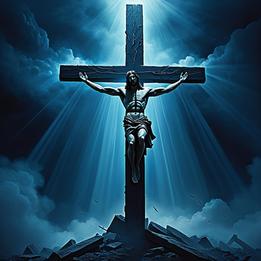
Christian Cross
A central symbol of Christianity representing sacrifice, redemption, and divine connection through Jesus Christ's crucifixion.
Christian Cross Dream Meaning
A central symbol of Christianity representing sacrifice, redemption, and divine connection through Jesus Christ's crucifixion.
Interpretive Themes
Sacrifice and Redemption
highCore Christian doctrine of atonement.
Divine Connection
highVertical and horizontal axes symbolize relationships.
Suffering and Endurance
mediumMartyrdom and personal trials reflected.
Death and Resurrection
highCentral Easter narrative embodied.
Moral Compass
mediumCrossroads symbolism in decision-making.
Mythological Resonance
Jesus Christ
ChristianCrucified for humanity's sins, resurrected after three days, symbolizing eternal life.
World Tree
UniversalAxis mundi connecting heaven, earth, and underworld, like Yggdrasil in Norse mythology.
Cultural Lenses
Global/Universal Perspective
View Context →Widely recognized as Christianity's primary symbol, though interpretations vary from sacred devotion to historical artifact across different global contexts.
Jungian Perspective
View Context →Archetype of the Self, representing integration of opposites (vertical/spiritual vs. horizontal/material) and the process of individuation through suffering and transformation.
East Asian Perspective
View Context →Often viewed as foreign religious symbol; in contexts like Japan, associated with Christianity's historical persecution and modern minority status alongside Western cultural influence.
South Asian Perspective
View Context →Primarily associated with Christian minorities; in Hindu contexts sometimes seen through syncretic lenses or as colonial legacy symbol with complex post-colonial meanings.
Middle Eastern Perspective
View Context →Ancient symbol predating Christianity; for Coptic Christians a vital identity marker, while in Islamic contexts often associated with Crusades history and contemporary interfaith dynamics.
European Perspective
View Context →Deep historical roots from Roman execution tool to medieval devotion symbol; now represents cultural heritage, religious identity, and sometimes nationalist connotations.
African Perspective
View Context →Syncretized with indigenous beliefs in many regions; Ethiopian crosses show unique artistic traditions, while in some areas represents colonial missionary history and adaptation.
North American Perspective
View Context →Symbol of religious freedom and diversity; also appears in political debates about separation of church and state, and in popular culture as fashion or tattoo motif.
Latin American Perspective
View Context →Central to Catholicism's colonial introduction and syncretic practices; appears in festivals like Day of the Dead and liberation theology contexts.
Freudian Perspective
View Context →Phallic symbol representing paternal authority and superego; crucifixion may symbolize castration anxiety or unresolved father conflicts in psychoanalytic interpretation.
Gestalt Perspective
View Context →Represents integration of conflicting aspects of self; the intersection point signifies awareness of how different life elements connect and create meaning.
Cognitive Perspective
View Context →Schematically processed as religious category marker; dream appearance may reflect memory activation of religious concepts or metaphorical thinking about sacrifice and values.
Evolutionary Perspective
View Context →Taps into innate pattern recognition of intersecting lines; leverages human tendencies toward ritual, group identity markers, and meaning-making around suffering and mortality.
Historical Authorities
Want a deeper analysis?
Get a personalized interpretation of your entire dream including this symbol.
Interpret My DreamThe Oracle's Prediction
Combine multiple symbolsA profound spiritual awakening or test of faith.
Timeframe
Seasonal (~3 Months)
Intensity
Deep
Common Appearances & Contexts
| Context | Emotion | Interpretation |
|---|---|---|
| Context Seeing a glowing cross in darkness | Emotion hope | Interpretation Divine guidance during difficult times or spiritual awakening. |
| Context Carrying a heavy cross uphill | Emotion burdened | Interpretation Feeling overwhelmed by responsibilities or moral obligations. |
| Context A cross crumbling or breaking | Emotion fear | Interpretation Crisis of faith or questioning core beliefs. |
| Context Placing a cross on someone's grave | Emotion grief | Interpretation Processing loss or seeking closure through spiritual means. |
| Context Wearing a cross that feels warm | Emotion comforted | Interpretation Feeling protected or connected to spiritual support. |
| Context A cross transforming into something else | Emotion confusion | Interpretation Transition in belief system or spiritual identity. |
| Context Multiple crosses in a field | Emotion solemn | Interpretation Collective suffering or memorializing shared trauma. |
| Context Drawing or painting a cross | Emotion focused | Interpretation Consciously working through spiritual questions or commitments. |
| Context A cross floating in water | Emotion peace | Interpretation Emotional cleansing or baptismal renewal symbolism. |
| Context Someone giving you a cross | Emotion grateful | Interpretation Receiving spiritual guidance or inheritance of values. |
| Context A cross with unusual colors | Emotion curious | Interpretation Personalized spirituality or unconventional faith expressions. |
| Context Trying to remove a cross | Emotion frustrated | Interpretation Conflict between inherited beliefs and personal identity. |
Interpret Your Full Dream
Beyond this symbol, every dream carries a unique story. Share your dream for a personalized AI-powered interpretation.