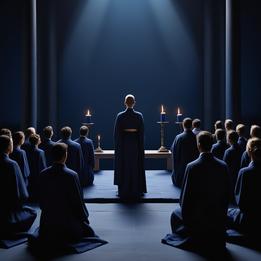
Ceremony
Ceremonies in dreams often symbolize transitions, rituals of passage, or significant life events.
Ceremony Dream Meaning
Ceremonies in dreams often symbolize transitions, rituals of passage, or significant life events.
Interpretive Themes
Mythological Resonance
The Eleusinian Mysteries - anc
The Eleusinian Mysteries - ancient Greek initiation rites celebrating the myth of Demeter and Persephone.
Cultural Lenses
Jungian Perspective
View Context →Ceremonies indicate crucial shifts in the psyche and the integration of experiences. Found in numerous mythologies representing a journey of transformation. May serve as powerful symbols of internal transitions.
East Asian Perspective
View Context →Ceremonies, such as rites of passage, are essential cultural elements marking significant life events. Celebrations tied to religious and family traditions. [South Asian] [Hindu] They reinforce values and connections within communities.
Jungian Perspective
View Context →From a Jungian perspective, ceremonies embody collective unconscious archetypes that represent transformation and individuation, acting as thresholds between the past and future.
North American Perspective
View Context →In many Native American cultures, ceremonies are sacred practices that connect individuals to their ancestry and the spirit world, emphasizing community and balance.
South Asian Perspective
View Context →In Hindu tradition, ceremonies such as rites of passage are vital for spiritual growth and societal acceptance, marking important transitions in one's life journey.
Middle Eastern Perspective
View Context →Ceremonies were crucial in Ancient Egyptian culture, often associated with afterlife beliefs and transitions to the spiritual realm, symbolizing eternal continuity.
European Perspective
View Context →In Christian contexts, ceremonies, such as baptism and marriage, signify covenant and community, reinforcing faith and shared values among believers.
African Perspective
View Context →Many African cultures utilize ceremonies to celebrate milestones, emphasizing communal identity and the continuity of traditions through generations.
East Asian Perspective
View Context →In Japanese culture, ceremonies such as tea ceremonies illustrate the art of mindfulness, beauty, and the importance of seasonal change in life.
Historical Authorities
Want a deeper analysis?
Get a personalized interpretation of your entire dream including this symbol.
Interpret My DreamThe Oracle's Prediction
Combine multiple symbolsA formal recognition or initiation into a new phase of understanding.
Timeframe
Lunation (~29 Days)
Intensity
Deep
A deepening of commitment or a ritualized bonding experience.
Timeframe
Seasonal (~3 Months)
Intensity
Deep
Common Appearances & Contexts
| Context | Emotion | Interpretation |
|---|---|---|
| Context Attending a wedding | Emotion Joyful | Interpretation Represents personal growth and new beginnings. |
| Context Participating in a graduation | Emotion Proud | Interpretation Indicates achievement and recognition of efforts. |
| Context Witnessing a funeral | Emotion Sad | Interpretation Reflects processing of loss and the end of a chapter. |
Interpret Your Full Dream
Beyond this symbol, every dream carries a unique story. Share your dream for a personalized AI-powered interpretation.