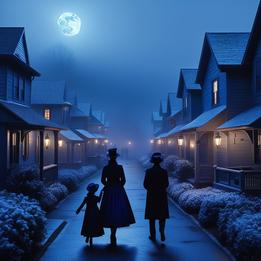
Caroling
Caroling represents communal joy, tradition, and the act of sharing love and goodwill through music during the holiday season.
Caroling Dream Meaning
Caroling represents communal joy, tradition, and the act of sharing love and goodwill through music during the holiday season.
Interpretive Themes
Community Spirit
highCaroling fosters community interaction and participation.
Nostalgia
highMany associate caroling with fond memories of childhood and family gatherings.
Generosity
mediumCaroling symbolizes the act of spreading goodwill and kindness.
Tradition
highCaroling reflects long-standing customs in diverse communities.
Spiritual Connection
mediumCaroling often incorporates elements of religious significance during the holidays.
Mythological Resonance
Orpheus
GreekThe musician whose songs could charm beasts, stones, and even Hades, using music to create connection and traverse boundaries.
Angelic Choirs
ChristianThe heavenly hosts singing 'Gloria' at the Nativity, announcing divine joy and unity through celestial harmony.
Cultural Lenses
Modern Western Perspective
View Context →Caroling gained popularity in the 19th century as part of Christmas festivities. Often performed in neighborhoods to spread holiday cheer and goodwill. [American] A fundamental part of the American holiday tradition.
European Perspective
View Context →Historically known as 'wassailing,' a form of caroling that involved singing for good harvest. Part of ancient rituals to welcome the new year. [Celtic] Reflects deep-rooted customs intertwined with nature and community.
European Perspective
View Context →Caroling's origins can be traced to pagan traditions that celebrated the winter solstice. Performed during various seasonal festivals. [European Folklore] Demonstrates the blending of mystical elements with communal rituals.
African Perspective
View Context →Spirituals adapted into carols reflect the unique cultural experiences of African Americans. Part of Christmas gatherings and church services. [African American] Emphasizes the depth of cultural traditions tied to faith and community.
Historical Authorities
Want a deeper analysis?
Get a personalized interpretation of your entire dream including this symbol.
Interpret My DreamThe Oracle's Prediction
Combine multiple symbolsThe formation of a new, meaningful social connection or community.
Timeframe
Immediate (Next 48h)
Intensity
Deep
Common Appearances & Contexts
| Context | Emotion | Interpretation |
|---|---|---|
| Context Singing with a crowd of unfamiliar faces | Emotion Excitement | Interpretation This may signify a desire for connection and belonging in waking life. |
| Context Performing solo in a crowded place | Emotion Anxiety | Interpretation Indicates feelings of vulnerability and the need for validation from others. |
| Context Receiving joy from passersby while singing | Emotion Happiness | Interpretation Reflects a reward in social interactions and approval from the community. |
| Context Hearing familiar carols but unable to sing along | Emotion Sadness | Interpretation Represents feelings of exclusion or lost connections with traditions. |
| Context Caroling in a snowy street | Emotion Warmth | Interpretation Symbolizes joy and comfort found in close-knit community settings. |
| Context Being invited to join a group of carolers | Emotion Curiosity | Interpretation Indicates an exploration of new relationships or experiences. |
| Context Seeing lights and decorations while singing | Emotion Joy | Interpretation Reinforces the connection between celebration and joy in shared experiences. |
| Context Fading voices of carolers in the distance | Emotion Longing | Interpretation A reflection on missed connections or fading traditions. |
| Context Struggling to learn new carols | Emotion Frustration | Interpretation Represents anxiety over personal growth and embracing new roles. |
| Context Caroling with family | Emotion Contentment | Interpretation Symbolizes familial bonds and treasured memories during the holidays. |
Interpret Your Full Dream
Beyond this symbol, every dream carries a unique story. Share your dream for a personalized AI-powered interpretation.