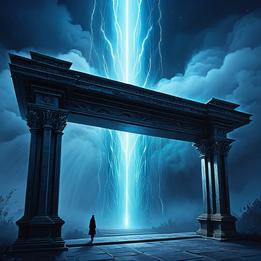
Beam
A structural support element in architecture, symbolizing stability, connection, and the framework that holds things together.
Beam Dream Meaning
A structural support element in architecture, symbolizing stability, connection, and the framework that holds things together.
Interpretive Themes
Structural Integrity
highDreams may test personal resilience.
Connection and Unity
mediumSymbolizes relationships or integration.
Hidden Support
highRepresents subconscious or unnoticed strengths.
Vulnerability and Collapse
mediumFears of losing support systems.
Guidance and Direction
lowMay indicate life direction or purpose.
Mythological Resonance
Atlas
GreekThe Titan condemned to hold up the celestial heavens for eternity, representing the ultimate burden and support of the cosmic order.
Yggdrasil
NorseThe World Tree, an immense ash whose roots and branches hold together the Nine Realms, serving as the central axis and support of all existence.
Cultural Lenses
Jungian Perspective
View Context →Represents the Self's structure—the psyche's framework integrating consciousness and unconsciousness. Historically, the axis mundi; modernly, personal wholeness and individuation process.
Freudian Perspective
View Context →Often a phallic symbol representing masculine energy, potency, or sexual tension. Historically linked to patriarchal authority; modernly, may reflect power dynamics or repressed desires.
Gestalt Perspective
View Context →Seen as a projection of the dreamer's own support system or backbone. Historically, parts of the self; modernly, how one holds oneself together in waking life.
Cognitive Perspective
View Context →A mental schema for stability, processed from waking experiences of architecture. Historically, survival-related; modernly, reflects cognitive frameworks for problem-solving or stress management.
Evolutionary Perspective
View Context →Rooted in the need for secure shelter—beams evoke ancient instincts for safe structures. Historically, tree branches as primal shelters; modernly, triggers security-assessment mechanisms.
Global/Universal Perspective
View Context →Cross-culturally, a fundamental symbol of support and connection. Historically, from timber in huts to steel in skyscrapers; modernly, represents societal or personal infrastructure.
East Asian Perspective
View Context →In traditions like Feng Shui, beams symbolize energy flow (qi)—overhead beams may create oppressive 'sha qi'. Historically, wooden architecture; modernly, balance and harmonious support.
South Asian Perspective
View Context →In Hindu and Buddhist architecture, beams represent cosmic order (rita/dharma) and the spine (sushumna) in yoga. Historically, temple mandalas; modernly, spiritual foundation.
Middle Eastern Perspective
View Context →In Islamic architecture, beams often feature intricate geometric patterns symbolizing divine unity and the unseen support of Allah. Historically, mosque designs; modernly, faith as structure.
European Perspective
View Context →In medieval Christian symbolism, the beam of the cross represents sacrifice and redemption. Historically, cathedral construction; modernly, moral or ethical support.
African Perspective
View Context →In many traditions, beams in communal structures symbolize ancestral support and social cohesion. Historically, thatched roofs; modernly, community backbone and heritage.
North American Perspective
View Context →In Indigenous cultures, beams (like totem poles or lodge poles) represent clan identity and spiritual connection. Historically, longhouses; modernly, cultural resilience and identity frameworks.
Historical Authorities
Want a deeper analysis?
Get a personalized interpretation of your entire dream including this symbol.
Interpret My DreamThe Oracle's Prediction
Combine multiple symbolsA foundational project or responsibility will be entrusted to you, testing your reliability.
Timeframe
Seasonal (~3 Months)
Intensity
Deep
Common Appearances & Contexts
| Context | Emotion | Interpretation |
|---|---|---|
| Context Holding up ceiling | Emotion Security | Interpretation Feeling supported and safe. |
| Context Cracking or bending | Emotion Anxiety | Interpretation Fear of collapse. |
| Context Walking on beam | Emotion Focus | Interpretation Navigating a narrow path. |
| Context Falling beam | Emotion Terror | Interpretation Sudden loss of support. |
| Context Shining or glowing | Emotion Awe | Interpretation Divine or enlightened guidance. |
| Context Many intersecting beams | Emotion Confusion | Interpretation Complex life structure. |
| Context Carrying a beam | Emotion Burden | Interpretation Shouldering heavy responsibility. |
| Context Beam in nature | Emotion Wonder | Interpretation Natural order and support. |
| Context Beam as bridge | Emotion Hope | Interpretation Connection overcoming divide. |
| Context Missing beam | Emotion Dread | Interpretation Lack of essential support. |
| Context Polished or ornate | Emotion Pride | Interpretation Valued personal foundation. |
| Context Beam in water | Emotion Uncertainty | Interpretation Support feels unstable. |
Interpret Your Full Dream
Beyond this symbol, every dream carries a unique story. Share your dream for a personalized AI-powered interpretation.