The Unseen Architecture: Dreaming of Hidden Support
The Somatic Echo
It begins not as a thought, but as a sensation. A subtle, almost imperceptible shift in the gravity of your being. It is the feeling of leaning back into a chair you didn’t know was there, the sudden, solid contact against your spine when you were braced for a fall. It’s the quiet sigh your body releases in a moment of crisis, a biological exhale that precedes conscious relief. This is the somatic echo of hidden support: a deep, cellular knowing that you are held by structures you cannot see. It feels like a softening of the jaw you’ve been clenching, a warmth spreading through the chest cavity where cold dread had begun to crystallize. It is the body’s first, wordless recognition that the ground beneath you, though invisible, is fundamentally sound.
The Dreamer's Log
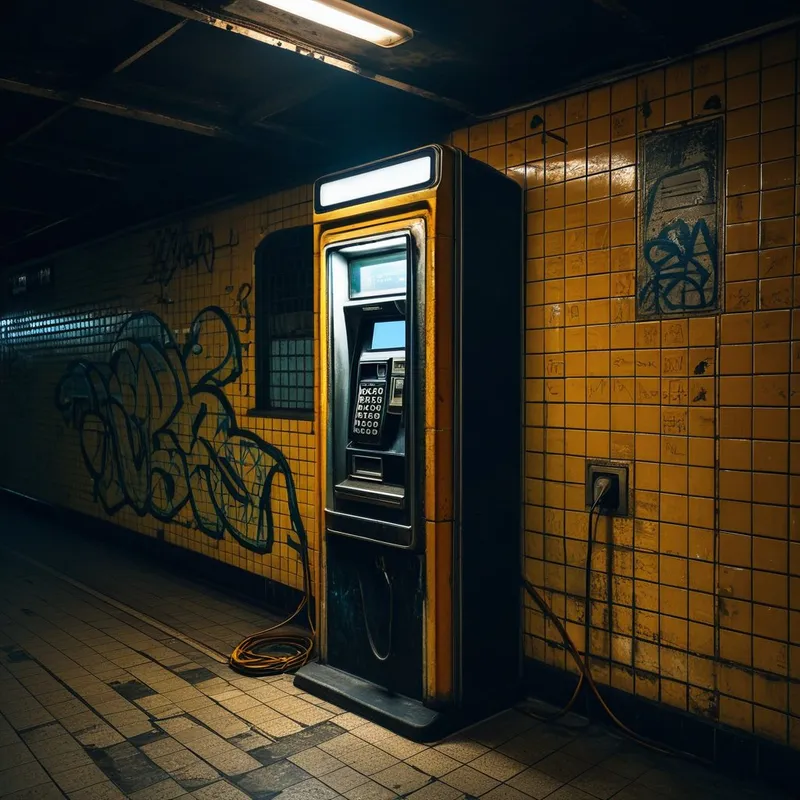
The dreamer stands on a derelict subway platform, the air thick with the smell of damp concrete and ozone. The world above has crumbled into silence. In the profound stillness, a forgotten payphone begins to ring with a clear, piercing tone. Lifting the heavy receiver, they hear not a voice, but a complex, harmonic hum—a frequency that seems to recalibrate the very rhythm of their heartbeat.
This is the alchemy of contact: the call from the abandoned outpost of the self, a signal from the infrastructure of the psyche that remains operational long after the conscious stations have gone dark.
The False Lead
This theme is not a promise of external rescue, nor is it a spiritual bypass dressed as grace. It is not the sudden appearance of a deus ex machina to solve your problems. To mistake hidden support for mere luck or external salvation is to miss its profound, architectural nature. It is the revelation of the load-bearing walls within your own psyche, the beams and foundations you built in moments of strength now holding you in moments of perceived collapse. It is the opposite of helplessness; it is the discovery of your own, pre-existing engineering.
Psychological Architecture
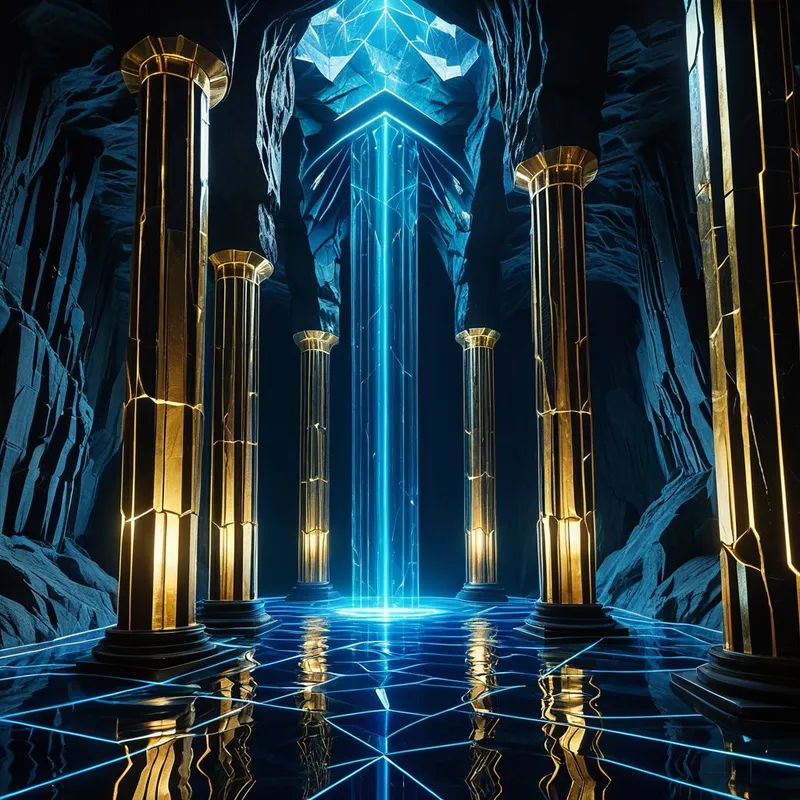
The work here is Shadow work of the most intimate kind: it is the excavation of trust. Not trust in others, but trust in the unseen, self-organizing intelligence of your own system. When life demands everything, the conscious ego—the foreman of the psyche—often believes it is working alone on a crumbling site. The dream of hidden support is the project manager’s report from the subsurface. It shows you the geothermal wells of resilience you tapped long ago, still flowing with heat. It reveals the network of internal allies—what some call parts in the language of Internal Family Systems—that have been laboring in silence: the Stoic who fortified your boundaries, the Witness who recorded your pain without flinching, the Nurturer who stockpiled compassion in hidden cellars.
Individuation here is the process of moving from tenant to architect. It is the terrifying, glorious moment you are given the blueprints to your own soul’s structure and realize you are not homeless in a storm; you are standing in the central atrium of a fortress you built but forgot you inhabited. The grief present is for all the times you felt utterly alone, unaware of this inner congress. The terror is in acknowledging the sheer scale and responsibility of this internal sovereignty.
Mythic Resonance
We see this in the myth of Ariadne, not in her role as the savior with the thread, but in the moment Theseus is alone in the absolute blackness of the Labyrinth. The thread is not just a tool; it is the physical manifestation of a hidden, sustaining connection. It is the psychic tether to a consciousness outside the maze of the immediate problem, a reminder that the world is larger than the Minotaur’s corridor. Similarly, in the Arthurian cycle, the Wasteland is healed not by a flash of magic, but by the asking of the right question—the Grail Question. The land’s barrenness was a reflection of a hidden support system (the Grail) being ignored. Its restoration comes from re-establishing contact with that hidden, nourishing source, proving that vitality was always present, merely dormant and awaiting recognition.
Symbolic Nodes
- Forgotten or Seldom-Used Rooms in a familiar house.
- Subterranean spaces: basements, bunkers, caves, root cellars.
- Ancient or outmoded technology that still functions perfectly (rotary phones, analog radios, mechanical watches).
- Unexpectedly solid objects in a decaying environment (a single sturdy door, an unbreakable pane of glass).
- Animals or figures that observe quietly from the periphery, offering no direct help but whose presence alters the dream’s atmosphere.
- A sound or frequency that stabilizes or clarifies a chaotic scene.
Archetypal Resonance
The Magician Archetype is the prime mover in this theme. Not the flashy stage illusionist, but the deep-sea cartographer, the one who maps unseen currents and knows how to harness the latent energy within a system. The somatic echo—that sudden, solid contact—is the Magician’s touch, activating a ley line within the self. This archetype’s core energy is the knowledge that reality is malleable because its underlying structures can be understood and engaged. The alchemical potential lies in its move from perception to participation: the dreamer stops being a victim of circumstance and becomes an operator within the hidden framework of their own psyche, transmuting perceived isolation into orchestrated connection.
The Alchemical Process
The transmutation here is from Fragmentation to Integration. The prima materia, the raw lead of the experience, is the soul-shattering feeling of being unsupported, adrift, and fundamentally alone in your struggle. The alchemical fire is applied through the intense, voluntary act of turning toward the void. It is the psychological pressure of sitting in the silence of your own despair and asking, “What remains?” without demanding an immediate answer.
This is the nigredo, the blackening. In this heat, the illusion of the solitary self cracks. What emerges is not one thing, but a symphony—the realization that your consciousness is a council, your resilience a distributed network. The albedo, the whitening, is the moment of dream contact: the phone rings in the empty station. The hidden support system announces itself. The final rubedo, the reddening, is the integration of this knowledge into waking life. It is the sovereign calm that comes from knowing you contain multitudes, and those multitudes are organized, resilient, and fundamentally on your side. The terror of collapse is transmuted into the profound authority of one who knows the bedrock upon which they stand.

The Integration Protocol
Question 1: In your waking life, when have you experienced that subtle “leaning back” sensation—a moment of ease or resolution that came from a resource you didn’t consciously know you had?
Question 2: If the hidden support in your dream were a system (e.g., a communications network, a structural foundation, a energy grid), what is its primary function? Is it to stabilize, communicate, nourish, or protect?
Question 3: What part of your current self feels most like that derelict subway platform—abandoned, silent, and waiting? What would a signal of connection sound or feel like to that specific place within you?
Action 1 (Subterranean Mapping): For one week, carry a small notebook. Do not record events or thoughts. Instead, note only moments of unexpected ease—a sudden insight, a stranger’s timely kindness, a burst of energy when depleted. Do not analyze. Simply collect this data as evidence of a hidden operational network.
Action 2 (Circuit Drawing): Without planning, take a large piece of paper and draw the “architecture” of your current challenge. Use abstract shapes, lines, and textures. Where does it feel monolithic? Where are the cracks of light? Now, in a different color, draw in the “support structures” as they feel, not as they look. Are they deep pillars? Delicate filaments? A resonant frequency? Let the image reveal the hidden blueprint.
Action 3 (Frequency Anchor): Identify a simple, resonant sound—a singing bowl tone, a specific chord on an instrument, a hummed note. In a quiet moment, generate this sound. As you do, visualize it not as a sound you make, but as a signal you are broadcasting to your own internal network, a call to confirm connection and operational status. Feel for the somatic echo in reply.
Final Validation
To feel alone in the work of your life is a human pain of the deepest order. It is not a failure of character, but a sign of the depth of your engagement. The dream of hidden support does not arrive to shame that loneliness, but to honor it—and then to profoundly complicate it. It reveals that your solitude is an illusion maintained by a consciousness that can only perceive the tip of the iceberg. The difficult, sacred work is to dare to believe the evidence of the dream: that below the surface of your awareness lies an entire continent of strength, a council of allies, and an architecture built for precisely this moment. You are not holding yourself up. You are being held by the masterpiece of your own accumulated wisdom. The call is coming from inside the house. It is safe to answer.