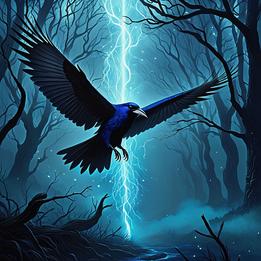
Augury
The ancient practice of interpreting omens from natural phenomena, especially bird flight patterns, to divine future events or divine will.
Augury Dream Meaning
The ancient practice of interpreting omens from natural phenomena, especially bird flight patterns, to divine future events or divine will.
Interpretive Themes
Mythological Resonance
The Augurs of Rome
RomanPriests who interpreted bird flights to determine divine approval for state decisions.
Calchas
GreekThe seer who interpreted bird omens to guide the Greek forces during the Trojan War.
Cultural Lenses
Jungian Perspective
View Context →Augury represents the collective unconscious communicating through archetypal symbols. Birds symbolize spirit or transcendence. The practice reflects the psyche's attempt to find patterns and meaning in chaos, connecting individual consciousness to universal wisdom.
Freudian Perspective
View Context →Interpreted as displacement of unconscious sexual or aggressive wishes onto neutral external signs. The act of divination may symbolize repressed curiosity about parental secrets or forbidden knowledge, with birds potentially representing phallic symbols.
Gestalt Perspective
View Context →The dreamer IS the augury—every element represents an aspect of self. Birds might be unexpressed thoughts taking flight. The interpretation process mirrors how the dreamer creates meaning from life's random events, projecting inner states outward.
Cognitive Perspective
View Context →Reflects the brain's pattern-recognition systems overapplying meaning to random stimuli. Dreams of augury may indicate anxiety about uncertainty, with the mind practicing threat assessment or decision-making through metaphorical scenario-building.
Evolutionary Perspective
View Context →Rooted in adaptive hyper-vigilance for environmental cues predicting danger or opportunity. Bird behavior specifically signaled weather, predators, or prey. Modern manifestations represent cognitive leftovers from when reading omens enhanced survival.
European Perspective
View Context →Deeply embedded in Greco-Roman religion (auspices) and medieval folklore. Ravens specifically associated with prophecy. Historically, augurs held political power; today survives in folk traditions like reading tea leaves or animal behavior for weather predictions.
East Asian Perspective
View Context →In Chinese tradition, bird omens (especially phoenixes) signaled imperial mandate or cosmic harmony. The I Ching represents systematized augury. Modern Feng Shui continues the principle of interpreting environmental signs for auspicious outcomes in life and business.
Middle Eastern Perspective
View Context →Ancient Mesopotamian hepatoscopy (liver divination) and Babylonian astral omens were state sciences. Islamic tradition generally rejects divination but acknowledges divine signs. Modern interpretation often focuses on dream omens as mentioned in prophetic traditions.
African Perspective
View Context →Many traditions incorporate bird messengers from ancestors or deities. The Sangoma of Southern Africa interprets natural signs alongside bone throwing. Modern contexts blend traditional divination with Christian or Islamic elements in syncretic practices.
North American Perspective
View Context →Various Indigenous traditions observe animal behavior for guidance, with eagles and ravens as common messengers. Colonial-era folk magic included weather omens. Today appears in eclectic neopaganism and metaphorical use in political commentary ('reading the signs').
Latin American Perspective
View Context →Syncretic blend of Indigenous omens (like Quechua bird language interpretation), African diaspora divination, and Catholic signs. Curanderos might read natural events. Modern context includes popular fascination with pre-Columbian prophecy systems and their commercialized versions.
Global/Universal Perspective
View Context →Nearly all cultures developed systems to interpret natural phenomena as divine communication. This reflects fundamental human desire to find meaning in randomness and exert control over uncertainty. Modern science replaces augury with data prediction models.
Historical Authorities
Want a deeper analysis?
Get a personalized interpretation of your entire dream including this symbol.
Interpret My DreamThe Oracle's Prediction
Combine multiple symbolsA new opportunity will arrive from an unexpected direction.
Timeframe
Seasonal (~3 Months)
Intensity
Deep
Common Appearances & Contexts
| Context | Emotion | Interpretation |
|---|---|---|
| Context Watching birds fly | Emotion Curiosity | Interpretation Seeking life direction. |
| Context Interpreting cloud shapes | Emotion Hope | Interpretation Anticipating positive change. |
| Context Ancient temple ritual | Emotion Reverence | Interpretation Connecting to tradition. |
| Context Failed omen reading | Emotion Frustration | Interpretation Feeling lost or confused. |
| Context Animal entrails examination | Emotion Disgust | Interpretation Facing unpleasant truths. |
| Context Receiving prophecy | Emotion Awe | Interpretation Encountering destiny moment. |
| Context Modern weather forecast | Emotion Anxiety | Interpretation Worry about future. |
| Context Bird attacking augur | Emotion Fear | Interpretation Rebellion against fate. |
| Context Teaching augury skills | Emotion Pride | Interpretation Sharing esoteric knowledge. |
| Context Augury tools breaking | Emotion Despair | Interpretation Loss of guidance system. |
| Context Celestial event observation | Emotion Wonder | Interpretation Cosmic significance felt. |
| Context Disputing omen meaning | Emotion Confusion | Interpretation Conflicting interpretations arise. |
Interpret Your Full Dream
Beyond this symbol, every dream carries a unique story. Share your dream for a personalized AI-powered interpretation.