Architecture & Places

Apostle's Cross Dream Meaning

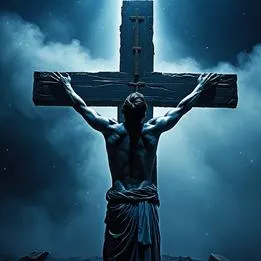
The Apostle's Cross is a symbol representing faith, guidance, and the teachings of the apostles in Christianity, often embodying personal sacrifice and spiritual journeys.

Common Appearances & Contexts

Context Emotion Interpretation
Receiving the cross as a gift Gratitude A symbol of being recognized for spiritual achievements.
Carrying the cross uphill Struggle Represents personal burdens and the effort required to pursue faith.
Seeing the cross illuminated in the dark Hope Signifies guidance in times of uncertainty and despair.
Seeing others wear the cross Connection Feeling unity with those sharing similar beliefs.
The cross breaking into pieces Fear Concern about losing faith or connection to spirituality.
Explaining the significance of the cross to others Pride Feeling a sense of responsibility to share one’s faith.
Witnessing a cross being raised during a ceremony Awe Experiencing the power of collective faith.
Participating in a ritual involving the cross Satisfaction Feeling fulfillment through engagement in meaningful practices.
Finding a cross in unexpected places Surprise Encounters with faith that bring unanticipated insights.
The cross surrounded by thorns Conflict Struggles between personal sacrifice and external expectations.
Being healed while touching the cross Elation Experiencing profound transformation or resolution of inner turmoil.
Seeing the cross transform into a tree Wonder Symbolizing growth and the resulting spiritual journeys.
Exploring the history behind the cross Curiosity A desire to understand the roots of one’s beliefs.
Fearing the rejection of the cross by others Anxiety Worries about acceptance and belonging within a community.
Witnessing a peaceful demonstration with the cross Pride Feeling pride in active participation in faith-related movements.
The cross dissolving into light Transcendence Embodying a sense of unity with the universe and spiritual essence.

Interpretive Themes

Cultural Lenses

Global/Universal Perspective

Full Hub →

Christian martyrdom symbol representing sacrifice and faith. Historically marks apostles' burial sites. Ritually used in processions. Emotionally evokes reverence and spiritual connection. Modernly symbolizes religious heritage and pilgrimage destinations.

Jungian Perspective

Full Hub →

Archetype of spiritual wholeness and self-sacrifice. Represents integration of opposites (horizontal/vertical). Historically connects to collective Christian unconscious. Ritually symbolizes individuation process. Emotionally indicates spiritual crisis or transcendence.

East Asian Perspective

Full Hub →

Foreign religious symbol with limited native history. Associated with Western missionaries since 16th century. Ritually unfamiliar except in Christian minorities. Emotionally represents cultural intrusion or exoticism. Modernly seen in urban churches.

South Asian Perspective

Full Hub →

Christian minority symbol introduced by Portuguese colonizers. Historically marks St. Thomas's traditional martyrdom site in Chennai. Ritually used in Syrian Christian churches. Emotionally signifies religious minority identity and colonial history.

Middle Eastern Perspective

Full Hub →

Early Christian symbol predating Latin cross. Historically used by Eastern Orthodox and Coptic churches. Ritually appears in ancient monasteries. Emotionally connects to Christian persecution heritage. Modernly represents ancient Christian communities.

European Perspective

Full Hub →

Medieval pilgrimage symbol marking apostle relics. Historically associated with Santiago de Compostela. Ritually used in Catholic processions. Emotionally evokes medieval piety and crusader heritage. Modernly appears in heraldry and tourism.

African Perspective

Full Hub →

Colonial-era Christianization symbol with syncretic adaptations. Historically introduced by missionaries. Ritually incorporated into indigenous Christian ceremonies. Emotionally represents both forced conversion and authentic faith. Modernly signifies African Christianity's growth.

North American Perspective

Full Hub →

Immigrant religious heritage symbol. Historically brought by European settlers. Ritually used in ethnic Catholic parishes. Emotionally represents cultural preservation. Modernly appears in multicultural religious contexts and historical sites.

Latin American Perspective

Full Hub →

Spanish colonial evangelization symbol. Historically central to conversion of indigenous peoples. Ritually prominent in feast day celebrations. Emotionally represents both colonial oppression and popular devotion. Modernly common in street shrines.

Freudian Perspective

Full Hub →

Phallic symbol representing father authority and religious guilt. Historically connects to patriarchal religious structures. Ritually signifies superego imposition. Emotionally indicates repressed sexual conflicts under religious morality. Modernly reflects authority conflicts.

Gestalt Perspective

Full Hub →

Projection of spiritual aspirations or moral conflicts. The cross's arms represent life choices/directions. Historically symbolizes decision points. Ritually marks existential crossroads. Emotionally indicates need for guidance or moral clarity in current situation.

Cognitive Perspective

Full Hub →

Religious schema activation from memory networks. Historically stored as Christian cultural knowledge. Ritually triggers associated scripts. Emotionally produces awe or guilt based on personal religious experiences. Modernly processed through acquired religious concepts.

Evolutionary Perspective

Full Hub →

Supernatural agent signifier enhancing group cohesion. Historically promoted cooperation through shared rituals. Ritually reinforces in-group identity. Emotionally triggers awe responses to authority figures. Modernly functions as costly signaling of commitment.

AI-Powered

Interpret Your Full Dream

Beyond this symbol, every dream carries a unique story. Share your dream for a personalized AI-powered interpretation.