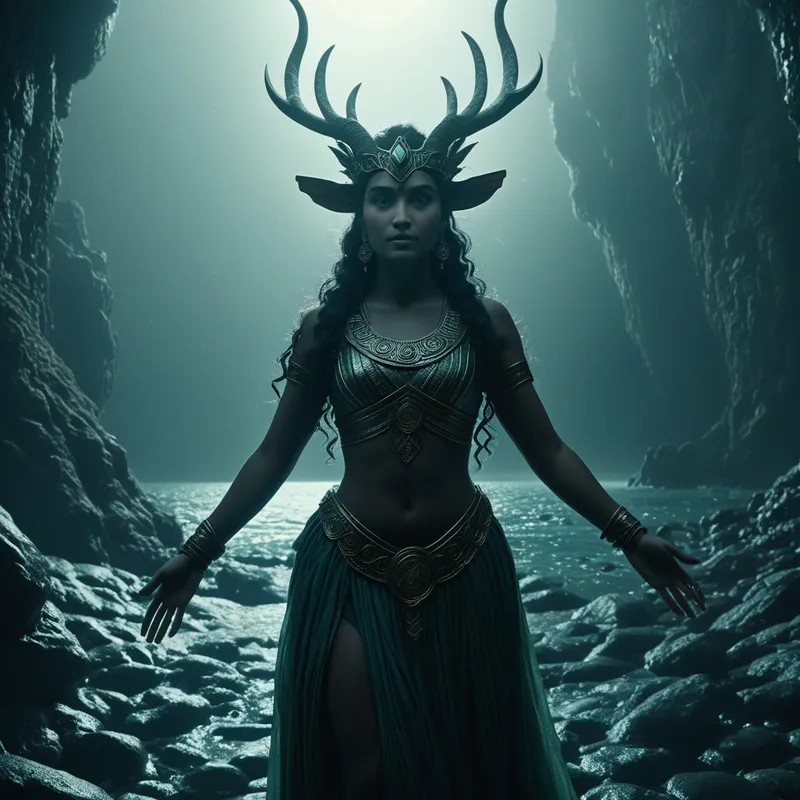
Yetzirah the World of Formation
In Kabbalah, Yetzirah is the World of Formation where divine ideas take shape before entering our physical reality, serving as a bridge between spiritual and material realms.
The Tale of Yetzirah the World of Formation
In the beginning, before [the world](/myths/the-world “Myth from Tarot culture.”/) we know, there was a thought in the mind of the Infinite, [Ein Sof](/myths/ein-sof “Myth from Kabbalistic culture.”/). This thought, a pure and undifferentiated [emanation](/myths/emanation “Myth from Neoplatonic/Gnostic culture.”/) of divine will, descended through the first two worlds: Atziluth, the realm of pure archetype, and Briah, the realm of conception. But a thought, even a divine one, yearns for expression. It longs for a language, a structure, a form through which its essence can be known.
Thus, the divine breath flowed into Yetzirah, the World of Formation. Here, the abstract blueprints from Briah encountered the primordial substance of being. It is a realm of dynamic becoming, a cosmic workshop where spirit begins to clothe itself in the garments of potential. Imagine a master sculptor standing before a block of pure, luminous marble. In Atziluth exists the sculptor’s vision; in Briah, the knowing of the sculpture within the stone. But in Yetzirah, the chisel first meets the surface. The first lines are drawn, the rough shape emerges from the formless mass. The sculpture is not yet complete, not yet solid, but its identity is now unmistakable. It is real in its essential form, yet still fluid, still open to the final nuances of manifestation.
This is the realm of the Sefirot in their formative aspect, governed by archangels and celestial choirs. It is the domain of the [Ruach](/myths/ruach “Myth from Hebrew culture.”/), the spirit, which in humanity bridges the higher intellect (Neshamah) and the animal soul (Nefesh). In Yetzirah, the commandment “Let there be light” is not yet the physical sun, but the idea of illumination given a voice, a vibration, a pattern of energy that can eventually condense into photons. It is the world where the divine attribute of Chesed takes the form of a flowing, nurturing current, and the attribute of Gevurah takes the form of a defining, limiting structure. Their interplay here is not yet the concrete acts of kindness or discipline in our world, but their fundamental emotional and energetic architectures.
Cultural Origins & Context
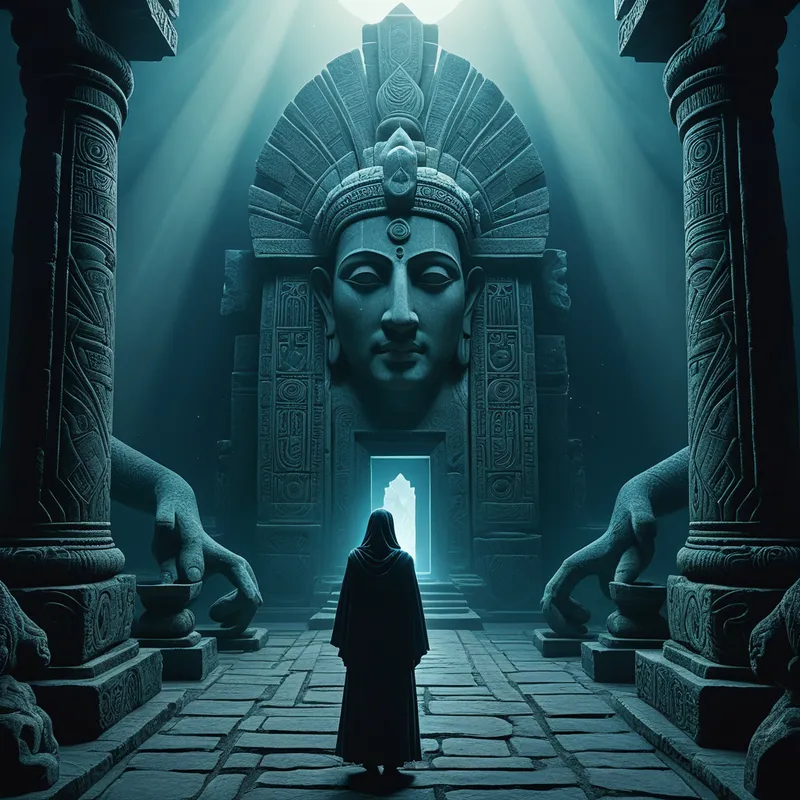
Yetzirah is a foundational concept within the Jewish mystical tradition of Kabbalah, particularly as systematized in medieval texts like the Zohar and the works of [Isaac](/myths/isaac “Myth from Biblical culture.”/) Luria (the Ari). It is the third of the four interconnected worlds (Olamot) that describe the process of creation from the unknowable Godhead to the physical universe. The very name “Yetzirah” derives from the Hebrew root Y-Tz-R, meaning to form, fashion, or shape, as a potter forms clay.
This cosmology is not merely a map of the heavens but a profound psychological and theological model. It answers the question of how the transcendent, infinite Divine interacts with—and ultimately creates—a finite, seemingly separate world. Yetzirah is the critical intermediary. Without it, the pure, boundless light of the Divine would utterly overwhelm and nullify creation; it would be like trying to pour an ocean into a thimble. Yetzirah provides the thimble—the formative vessels, the angelic intelligences, and the emotional-psychic structures—that can receive and translate that light into increasingly specific patterns.
It is associated with the second day of creation in Genesis, the day the “firmament” (Rakia) was established to separate the waters above from the waters below. Mystically, this firmament is seen as the formative plane of Yetzirah itself, creating the necessary distinction and order for further complexity to arise. It is the world of the [Merkabah](/myths/merkabah “Myth from Hebrew culture.”/), the Divine Chariot, described in the visions of Ezekiel—a realm of overwhelming symbolic forms (the Chayot, the Ophanim, the wheels within wheels) that mediate the presence of the Divine.
Symbolic Architecture
Yetzirah is the [architecture](/symbols/architecture “Symbol: Architecture in dreams often signifies structure, stability, and the framing of personal identity or life’s journey.”/) of the [soul](/symbols/soul “Symbol: The soul represents the essence of a person, encompassing their spirit, identity, and connection to the universe.”/) before it incarnates. It is the [blueprint](/symbols/blueprint “Symbol: A blueprint represents the foundational plan or design for something, often symbolizing potential, structure, and the mapping of one’s inner self or future.”/) of a [life](/symbols/life “Symbol: The symbol of ‘Life’ represents a journey of growth, interconnectedness, and existential meaning, encompassing both the joys and challenges that define human experience.”/), not as a fixed [fate](/symbols/fate “Symbol: Fate represents the belief in predetermined outcomes, suggesting that some aspects of life are beyond human control.”/), but as a complex, interactive [pattern](/symbols/pattern “Symbol: A ‘Pattern’ in dreams often signifies the underlying structure of experiences and thoughts, representing both order and the repetitiveness of life’s situations.”/) of potentialities, challenges, and spiritual attributes. The ten [Sefirot](/symbols/sefirot “Symbol: The ten divine emanations in Kabbalah representing aspects of God and the structure of creation.”/), when experienced through the [lens](/symbols/lens “Symbol: A lens in dreams represents focus, perspective, clarity, or distortion in how one perceives reality, art, or self.”/) of Yetzirah, become the inner dynamics of the [psyche](/myths/psyche “Myth from Greek culture.”/): the flow of love, the restraint of judgment, the harmonizing [beauty](/symbols/beauty “Symbol: This symbol embodies aesthetics, harmony, and the appreciation of life’s finer qualities.”/), the enduring [foundation](/symbols/foundation “Symbol: A foundation symbolizes the underlying support systems, values, and beliefs that shape one’s life, serving as the bedrock for growth and development.”/), the receptive understanding, and so on.
In Yetzirah, emotion is not a mere biochemical reaction; it is a cosmic weather system. A storm of grief here is not yet tears, but a specific, potent configuration of divine energy related to Gevurah and Hod, seeking a channel into expression.
This world is populated by the angelic hosts, each a discrete intelligence embodying a single divine function or command. In psychological terms, these angels can be understood as archetypal forces, the personified patterns of [energy](/symbols/energy “Symbol: Energy symbolizes vitality, motivation, and the drive that fuels actions and ambitions.”/) that shape [human](/symbols/human “Symbol: The symbol of a human represents individuality, complexity of emotions, and social relationships.”/) experience. They are the “formative thoughts” of God, the executors of the divine will in the process of manifestation. The human Ruach is said to originate here, meaning our moral and emotional [character](/symbols/character “Symbol: Characters in dreams often signify different aspects of the dreamer’s personality or influences in their life.”/) is forged in this formative [realm](/symbols/realm “Symbol: The symbol of ‘Realm’ often signifies the boundaries of one’s consciousness, experiences, or emotional states, suggesting aspects of reality that are either explored or ignored.”/), drawing from its divine archetypes before being clothed in the physical [body](/symbols/body “Symbol: The body in dreams often symbolizes the dreamer’s self-identity, personal health, and the relationship they have with their physical existence.”/) of Assiah.
The Dreamer’s Resonance
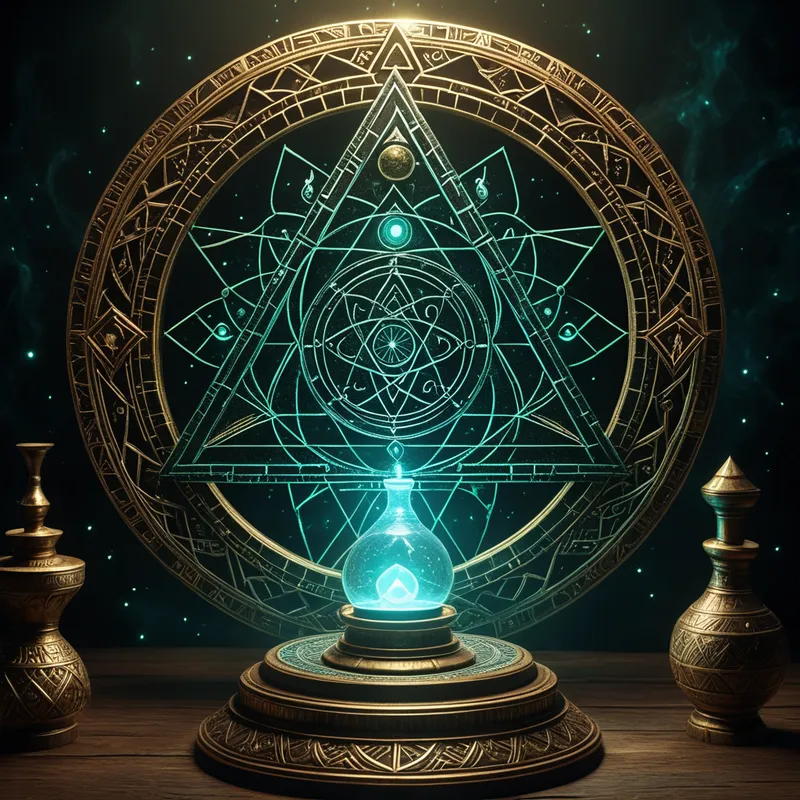
To the depth psychologist, Yetzirah is the realm of the [anima mundi](/myths/anima-mundi “Myth from Greek culture.”/), [the world soul](/myths/the-world-soul “Myth from Various culture.”/), and [the collective unconscious](/myths/the-collective-unconscious “Myth from Jungian culture.”/) as described by Carl Jung. It is the psychic substrate where archetypes reside not as vague ideas, but as living, formative patterns. When we dream, particularly in dreams of profound symbolic weight, we do not create the symbols anew; we dip into the waters of Yetzirah, where these forms already exist in a state of potential. The dream is a personal manifestation of a transpersonal formative pattern.
Our emotional life is the most direct experience of Yetzirah within us. A raw, unprocessed emotion is a chaotic formative energy from this world impacting our physical being. The work of psychological integration—of giving form to our feelings through words, art, or conscious understanding—is the work of consciously participating in Yetzirah. We become co-formers, taking the chaotic divine energy and, through [the vessel](/myths/the-vessel “Myth from Alchemical culture.”/) of our awareness, giving it a coherent shape that can then be acted upon in the world of Assiah. The neurotic symptom, the compulsive behavior, the creative impulse—all are Yetziratic energies seeking, and sometimes forcing, a form in our lives.
Alchemical Translation
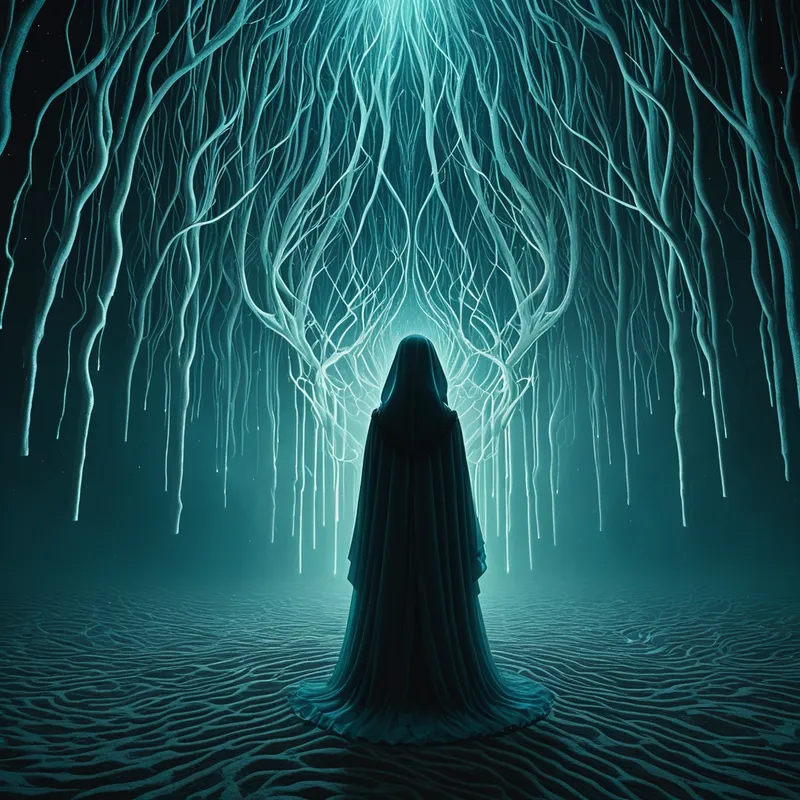
In the alchemical process, Yetzirah corresponds to the stage of [Solutio](/myths/solutio “Myth from Alchemical culture.”/) (dissolution) and the beginning of [Coagulatio](/myths/coagulatio “Myth from Alchemical culture.”/) (coagulation). The fixed elements of the old self (the [prima materia](/myths/prima-materia “Myth from Alchemical culture.”/) of Assiah) are dissolved back into their psychic and spiritual components in the “[water](/myths/water “Myth from Chinese culture.”/)” of the unconscious—the fluid realm of Yetzirah. Here, in this formative soup, the new pattern, [the Philosopher’s Stone](/myths/the-philosophers-stone “Myth from Alchemical culture.”/) of the integrated Self, begins to coalesce. It is not yet the solid gold, but the precise, perfect arrangement that will become the gold.
The alchemist’s vessel is the human heart-mind, the seat of the Ruach. The heat of attention and the waters of emotion work upon the raw material of experience, separating the essential formative pattern from the dross of literal circumstance.
This is also the realm of true imagination, or Imaginatio, not as fantasy but as the organ of perception for spiritual realities. It is the faculty that can perceive [the forms](/myths/the-forms “Myth from Platonic culture.”/) in Yetzirah. Spiritual practices like guided meditation, certain forms of prayer, and the contemplation of sacred geometry are attempts to still the waters of Assiah (the physical world and the busy mind) to perceive the forms moving in the waters of Yetzirah. One does not invent the vision; one aligns one’s consciousness to receive it.
Associated Symbols
Explore related symbols from the CaleaDream lexicon:
- Bridge — The essential function of Yetzirah, forming the connective span between the archetypal spiritual realms and the world of tangible matter and action.
- Form — The core principle of this world, where amorphous divine energy first takes on distinguishable shape, structure, and pattern.
- Water — The elemental metaphor for Yetzirah’s fluid, emotional, and plastic nature, where forms are held in a state of potential before solidification.
- Cloud Formation — A direct visual metaphor for the ephemeral, ever-shifting, yet intelligible structures that coalesce in the formative realm.
- Mirror — Represents the reflective, intermediary quality of Yetzirah, which does not generate light but receives and shapes it into comprehensible images.
- Cocoon Transformation — The protective, formative space where the essence of a being is reorganized into a new structure before emerging into a new state of existence.
- Spirit — Corresponds directly to the Ruach, the level of soul associated with Yetzirah, encompassing emotion, intellect, and moral character.
- Dream — The personal gateway to the formative world, where the psyche encounters and processes archetypal forms in narrative and symbolic language.
- River — The dynamic, flowing current of formative energy that carries potential from its source toward manifestation, constantly shaping and being shaped.
- Temple — The structured, sacred space built according to a heavenly blueprint, mirroring the process of giving perfect form to divine presence.
- Log — In its sense as a record or structured information, it reflects the codifying, pattern-making function of Yetzirah, turning experience into transmissible form.
- Seed — The perfect, compressed formative pattern containing the entire potential structure of the being that will manifest in the physical world.