Xbalanque and the Sun Myth Meaning & Symbolism
The Maya hero Xbalanque journeys to the underworld, defeats the Lords of Death, and is reborn as the Sun, establishing the cycle of day and night.
The Tale of Xbalanque and the Sun
Listen. The world was dark. Not the dark of night, but the dark of a tomb, a deep and final dark that had swallowed the first sun and the first fathers. In this gloom, the people stumbled, cold and afraid. The Lords of Xibalba ruled from their foul houses—the House of Gloom, the House of Knives—and their laughter was the rattle of bones.
But in the world above, two lights were kindled: the Hero Twins, Hunahpu and Xbalanque. They were the grandsons of a murdered father, their destiny written in the stars and the rubber of the sacred ballgame. When the arrogant Death Lords summoned them to play in the deep courts of Xibalba, the Twins did not hesitate. They descended the steep road, past the rushing rivers of blood and pus, their hearts steady.
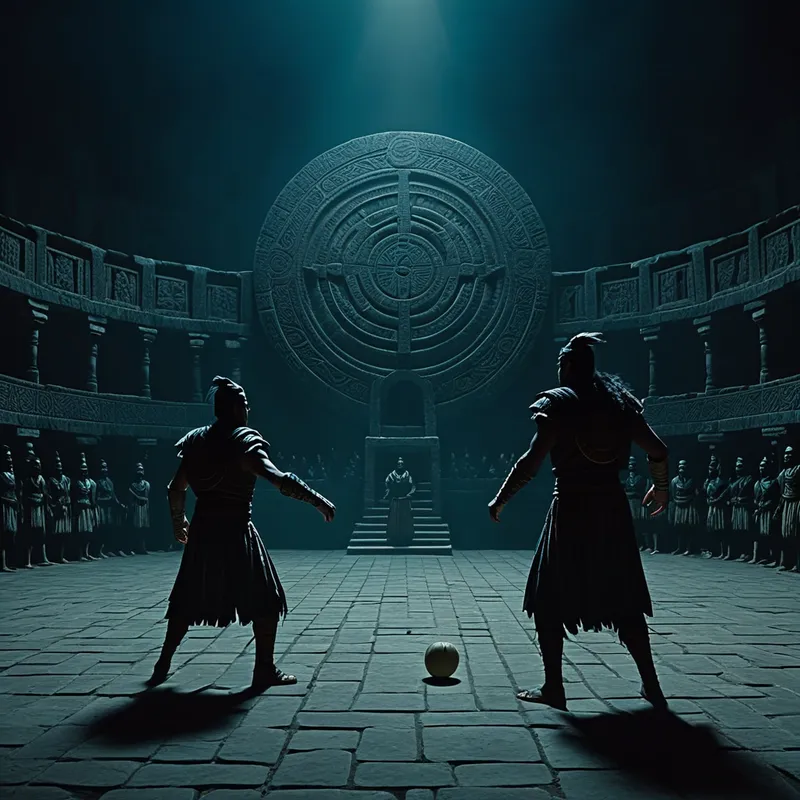
In Xibalba, they were tested with cruel tricks: forced to spend a night in the House of Cold, then the House of Jaguars. They outwitted each trial, using cunning and the aid of humble creatures. But the Lords demanded the ultimate game. In the final, echoing ballcourt, a contest not of skill but of annihilation, Hunahpu was lost, his head severed and placed in a barren tree as a trophy.
Now Xbalanque stood alone. The darkness pressed closer. But from his brother’s sacrifice, a seed was planted. With profound cunning, Xbalanque orchestrated a greater game. He and a resurrected Hunahpu returned as miraculous dancers and magicians, performing wonders for the Death Lords—setting houses ablaze and restoring them, sacrificing each other and returning whole. Drunk on this spectacle of death and rebirth, the chief Lords demanded, “Do it to us! Make us a sacrifice and bring us back!”
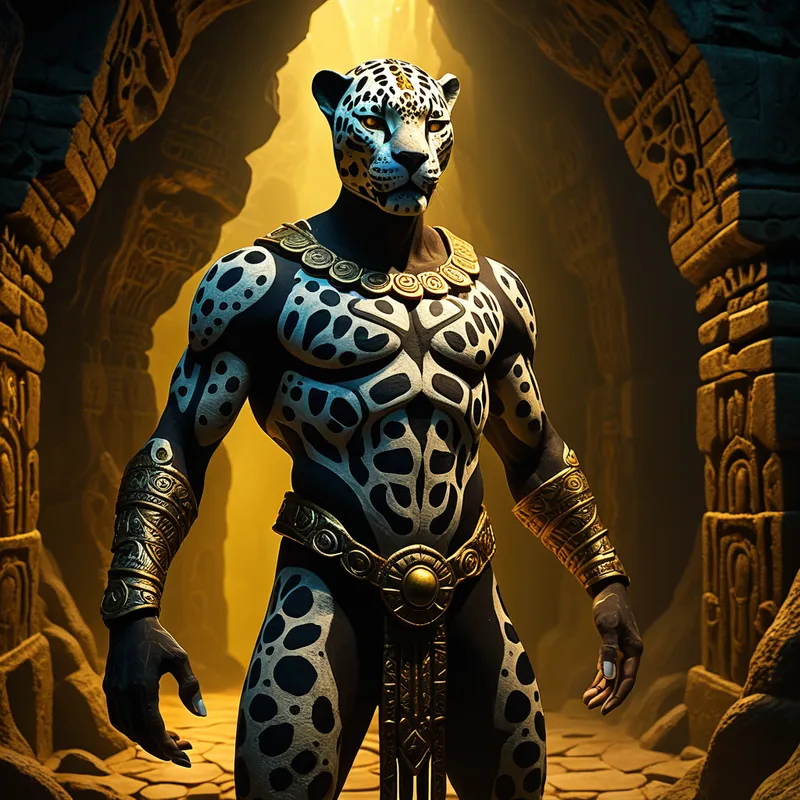
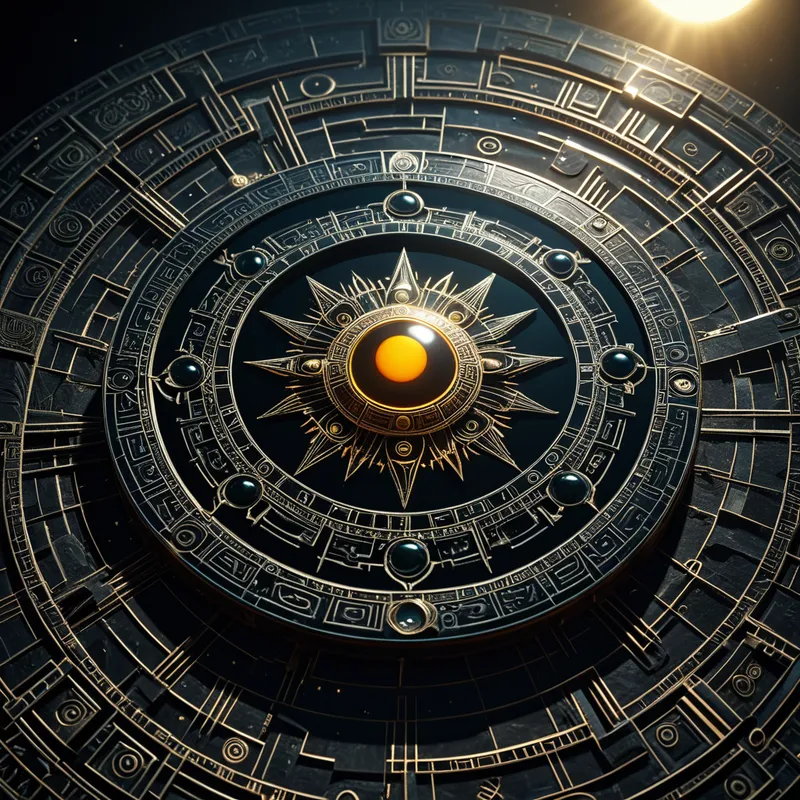
This was the trap. Xbalanque performed the sacrifice, but he did not restore them. He broke their power, humbled their legions, and retrieved the honored bones of his father from the depths. His final act was not of destruction, but of creation. From the dark soil of the underworld, he rose. He did not merely escape Xibalba; he transformed it within himself. He ascended into the sky, and where Hunahpu became the sun of the day, Xbalanque, the jaguar of the night, became the Black Sun, the Jaguar Sun that illuminates the realm of the dead. He became the sun that is also a jaguar, a ballplayer who is also a star, establishing the eternal, breathing rhythm of day and night, life and death.
Cultural Origins & Context
This myth is the climactic narrative of the Popol Vuh, the “Book of the Community,” of the K’iche’ Maya. It is not a mere folktale but a foundational cosmology, recited by nobility and priests to encode history, justify royal lineage (claiming descent from the Hero Twins), and explain the fundamental order of the universe. The story was performed, likely during important calendrical rites and royal successions, transforming the listeners into participants in the eternal drama of cosmic maintenance.
The myth served a critical societal function: it explained the necessity of the sacred ballgame, a ritual reenactment of the cosmic struggle; it validated the concept of noble sacrifice as the fuel for cosmic renewal; and it provided a map of the afterlife, with Xibalba as a tangible, if terrifying, destination. The triumph of Xbalanque was a collective triumph, a reassurance that order—their order—was wrested from chaos through intelligence, sacrifice, and resilience.
Symbolic Architecture
At its core, this is a myth of alchemical inversion. The [underworld](/symbols/underworld “Symbol: A symbolic journey into the unconscious, representing exploration of hidden aspects of self, transformation, or confronting repressed material.”/), typically a place of [dissolution](/symbols/dissolution “Symbol: The process of breaking down, dispersing, or losing form, often representing transformation, release, or the end of a state of being.”/), becomes the [crucible](/symbols/crucible “Symbol: A vessel for intense transformation through heat and pressure, symbolizing spiritual purification, testing, and alchemical change.”/) for the creation of the most vital celestial [body](/symbols/body “Symbol: The body in dreams often symbolizes the dreamer’s self-identity, personal health, and the relationship they have with their physical existence.”/). Xbalanque’s [journey](/symbols/journey “Symbol: A journey in dreams typically signifies adventure, growth, or a significant life transition.”/) is the ultimate descensus ad inferos—the descent into the [underworld](/symbols/underworld “Symbol: A symbolic journey into the unconscious, representing exploration of hidden aspects of self, transformation, or confronting repressed material.”/) that is necessary for any true [ascent](/symbols/ascent “Symbol: Symbolizes upward movement, progress, spiritual elevation, or striving toward higher goals, often representing personal growth or transcendence.”/).
The light is not found by fleeing the dark, but by becoming so intimate with it that you learn its true name, and in doing so, become its master.
Xbalanque represents the part of the psyche that can engage the [shadow](/symbols/shadow “Symbol: The ‘shadow’ embodies the unconscious, repressed aspects of the self and often represents fears or hidden emotions.”/)—the [realm](/symbols/realm “Symbol: The symbol of ‘Realm’ often signifies the boundaries of one’s consciousness, experiences, or emotional states, suggesting aspects of reality that are either explored or ignored.”/) of [death](/symbols/death “Symbol: Symbolizes transformation, endings, and new beginnings; often associated with fear of the unknown.”/), fear, and the unconscious—without being annihilated by it. His [jaguar](/symbols/jaguar “Symbol: The jaguar symbolizes strength, power, and stealth, often associated with transformation and the spiritual journey.”/) [aspect](/symbols/aspect “Symbol: A distinct feature, quality, or perspective of something, often representing a partial view of a larger whole.”/) is key: the jaguar is the master of the [night](/symbols/night “Symbol: Night often symbolizes the unconscious, mystery, and the unknown, representing the realm of dreams and intuition.”/) [forest](/symbols/forest “Symbol: The forest symbolizes a complex domain of the unconscious mind, representing both mystery and potential for personal growth.”/), the [creature](/symbols/creature “Symbol: Creatures in dreams often symbolize instincts, primal urges, and the unknown aspects of the psyche.”/) that moves seamlessly between the world of the living and the [spirit world](/symbols/spirit-world “Symbol: A realm beyond the physical, inhabited by spirits, ancestors, or supernatural beings, often representing the unconscious, afterlife, or mystical connection.”/). He is not a god of pure, distant light, but of informed light, a [consciousness](/symbols/consciousness “Symbol: Consciousness represents the state of awareness and perception, encompassing thoughts, feelings, and experiences.”/) that has integrated its own darkness. His final form as the [Jaguar](/symbols/jaguar “Symbol: The jaguar symbolizes strength, power, and stealth, often associated with transformation and the spiritual journey.”/) Sun symbolizes this complete [integration](/symbols/integration “Symbol: The process of unifying disparate parts of the self or experience into a cohesive whole, often representing psychological wholeness or resolution of internal conflict.”/): a radiant consciousness that contains and illuminates the [depths](/symbols/depths “Symbol: Represents the subconscious, hidden emotions, or foundational aspects of the self, often linked to primal fears or profound truths.”/), rather than merely opposing them. The sacrificed Lords of [Death](/symbols/death “Symbol: Symbolizes transformation, endings, and new beginnings; often associated with fear of the unknown.”/) represent the tyrannical, archaic complexes of the psyche that must be broken for new consciousness to [dawn](/symbols/dawn “Symbol: The first light of day, symbolizing new beginnings, hope, and the transition from darkness to illumination.”/).
The Dreamer’s Resonance
When this myth stirs in modern dreams, it often signals a profound initiation into the second half of life. The dreamer may find themselves in labyrinthine basements, decaying institutions (the Houses of Xibalba), or facing terrifying, authoritarian figures (the Death Lords). They may be compelled to play a high-stakes, confusing game where the rules keep changing.
This is the somatic signature of the ego being called into the underworld of the personal and collective unconscious. The feeling is not of simple fear, but of a sacred, terrifying obligation. The dreamer is Xbalanque at the start of his journey: summoned to face what they have inherited—family curses, repressed grief, ancestral shame (the murdered father). The triumph in such dreaming is rarely a violent conquest. It is the dream of ingenious solution, of finding allies in unexpected places (the humble animals), and ultimately, of performing a transformative act that changes the very structure of the inner world. It is the dream of becoming the one who can hold the tension of opposites—light and dark, life and death—and in that holding, give birth to a new, sustaining rhythm of being.
Alchemical Translation
For the modern individual, the myth of Xbalanque models the process of individuation not as a climb to a sunny peak, but as a deliberate, courageous descent. The first half of life is often spent building a solar identity—bright, visible, achieving (Hunahpu as the Day Sun). The crisis comes when this identity is severed, when the old ways of being “die.”
The alchemical work is then to become Xbalanque. It is to voluntarily go into the depression, the grief, the shadowy material we have spent a lifetime avoiding (the journey to Xibalba). There, we must outwit the inner voices of despair and self-annihilation (the Death Lords) not by brute force, but by cunning and acceptance—by “dancing” with our pain, sacrificing our old, rigid self-concepts, and discovering we can be reborn from them.
The gold of the mature personality is forged in the blackness of the nigredo. The new sun that rises is not the innocent sun of youth, but the wise, jaguar-spotted sun that has seen the underworld and carries its knowledge as warmth, not as cold fear.
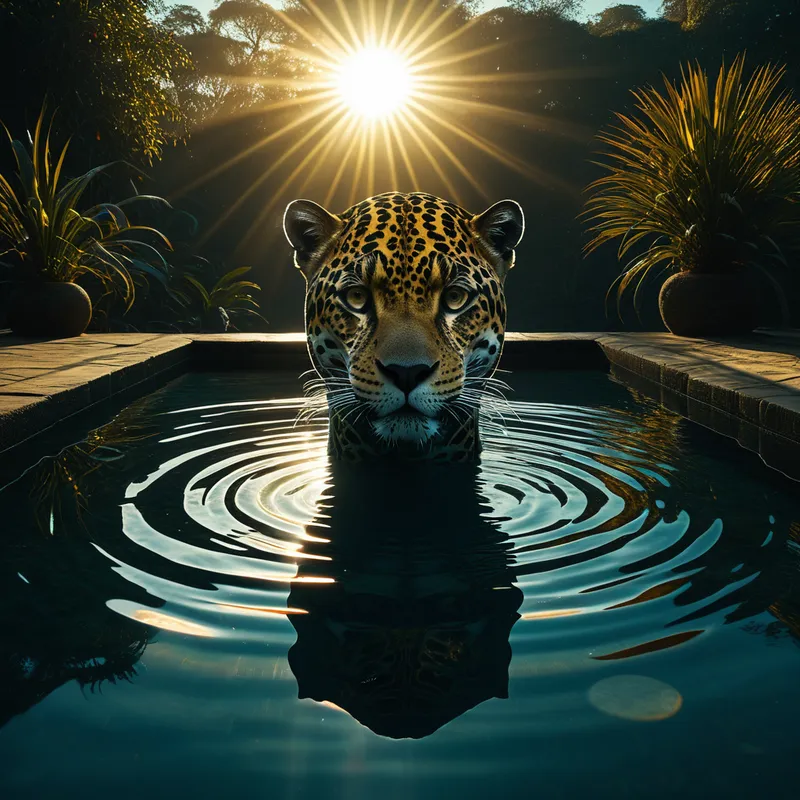
The final, psychic transmutation is the realization that the light of consciousness and the darkness of the unconscious are not enemies, but partners in a divine ballgame. To become the Jaguar Sun is to achieve a state where one’s consciousness is no longer afraid of its own depths, but can illuminate them, creating an inner cosmos where day and night, effort and rest, knowing and unknowing, exist in a sacred, revolving balance. We don’t escape our Xibalba; we learn to wear it as a jaguar wears its spots, as integral markings of our power and our story.
Associated Symbols
Explore related symbols from the CaleaDream lexicon:
- Sun — The central goal and transformation of the myth, representing not just a celestial body but a consciousness that has integrated the underworld, becoming the Jaguar Sun that rules both day and night.
- Journey — The essential structure of the myth: a deliberate descent into the unknown (the underworld) that is necessary for achieving a transformative goal and returning with new power.
- Sacrifice — The pivotal, transformative act; the voluntary loss (of the brother, of the old self) that makes the new creation (the sun, the integrated self) possible and potent.
- Underworld — Symbolized by Xibalba, it represents the realm of the unconscious, shadow, death, fear, and all that is repressed, which must be confronted and navigated to achieve wholeness.
- Trickster — Embodied by Xbalanque’s cunning strategies, especially the deceptive dance performance that ultimately defeats the Lords of Death through their own arrogance.
- Rebirth — The core outcome; Xbalanque is not merely resurrected but transmuted into a new, higher form—the sun—establishing a permanent cycle of death and renewal.
- Game — Represented by the sacred ballgame, it symbolizes the ritualized, high-stakes struggle between cosmic forces (order/chaos, life/death) and the cunning required to win.
- Hero — Xbalanque as the archetypal figure who undertakes a perilous quest for the benefit of his people, facing supernatural foes and undergoing apotheosis.
- Darkness — The primordial state from which the new sun is born; not merely an absence of light but a fertile, necessary ground for transformation.
- Dance — The performative, ritualized action through which transformation is effected; a metaphor for engaging with powerful forces through skillful, embodied cunning rather than direct combat.
- Father — The murdered ancestor whose bones are retrieved, representing the unfinished business of the past, lineage, and the need to honor and integrate ancestral legacy.
- Tree — The barren tree where Hunahpu’s head is placed, a symbol of a sterile, trophied death that is later transformed into a site of potential through sacrifice and cunning.