Wayland the Smith Myth Meaning & Symbolism
A master smith, betrayed and crippled, forges his vengeance and freedom from the bones of his captors, transforming agony into sovereign power.
The Tale of Wayland the Smith
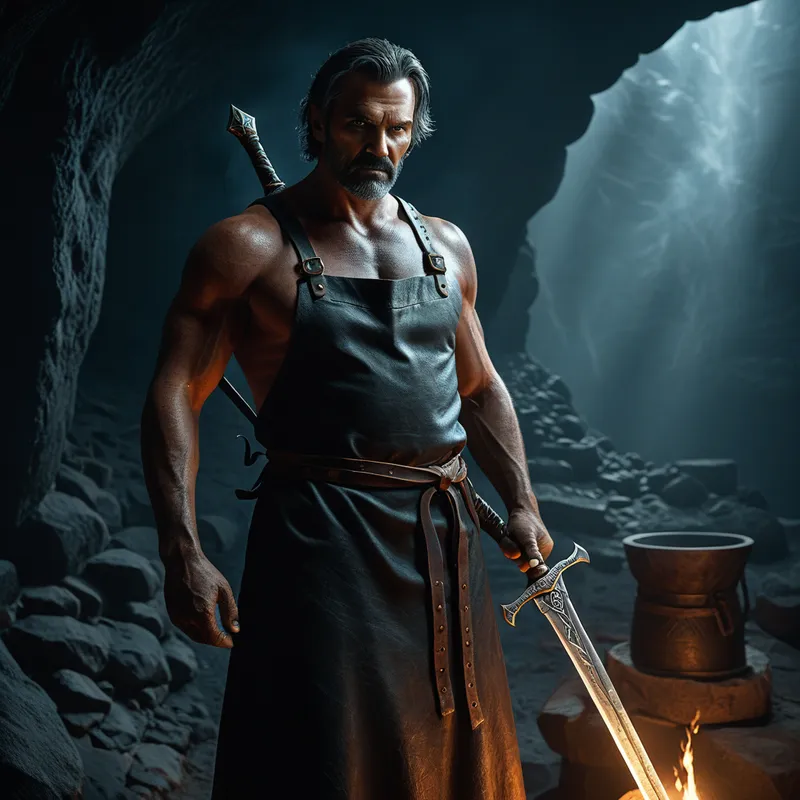
Listen. In the deep forests of the North, where the roots of the Yggdrasil drink from ancient wells, there lived a smith whose hands were kissed by the fire of the stars. His name was Wayland. He was no ordinary man, but one of the álfar, a being whose soul was wedded to metal and flame. In his hall by the lake, the anvil sang a song only he could understand, and from his forge came swords that could cleave fate itself and rings that held the light of the moon.
But kings covet such power. King Níðuðr of Sweden heard of this peerless craftsman and desired to own him, to make that celestial skill a slave to his throne. With treachery and armed men, the king descended upon Wayland’s solitary island. They took him sleeping, bound the hands that shaped wonders, and dragged him to a desolate, sea-washed place. To ensure the smith could never flee, Níðuðr did a terrible thing: he severed the sinews behind Wayland’s knees, crippling him, then set him to work in a sealed underground forge. The master of creation was made a thrall, his body broken, his world shrunk to stone walls and the mocking gleam of his own stolen treasures, which now adorned the king and his cruel sons.
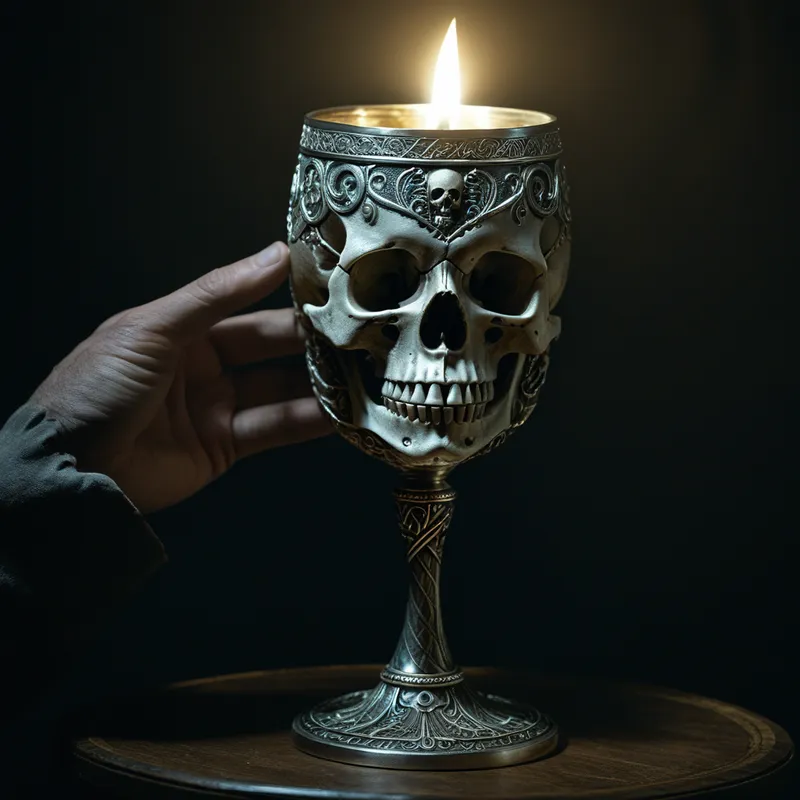
The fire in Wayland’s heart did not die; it turned inwards, burning cold and blue. In the suffocating dark, with pain as his only companion, he began to plot. He did not rage; he calculated. The king’s young sons, boastful and foolish, came to marvel at the captive wonder-worker. With a voice like grinding stone, Wayland whispered of hidden treasures within his island forge. Greed led them to his prison, one by one. And there, in the shadows, the smith’s strong hands, which once crafted beauty, performed a darker art. He slew them. From their skulls he fashioned drinking cups set with silver and gems, and from their teeth, a brooch of chilling splendor. He sent these gifts to their father.
The final visitor was the king’s daughter, Böðvildr. She came bearing a broken ring, seeking the smith’s magic to mend it. He promised to fix it, but first, he gave her drugged wine. In that grim cave, he took his vengeance upon the royal line. Yet from this violation, a seed was planted—a son who would one day wear the wings his father forged.
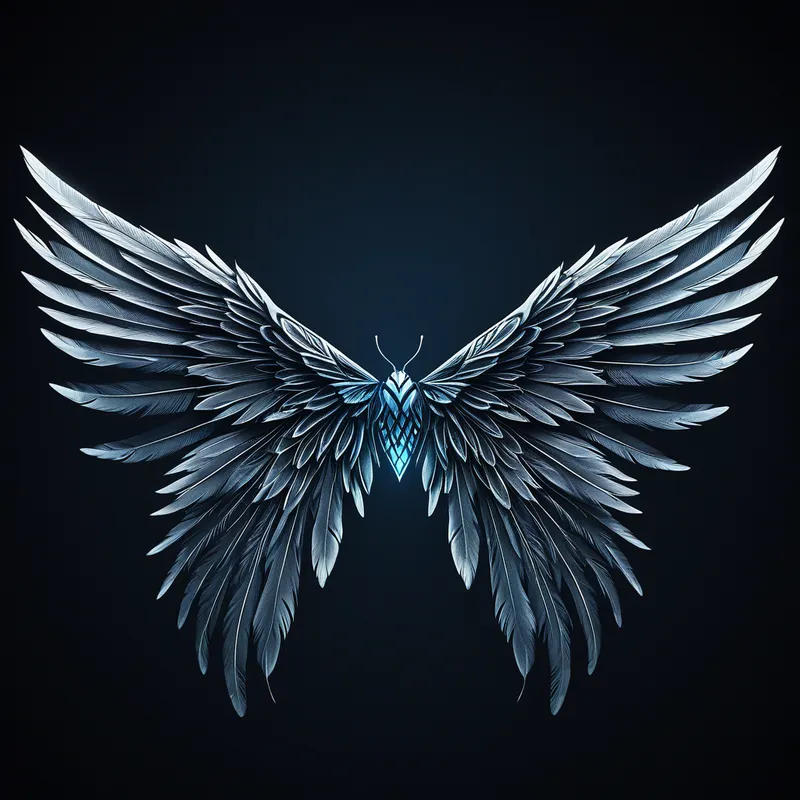
For Wayland had not been idle. From the feathers of birds and the strongest metals, he had built himself a pair of wings. With tools born of agony and a will tempered in betrayal, he completed his masterpiece. When King Níðuðr came again, drawn by a father’s dread, Wayland stood before him not as a cripple, but as a figure of terrifying power. He revealed the grim fate of the princes, taunted the broken king, and then, with a roar that shook the foundations of the earth, he leapt from the cliffside. The wings caught the wind. The crippled smith ascended, leaving behind a wailing king, a defiled hall, and the indelible lesson: you can chain the hands, but you cannot imprison the spirit that knows how to forge its own freedom.
Cultural Origins & Context
The legend of Wayland is a profound strand in the tapestry of Germanic and Norse mythology, with roots reaching back to the Migration Period. It is preserved most famously in the Old Norse Völundarkviða, but his story appears across Northern Europe, from the Anglo-Saxon epic Beowulf (where he is referenced as the maker of a hero’s mailcoat) to carvings on the 8th-century Franks Casket. This was not a tale confined to the courts of skalds alone; it was a story told in smoky longhouses and around communal fires, a narrative that spoke directly to the people of a harsh, unforgiving world.
The societal function of the myth was multifaceted. For the common person, it was a stark parable about the dangers of envy and the abuse of power, and a cathartic fantasy of the oppressed outwitting the oppressor through cunning (hugr). For the craftsman—the smith, the carpenter, the boat-builder—Wayland was a divine patron, a symbol of the sacred, almost magical power inherent in transformative skill. His story validated their art as a force that could alter destiny itself. Furthermore, the myth served as a cultural container for the deep-seated fear of mutilation and loss of autonomy, and the even deeper yearning to transcend physical and social limitations through sheer ingenuity and will.
Symbolic Architecture
At its core, the myth of Wayland is a masterclass in the psychology of the wounded creator. The smith’s forge is the crucible of the Self, where raw experience (ore) is subjected to the heat of suffering and the hammer-blows of fate to be shaped into identity. Wayland’s lameness is not merely a physical handicap; it is the symbolic wound that every individual carries—a trauma, a limitation, a betrayal that seems to permanently cripple one’s ability to move freely through the world.
The prison, once accepted as fate, becomes the workshop. The chains, once symbols of defeat, become the raw material for the keys.
His vengeance is not simple brutality; it is a horrifyingly literal re-creation. He takes the very substance of his oppressors (their bones) and transforms them into artifacts of both mockery and mastery. This represents the psychological process of digesting trauma—of taking the painful, indigestible memories and experiences inflicted upon us and, through the fierce heat of conscious engagement, transmuting them into something one can hold, understand, and ultimately use. The wings are the ultimate symbol of this alchemy. Forged in darkness, they represent the birth of a new faculty of being—a psychological or spiritual capacity born directly from the confrontation with, and mastery over, one’s deepest constraints.
The Dreamer’s Resonance
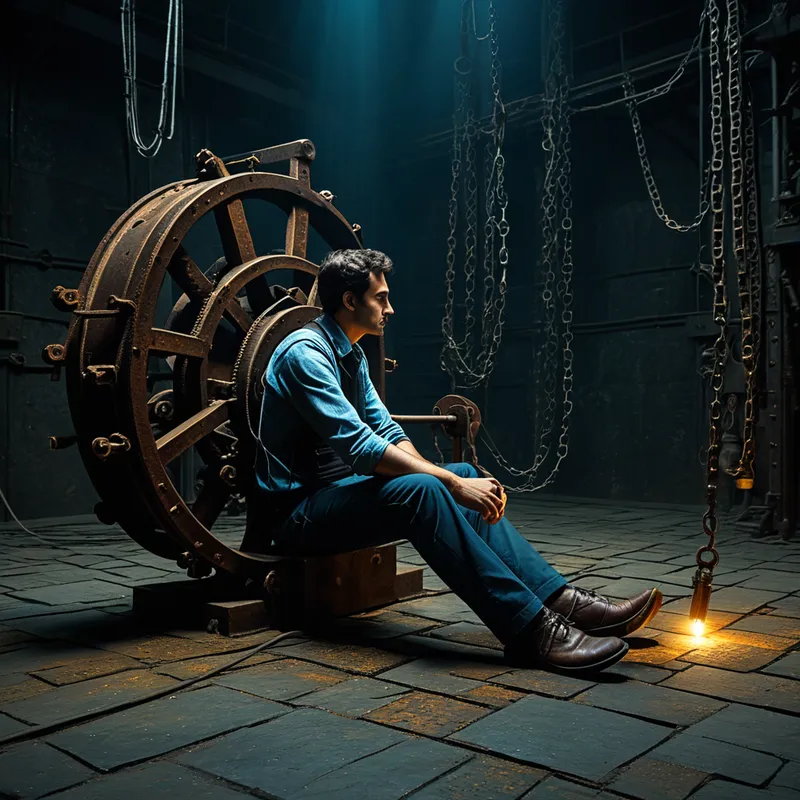
When the pattern of Wayland manifests in modern dreams, the dreamer is likely in a profound state of psychological imprisonment. They may dream of being trapped in a basement, a cage, or a room with no doors, often with a sense of being crippled or unable to run. The somatic feeling is one of crushing pressure, frozen rage, and impotence. This is the psyche signaling a confrontation with the Shadow and the complex of victimization.
The figure of the smith in such dreams—whether as the dreamer themselves at a workbench, or as a mysterious, silent presence—indicates that the transformative process has begun. The act of forging in the dream, even if the object is unclear, is a powerful sign of the ego beginning to collaborate with the unconscious to craft a solution from the very materials of the problem. A dream of finally seeing a completed tool, weapon, or especially wings, signals that the period of incubation is over, and a means of liberation—a new insight, a difficult decision, a reclaimed power—is now available to consciousness.
Alchemical Translation
The journey of Wayland is a precise map of the individuation process, the opus of turning leaden suffering into golden sovereignty. The initial state is one of naive, gifted wholeness (the master in his lake-side forge). The confrontation with the king—the oppressive outer world or the inner critic/tyrant—represents the necessary nigredo, the blackening, the descent into the darkness of betrayal, limitation, and despair.
The long captivity is the albedo, the whitening, not a passive waiting but an active, secretive purification. Here, in the solitude of the psyche’s forge, the individual must face the “sons” of the problem—the attendant fears, resentments, and weaknesses. These must be “slain” (consciously confronted and dis-identified from) and their essence repurposed. The crafting of the macabre gifts is the painful but necessary act of presenting the truth of one’s suffering to the ruling consciousness (the inner “king”).
Freedom is not the absence of chains, but the mastery of metallurgy. One becomes free not by breaking the locks, but by learning to forge the key from the lock’s own substance.
The final act, the forging of the wings and the flight, is the rubedo, the reddening, the culmination. It signifies the birth of a transcendent function—a new psychological attitude that can hold the tension of opposites (crippled/soaring, victim/avenger, captive/creator) and generate a third, liberating way. The individual does not simply escape their wound; they integrate it so completely that it becomes the source of their unique power and perspective, allowing them to ascend to a new level of consciousness and autonomy, forever changed, forever sovereign.
Associated Symbols
Explore related symbols from the CaleaDream lexicon: