Valhalla's Feasting Hall Myth Meaning & Symbolism
The slain are chosen by Odin to feast and fight in a golden hall, preparing for the final battle at the world's end.
The Tale of Valhalla’s Feasting Hall
Listen, and hear the echo of spears clashing in a hall that is not of this earth. It begins not with a beginning, but with an ending—the ragged, final breath of a warrior on a blood-soaked field. [The sky](/myths/the-sky “Myth from Persian culture.”/) is iron-grey, the ravens are calling, and the air is thick with the scent of iron and soil. This is the moment the Valkyries come.
They ride not on horses, but on the very winds of fate, their armor gleaming like winter ice, their faces both terrible and beautiful to behold. They descend to the field of the slain, and their eyes, which have seen the weaving of the [Norns](/myths/norns “Myth from Nordic culture.”/), seek out the bravest. Not the one who lived longest, but the one who fell best, with his face to the foe and his oath unbroken. With a touch that is colder than the grave and more gentle than a lover’s, a [Valkyrie](/myths/valkyrie “Myth from Norse culture.”/) lifts the warrior’s spirit from his broken body.
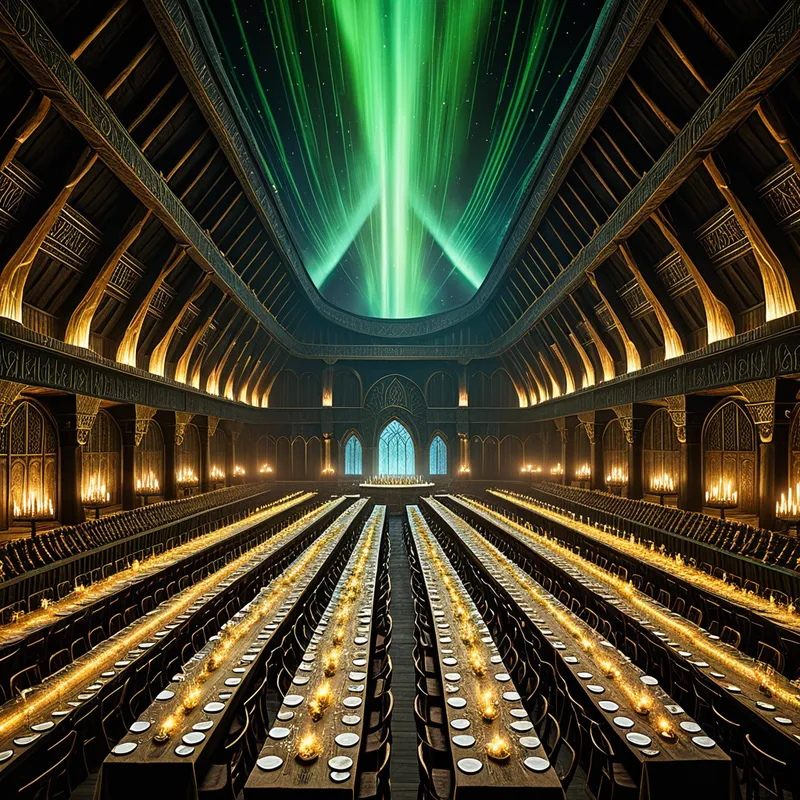
He awakens not to soft meadows, but to the sound of distant, glorious clamor. Before him rises a sight to still the heart of any mortal or god: [Valhalla](/myths/valhalla “Myth from Germanic culture.”/). Its walls are vast, built of the shafts of spears. Its roof is thatched with shining shields, and its rafters are the ribs of great beasts. The gates are wide enough for eight hundred warriors to march through abreast. This is Odin’s hall, and he waits within.
Inside, the air is warm with the heat of a thousand hearth-fires and alive with the roar of fellowship. Endless benches groan under the weight of roasted boar [Sæhrímnir](/myths/shrmnir “Myth from Norse culture.”/), whose flesh feeds all and is ever-renewed. Mead, sweeter and stronger than any brewed in [Midgard](/myths/midgard “Myth from Norse culture.”/), flows from the udders of the goat [Heiðrún](/myths/heirn “Myth from Norse culture.”/), who feeds on the leaves of the great [world tree](/myths/world-tree “Myth from Global culture.”/), [Yggdrasil](/myths/yggdrasil “Myth from Global/Universal culture.”/). Here sit the Einherjar, the chosen ones.
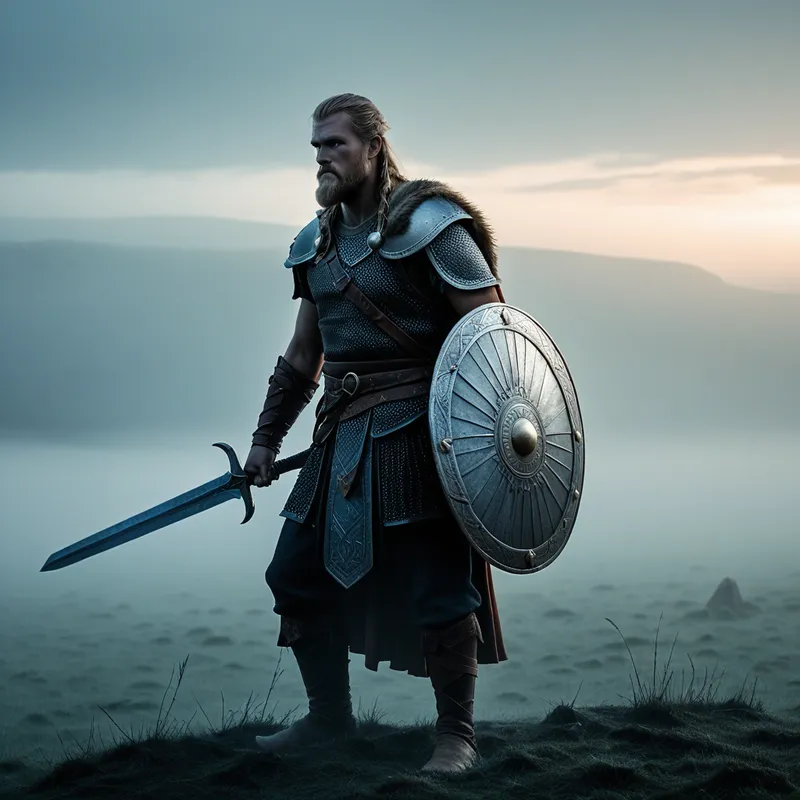
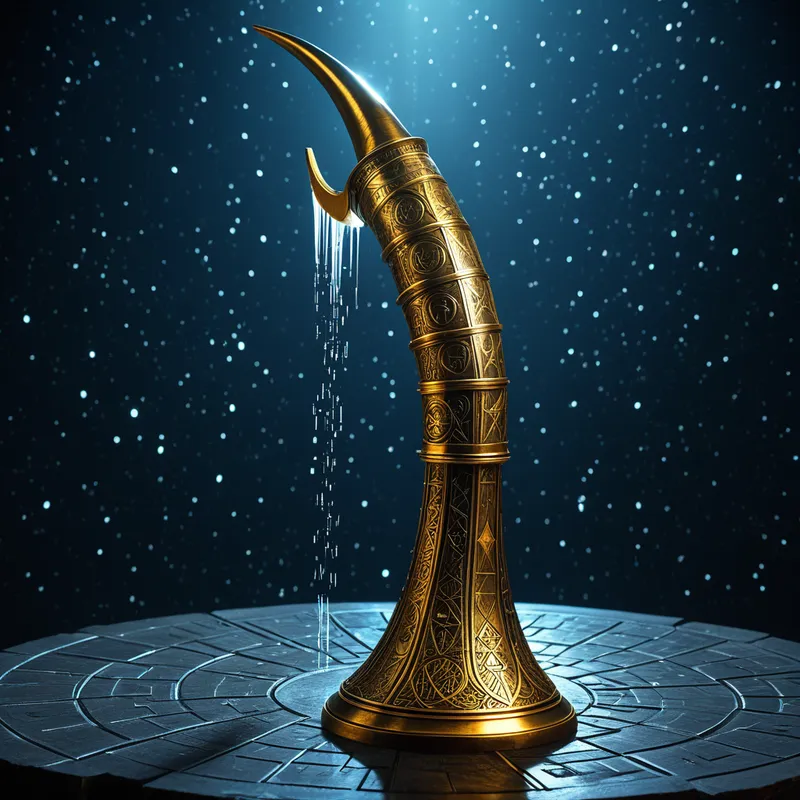
Their days are not spent in idle rest. With the dawn, they don their war-gear, which is always mended, and stride out onto the vast, green field before the hall. There, they fight. They clash with desperate, joyful fury, hewing at each other, falling, dying once more. But when the battle-horn sounds, all wounds are healed, all slain rise again, and the old enemies clasp arms as brothers. They return to the hall, whole and roaring with life, to feast through the eternal night.
And at the head of it all sits Odin, the All-Father. He drinks not from the common mead, but gives his portion to the great wolves [Geri and Freki](/myths/geri-and-freki “Myth from Norse culture.”/) at his feet. His own feast is different. He feeds on the sight of them—his army, his sons-by-choice, growing ever stronger, ever more skilled in the art of war. For he knows a secret that hangs over the revelry like a silent, sharpened blade. This glorious preparation, this endless cycle of battle and feast, has a single, final purpose: [Ragnarök](/myths/ragnark “Myth from Norse culture.”/). They are being forged, day by eternal day, into the weapon that will stand with the gods when the wolf [Fenrir](/myths/fenrir “Myth from Norse culture.”/) breaks free and the [world serpent](/myths/world-serpent “Myth from Global culture.”/) [Jörmungandr](/myths/jrmungandr “Myth from Norse culture.”/) rises from [the sea](/myths/the-sea “Myth from Greek culture.”/). The feast is both reward and recruitment; the hall is both heaven and barracks. They are the hope of a doomed order, feasting in the long twilight before the end.
Cultural Origins & Context
This myth was not scripture, but story—lived and breathed in the fire-lit halls of Scandinavia during the Viking Age (c. 793–1066 CE). It was preserved not in holy books, but primarily in two 13th-century Icelandic texts: the Poetic Edda, a collection of older verse, and the Prose Edda, compiled by Snorri Sturluson. Snorri’s work, while Christian-influenced, is our most detailed window into this pagan worldview.
The myth functioned as a powerful societal narrative. In a culture where honor, courage in battle, and loyalty to one’s lord were paramount virtues, Valhalla provided a potent eschatology. It offered a meaningful destiny for the warrior elite, framing a violent death not as a final terror, but as a potential doorway to eternal glory alongside the gods themselves. This belief was likely a key component of the famed Viking martial ethos, reinforcing the idea that the manner of one’s death defined one’s legacy. The myth was told by skalds (poets) and elders, weaving a cosmology where human action directly contributed to the cosmic order, preparing for the ultimate, fate-bound conflict.
Symbolic Architecture
At its core, [Valhalla](/symbols/valhalla “Symbol: In Norse mythology, Valhalla is the great hall where slain warriors chosen by Odin feast and prepare for Ragnarok.”/) is not merely a [paradise](/symbols/paradise “Symbol: A perfect, blissful place or state of being, often representing ultimate fulfillment, harmony, and transcendence beyond ordinary reality.”/); it is a [paradox](/symbols/paradox “Symbol: A contradictory yet true concept that challenges logic and perception, often representing unresolved tensions or profound truths.”/). It symbolizes the ultimate [integration](/symbols/integration “Symbol: The process of unifying disparate parts of the self or experience into a cohesive whole, often representing psychological wholeness or resolution of internal conflict.”/) of opposites essential to the Norse [psyche](/myths/psyche “Myth from Greek culture.”/): war and [peace](/symbols/peace “Symbol: Peace represents a state of tranquility and harmony, both internally and externally, often reflecting a desire for resolution and serenity in one’s life.”/), [death](/symbols/death “Symbol: Symbolizes transformation, endings, and new beginnings; often associated with fear of the unknown.”/) and resurrection, individual glory and collective [purpose](/symbols/purpose “Symbol: Purpose signifies direction, meaning, and intention in life, often reflecting personal ambitions and core values.”/).
The hall of the slain is not an end, but an intensive training ground for the soul. The feast is the reward for courage, but the daily battle is the crucible that transmutes that courage into something divine.
The Einherjar represent the part of the psyche that has faced the ultimate [shadow](/symbols/shadow “Symbol: The ‘shadow’ embodies the unconscious, repressed aspects of the self and often represents fears or hidden emotions.”/)—annihilation—and, by being chosen, has had its worth affirmed. Their daily cycle of battle and healing symbolizes the necessary, repetitive work of confronting one’s inner conflicts and traumas to achieve wholeness. Odin’s [role](/symbols/role “Symbol: The concept of ‘role’ in dreams often reflects one’s identity or how individuals perceive their place within various social structures.”/) is crucial; he is the archetypal ruler and strategist who sacrifices immediate comfort (giving his [food](/symbols/food “Symbol: Food in dreams often symbolizes nourishment, both physical and emotional, representing the fulfillment of basic needs as well as deeper desires for connection or growth.”/) to his wolves) for a long-[term](/symbols/term “Symbol: The term often represents boundaries, defined concepts, or experiences that have a specific meaning in a given context.”/), almost hopeless goal. Valhalla, therefore, is a [symbol](/symbols/symbol “Symbol: A symbol can represent an idea, concept, or belief, serving as a powerful tool for communication and understanding.”/) of purposeful preparation in the face of certain doom. It valorizes not just bravery, but [resilience](/symbols/resilience “Symbol: The capacity to recover quickly from difficulties, adapt to change, and maintain strength through adversity.”/), camaraderie forged in struggle, and the commitment to a cause greater than [the self](/myths/the-self “Myth from Jungian culture.”/), even when the final [outcome](/symbols/outcome “Symbol: Outcome symbolizes the results of actions or decisions, often reflecting hopes, fears, and the consequences of choices.”/) is destruction.
The Dreamer’s Resonance
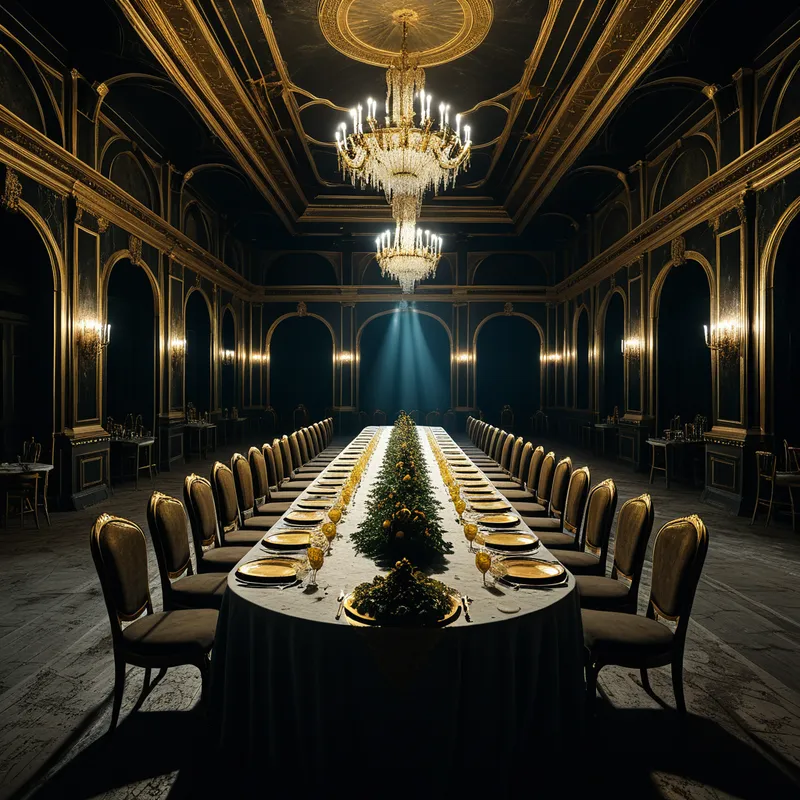
When this myth surfaces in modern dreams, it rarely appears as a literal Viking hall. Instead, one might dream of an endless, obligatory banquet; a recurring, ritualized competition with colleagues or old rivals where no one ever truly wins or loses; or a feeling of being selected for a great, looming task that one is perpetually training for but never quite begins.
Psychologically, this signals a process of psychic mobilization. The dreamer is likely in a phase where they are integrating past “battles”—overcome challenges, endured losses, faced personal failures. The somatic feeling can be one of restless readiness, a tension between exhaustion and a driven energy. The feast represents [the ego](/myths/the-ego “Myth from Jungian culture.”/)’s need for reward and replenishment, while the implied, endless training points to an unconscious awareness of a larger life challenge or transition ahead (Ragnarök as a personal “end of an era”). Dreaming of being an observer, not a participant, may indicate a feeling of being unprepared for life’s demands, while dreaming of actively feasting and fighting suggests engagement with one’s own process of strength-building and shadow-integration.
Alchemical Translation
The alchemical journey modeled by Valhalla is that of coagulatio—the forming of a solid, potent spirit from the raw material of experience. The initial mortificatio (death on the battlefield) is the dissolution of the old, mortal identity. The selection by the Valkyrie represents a moment of profound recognition by the Self (the deeper, total psyche, akin to Odin) of the ego’s courage.
The individual is not perfected in bliss, but is repeatedly broken and remade in the image of their own latent potential. The feast is the solutio that dissolves the day’s strife; the battle is the separatio that refines the spirit.
For the modern individual, this myth maps the path of individuation as a disciplined, cyclical practice. It is not about achieving a static state of enlightenment, but about committing to the daily “battle” of self-confrontation, honesty, and skill-building. The “feast” is the necessary self-care, joy, and community that makes the work sustainable. The ultimate purpose—facing one’s personal Ragnarök, whether it be a major crisis, the acceptance of mortality, or the culmination of one’s life work—looms in the future. Valhalla teaches that we prepare for these ultimate tests not in fear, but in a state of chosen, communal, and even joyful rigor. We are to become our own Einherjar, forging our character in the daily skirmishes of life, so that when the great wolf of our destiny breaks its chain, we are not merely ready to fight, but ready to meet our fate with the fullness of a spirit that has been feasted, tested, and utterly remade.
Associated Symbols
Explore related symbols from the CaleaDream lexicon: