Urd Myth Meaning & Symbolism
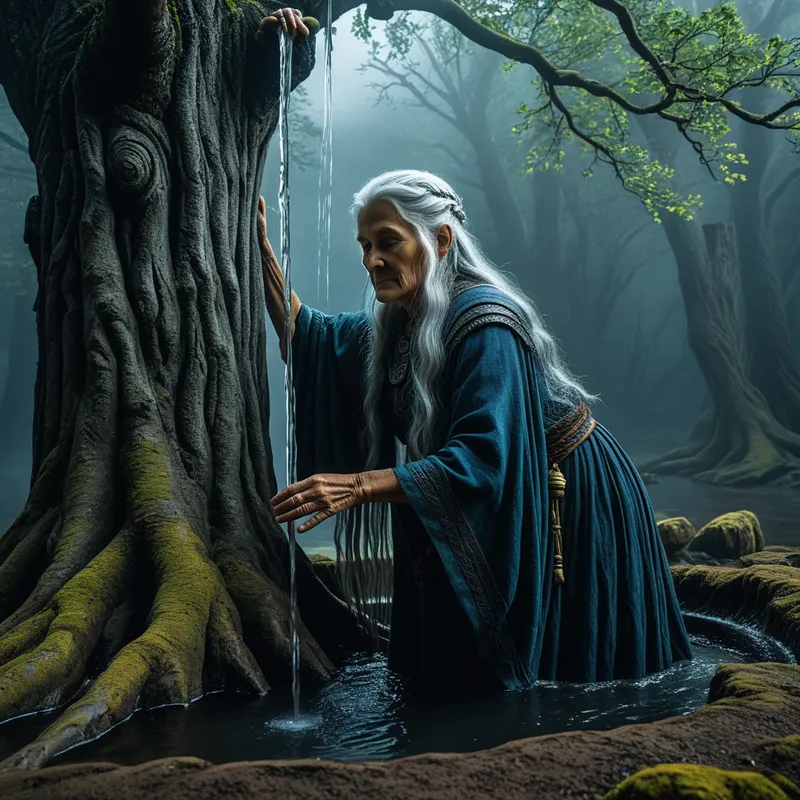
Urd is the Norn of Fate who draws water from the Well of Wyrd to nourish the World Tree, weaving the past into the tapestry of destiny.
The Tale of Urd
Listen, and hear the whisper from the roots of the world. Where the great ash, the Yggdrasil, grips the soil of being, there is a place of profound silence. It is a well, deep and dark, older than the sun. Its name is Urðarbrunnr, and its waters are not water as we know it. They are memory. They are consequence. They are the liquid substance of all that has ever been.
Here, in the perpetual twilight beneath the Tree, three figures are forever at work. They are the Norns. The first is young, with hair like spun gold and eyes full of what-might-be; she is Skuld. The second is strong, in the full flower of her power, her hands busy with the now; she is Verdandi. But the eldest, the one from whom the well takes its name, is Urd. Her face is a map of time itself, lined with the echoes of every choice, every deed, every whispered word that has ever fallen into the well of the past.
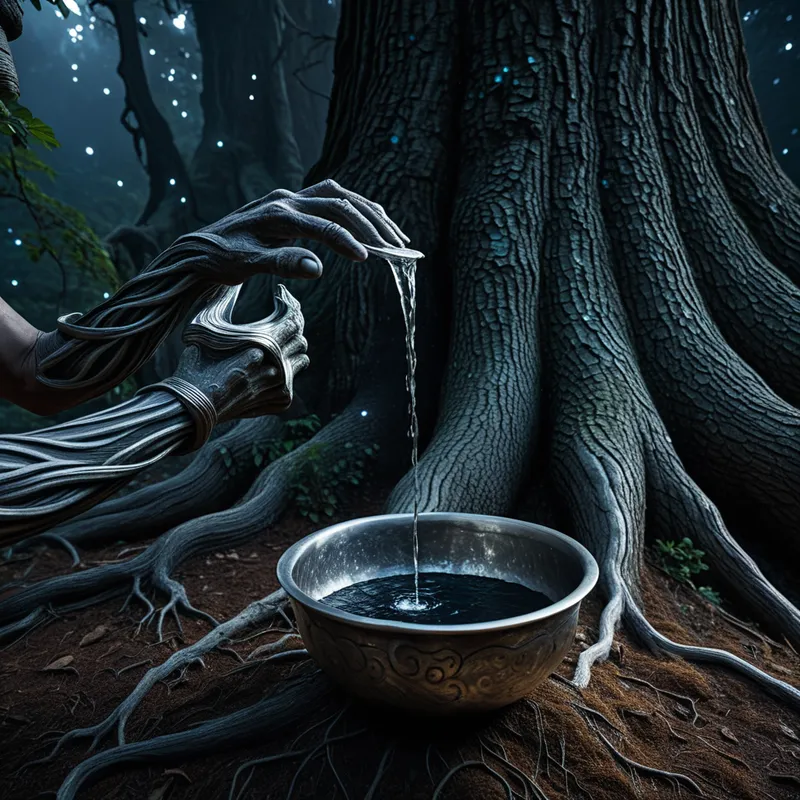
Her work is simple and eternal. With a bowl of gleaming silver, she dips into the black waters. She does not draw blindly; her gaze pierces the depths, seeing the intricate web of cause and effect, the tangled roots of every action. The water she lifts is heavy, not with weight, but with meaning. She carries this draught to the great root of Yggdrasil, where it meets the earth. There, she pours it out.
And as the dark water touches the root, a miracle occurs. The parched wood drinks it in, and the Tree—which holds all nine worlds in its branches—shudders with renewed life. The water from what was becomes the sap for what is. Without this libation, the Tree would sicken, its leaves would fall, and the worlds would wither into grey dust. Urd’s pouring is not an act of reminiscence, but of sustenance. The past is not dead; it is the only nutrient that feeds the present. Around the three sisters, the air hums with the sound of their work—the scrape of wood, the splash of water, and the softer, more terrifying sound of threads being measured and cut. For they also weave. From the substance drawn from the well, they spin the threads of ørlög, the unalterable law laid down. They do not smile. They do not weep. They simply are, the silent weavers at the loom of existence, with Urd’s hand guiding the first and foundational thread.
Cultural Origins & Context
The myth of Urd and the Urðarbrunnr is preserved primarily in the Poetic Edda, specifically in the Völuspá (The Prophecy of the Seeress) and Gylfaginning from the Prose Edda. These texts, written down in 13th-century Iceland, are our window into a much older, oral tradition. The myths were not mere stories for entertainment; they were the metaphysical framework of the Norse world-view, recited by skalds and seers.
The societal function was profound. In a culture that valued heroic action yet acknowledged a seemingly inexorable fate, the Norns provided a crucial psychological model. They personified the tension between free will and destiny. Urd, as the past, represented the fixed ground of one’s being—one’s lineage, one’s deeds, one’s unchangeable history. This was not seen as a prison, but as the source material of one’s identity. The myth taught that one’s past actions (ørlög) set the conditions for the present. To know oneself, one had to acknowledge one’s Urd. The well was also a place of sacred knowledge; it was here that Odin sacrificed his eye for a drink, seeking the wisdom of what is woven. Thus, the myth served as a cornerstone for concepts of honor, consequence, and the search for wisdom rooted in the acceptance of reality as it has been shaped.
Symbolic Architecture
Urd is the archetype of the Inexorable Past. She is not memory as nostalgic recollection, but memory as substance, as the foundational layer of the psyche. The Urðarbrunnr symbolizes the unconscious itself—a deep, dark reservoir where every experience, thought, and feeling is stored, not as a dead record, but as a living, shaping force.
The past is not a foreign country; it is the soil from which the present grows. To deny it is to starve the tree of the self.
The act of drawing water and pouring it on the roots of Yggdrasil is the central symbol. It represents the process by which the contents of the personal and collective unconscious (the well) are consciously integrated (brought to light and applied) to nourish the totality of the psyche (the World Tree). Urd’s work is the necessary, ongoing process of metabolizing experience. The silver bowl is the vessel of consciousness—the ego or the observing mind—that must be brave enough to dip into the dark waters and bear what it finds.
The three Norns together model the totality of time: Urd (What Was), Verdandi (What Is Becoming), and Skuld (What Shall Be). They are not separate but a continuum. Crucially, the future (Skuld) is often translated as “debt” or “guilt,” implying that what is to come is indebted to, and shaped by, the past. The psyche’s future possibilities are constrained and directed by the unintegrated material (the debts) of the past.
The Dreamer’s Resonance
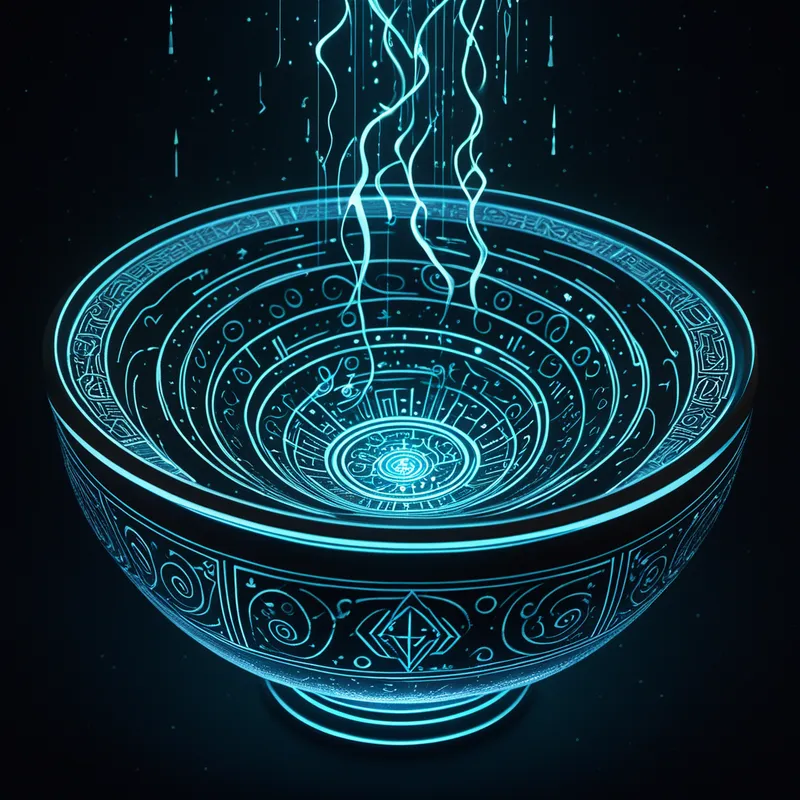
When the pattern of Urd arises in modern dreams, it often signals a profound encounter with the personal past. This is not a simple memory dream. The dreamer may find themselves at a deep, dark well, a forgotten basement, or an ancient library. There may be a task: to draw water, to read an old book, to clean a wound. There is a somatic weight to these dreams—a feeling of dredging, of lifting something heavy and essential.
Psychologically, this is the process of confronting what depth psychology calls the “personal shadow”—the repressed, forgotten, or shameful aspects of one’s history. The dream is the psyche’s insistence that this material must be “drawn up” and integrated. If the dreamer is afraid to look into the well or drops the vessel, it may reflect resistance to this necessary work, leading to a sense of stagnation or “drought” in waking life—depression, anxiety, or a feeling of being rootless. A successful dream, where water is drawn and carried, often accompanies a period of deep self-reflection, therapy, or a coming to terms with family or personal history, resulting in a renewed sense of vitality and purpose.
Alchemical Translation
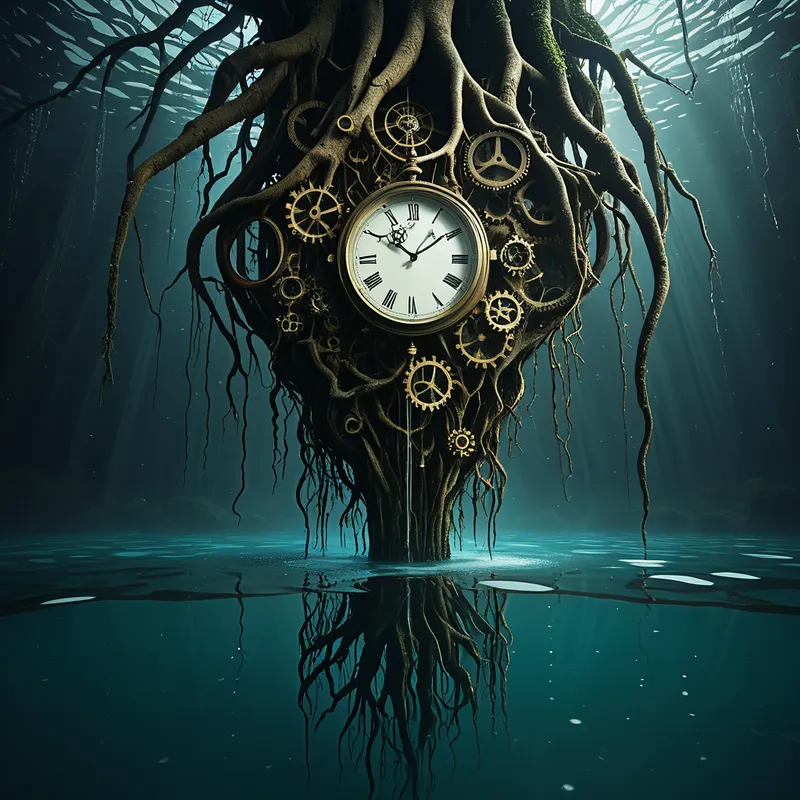
The alchemical process mirrored in Urd’s myth is solutio—dissolution into the primal waters—followed by coagulatio—the re-forming into a nourishing substance. The journey of individuation requires this descent into one’s own Urðarbrunnr. One must willingly lower the vessel of consciousness into the dark, murky waters of one’s origin story: childhood experiences, ancestral patterns, past traumas, and forgotten joys.
Individuation begins not with a vision of the future, but with a respectful bow to the past. The water of memory, when borne consciously, becomes the sap of transformation.
This is the “alchemical translation”: the transmutation of leaden, burdensome history into golden, life-giving wisdom. Urd’s impassive demeanor is key. She does not judge the water; she simply draws it and applies it. The modern individual must learn to do the same—to observe the past without being flooded by it, to acknowledge faults and wounds without being defined by them. By consciously “pouring” this understood past onto the roots of one’s being, one nourishes the entire psychic system. The fixed, fate-like quality of one’s ørlög softens; it becomes not a prison sentence, but the unique grain of the wood from which one is carved. The future (Skuld) then shifts from a debt-collector to a realm of genuine possibility, because the debt to the unexamined past is being paid. In this way, honoring Urd is the first and most critical step in weaving a destiny that is conscious, whole, and truly one’s own.
Associated Symbols
Explore related symbols from the CaleaDream lexicon: