Tsagaan Ovgon the White Old Man Myth Meaning & Symbolism
The ancient Mongolian deity of wisdom, longevity, and nature's balance, embodying the sacred contract between humanity and the living world.
The Tale of Tsagaan Ovgon the White Old Man
Listen, and let the wind carry you back to the time when the world was a single, breathing creature. The sky, Tengri, was a vast, watchful eye. The earth, Etügen, was a warm, sleeping body. And between them, on the endless, rolling sea of grass, walked the people—the herders, the hunters, the children of horse and horizon.
But the people grew forgetful. In their pursuit of flocks and fortune, they took from the earth without seeing. They hunted without asking. They drank from the springs without thanking. The land grew thin. The springs whispered less. A coldness, not of winter, but of neglect, began to seep into the world.
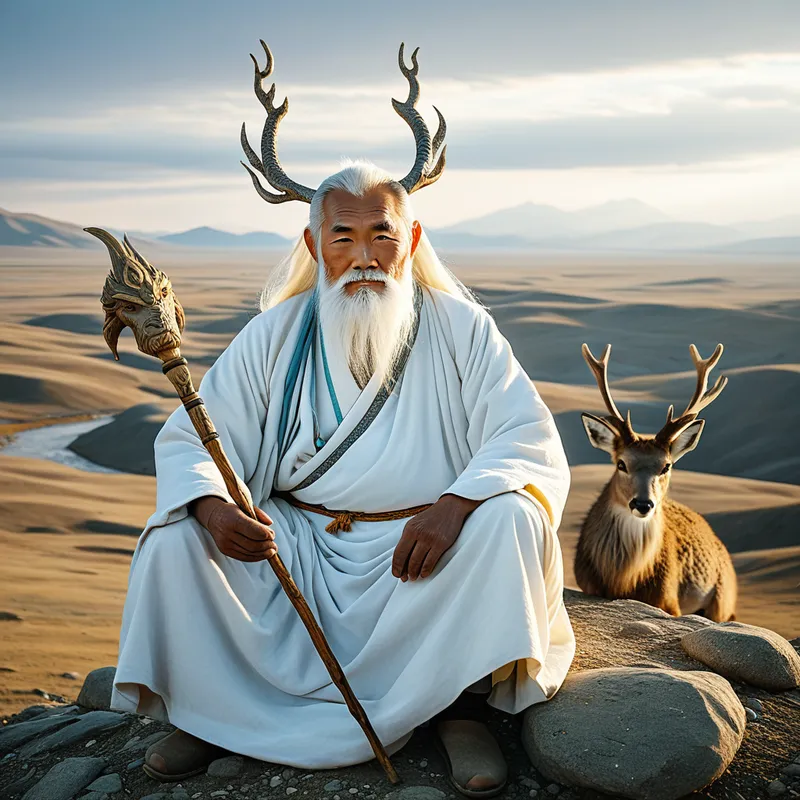
Then, from the northern mountains where the snow never melts, he came. He did not arrive with thunder, but with a profound, settling silence. He was an old man, so ancient his skin was like the parchment of the sky, his beard a waterfall of purest snow. His robes were the white of cloud and milk. In one hand, he held a staff, its head carved into the wise, coiled form of a Luu. In the other, he cradled a book of fate. His eyes held the patience of stone and the clarity of a mountain lake.
He walked the length and breadth of the land. Where he placed his staff, a spring would bubble forth. Where his shadow fell, grass grew lush. Deer and argali sheep would emerge from the rocks to walk beside him. He spoke not to kings, but to the herder in his lonely ger, to the child chasing a goat. His voice was the rustle of dry grass, the trickle of meltwater.
“Do you see?” he would ask. “The marmot gives you warning of the fox, and in turn, you leave a portion of the field untouched for its young. The river gives you drink, and you offer the first drops to the spirits of the stream. Your life is not a line from birth to death. It is a circle, woven into the life of the wolf, the grass, the rock, and the star. Break the circle, and you break your own fortune.”
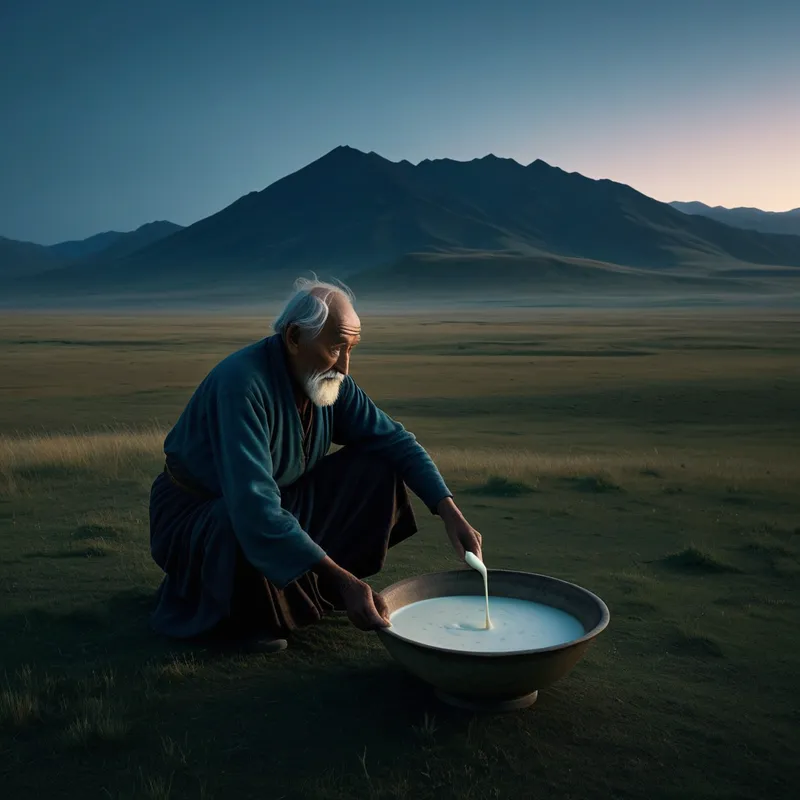
To those who listened, who left offerings of milk and the first fruits of the hunt, he bestowed blessings—long life, healthy children, and herds that multiplied like stars. To the arrogant, the greedy who took without thought, he turned a gaze that was neither angry nor cruel, but profoundly sorrowful. Their luck would sour. Their paths would grow hard. He did not punish; he merely showed them the natural consequence of a severed bond.
He became known as Tsagaan Ovgon, the White Old Man. He did not conquer or command. He remembered. He was the living memory of the pact between the human heart and the wild, whispering soul of the world. And in remembering, he made the circle whole again.
Cultural Origins & Context
Tsagaan Ovgon is a pre-Buddhist deity whose roots delve deep into the animistic and shamanic soil of Tengrism. He is not a god of a distant pantheon, but a genius loci of the Mongolian landscape itself—a personification of the sacred laws of nature, fertility, and cosmic balance. His veneration was woven into the fabric of daily nomadic life.
He was traditionally honored at ovoo, the stone cairns that mark high passes and sacred places. Travelers would add a stone, circle the ovoo three times, and leave offerings—a piece of candy, a strip of blue silk (the color of Tengri), or a splash of milk or vodka—to gain his favor for a safe journey and good fortune. His lore was kept alive not in formal temples, but around hearths and in the oral teachings passed from elder to child. He served as the moral and ecological compass for a culture whose survival depended on a respectful, reciprocal relationship with a powerful and often harsh environment. Later, with the arrival of Tibetan Buddhism, Tsagaan Ovgon was syncretized, often identified as a worldly protector or an emanation of a bodhisattva, but his core function as the guardian of natural order and bestower of longevity remained untouched.
Symbolic Architecture
Tsagaan Ovgon is the archetypal embodiment of the Rta or Dao as understood on the steppe—the inherent, balanced [pattern](/symbols/pattern “Symbol: A ‘Pattern’ in dreams often signifies the underlying structure of experiences and thoughts, representing both order and the repetitiveness of life’s situations.”/) of [life](/symbols/life “Symbol: The symbol of ‘Life’ represents a journey of growth, interconnectedness, and existential meaning, encompassing both the joys and challenges that define human experience.”/). He is not a [creator](/symbols/creator “Symbol: A figure representing ultimate origin, divine power, or profound authorship. Often embodies the source of existence, innovation, or personal destiny.”/), but a sustainer. His white color symbolizes not purity in a moral sense, but primordial essence, the unity of all things, and the wisdom that comes with great age—the hoarfrost of countless cycles.
The true master does not rule the mountain; he listens to it. The deepest wisdom is not knowing what to take, but remembering what to give back.
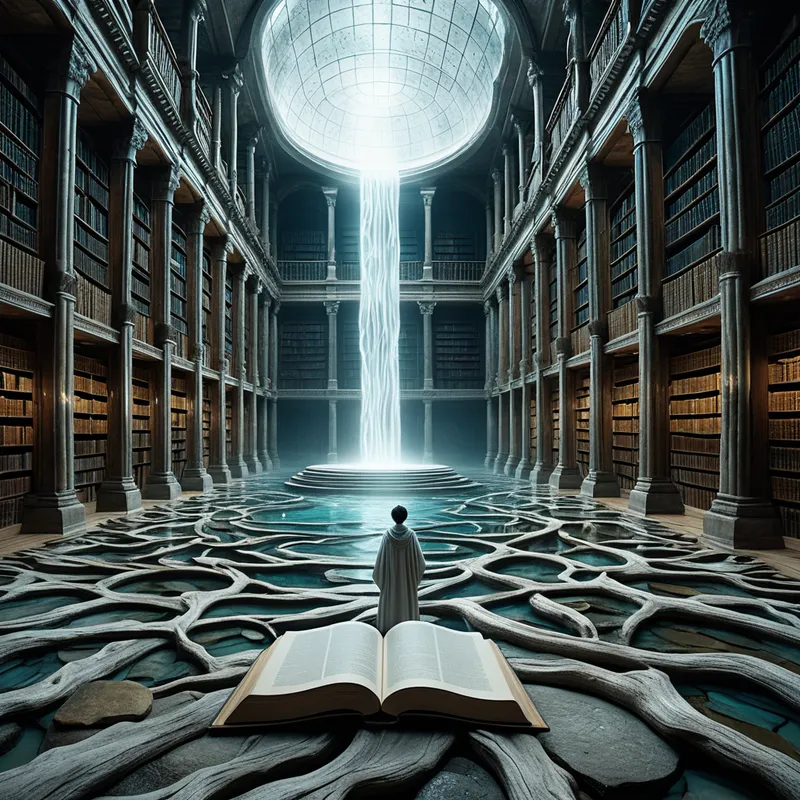
His staff, topped with the luu, connects the heavens (the staff) with the chthonic, watery wisdom of the [earth](/symbols/earth “Symbol: The symbol of Earth often represents grounding, stability, and the physical realm, embodying a connection to nature and the innate support it provides.”/) (the [dragon](/symbols/dragon “Symbol: Dragons are potent symbols of power, wisdom, and transformation, often embodying the duality of creation and destruction.”/)). It is an [axis](/symbols/axis “Symbol: A central line or principle around which things revolve, representing stability, orientation, and the fundamental structure of reality or consciousness.”/) mundi, a tool for tapping into and directing the vital energies of the world. The book he holds is the [ledger](/symbols/ledger “Symbol: A symbolic record of accounts, debts, and balances, representing life’s moral, emotional, and transactional reckonings.”/) of [fate](/symbols/fate “Symbol: Fate represents the belief in predetermined outcomes, suggesting that some aspects of life are beyond human control.”/), the Žayači, representing the inescapable consequences of our actions within the web of life. He is the psychological complex of the inner elder—the part of the psyche that values sustainability over conquest, [relationship](/symbols/relationship “Symbol: A representation of connections we have with others in our lives, often reflecting our emotional state.”/) over domination, and long-[term](/symbols/term “Symbol: The term often represents boundaries, defined concepts, or experiences that have a specific meaning in a given context.”/) [harmony](/symbols/harmony “Symbol: A state of balance, agreement, and pleasing combination of elements, often associated with musical consonance and visual or social unity.”/) over short-[term](/symbols/term “Symbol: The term often represents boundaries, defined concepts, or experiences that have a specific meaning in a given context.”/) gain.
The Dreamer’s Resonance
When the figure of the White Old Man appears in a modern dream, he often arrives during a period of psychic or life imbalance. The dreamer may be experiencing burnout from relentless “taking”—overwork, intellectual abstraction, or emotional consumption. The somatic feeling can be one of brittleness, dryness, or a cold emptiness at the core.
The dream Tsagaan Ovgon does not lecture. He may simply be present, sitting calmly in a barren landscape of the dreamer’s making, or gently pointing to a withered plant or a polluted stream within the dream scene. He represents the Self’s corrective function, calling the dreamer’s attention to what has been neglected: the body (the earth), instinct (the animals), or the soul’s need for ritual and reciprocity (the offering). To dream of him is to be confronted with the question: “What circle have you broken? What have you forgotten to honor in your relentless forward march?” The process initiated is one of re-membering—literally putting the dis-membered parts of one’s life and psyche back into a respectful, nourishing relationship.
Alchemical Translation
The individuation process modeled by Tsagaan Ovgon is not the heroic journey of slaying dragons, but the sage’s journey of communing with them. The modern ego, identified with progress and possession, is the “forgetful people” of the myth. The first stage of alchemy, the nigredo, is the felt experience of aridity, burnout, and existential coldness—the consequence of living out of balance.
Transmutation begins not with a grand quest, but with the first, humble offering. To pour out a libation to what you have neglected is to begin the sacred exchange anew.
Tsagaan Ovgon represents the guiding principle of the albedo, the whitening. This is not an escape into spiritual bypassing, but a conscious, patient return to basics: caring for the body (the land), honoring instincts and emotions (the animal spirits), and establishing small, daily rituals of gratitude and reciprocity. His staff is the focused intention that channels chaotic life force (the dragon) into sustainable structures. The “long life” he offers is not merely biological, but the quality of a life lived in authentic dialogue with the inner and outer wilderness. The ultimate gold, the rubedo, is the achieved state where one’s personal existence feels seamlessly woven into the larger tapestry of life, characterized by a profound, unshakeable sense of belonging, wisdom, and peaceful authority. One becomes, in a sense, a steward of one’s own inner landscape.
Associated Symbols
Explore related symbols from the CaleaDream lexicon:
- Mountain — The abode and embodiment of Tsagaan Ovgon, representing ancient, unchanging wisdom, perspective, and the meeting point of earth and sky.
- Staff — His dragon-headed staff, symbolizing authority derived from nature, the channeling of primal energy, and support on the long journey of life.
- River — The life-giving waters that flow from his presence, representing the sustenance, continuity, and flowing wisdom that comes from honoring natural law.
- Deer — The animals that accompany him, symbolizing gentleness, grace, longevity, and the harmonious coexistence between humanity and the wild.
- Milk — The traditional offering made to him, representing nourishment, purity, reciprocity, and the giving back of life’s first and most essential sustenance.
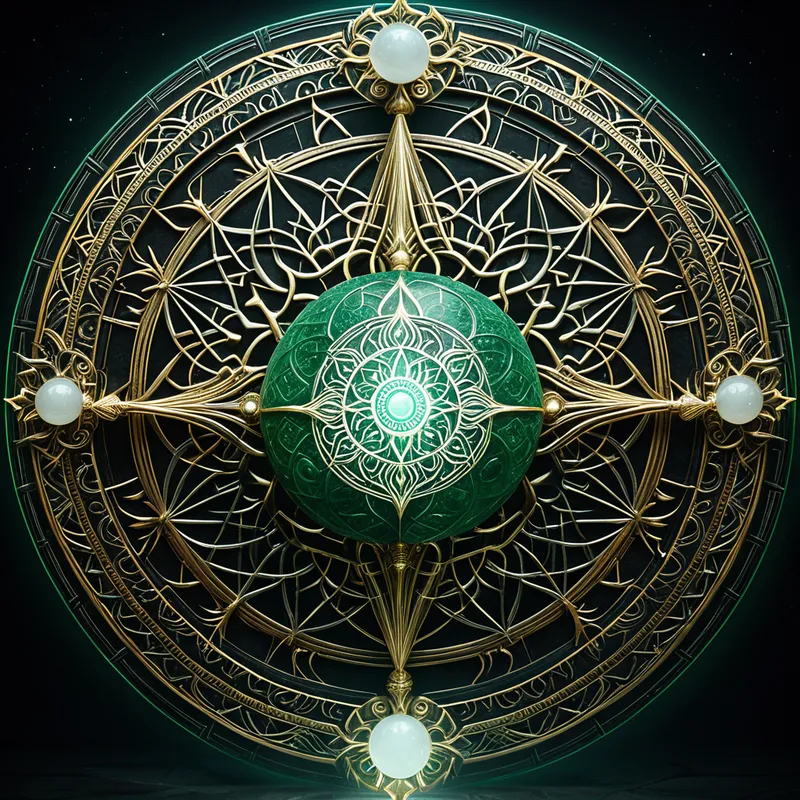
- Circle — The central teaching of Tsagaan Ovgon, representing the cyclical nature of life, karma, ecological balance, and the sacred reciprocity of all relationships.
- Stone — The material of the sacred ovoos where he is venerated, symbolizing permanence, memory, and the accumulation of small, faithful actions over time.
- Dragon — The luu on his staff, symbolizing the untamed, chthonic forces of the earth, hidden treasures, and the wisdom that lies beneath the surface.
- Book — The ledger of fate he holds, representing natural law, consequence, destiny, and the inescapable record of one’s actions within the web of life.
- White — His defining color, symbolizing primordial unity, hoary age, essential truth, snow, clouds, and the blank page upon which balanced life is written.
- Grief — The sorrow in his gaze for those who break the circle, representing the profound psychic pain that arises from alienation from nature and one’s own soul.
- Healing — The blessing he bestows, representing the restoration of balance, the mending of severed connections, and the longevity that comes from living in harmony.