
Tohunga Keeper of Sacred Knowledge Myth Meaning & Symbolism
A myth of sacred guardianship where profound knowledge is a living, dangerous force, demanding purity of heart and absolute responsibility from its chosen keeper.
The Tale of Tohunga Keeper of Sacred Knowledge
Listen. The wind does not just blow; it carries the breath of the ancestors. The forest is not silent; it thrums with the mauri of all things. And in the heart of this living world, there is a knowing so deep it can shape reality, a knowledge that is not read, but felt in the marrow, sung into the bones of the land. This is mātauranga, and it is not for the careless hand.
In the time when the world was closer to the [Ranginui](/myths/ranginui “Myth from Maori culture.”/) and Papatūānuku, a young one was chosen. Not the strongest warrior, nor the most cunning hunter, but the one whose spirit was still as a deep pool, whose heart beat in time with the tides. The elders saw it—a flicker of inner light, an attentiveness to the whisper of the wairua in the rustling leaves. They took him to a secluded place, a tapu grove where the ancient pōhutukawa roots gripped the cliff like stone fingers.
Here, the knowledge was not given, but awakened. Under the watch of the star Matariki, the elders began the ako. They taught the rhythms of the sea for navigation, the language of the birds for prophecy, the properties of plants for rongoā. They chanted the whakapapa, linking him back to the gods themselves. But this was only the surface. The true test came with the deeper lore: the karakia to bind and loose, the rituals to commune with the departed, the understanding of mana and the deadly weight of tapu.
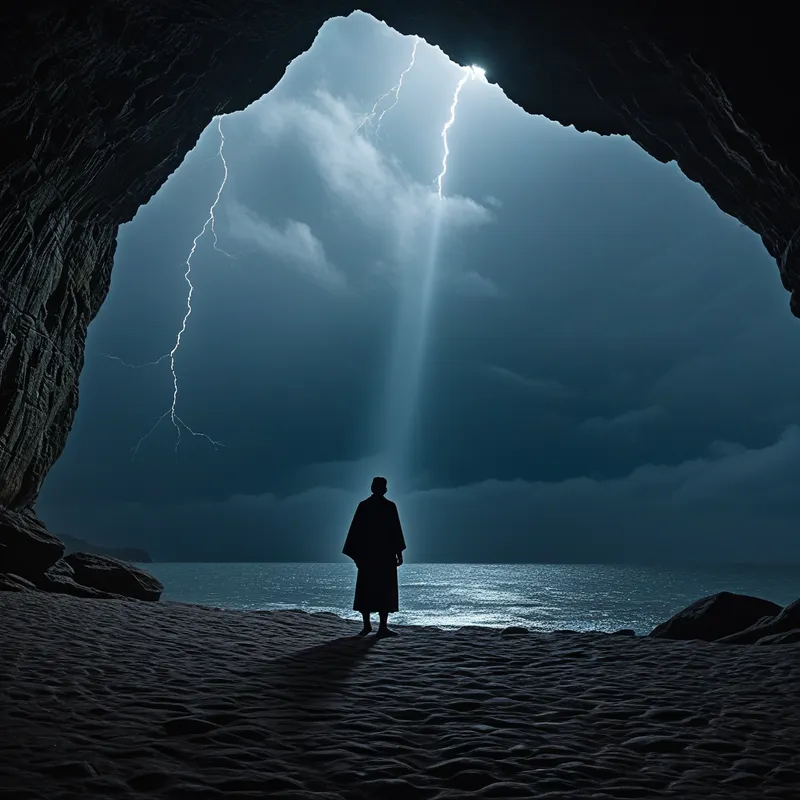
One night, in the deepest part of his initiation, he was led to a cave behind a waterfall. The roar of water was deafening, a veil of sound and mist. Inside, in a silence that was heavier than the rock, sat the last Keeper. An ancient tohunga, his eyes like dark pools reflecting unseen fires. No words were exchanged. The old one placed his hands on the young one’s head. It was not a transfer of facts, but an infusion—a torrent of visions, of histories written in pain and triumph, of chants that could heal a tribe or curse it to dust, of the precise, terrifying responsibility that now flowed into his veins like a second heartbeat.
The young one staggered out, forever changed. He was now the Tohunga, the Keeper. His life was no longer his own. He must maintain his purity, his tikanga, for a single misstep could turn the sacred knowledge to poison, harming his people instead of guiding them. He held the light, but now he knew the shape and depth of the shadow it cast.
Cultural Origins & Context
This narrative pattern is not a single, codified myth but the lived archetype embedded in the fabric of traditional Māori society. The tohunga was a pivotal figure—a priest, healer, navigator, astronomer, and historian. Their knowledge, mātauranga, was the tribe’s most vital asset, ensuring survival, identity, and connection to the cosmological order.
This knowledge was transmitted orally through rigorous, often secretive, initiation processes within specific schools (whare wānanga). It was not democratized; it was earned through demonstrated character, spiritual aptitude, and unwavering discipline. The societal function was profound: the tohunga was the bridge between the mundane world (Te Ao Mārama) and the spiritual realms. They interpreted the will of the gods, healed breaches of tapu, and guided the people according to ancestral precedent. The mythos of the Keeper underscores that true knowledge is inseparable from ethics, power from responsibility, and wisdom from sacrifice.
Symbolic Architecture
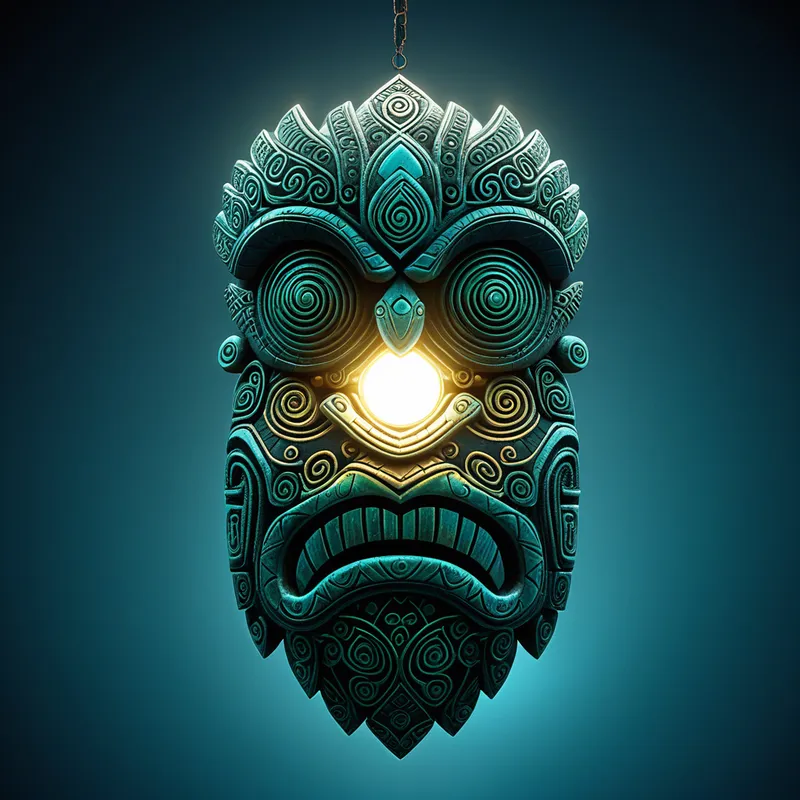
At its core, this is a myth of the [vessel](/symbols/vessel “Symbol: A container or structure that holds, transports, or protects something essential, representing the self, emotions, or life journey.”/). The Tohunga is not the [source](/symbols/source “Symbol: The origin point of something, often representing beginnings, nourishment, or the fundamental cause behind phenomena.”/) of [knowledge](/symbols/knowledge “Symbol: Knowledge symbolizes learning, understanding, and wisdom, embodying the acquisition of information and enlightenment.”/) but its chosen container. The sacred lore is a potent, animate force—like a [river](/symbols/river “Symbol: A river often symbolizes the flow of emotions, the passage of time, and life’s journey, reflecting transitions and movement in one’s life.”/) of mauri—that requires stable, respectful banks through which to flow without causing a flood.
To receive the light of the world, one must first become a crucible strong enough to hold its fire without being consumed.
The [initiation](/symbols/initiation “Symbol: A symbolic beginning or transition into a new phase, status, or awareness, often involving tests, rituals, or profound personal change.”/) cave symbolizes the [womb](/symbols/womb “Symbol: A symbol of origin, potential, and profound transformation, representing the beginning of life’s journey and the unconscious source of creation.”/) of the unconscious, the collective [memory](/symbols/memory “Symbol: Memory symbolizes the past, lessons learned, and the narratives we construct about our identities.”/) of the tribe and the species. The [waterfall](/symbols/waterfall “Symbol: Waterfalls in dreams often signify a release of emotions or a transformation, symbolizing the flow of life and the transition of feelings.”/) at its [entrance](/symbols/entrance “Symbol: An entrance symbolizes new beginnings, opportunities, or transitions, reflecting the dreamer’s readiness to face changes.”/) represents the threshold of [consciousness](/symbols/consciousness “Symbol: Consciousness represents the state of awareness and perception, encompassing thoughts, feelings, and experiences.”/)—one must pass through the roaring [chaos](/symbols/chaos “Symbol: In Arts & Music, chaos represents raw creative potential, uncontrolled expression, and the breakdown of order to forge new artistic forms.”/) of the senses to reach the silent core of knowing. The knowledge itself is the ultimate taonga, but it carries the [weight](/symbols/weight “Symbol: Weight symbolizes burdens, responsibilities, and emotional loads one carries in life.”/) of tapu, which here symbolizes the inherent [danger](/symbols/danger “Symbol: The symbol of ‘Danger’ often indicates a sense of threat or instability, calling for caution and awareness.”/) and isolating burden of profound understanding. The Keeper’s required purity is not moralistic, but akin to the [clarity](/symbols/clarity “Symbol: A state of mental transparency and sharp focus, often representing resolution of confusion or attainment of insight.”/) of a [lens](/symbols/lens “Symbol: A lens in dreams represents focus, perspective, clarity, or distortion in how one perceives reality, art, or self.”/)—any [distortion](/symbols/distortion “Symbol: The alteration of form, sound, or perception from its original state, often creating unsettling or creative effects.”/) (ego, greed, fear) will distort the knowledge that passes through them, with potentially catastrophic results.
The Dreamer’s Resonance
When this myth stirs in the modern dreamer, it often manifests as dreams of being entrusted with a fragile, powerful, or forbidden object—a glowing stone, a volatile liquid, a sacred text that must be hidden. There may be a solemn council of shadowy figures (the elders, the unconscious itself) bestowing this charge. Alternatively, one might dream of a neglected library, a dying plant they are tasked to revive, or a secret they must guard at great personal cost.
Somatically, this can feel like a pressure in the chest or a buzzing in the crown of the head—the body sensing an influx of energy or responsibility it does not yet know how to metabolize. Psychologically, this dream pattern signals a critical juncture in the individuation process: the ego is being asked to become a steward for a content of the Self that is larger than itself. The conflict is between the desire for this empowering knowledge and the terror of its accompanying isolation and duty. It is the soul’s call to move from being a consumer of information to a guardian of wisdom.

Alchemical Translation
The alchemical journey modeled here is the transmutation of information into wisdom, and of the ego into a vessel for the Self. The initial “choosing” represents the moment one becomes conscious of a calling or a depth of potential that feels destined, not chosen. The rigorous training is the disciplina—the often painful process of shedding immature habits, biases, and distractions to create inner order (tikanga).
The ultimate sacrifice demanded by the Keeper is not of life, but of a certain kind of freedom—the freedom to be ignorant, irresponsible, or separate.
Receiving the knowledge in the cave is the coniunctio, the sacred marriage between conscious understanding and the numinous contents of the unconscious. The Keeper’s lifelong vigil of purity is the rubedo, the red stage of alchemy—the continual, conscious application of this integrated knowledge in the world, which requires constant vigilance against inflation (misusing power) or neglect (betraying the trust). The modern individual undergoes this when they commit to a path of deep integrity—whether in art, healing, leadership, or spiritual practice—where their personal identity becomes secondary to the truth or service they are bound to uphold. The myth teaches that true empowerment lies not in possessing knowledge, but in being faithfully possessed by it.
Associated Symbols
Explore related symbols from the CaleaDream lexicon:
- Cave — The womb of the unconscious and the sacred repository where undiluted knowledge is stored, requiring a perilous journey inward to access.
- Key — The initiation rites and personal aptitudes that unlock the vault of sacred knowledge, which cannot be forced open but must be respectfully turned.
- Mountain — The arduous path of learning and the elevated, often isolated, position of the keeper, who must dwell at the summit of understanding.
- River — The flowing, living nature of true knowledge, which must be channeled with care, as its pure waters can become a destructive flood if mismanaged.
- Stone — The enduring, unchanging core of ancestral wisdom and the weight of responsibility that settles permanently upon the keeper’s spirit.
- Fire — The illuminating but dangerous power of sacred knowledge, which provides light and warmth but can also scorch and consume the unprepared.
- Mirror — The required purity and clarity of the keeper’s soul, which must reflect knowledge without distortion from ego, fear, or desire.
- Shadow — The inevitable dark counterpart to luminous knowledge, encompassing the burden, isolation, and potential for corruption that accompanies great understanding.
- Ritual — The precise protocols and disciplines that maintain the vessel’s integrity, turning raw power into structured, safe, and effective application.
- Roots of a Sacred Tree — The deep, hidden connection to ancestral lineage and the living earth from which all true knowledge ultimately draws its sustenance.