Thor's Gauntlets Myth Meaning & Symbolism
The myth of the iron gloves Thor needs to wield his world-shaking hammer, Mjölnir, a story of channeling immense force with sacred discipline.
The Tale of Thor’s Gauntlets
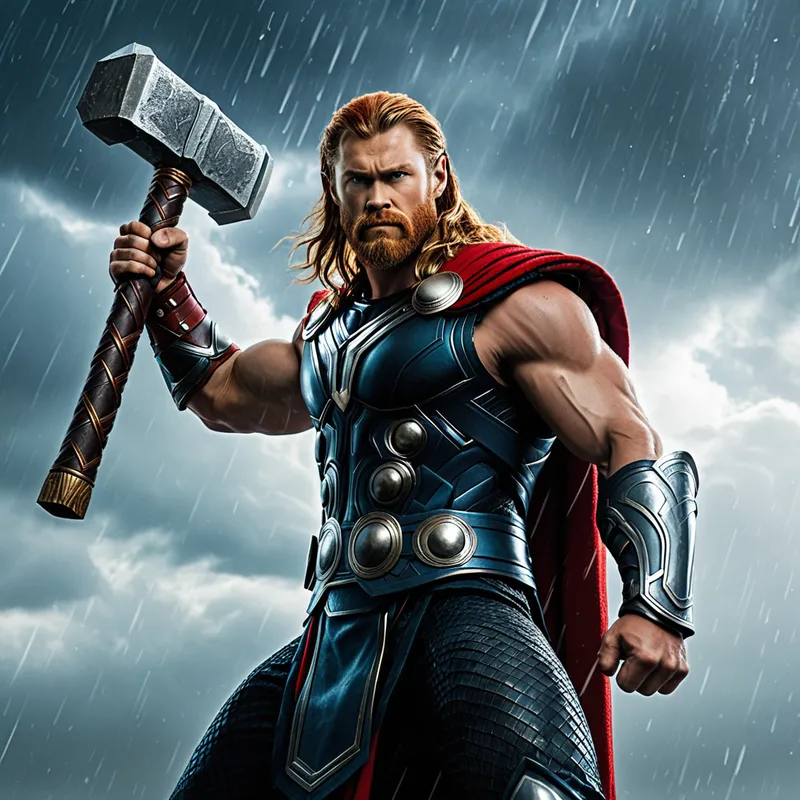
Hear now, a tale not of the hammer’s fall, but of the hands that hold it. In the high halls of Ásgarðr, where the roots of the [Yggdrasil](/myths/yggdrasil “Myth from Global/Universal culture.”/) drink from deep wells, there lived the Thunderer, Þórr. His voice was the crash that splits [the sky](/myths/the-sky “Myth from Persian culture.”/), his rage the gale that scours [the earth](/myths/the-earth “Myth from Hindu culture.”/). And he had a weapon, forged in the heart of a dying star by cunning dvergr hands: [Mjölnir](/myths/mjlnir “Myth from Norse culture.”/).
But Mjölnir was no simple tool. It was a concentration of [the world](/myths/the-world “Myth from Tarot culture.”/)’s fury, a focus for the storm that lived in Þórr’s breast. To lift it was to invite cataclysm; to swing it, to channel chaos. Its handle was short, made so by a flaw in its making, a trick of the Loki. This was no accident of the smiths, but a necessity of fate. For a weapon that could level mountains and slay giants could not be wielded by mortal grip or untempered divinity alone.
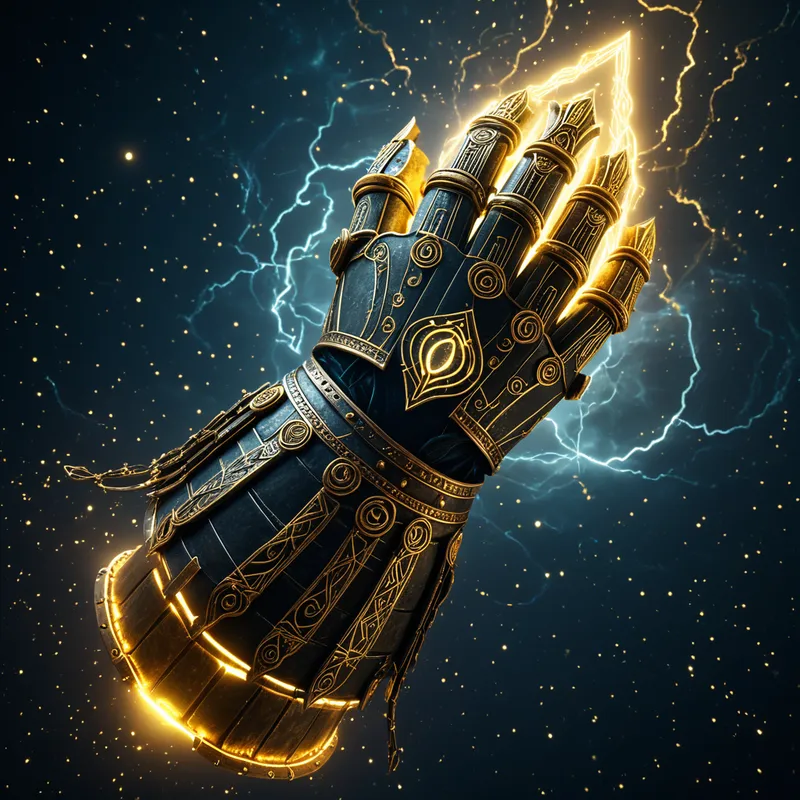
So the dvergr, Ívaldi’s Sons, who had poured the core of a thunderbolt into the hammer’s head, also forged a pair of gauntlets. Not of gold or silver, but of grey, unadorned iron. They were named Járngreipr. They were not beautiful. They were functional, profound, and heavy. They were the boundary between the god and his power, [the crucible](/myths/the-crucible “Myth from Alchemical culture.”/) that contained the forge-fire.
Picture him, in the moments before battle. The skies over Jötunheimr darken. The giant’s shadow falls across the land. Þórr does not snatch up his hammer. He begins with a ritual. First, he fastens the belt, Megingjörð, around his waist, the well of his might deepening. Then, with deliberate, solemn care, he pulls on the iron gauntlets. The metal is cold at first, then warms to the heat of his living hands. He feels their weight, their constraint. They are a reminder, a covenant.
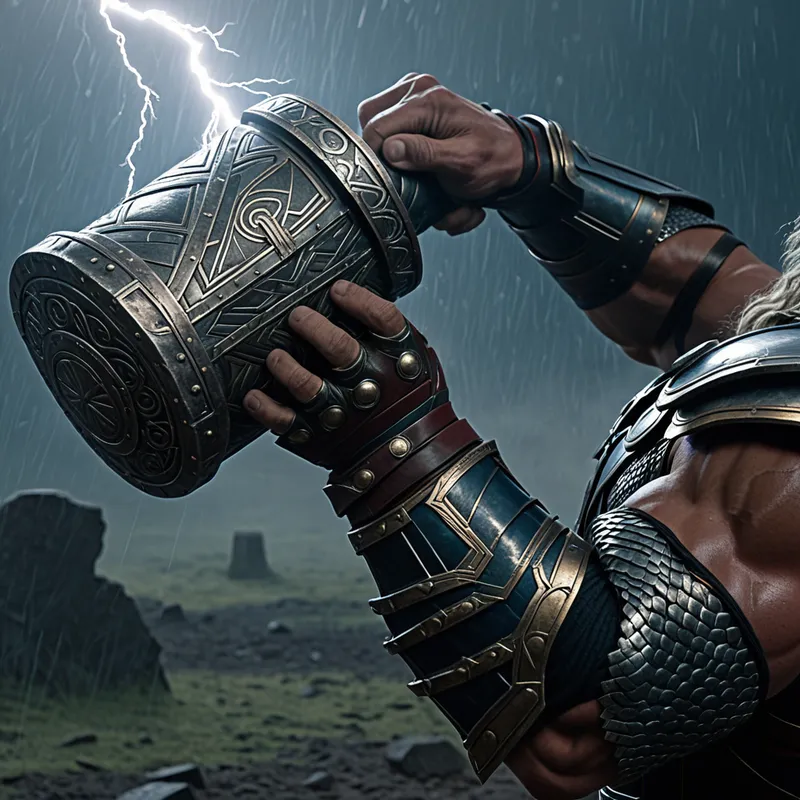
Only then does he reach for Mjölnir. His gauntleted fingers close around the short haft. The hammer, which rests with the weight of fallen worlds, yields. It becomes an extension of his arm, not a separate force. The lightning that dances across its head does not leap back to scar his flesh; it is grounded through the iron, focused by his will. When he swings, it is not an uncontrolled eruption. It is a directed strike, a sentence delivered by a god who has, through those tools, mastered the very chaos he embodies. The giant falls, the storm is spent, and Þórr stands, the gauntlets steaming in the sudden quiet.
Cultural Origins & Context
This myth reaches us primarily through the Poetic Edda, specifically in the poems Þrymskviða (The Lay of Thrym) and Skáldskaparmál (The Language of Poetry) within the Prose Edda. It was not a standalone epic, but a vital piece of cosmological equipment, mentioned with the same matter-of-fact necessity as the sun rising. For the Norse, a people intimately acquainted with the brutal, immediate forces of nature and conflict, the idea of raw power was not abstract. It was the wave that swamps the longship, the axe that cleaves the shield.
The myth was preserved by skalds and storytellers for a society that valued both immense personal force (megin) and the strict, often grim, codes of law and ritual that kept that force from tearing the community apart. The gauntlets, along with the belt, were part of Thor’s canonical iconography. They were not optional accessories but fundamental attributes. This tells us that in the Norse mind, even for a god, strength was not enough. Power required its proper harness. The myth functioned as a divine model for a human truth: true potency lies not in having force, but in the sacred technology—the discipline, the tool, the ritual—that allows one to direct it without self-destruction.
Symbolic Architecture
The gauntlets, Járngreipr, are a master [symbol](/symbols/symbol “Symbol: A symbol can represent an idea, concept, or belief, serving as a powerful tool for communication and understanding.”/) of mediated power. They represent the essential interface between raw, unconscious potential and conscious, deliberate [action](/symbols/action “Symbol: Action in dreams represents the drive for agency, motivation, and the ability to take control of situations in waking life.”/). Thor’s hammer is the archetypal force of creation and destruction, the unbridled libido or [life](/symbols/life “Symbol: The symbol of ‘Life’ represents a journey of growth, interconnectedness, and existential meaning, encompassing both the joys and challenges that define human experience.”/)-[energy](/symbols/energy “Symbol: Energy symbolizes vitality, motivation, and the drive that fuels actions and ambitions.”/) of the [psyche](/myths/psyche “Myth from Greek culture.”/). But without the gauntlets, it is unusable, even to its [owner](/symbols/owner “Symbol: The symbol of an ‘Owner’ in dreams often signifies control, responsibility, and the relationship to one’s possessions or roles in life.”/). The short handle signifies the inherent difficulty, the “flaw” or challenge in wielding our own deepest powers.
The gauntlet is the symbol of the ego’s necessary service to the Self. It is the conscious vessel that makes the numinous actionable.
Iron, in Norse [symbolism](/symbols/symbolism “Symbol: The use of symbols to represent ideas or qualities, often conveying deeper meanings beyond literal interpretation. In dreams, it’s the language of the unconscious.”/), is the [metal](/symbols/metal “Symbol: Metal in dreams often signifies strength, transformation, and the qualities of resilience or coldness.”/) of [Midgard](/myths/midgard “Myth from Norse culture.”/), the [human](/symbols/human “Symbol: The symbol of a human represents individuality, complexity of emotions, and social relationships.”/) [realm](/symbols/realm “Symbol: The symbol of ‘Realm’ often signifies the boundaries of one’s consciousness, experiences, or emotional states, suggesting aspects of reality that are either explored or ignored.”/). It is durable, functional, and connected to the earthly. By having the god of the heavens don iron, the myth marries the celestial power of the storm to the terrestrial [reality](/symbols/reality “Symbol: Reality signifies the state of existence and perception, often reflecting one’s understanding of truth and life experiences.”/) of form and limit. The gauntlets are a grounding wire. They symbolize the [body](/symbols/body “Symbol: The body in dreams often symbolizes the dreamer’s self-identity, personal health, and the relationship they have with their physical existence.”/) itself—the physical [vessel](/symbols/vessel “Symbol: A container or structure that holds, transports, or protects something essential, representing the self, emotions, or life journey.”/) that contains and channels the immense energy of the [spirit](/symbols/spirit “Symbol: Spirit symbolizes the essence of life, vitality, and the spiritual journey of the individual.”/). They are the [ritual](/symbols/ritual “Symbol: Rituals signify structured, meaningful actions carried out regularly, reflecting cultural beliefs and emotional needs.”/), the technique, the practiced skill, the moral [framework](/symbols/framework “Symbol: Represents the underlying structure of one’s identity, emotions, or life. It signifies the mental or emotional scaffolding that supports or confines the self.”/) that transforms blind [impulse](/symbols/impulse “Symbol: A sudden, powerful urge or drive that arises without conscious deliberation, often linked to primal instincts or emotional surges.”/) into meaningful deed. They answer the perennial question: How do we touch the [lightning](/symbols/lightning “Symbol: Lightning symbolizes sudden insights or revelations, often accompanied by powerful emotions or disruptive change.”/) without being burned by it?
The Dreamer’s Resonance
When this myth stirs in the modern unconscious, it often manifests in dreams of potent but unwieldy force. One may dream of possessing a great talent or a surge of emotional energy—a creative vision, a righteous anger, a passionate love—that feels too powerful to handle. The dream imagery might involve electrical devices that shock the user, vehicles too fast to control, or weapons that buck in the hand.
The somatic experience is key: a feeling of tremendous potential energy in the arms and hands, coupled with a sense of frustration or fear of release. This is the psyche presenting its own “Mjölnir”—a core power or drive that has become activated. The absence of the “gauntlet” in the dream points to a lack of the necessary psychological structure: perhaps insufficient discipline, a missing boundary, or an underdeveloped skill set needed to express this power constructively. The dream is a call to forge the inner Járngreipr. It is an invitation to ask: What ritual, what practice, what form of conscious containment do I need to develop to wield what is awakening within me?
Alchemical Translation
The process modeled here is the alchemy of [temperance](/myths/temperance “Myth from Tarot culture.”/), a core stage in the journey of individuation. It is the move from identification with one’s power (being the storm) to having a relationship to it (wielding the storm). The raw material is the [prima materia](/myths/prima-materia “Myth from Alchemical culture.”/) of the individual’s innate, often chaotic, vitality—their anger, creativity, ambition, or desire.
First, one must recognize and “lift” this power, acknowledging its presence and weight. This is confronting [the shadow](/myths/the-shadow “Myth from Jungian culture.”/), the giant within. The subsequent challenge is the “short handle”—the immediate difficulty and danger in trying to use it. The alchemical fire is applied through the forging of the gauntlets: the conscious, patient work of building structure. This is the discipline of the artist who practices daily, the mediator who learns to process rage into assertive communication, the leader who cultivates empathy to direct their will.
Individuation is not the elimination of one’s giants, but the development of sacred tools to meet them in battle.
The gauntlets are fashioned in the heat of this conscious effort. When the process is complete, the power is not diminished; it is focused. The individual no longer erupts; they act. The lightning of insight strikes where they aim it. The hammer of their will builds and protects, rather than smashes indiscriminately. They become, like Thor, not a force of nature, but a sovereign who commands the forces of their own nature. The myth concludes not with the possession of power, but with the sacred, solemn ritual of donning the means to use it wisely—the true mark of the integrated hero.
Associated Symbols
Explore related symbols from the CaleaDream lexicon: