Theseus and the Minotaur Myth Meaning & Symbolism
A hero enters a labyrinth to slay a monstrous half-man, half-bull, confronting the dark legacy of a king's hubris and his own hidden lineage.
The Tale of Theseus and the Minotaur
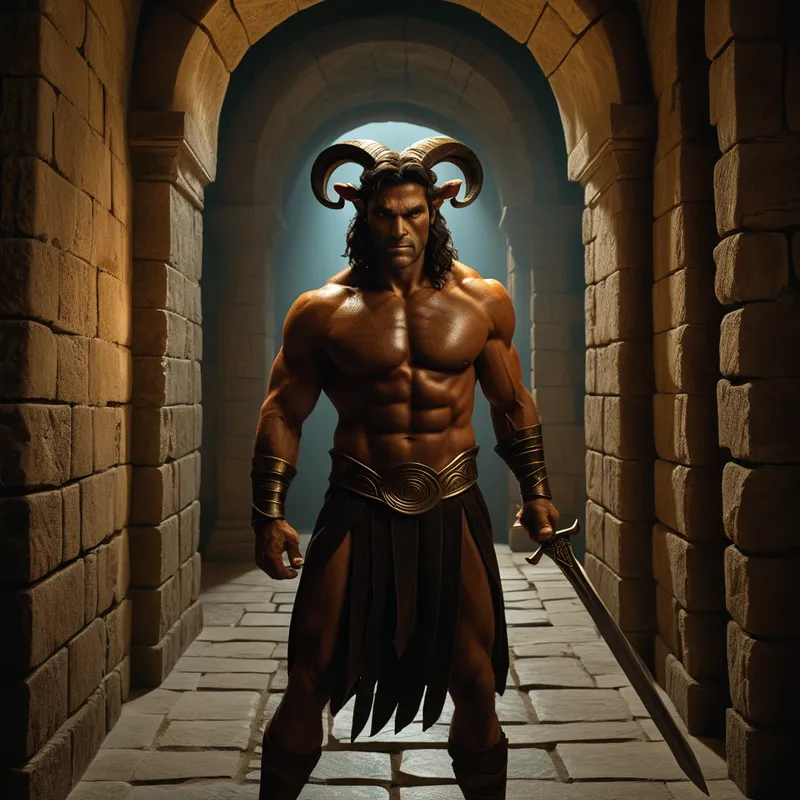
Hear now of the deep, rumbling groan that echoed from the heart of Crete. It was the sound of a debt unpaid, a curse made flesh. For the great King [Minos](/myths/minos “Myth from Greek culture.”/), in his hubris, had offended [Poseidon](/myths/poseidon “Myth from Greek culture.”/). In answer, the god made the king’s own queen, Pasiphaë, burn with an unholy passion for a magnificent white bull sent from [the sea](/myths/the-sea “Myth from Greek culture.”/). From that union of queen and beast was born the [Minotaur](/myths/minotaur “Myth from Greek culture.”/)—Asterion, the starry one—a creature with the body of a man and the head and tail of a bull, whose only food was human flesh.
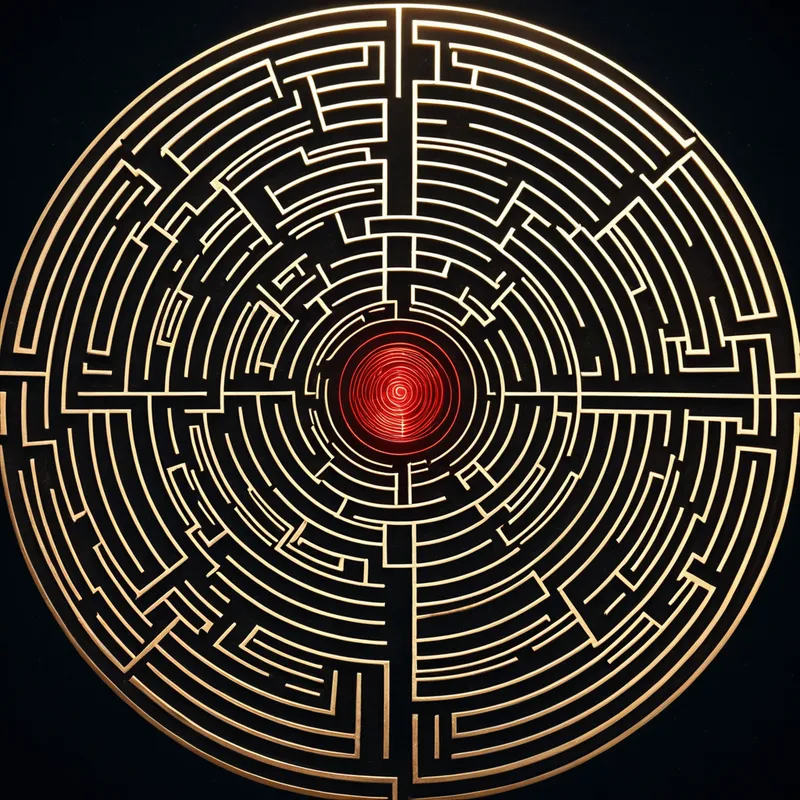
To hide his shame and contain the monster, Minos commanded the genius Daedalus to build a prison from which none could escape: [the Labyrinth](/myths/the-labyrinth “Myth from Greek culture.”/). A winding, twisting maze of stone, so cunningly devised that once inside, a man would forget [the sky](/myths/the-sky “Myth from Persian culture.”/). And into this stone gut, Minos fed the flesh of Athens. Every nine years, seven youths and seven maidens were sent across the wine-dark sea as tribute, a harvest of sorrow for the ravening beast below.
Then came the son of Aegeus, the young prince [Theseus](/myths/theseus “Myth from Greek culture.”/). His heart, forged in the wilds of Troezen, could not bear the lament of his city. He volunteered to be among the tribute, sailing to Crete not as a victim, but as a hidden blade. His father’s last plea echoed in the salt air: if he succeeded, he was to change the ship’s black sail of mourning to a white one of [triumph](/myths/triumph “Myth from Roman culture.”/).
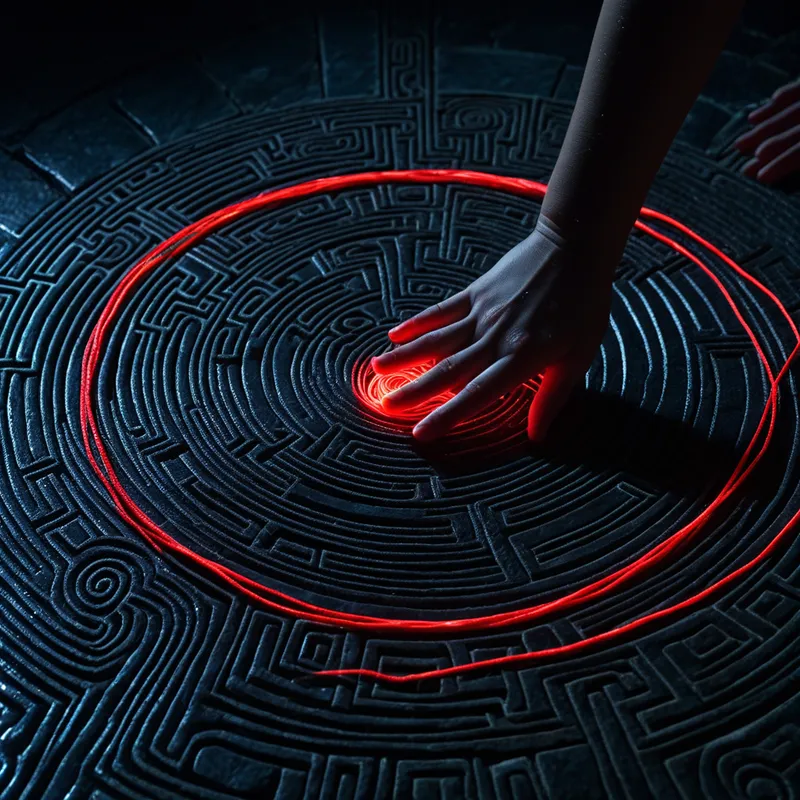
In the court of Minos, the princess Ariadne saw him. In his bearing, she saw not death, but destiny, and her heart was ensnared. In the deep of night, she came to him with two gifts: a ball of gleaming thread and a sword. The thread was his connection to [the world](/myths/the-world “Myth from Tarot culture.”/), his path back from [the underworld](/myths/the-underworld “Myth from Greek culture.”/) of the maze. The sword was his will, made sharp for the confrontation.
The great doors of the [Labyrinth](/myths/labyrinth “Myth from Various culture.”/) groaned open. The dank, earthy breath of the place swallowed the fourteen Athenians. Theseus tied the thread to the lintel, and into the palpable dark he went, the only sound the scuff of his feet and the unspooling of his hope. The air grew thick with the smell of old blood and wet stone. He followed the thread deeper, his own breath loud in his ears, until he heard it—a low, guttural snort, the scrape of a hoof on rock.
And there, in a chamber that felt like the center of the world, stood [the Minotaur](/myths/the-minotaur “Myth from Greek culture.”/). Not just a beast, but a prison of flesh, a testament to a king’s sin and a queen’s cursed desire. Its eyes held a terrible, trapped intelligence. With a roar that shook dust from the ceiling, it charged. Theseus stood his ground, the thread firm behind him. It was not a long fight, but a primal one—a dance of man and monster in a space with no witness but the stones. With a final, mighty thrust, the hero’s sword found its mark. The beast fell, its groan the last echo of the Labyrinth’s heart.
Theseus followed the blood-red thread back to the light, gathered the other Athenians, and fled with Ariadne. But the story’s end is woven with another thread of grief. In his triumph, or his haste to leave the cursed island, Theseus forgot his father’s command. The ship approached Athens under the black sail of mourning. Old Aegeus, watching from the Acropolis, saw the dark cloth and, believing his son dead, cast himself into the sea that bears his name to this day.
Cultural Origins & Context
This myth is not a simple fireside tale, but a foundational narrative deeply embedded in the Bronze Age consciousness of the Aegean world. It likely originated in the oral traditions of Minoan and Mycenaean cultures, a memory of political and cultural tension between the powerful maritime empire of Crete and the rising city-states of mainland Greece, like Athens. The tribute of youths may echo a distant historical reality of subjugation or a ritual practice lost to time.
The myth was crystallized for the classical Greek world by poets and tragedians. It is a cornerstone of Athenian civic identity, portraying their legendary king as a liberator who ended a monstrous oppression. The story was told in epic cycles, painted on pottery, and enacted in dramas, serving as a powerful metaphor for Athenian courage, cunning, and the tragic cost of heroism. It functioned as an initiation story for the polis itself, about overcoming a bestial past (represented by Minoan dominance) through heroic intelligence and resolve.
Symbolic Architecture
At its core, this is a myth of confronting the [Shadow](/symbols/shadow “Symbol: The ‘shadow’ embodies the unconscious, repressed aspects of the self and often represents fears or hidden emotions.”/). The [Labyrinth](/symbols/labyrinth “Symbol: The labyrinth represents a complex journey, symbolizing the intricate path toward self-discovery and understanding one’s life’s direction.”/) is not just a [maze](/symbols/maze “Symbol: A maze represents confusion, complexity, or a search for truth, often reflecting life’s challenges or inner turmoil.”/); it is the convoluted, deceptive [structure](/symbols/structure “Symbol: Structure in dreams often symbolizes stability, organization, and the framework of one’s life, reflecting how one perceives their environment and personal life.”/) of the unconscious mind, where [logic](/symbols/logic “Symbol: The principle of reasoning and rational thought, often representing order, structure, and intellectual clarity in dreams.”/) fails and primal fears reign.
The Minotaur is the Shadow made flesh—the unacceptable hybrid, the buried result of denied desire and royal hubris, waiting to be fed by our sacrifices.
Theseus represents the conscious ego, the part of the [psyche](/myths/psyche “Myth from Greek culture.”/) that must voluntarily descend into its own [chaos](/symbols/chaos “Symbol: In Arts & Music, chaos represents raw creative potential, uncontrolled expression, and the breakdown of order to forge new artistic forms.”/) to integrate what is monstrous. He does not stumble into the maze; he chooses to enter it. His tools are critical: the sword (discrimination, focused will) and the thread (the theoria, the guiding [insight](/symbols/insight “Symbol: A sudden, deep understanding of a complex situation or truth, often arriving unexpectedly and illuminating hidden connections.”/) or [connection](/symbols/connection “Symbol: Connection symbolizes relationships, communication, and bonds among individuals.”/) to [consciousness](/symbols/consciousness “Symbol: Consciousness represents the state of awareness and perception, encompassing thoughts, feelings, and experiences.”/) that prevents total [dissolution](/symbols/dissolution “Symbol: The process of breaking down, dispersing, or losing form, often representing transformation, release, or the end of a state of being.”/) in the unconscious). Ariadne, who provides these tools, symbolizes the [anima](/symbols/anima “Symbol: The feminine archetype within the male unconscious, representing soul, creativity, and connection to the inner world.”/)—the mediating, connective feminine principle that guides the [hero](/symbols/hero “Symbol: A hero embodies strength, courage, and the ability to overcome significant challenges.”/) into and out of the [depths](/symbols/depths “Symbol: Represents the subconscious, hidden emotions, or foundational aspects of the self, often linked to primal fears or profound truths.”/). Her later [abandonment](/symbols/abandonment “Symbol: A dream symbol representing feelings of being left behind, isolated, or emotionally deserted, often tied to primal fears of separation and loss of support.”/) by Theseus on Naxos is the tragic cost often paid when the conscious [hero](/symbols/hero “Symbol: A hero embodies strength, courage, and the ability to overcome significant challenges.”/), having achieved his goal, fails to fully integrate the very principle that made his victory possible.
The final tragedy, Aegeus’s suicide, underscores that the [journey](/symbols/journey “Symbol: A journey in dreams typically signifies adventure, growth, or a significant life transition.”/) [inward](/symbols/inward “Symbol: A journey toward self-awareness, introspection, and the exploration of one’s inner world, thoughts, and unconscious mind.”/) has irrevocable consequences in the outer world. The old order (the [father](/symbols/father “Symbol: The father figure in dreams often symbolizes authority, protection, guidance, and the quest for approval or validation.”/)/[king](/symbols/king “Symbol: A symbol of ultimate authority, leadership, and societal order, often representing the dreamer’s inner power or external control figures.”/)) must die for the new, integrated Self (the son/hero) to fully reign, even if that [death](/symbols/death “Symbol: Symbolizes transformation, endings, and new beginnings; often associated with fear of the unknown.”/) is borne of a heartbreaking miscommunication.
The Dreamer’s Resonance
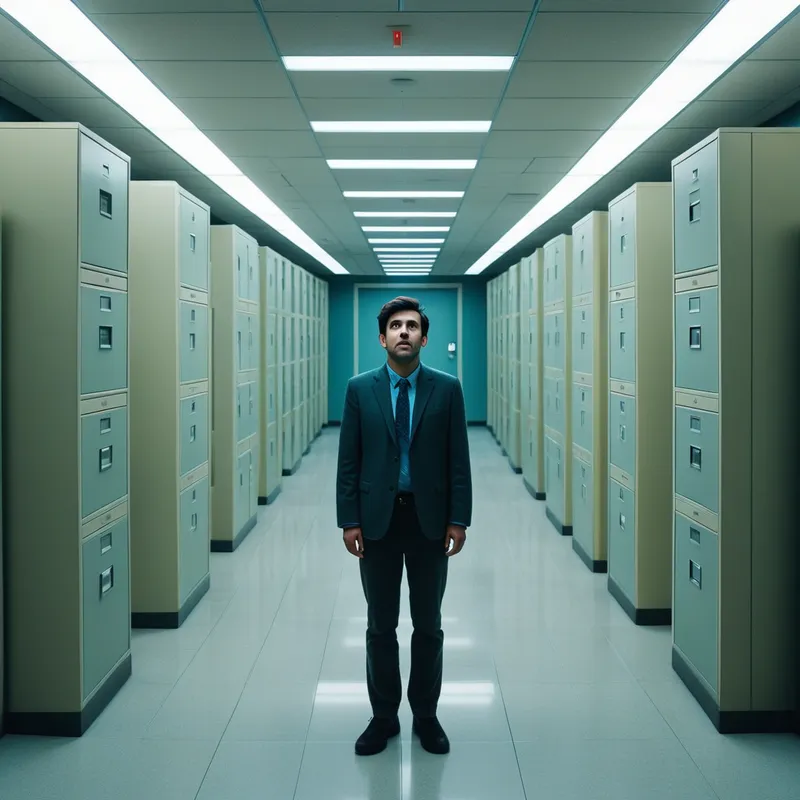
When this myth stirs in modern dreams, it signals a profound encounter with the personal Shadow. Dreaming of being lost in a maze or complex building often correlates with feelings of confusion in life, a sense of being trapped by one’s own psyche or circumstances. The heavy breathing or presence of a monstrous beast—perhaps not seen, but felt—is the somatic signature of an unintegrated complex: a rage, a shame, a desire, or a trauma that has taken on a life of its own in the dark.
The dreamer is at [the threshold](/myths/the-threshold “Myth from Folklore culture.”/) of a necessary confrontation. The anxiety is not a sign to flee, but a call to prepare. Where in your life do you feel you are making a “tribute” of your energy or vitality to some hidden, consuming force? The dream is the psyche’s way of building the Labyrinth, setting the stage for the heroic journey of integration. To dream of finding a thread or a guide suggests the nascent emergence of the insight or supportive inner figure (the anima/animus) needed to navigate this inner crisis.
Alchemical Translation
The myth models the alchemical process of [nigredo](/myths/nigredo “Myth from Alchemical culture.”/) and albedo, the descent into darkness for the sake of purification and rebirth. The voluntary journey into the Labyrinth is the [nigredo](/myths/nigredo “Myth from Alchemical culture.”/)—the confrontation with the [prima materia](/myths/prima-materia “Myth from Alchemical culture.”/) of the soul, which is often foul, bestial, and terrifying.
The slaying of the Minotaur is not an act of eradication, but of sacred defeat. It is the moment the ego consciously dis-identifies from the autonomous power of the complex, stripping it of its monstrous, devouring autonomy.
The beast is not killed to be forgotten, but to be transformed. Its energy is reclaimed. The triumphant return, following the thread, is the albedo—the emergence of a consciousness that has faced its own darkness and survived, now carrying a hard-won wisdom. For the modern individual, this translates to the painful but essential work of shadow integration. We must enter the labyrinth of our own history, our traumas, and our denied passions. We must find our Ariadne’s thread—perhaps therapy, creative expression, or contemplative practice—that allows us to go deep without losing ourselves. The goal is not to exit the maze and sail away unchanged, but to return having made the monster a part of our story, no longer a ruler in the dark, but a transformed aspect of a more complete self. The forgotten white sail is the perennial warning: the work is never fully done; consciousness must remain vigilant, or the fruits of the descent can be lost in a tide of old grief.
Associated Symbols
Explore related symbols from the CaleaDream lexicon: