The Yellow Emperor Huangdi
The mythical Yellow Emperor who unified ancient China, invented key cultural foundations, and became a central figure in Taoist cosmology and immortality lore.
The Tale of The Yellow Emperor Huangdi
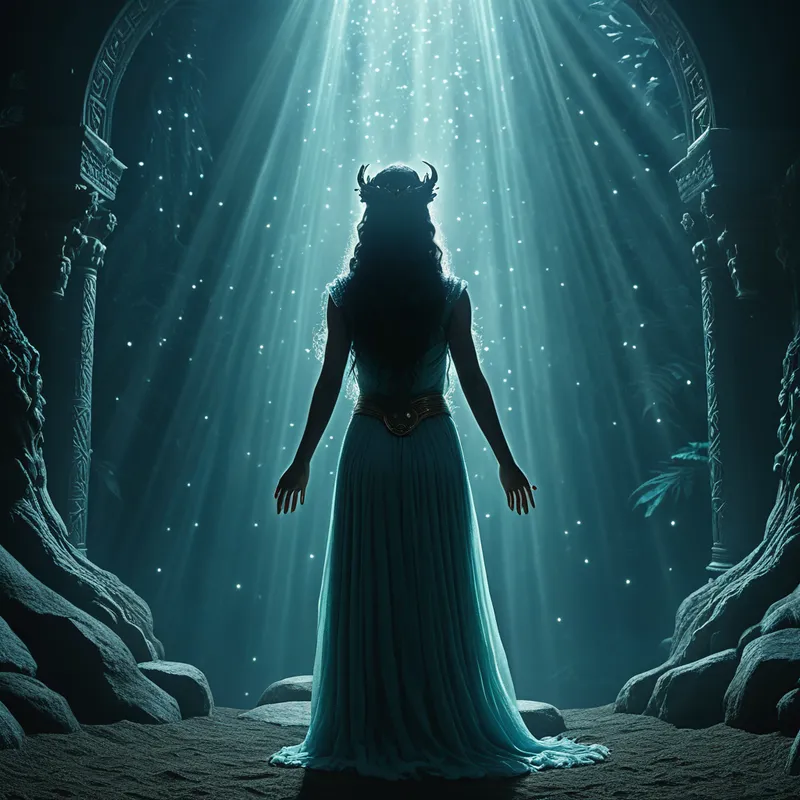
In the swirling mists of time, before the Five Peaks were named and the rivers found their courses, [the world](/myths/the-world “Myth from Tarot culture.”/) was a cacophony of warring tribes. From this primal [chaos](/myths/chaos “Myth from Greek culture.”/), a sovereign light emerged: Huangdi, [the Yellow Emperor](/myths/the-yellow-emperor “Myth from Chinese culture.”/). His birth was itself a portent, whispered to be accompanied by a supernatural brightness and the capacity for speech at birth. He did not inherit a throne; he forged one through virtue and visionary might, becoming the heart around which the scattered limbs of early China coalesced.
His reign was defined by a monumental struggle, the war against Chiyou, a formidable chieftain and master of metalwork and sorcery. Chiyou’s armies were fearsome, his magic potent, summoning dense fogs to confound Huangdi’s forces. In this moment of crisis, the Emperor’s profound connection to the celestial order manifested. He commissioned the creation of a magical south-pointing chariot, an instrument of cosmic Li that could pierce through any artificial darkness. More crucially, he received divine aid. The goddess Xuannü, a dark, mysterious warrior deity, descended to impart strategies of battle and the secrets of cosmic alignment. With this sacred knowledge, Huangdi triumphed, not merely defeating a rival but subduing the very spirit of violent disorder.
Yet Huangdi was more than a conqueror; he was the archetypal civilizing force. Tradition credits him, or his wise ministers, with the invention of the essential vessels of culture: the compass, the cart, the boat, and the calendar that harmonized human activity with the seasons. He established rites, music, and medicine, drawing from the Huangdi Neijing. His reign was a [golden age](/myths/golden-age “Myth from Universal culture.”/) of order emerging from chaos, a testament to the ruler as [the axis mundi](/myths/the-axis-mundi “Myth from Chinese culture.”/), the pivot between heaven and earth.
His departure from the world was as significant as his arrival. After a long and prosperous reign, the culmination of his earthly journey was not [death](/myths/death “Myth from Tarot culture.”/), but transcendence. Legends tell of a divine [dragon](/myths/dragon “Myth from Chinese culture.”/) descending from the heavens to carry him to [the immortal](/myths/the-immortal “Myth from Taoist culture.”/) realms. At a place called Mount Qiao, in a final, glorious [epiphany](/myths/epiphany “Myth from Greek culture.”/), he ascended in broad daylight, leaving behind only his robes. This act sealed his dual legacy: as the mortal founder of civilization and the immortal paragon of the Taoist quest.
Cultural Origins & Context
Huangdi’s figure sits at the confluence of history, myth, and state ideology. Initially appearing in early Chinese texts like the Shiji (Records of the Grand Historian) as a legendary sage-king from deep antiquity, his historicity is less important than his symbolic function. He represents the idealized origin point of Han Chinese civilization, a cultural anchor in a time perceived as foundational and pure.
His incorporation into Taoism, particularly from the Han dynasty onward, transformed him from a cultural hero into a central pillar of religious and alchemical practice. As Taoist philosophy deepened its exploration of longevity and immortality, Huangdi became the prime exemplar. He was reconceived not just as a wise ruler, but as a seeker who engaged in dialogues with his celestial ministers, like the sage Guangchengzi, to learn the secrets of nurturing life and aligning with the Dao. This fusion of sovereignty and spiritual pursuit made him the perfect patron for esoteric traditions, embodying the ultimate success of harmonizing worldly order with cosmic law.
Symbolic Architecture
Huangdi is the living [symbol](/symbols/symbol “Symbol: A symbol can represent an idea, concept, or belief, serving as a powerful tool for communication and understanding.”/) of the [axis](/symbols/axis “Symbol: A central line or principle around which things revolve, representing stability, orientation, and the fundamental structure of reality or consciousness.”/) mundi—the world pillar that connects the three realms of [Heaven](/symbols/heaven “Symbol: A symbolic journey toward ultimate fulfillment, spiritual transcendence, or connection with the divine, often representing life’s highest aspirations.”/), [Earth](/symbols/earth “Symbol: The symbol of Earth often represents grounding, stability, and the physical realm, embodying a connection to nature and the innate support it provides.”/), and Humanity. His color, yellow, is the hue of the fertile loess [soil](/symbols/soil “Symbol: Soil symbolizes fertility, nourishment, and the foundation of life, serving as a metaphor for growth and stability.”/) of the Central Plains and, in Wuxing cosmology, represents the Element of [Earth](/symbols/earth “Symbol: The symbol of Earth often represents grounding, stability, and the physical realm, embodying a connection to nature and the innate support it provides.”/), the stabilizing, nurturing center from which all [life](/symbols/life “Symbol: The symbol of ‘Life’ represents a journey of growth, interconnectedness, and existential meaning, encompassing both the joys and challenges that define human experience.”/) springs and to which it returns. He is the embodiment of Zhong—centrality, [equilibrium](/symbols/equilibrium “Symbol: A state of balance, stability, or harmony between opposing forces, often representing inner peace or external order.”/), and the correct mediating principle.
His myth is not one of simple conquest, but of integration. He does not annihilate chaos (represented by Chiyou); he masters and incorporates its energies, just as a wise ruler integrates disparate tribes into a unified whole. The victory is a psychological and cosmological act of bringing the shadow into the service of the sovereign self.
His [ascent](/symbols/ascent “Symbol: Symbolizes upward movement, progress, spiritual elevation, or striving toward higher goals, often representing personal growth or transcendence.”/) to immortality completes this [architecture](/symbols/architecture “Symbol: Architecture in dreams often signifies structure, stability, and the framing of personal identity or life’s journey.”/). It proposes that perfect alignment with the Dao through sage governance and inner cultivation does not culminate in an end, but in a transformation. The mortal [body](/symbols/body “Symbol: The body in dreams often symbolizes the dreamer’s self-identity, personal health, and the relationship they have with their physical existence.”/) is shed like the “[Emperor’s Robes](/symbols/emperors-robes “Symbol: The Emperor’s Robes symbolize authority, power, and the burden of leadership, often reflecting one’s inner truth versus public persona.”/),” while the essential [spirit](/symbols/spirit “Symbol: Spirit symbolizes the essence of life, vitality, and the spiritual journey of the individual.”/) achieves union with the eternal.
The Dreamer’s Resonance
To the individual [psyche](/myths/psyche “Myth from Greek culture.”/), Huangdi represents the archetypal Ruler in its most evolved form. He is the organizing principle within the chaos of the inner world—the capacity for self-governance, discipline, and the establishment of inner order. His battle with Chiyou mirrors the internal struggle to subdue unruly passions, destructive impulses, and the “fogs” of confusion that obscure one’s true direction ([the south-pointing chariot](/myths/the-south-pointing-chariot “Myth from Chinese culture.”/)).
His journey speaks to the profound human desire not just for a well-ordered life, but for that order to have transcendent meaning. He models the path of turning raw, instinctual power (the warrior) into structured, creative cultural force (the inventor, the lawgiver), and finally, into spiritual liberation. He resonates with anyone seeking to build a coherent “kingdom” of [the self](/myths/the-self “Myth from Jungian culture.”/), facing internal conflicts, instituting healthy “rituals” of habit, and ultimately aspiring toward a state of wholeness that feels immortal in its integrity.
Alchemical Translation
In [the laboratory](/myths/the-laboratory “Myth from Alchemical culture.”/) of the self, the myth of Huangdi is a precise manual for Taoist inner alchemy. The warring tribes are the scattered, conflicting elements of one’s vital energy (jing) and spirit (shen). The [Yellow Emperor](/myths/yellow-emperor “Myth from Chinese culture.”/) is the presiding consciousness, the “true intent” (yi), that must unify them.
The south-pointing chariot is the unwavering compass of the heart-mind, aligned with the true north of the Dao, which guides one through emotional and psychic obscuration. The dialogue with celestial beings represents the inner revelation that comes from deep meditation and stillness, where one receives guidance from the higher self or ancestral wisdom.
The culmination—the ascension—is the alchemical goal. It is the successful refinement of the three treasures (jing, qi, shen) into the golden elixir of the immortal spirit body. The mortal coil (the robes) is left behind, as the practitioner achieves a state of conscious existence beyond the cycles of decay, fully integrated into the cosmic process. Huangdi’s tale is thus a map from fragmentation to sovereignty to transcendence.
Associated Symbols
Explore related symbols from the CaleaDream lexicon:
- Yellow — The color of the center, earth, and sovereignty, representing the fertile ground from which civilization and the integrated self emerge.
- Mountain — The sacred axis where heaven and earth meet, the site of divine revelation and ascension, as with Mount Qiao.
- Dragon — The celestial, transformative power that carries the perfected being from the earthly to the immortal realm.
- Order — The principle of cosmic and social harmony established from chaos, embodied in rites, calendars, and governance.
- Ruler — The archetype of the centered, virtuous sovereign who governs both a kingdom and the inner self with wisdom and alignment.
- Taoist Alchemy — The practical spiritual process of refining the base elements of life into an immortal essence, for which Huangdi is the patron.
- Emperor’s Robes — The symbolic shedding of the mortal, physical form, leaving behind the trappings of temporal identity for spiritual transcendence.
- Warrior — The aspect of the self that must engage in the necessary battle to subdue inner chaos and disorder.
- Chariot — The vehicle of direction and purpose, specifically the south-pointing chariot as the enlightened mind that navigates through confusion.
- Mortality — The foundational condition that is consciously worked with and ultimately transcended through alignment and cultivation.