The Myth in the Marrow: When Dreams Speak in Gods and Monsters
The Somatic Echo
Before the image of a labyrinth, a golden fleece, or a thunderbolt forms, the body knows. It is a deep, tectonic hum in the bones—a resonance that feels less like a memory and more like a remembering. It is the weight of epochs in the shoulders, a sudden, inexplicable awe that tightens the chest and stills the breath. This is not nostalgia for a past you never had; it is the somatic echo of the timeless patterns that structure consciousness itself. Your nervous system is the original parchment upon which these stories were first inscribed. The dream of mythology begins not in the mind’s eye, but in a visceral sense of scale—the simultaneous feeling of being profoundly insignificant before the cosmos and utterly central to its unfolding drama. It is the shiver of touching something older than your name.
The Dreamer's Log
I stood at the edge of a primeval forest, holding a cracked tablet of obsidian. The symbols carved into it were unfamiliar, yet I understood their meaning was vital. From the dark trees, a low, resonant chant began, not in a language, but in the rhythm of my own heartbeat. I knew I had to carry the tablet into the woods, but my feet were roots, holding me fast to the safe, sunlit edge.
Alchemical Interpretation: The dream presents the confrontation between received, crystalline knowledge (the tablet) and the living, chthonic wisdom of the unconscious (the forest), with the dreamer’s own life force caught in the stalemate.

The False Lead
A dream of mythology is not a suggestion to read more Joseph Campbell or an assignment to find your “personal myth” as if shopping for a new identity. It is not mere escapism into fantasy, nor is it a literal prophecy about your future. The most common misinterpretation is to aestheticize the symbols—to admire the Minotaur as a fascinating monster without feeling its breath in the dark maze of your own avoidance. This theme is not about collecting archetypes like stamps; it is about being claimed by one, about feeling the ancient drama replace your personal neurosis, forcing a structural shift in the very architecture of your being.
Psychological Architecture
When mythology erupts into the dreamspace, it signals that your personal psychology has become too small a container. The daily dramas of ego—your worries, ambitions, and grievances—are but shallow scripts. Beneath them, the bedrock of archetypal reality is shifting. This is the Shadow work of the species. You are not just integrating your personal repressed pain; you are being asked to host a cosmic conflict. The “hero’s journey” becomes internal: the tyrant king you must depose is your own rigid control; the wasteland that needs healing is your capacity for feeling; the treasure you guard is your unlived life. Individuation, in this light, is not about becoming a well-adjusted individual, but about becoming a conscious vessel for a universal pattern. The psyche is dissolving the walls of your personal history to rebuild them with the stones of eternal story.
Mythic Resonance
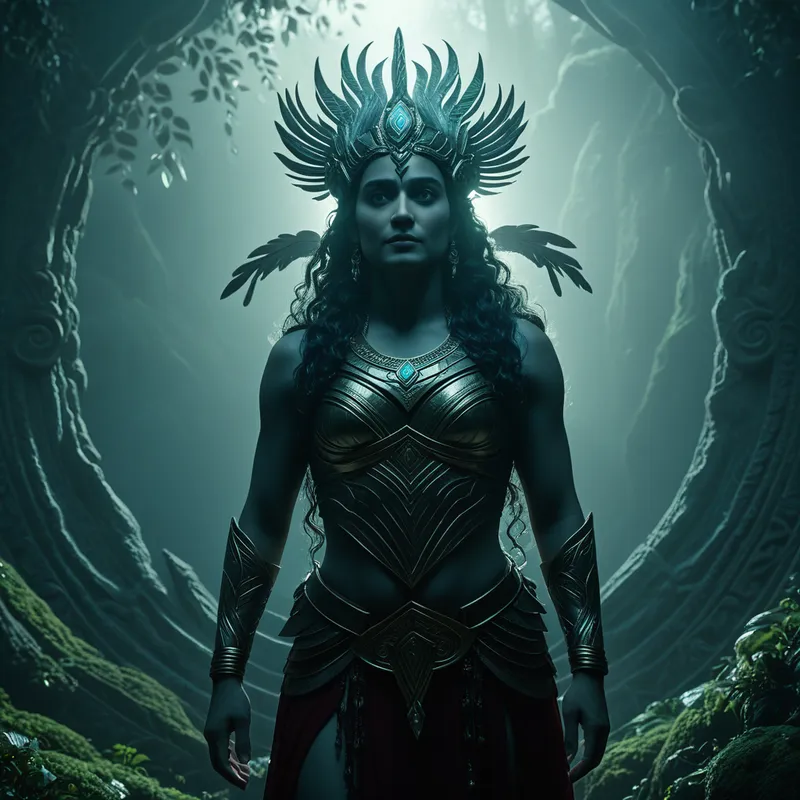
Consider the Sumerian goddess Inanna’s descent into the underworld. At each of the seven gates, she is stripped—of her crown, her jewels, her garments—until she arrives naked and bowed before her dark sister, Ereshkigal. This is not a tale of punishment, but of necessary dissolution. The dream that brings you a mythological gate, a threshold, or a stripping away is performing the same function. Your modern identity, your titles and achievements, are the radiant garments. The descent myth asks: what remains when all that is taken? The raw, essential you, the naked awareness that can meet the shadow and return, not unscathed, but initiated. Similarly, the Norse world-tree Yggdrasil, which holds all the realms within its roots and branches, is not just a map of the cosmos but a blueprint of the psyche. To dream of a great tree is to feel the structure of your own soul, connecting the hell of your deepest fears (Hel) to the heaven of your highest aspirations (Asgard) through the middle world of your daily reality (Midgard).
Symbolic Nodes
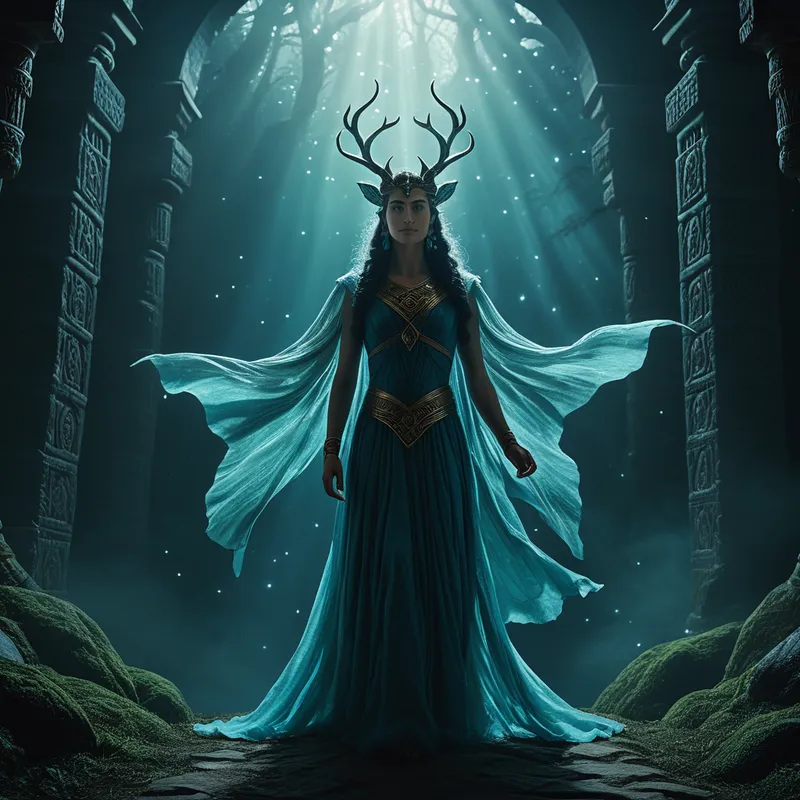
- Ancient Temples/Ruins: The internal structures of belief and meaning, in states of veneration or decay.
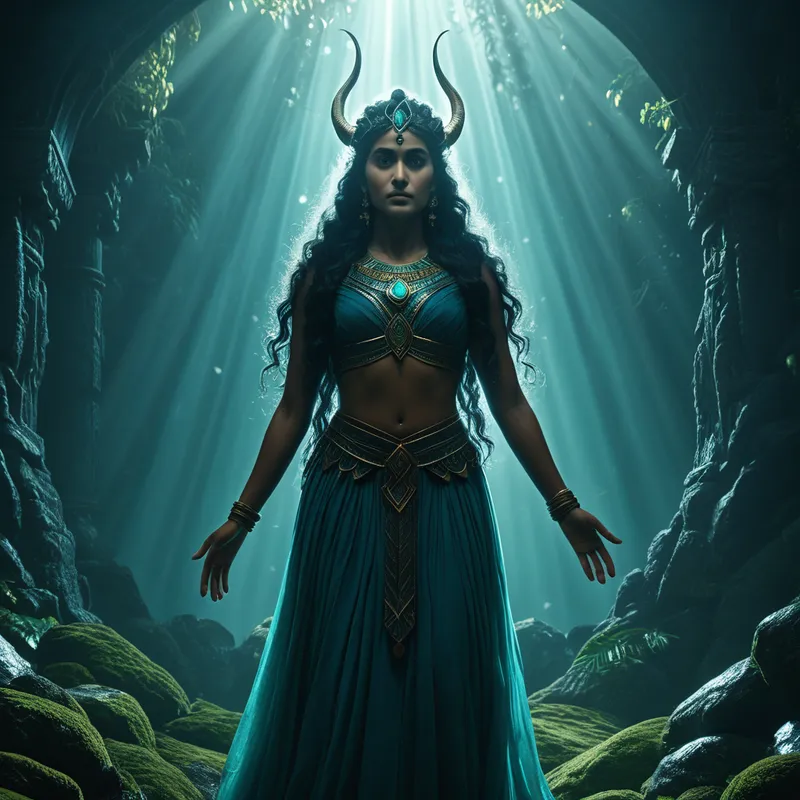
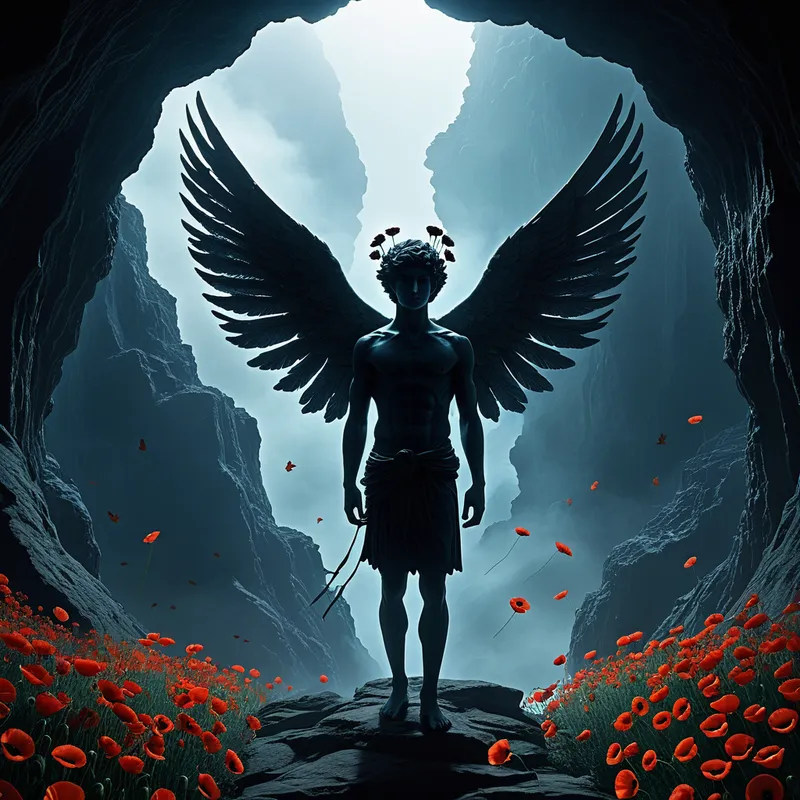
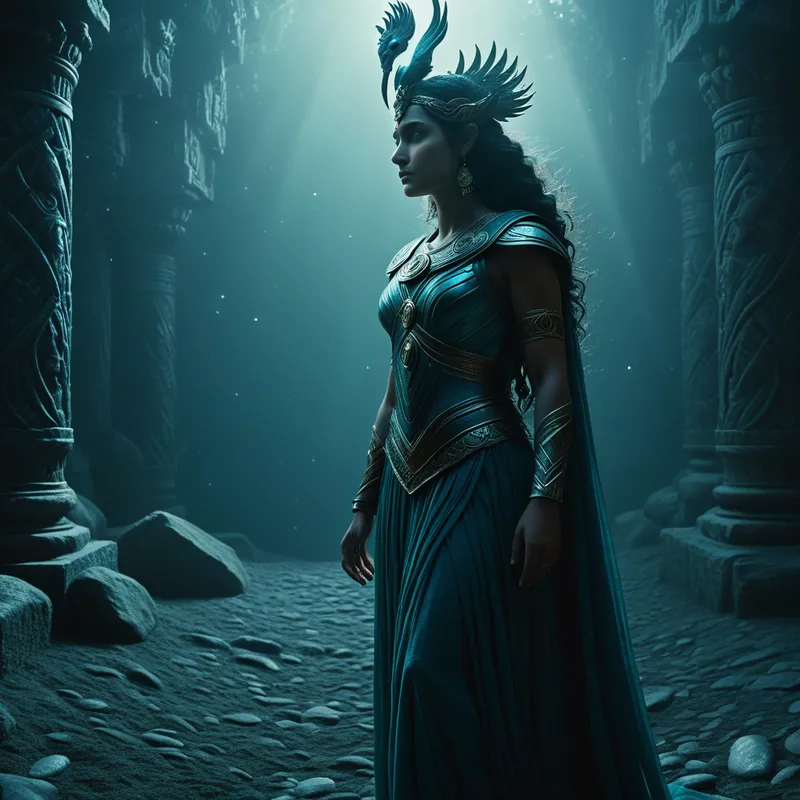
- Gods, Goddesses, Titans: Personified forces of nature, consciousness, and power engaging with the dream-ego.
- Mythical Beasts (Sphinx, Phoenix, Cerberus): Composite guardians of thresholds, representing fused instincts or unsolvable riddles of the soul.
- Artefacts (Swords, Cauldrons, Amulets): Latent potentials or specific powers awaiting conscious activation.
- Cosmic Landscapes (World Trees, Primordial Waters, Chasms): The foundational layers of the psyche itself.
Archetypal Resonance
The Magician Archetype is the prime mover in the mythology dream. This is not the stage illusionist, but the archetype that understands the fundamental laws of reality—the hidden connections between things—and seeks to transform reality according to will and vision. The somatic echo of awe and resonant scale is the Magician sensing the raw, archetypal substance behind the veil of the mundane. The alchemical potential here is immense: to move from being a passive character in a myth to becoming the conscious author of your myth. The shadow Magician, however, is the manipulator who confuses personal will with cosmic law, using archetypal imagery to bewitch the self or others, creating a private mythology of specialness or victimhood that avoids true transformation.
The Alchemical Process
The transmutation here is the conversion of personal history into impersonal truth. The prima materia is the leaden weight of your subjective past—your traumas, your family narrative, your cultural conditioning. The intense heat and pressure required is the willingness to subject this personal story to the mythic fire. This is the nigredo: the terrifying dissolution where you see your father not just as your father, but as an instance of the Tyrant King or the Wounded Fisher; your longing not just as yours, but as the soul’s search for the Holy Grail. The grief is for the loss of your story as uniquely, solely yours. The terror is in surrendering to a plot larger than your ego’s comprehension. The albedo emerges when the purified essence—the archetypal pattern—is revealed, shining and timeless. Sovereignty is claimed not by owning your story, but by realizing you are a conscious iteration of The Story. You become the Magician, not manipulating the world, but in right relationship with the archetypal forces that move through it and through you.

The Integration Protocol
Question 1: Where in my current life do I feel like a passive character in someone else’s script? Which "myth" (family, career, societal) am I unconsciously acting out?
Question 2: If the central figure in my dream myth (the god, monster, or hero) were a disowned part of my own energy, what would it be? What power does it hold that I have exiled?
Question 3: What in my life feels "timeless"? When do I experience a sense of scale that makes my personal worries shrink, not into insignificance, but into proper perspective?
Action 1 (Somatic Anchoring): When you feel the "mythic dread" or awe in waking life—that sudden sense of scale—stop. Place your hands flat on a surface (earth, a wall, your own chest). Breathe deeply into the base of your spine. Do not try to interpret. Simply feel the vibration. You are grounding the archetype into your physical vessel.
Action 2 (Unstructured Mythography): Take the key symbol from your dream. Without narrative intent, draw it, sculpt it with clay, or write a stream-of-consciousness "hymn" to it. Let the form change. Allow the labyrinth to become a fingerprint, the goddess to become a weather pattern. This bypasses the intellect to commune with the symbol’s living essence.
Action 3 (Ritual of Acknowledgment): Create a simple, private ritual to "return" the mythic energy. This could be speaking the dream aloud to a tree, pouring water onto the earth while naming the archetype that visited you, or burning a drawing of the symbol with gratitude. The action signals to the unconscious that the transmission was received, moving it from spectacle to integrated relationship.
Final Validation
It is a dizzying, often terrifying, responsibility to feel the gods stirring in your cellar, to hear the echo of epic wars in the quiet pulse of your blood. To dismiss it is to condemn your soul to a shoebox diorama when it is meant to inhabit a cathedral. But to answer the call is not to be grandiosely special; it is to become humbly specific—a single, conscious note in the eternal song. The myth is not outside you, waiting to be found. It is speaking through you, in the language of dream and bone, asking only that you listen, and in listening, begin to remember who, and what, you truly are.