The Water Mother Siberian Myth Meaning & Symbolism
A primordial goddess of the deep waters births the world from her body, sacrificing her form to become the lifeblood of the taiga and the human soul.
The Tale of The Water Mother Siberian
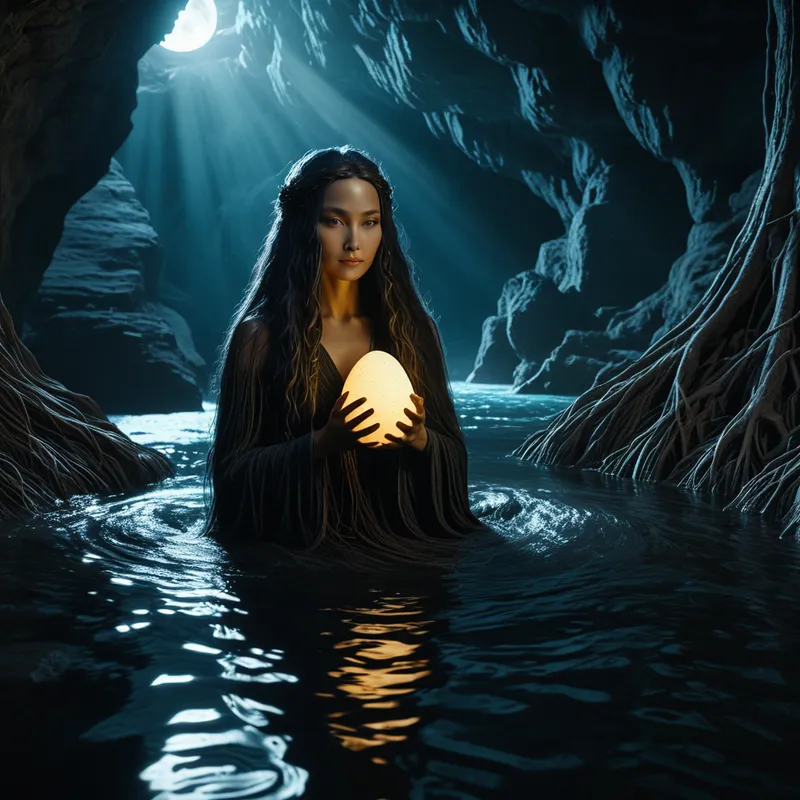
In the time before time, when the world was a single, silent thought in the mind of the dark, there was only the deep, cold water. Not an ocean, for there were no shores, but a boundless, dreaming abyss. And in that abyss, there was a presence. She was not born; she simply was. The water was her body, her breath, her consciousness. She was the Water Mother.
For eternities, she drifted in the silent dark, a self-contained universe of potential. But within her depths, a longing stirred—a longing not for light, but for form; not for sound, but for the vibration of difference. This longing grew until it became a pressure, a great, slow ache in her liquid heart. She began to turn inward, her consciousness coiling upon itself like a vast, gentle serpent. From the very substance of her being, from the cold, dark water, she began to gather and shape.
She drew the silt from her own bed, the minerals from her own bones, and with a sigh that was the first current, she formed a sphere within her womb-darkness. It was a world-egg, rough and dense. She cradled it, warming it not with fire, for there was none, but with the focused pulse of her own being. The ache intensified. It was the ache of creation, which is also the ache of dissolution.
And then, she made the choice. With a will as vast and inexorable as the tide, she pushed. She did not lay the egg; she broke herself upon it. Her form, that boundless watery body, shattered. Her substance rushed outward, filling the void. Her bones became the great stone ribs of the taiga, thrusting up from the abyssal plain. Her blood became the network of rivers—the Yenisei, the Lena, the Ob—snaking silver through the newborn land. Her breath became the mist that cloaks the mountains at dawn and the blizzard that howls from the north. Her hair became the dark, tangled roots of the larch and pine, drinking deep from her scattered self.
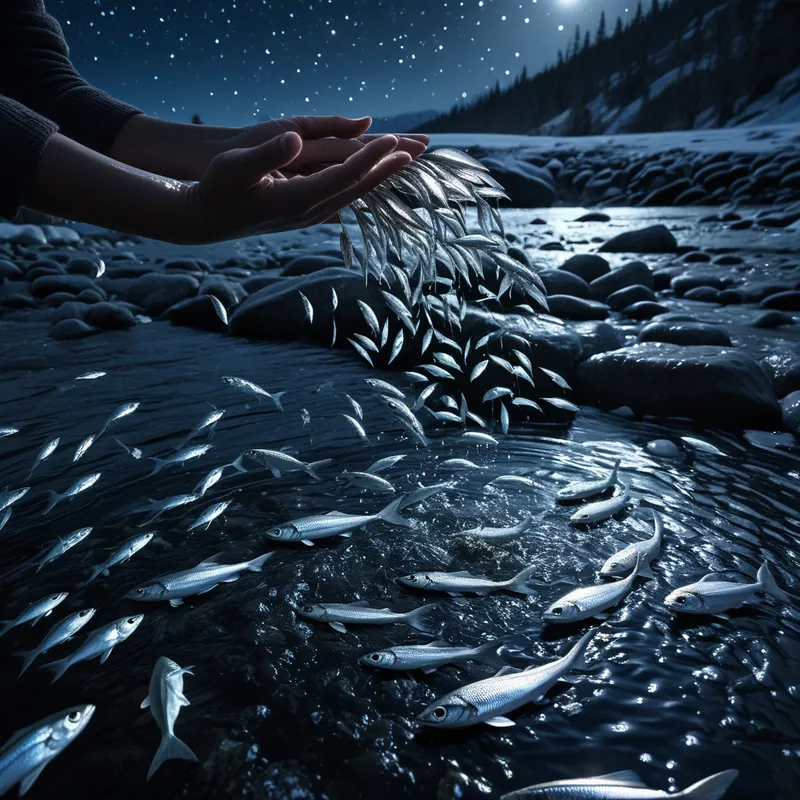
The world-egg cracked, and from it spilled the first animals: the bear from its strength, the elk from its grace, the salmon from its fluid heart. And lastly, from the final, gleaming fragment of the shell, coated in the last drops of her conscious essence, came the first humans. They stood on the shore of a newly formed lake, which was the last intact pool of her gazing eye, and felt a double longing: for the solid earth beneath their feet, and for the deep, remembering water from which they came.
She was gone, and yet she was everywhere. The people who walked the land could hear her voice in the river’s rush, feel her touch in the rain, sense her sorrow in the drought. She had sacrificed her singular self to become the world’s body, its lifeblood, and its hidden, nurturing soul. To take a drink from a stream was to partake of her. To drown was to return to her unresisting embrace.
Cultural Origins & Context
This myth, in its myriad local forms, is the bedrock of many Indigenous Siberian worldviews, particularly among the Khanty, Mansi, Evenki, and others. It was not a story told for mere entertainment, but a sacred narrative recited by shamans during rituals of birth, death, and seasonal change. Its tellers were the shamans, who, in their trance states, were said to travel to the watery underworld to commune with the Water Mother’s remaining spirit.
The myth functioned as an ontological map. It explained the origin of the harsh, beautiful Siberian landscape and humanity’s place within it as children of both earth and water. It established a cosmology of profound reciprocity: since the world is the body of a sacrificed goddess, every act is intimate. To pollute a river is to wound the Mother. To respect a spring is to honor her. The myth encoded ecological ethics, a deep understanding of the feminine as the source and substance of all life, and a view of creation not as a violent conquest, but as a self-shattering act of care.
Symbolic Architecture
The [Water](/symbols/water “Symbol: Water symbolizes the subconscious mind, emotions, and the flow of life, representing both cleansing and creation.”/) [Mother](/symbols/mother “Symbol: The symbol of ‘Mother’ represents nurturing, protection, and the foundational aspect of one’s emotional being, often associated with comfort and unconditional love.”/) is the [archetype](/symbols/archetype “Symbol: A universal, primordial pattern or prototype in the collective unconscious that shapes human experience, behavior, and creative expression.”/) of the prima materia—the chaotic, potential-filled state from which all forms arise. She represents the unconscious itself, vast, dark, and fecund, prior to the [emergence](/symbols/emergence “Symbol: A process of coming into being, rising from obscurity, or breaking through a barrier, often representing birth, transformation, or revelation.”/) of ego-[consciousness](/symbols/consciousness “Symbol: Consciousness represents the state of awareness and perception, encompassing thoughts, feelings, and experiences.”/) (the solid land, the [human](/symbols/human “Symbol: The symbol of a human represents individuality, complexity of emotions, and social relationships.”/)).
Creation is not an act of making from without, but a sacrifice of being from within. The world is not built; it is born.
Her act of breaking her form to create the world is the ultimate [symbol](/symbols/symbol “Symbol: A symbol can represent an idea, concept, or belief, serving as a powerful tool for communication and understanding.”/) of the feminine creative principle. It is not a heroic deed of willpower over external matter, but a transformative surrender of one’s own substance. The world-egg signifies the latent totality of the psyche. The shattering is the necessary [crisis](/symbols/crisis “Symbol: A crisis symbolizes turmoil, urgent challenges, and the need for immediate resolution or change.”/) that differentiates consciousness from the unconscious, giving [birth](/symbols/birth “Symbol: Birth symbolizes new beginnings, transformation, and the potential for growth and development.”/) to the multiplicity of the world and the psyche’s complex elements.
The resulting [landscape](/symbols/landscape “Symbol: Landscapes in dreams are powerful symbols representing the dreamer’s emotional state, personal journey, and the broader context of life situations.”/)—where her [spirit](/symbols/spirit “Symbol: Spirit symbolizes the essence of life, vitality, and the spiritual journey of the individual.”/) is diffused yet omnipresent—mirrors the psychological [reality](/symbols/reality “Symbol: Reality signifies the state of existence and perception, often reflecting one’s understanding of truth and life experiences.”/) after a major transformation. The integrated [insight](/symbols/insight “Symbol: A sudden, deep understanding of a complex situation or truth, often arriving unexpectedly and illuminating hidden connections.”/) (the [Goddess](/symbols/goddess “Symbol: The goddess symbolizes feminine power, divinity, and the nurturing aspects of life, embodying creation and wisdom.”/)) is gone as a singular entity, but its essence now informs every [aspect](/symbols/aspect “Symbol: A distinct feature, quality, or perspective of something, often representing a partial view of a larger whole.”/) of the [personality](/symbols/personality “Symbol: Personality in dreams often symbolizes the traits and characteristics of the dreamer, reflecting how they perceive themselves and how they believe they are perceived by others.”/) (the land, the rivers).
The Dreamer’s Resonance
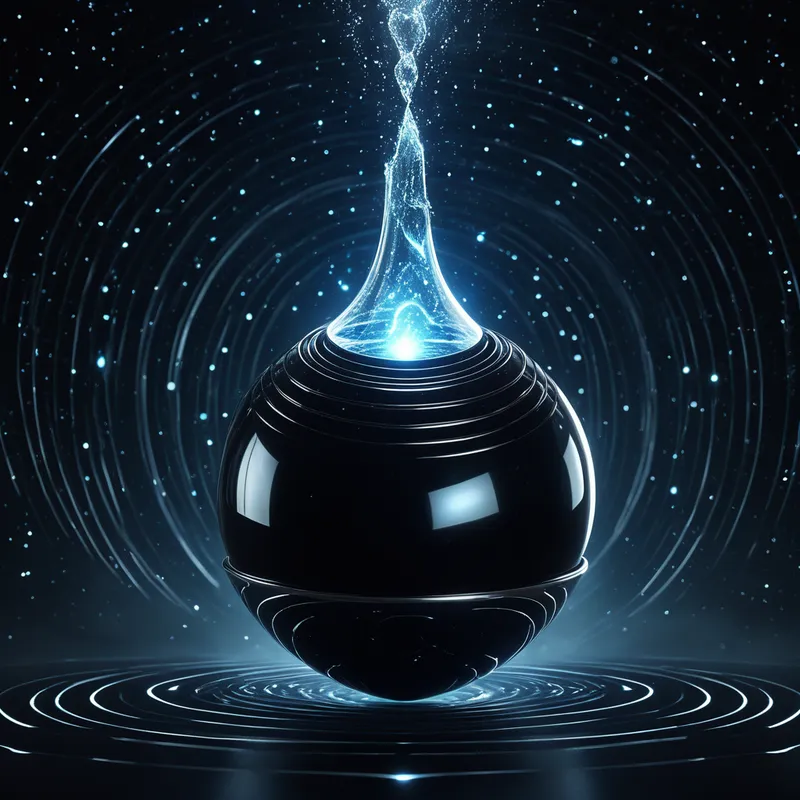
When this myth stirs in the modern dreamer, it often manifests as dreams of overwhelming, yet nurturing, water. A dream of a cascading waterfall emerging from one’s own chest. A dream of floating in a warm, dark sea, feeling utterly held. A dream of finding a secret freshwater spring in a concrete cellar.
These dreams signal a profound somatic and psychological process: the dissolution of an old, rigid sense of self to make way for a new, more authentic existence. The ego feels it is “drowning” or “breaking apart.” This is not a psychotic break, but a sacred disintegration. The psyche is invoking the Water Mother’s pattern, asking the dreamer to surrender a contained, defined identity to a more fluid, interconnected, and creative state of being. It is the process of healing by returning to the source, of allowing a part of oneself to be sacrificed for the sake of a greater inner wholeness.
Alchemical Translation
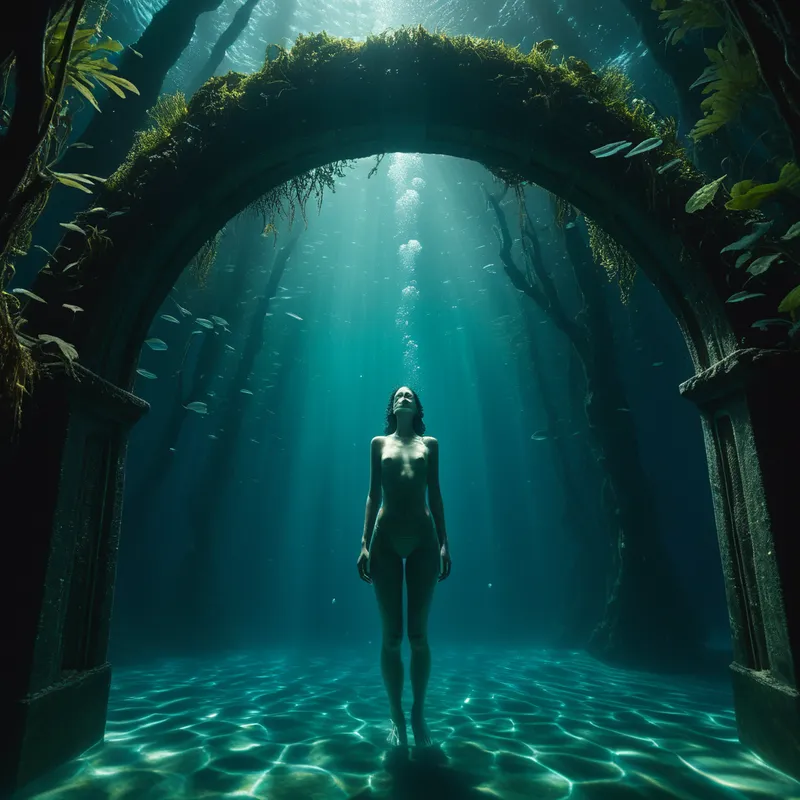
For the individual, the myth of the Water Mother models the alchemical stage of solutio—dissolution. This is the core of psychic transmutation on the path of individuation.
The ego must learn the humility of the water droplet, which gains its purpose only by losing itself in the river.
We spend our early lives building a solid “land”—a coherent ego, a persona, a set of defenses. The Water Mother’s call invites us to reverse this, to courageously allow those rigid structures to soften and dissolve back into the primal waters of the unconscious. This is experienced as a life crisis, a depression, a creative block, or a spiritual awakening—where everything we thought we were seems to be melting away.
The triumph is not in resisting this flood, but in consciously participating in the sacrifice. It is the act of saying, “I will let this old version of me break apart, trusting that my essence will become something greater and more interconnected.” The “world” that is born from this dissolution is a renewed personality. Your passions become the rivers that guide you. Your foundational values become the enduring mountains. Your compassion becomes the nourishing rain. You are no longer a solitary figure on the land, but a living landscape in yourself, animated by the diffused, nurturing spirit of your own deepest, most creative self. You become both the creator and the creation, the sacrificer and the sacred ground.
Associated Symbols
Explore related symbols from the CaleaDream lexicon:
- Water — The primal substance of the Water Mother, representing the unconscious, emotion, life itself, and the medium of all transformation.
- Mother — The archetypal source, the nourisher, and the one who gives her own substance for the creation and sustenance of life.
- Sacrifice — The central, voluntary act of self-dissolution that transforms undifferentiated potential into a living, differentiated world.
- River — The flowing, life-giving blood of the sacrificed Mother, symbolizing the journey of the soul, time, and the connective flow of psychic energy.
- Earth — The solid form born from the liquid, representing the manifested world, the body, and the grounded reality created through sacrifice.
- Cave — The womb-like, submerged space of the deep unconscious where the Water Mother dreams and creates the world-egg.
- Creation — The act of bringing form from formlessness, depicted not as a construction but as a birthing through self-surrender.
- Roots — The hidden, nourishing connections to the source, like the Mother’s hair becoming tree roots, symbolizing our deep, often unseen ties to the primal and ancestral.
- Ocean — The vast, boundless original state of the Water Mother, symbolizing the collective unconscious and the totality of being before differentiation.
- Dream — The state of the primal waters before creation, and the modern medium through which the pattern of dissolution and rebirth communicates with the conscious mind.
- Rebirth — The inevitable result of the sacrificial dissolution, where life and consciousness are renewed in a more complex and interconnected form.
- Vessel for Water — The human soul and body, seen as a container for the essence of the Water Mother, reminding us we carry the source within.