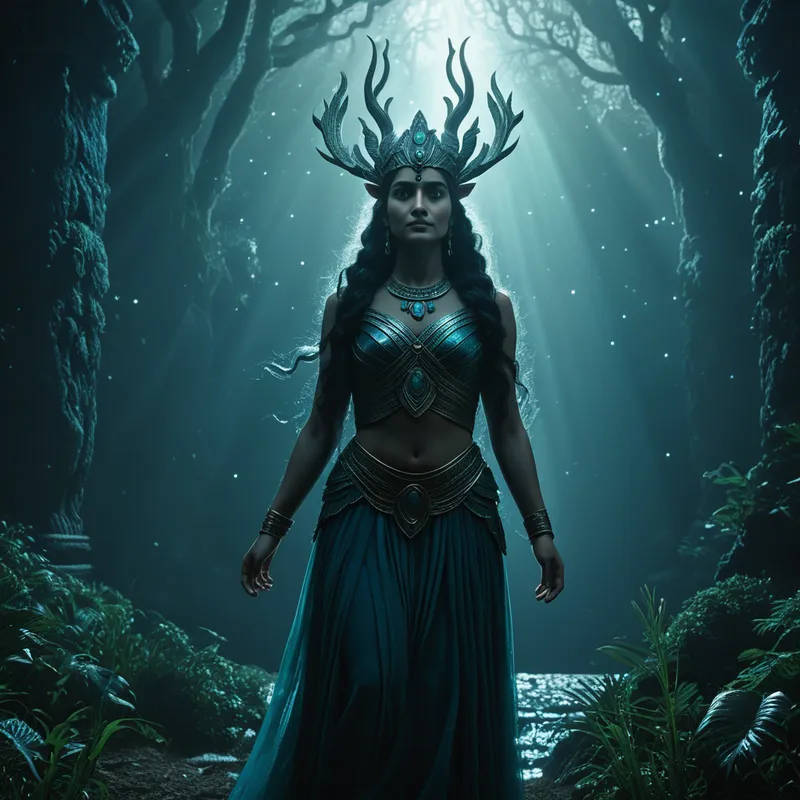
The Twin Heroes of the Xingu
Twin brothers from Amazonian lore whose intertwined destinies shape creation, embodying duality and heroic balance in the Xingu River region.
The Tale of The Twin Heroes of the Xingu
In the beginning-time, when [the world](/myths/the-world “Myth from Tarot culture.”/) was still soft and [the sky](/myths/the-sky “Myth from Persian culture.”/) lay close to the treetops, a woman of the waters was taken by the Sun. From this union, she bore twin sons within the great river. But the Sun, in his jealous heat, feared their power and sought to destroy them. He cast them into the waters, yet they did not drown. They were found, nurtured, and hidden by an old woman in the depths of the forest, who knew they carried the fate of the world within their infant hearts.
As they grew, the twins revealed their natures. One was fierce and direct, a being of action and daylight. The other was subtle and reflective, a being of thought and the secrets of night. They were named, in the old tongue, Kuat and Iaê. Kuat, the elder, claimed the domain of the day. Iaê, the younger, became the lord of the night. Yet they were inseparable, their destinies woven like the vines of the igarapé.
Their journey was an unmaking of the old, formless world. They heard the eternal, oppressive humming of the giant cicada, which held all of creation in a monotonous, static drone. No night existed; no day could dawn. The people lived in a bleached and weary eternity. The twins, embodying the first principle of difference, knew this could not stand. With cunning and courage, they shot down the celestial cicada with arrows of bamboo. As it fell, its great hum faded, and in the resulting silence, the first true darkness fell—Iaê’s domain was born. From [the cicada](/myths/the-cicada “Myth from Greek culture.”/)’s body, they scattered its parts to the winds, creating the animals of the forest. Then Kuat, climbing a great tree, used resin to ignite the first fire and hurled it into the sky to become the Sun, claiming his own reign.
But their work was not done. The world was still perilous and empty of order. They confronted monstrous beings that preyed on the nascent humanity. They tricked and defeated the great jaguar, master of fear. They navigated the deceptions of the anaconda, ruler of the watery abyss. In each adventure, their methods differed—Kuat would often meet force with force, while Iaê would devise a clever trap or a transformative ruse—yet their goal was one: to make the world safe, varied, and balanced.
Their final and most profound act was the giving of culture. They did not simply slay monsters; they taught the people how to live. They instituted the sacred ceremonies, the kuarup, which honor the dead and reaffirm the cycle of life. They brought the knowledge of agriculture, of the manioc, and the rituals that sustain the community. In doing so, they moved from being merely monster-slayers to being culture-bearers, weaving the social and spiritual fabric of the Xingu world. Having established the rhythms of day and night, life and [death](/myths/death “Myth from Tarot culture.”/), ceremony and daily life, they departed. Some say Kuat became the Sun itself, and Iaê [the Moon](/myths/the-moon “Myth from Tarot culture.”/), eternally chasing each other across the sky in a celestial affirmation of the balance they forged.
Cultural Origins & Context
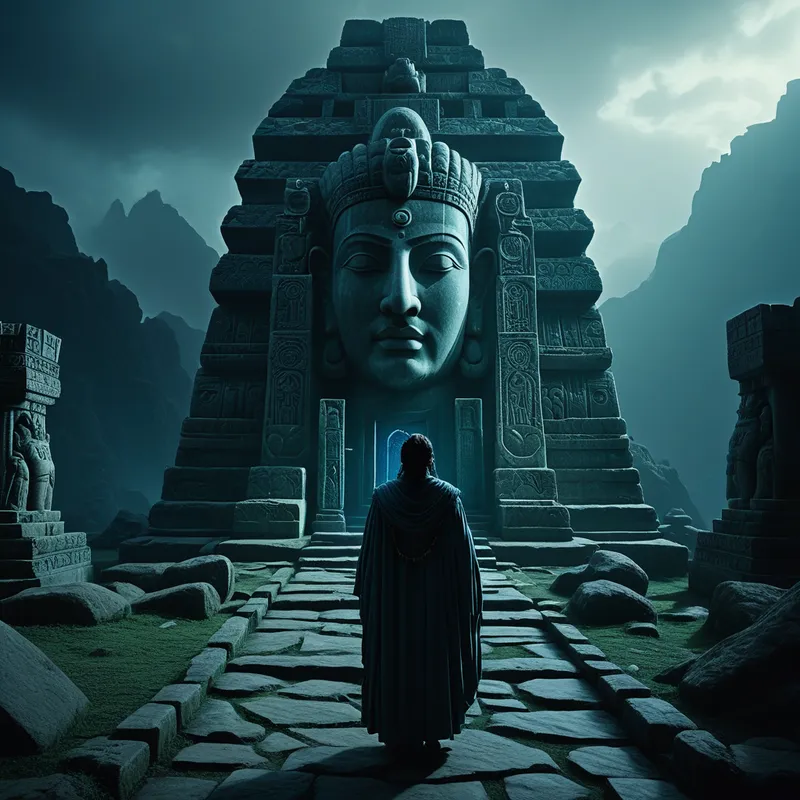
The myth of the Twin Heroes is central to the cosmology of the indigenous peoples of the Upper Xingu River basin in Brazil, particularly those within the Xingu Indigenous Park. This is not a single, monolithic story but a core narrative cycle expressed through the oral traditions, rituals, and art of various peoples such as the Kamayurá, Aweti, and Wauja. The Xinguano cultural complex is renowned for its intricate intertribal network, sustained through ceremonial trade, athletic contests, and shared mythological frameworks. The twin myth provides this shared framework, a foundational “sacred history” that explains the origins of the fundamental conditions of existence.
The heroes are not distant gods but culture heroes or demiurges. They are directly involved in shaping the landscape and social order familiar to the Xingu peoples. The narrative is deeply emplaced: [the river](/myths/the-river “Myth from Buddhist culture.”/), the forest, the cicada, the jaguar, and the manioc plant are all local, immediate realities. The myth explains why the world is as it is—why we have day and night, why certain animals behave as they do, and, most importantly, why we have the rituals that hold society together. It is a map of the cosmos, but also a charter for social and ecological life along the Xingu.
Symbolic Architecture
At its [heart](/symbols/heart “Symbol: The heart symbolizes love, emotion, and the core of one’s existence, representing deep connections with others and self.”/), the myth is a profound exploration of complementary duality. This is not the duality of good versus evil, but of necessary, interdependent opposites that create a whole. Day (Kuat) and [Night](/symbols/night “Symbol: Night often symbolizes the unconscious, mystery, and the unknown, representing the realm of dreams and intuition.”/) (Iaê), [action](/symbols/action “Symbol: Action in dreams represents the drive for agency, motivation, and the ability to take control of situations in waking life.”/) and [reflection](/symbols/reflection “Symbol: Reflection signifies self-examination, awareness, and the search for truth within oneself.”/), force and cunning, Sun and [Moon](/symbols/moon “Symbol: The Moon symbolizes intuition, emotional depth, and the cyclical nature of life, often reflecting the inner self and subconscious desires.”/)—these pairs are not in conflict but in [conversation](/symbols/conversation “Symbol: A conversation in a dream often symbolizes the need for communication and understanding, both with oneself and others.”/). The world before the twins was a world of monstrous, undifferentiated unity (the eternal hum), which was a kind of living [death](/symbols/death “Symbol: Symbolizes transformation, endings, and new beginnings; often associated with fear of the unknown.”/). The heroes introduce [differentiation](/symbols/differentiation “Symbol: The process of distinguishing or separating parts of the self, emotions, or identity from a whole, often marking a developmental or psychological milestone.”/), the [space](/symbols/space “Symbol: Dreaming of ‘Space’ often symbolizes the vastness of potential, personal freedom, or feelings of isolation and exploration in one’s life.”/) between things, which is the very space where [life](/symbols/life “Symbol: The symbol of ‘Life’ represents a journey of growth, interconnectedness, and existential meaning, encompassing both the joys and challenges that define human experience.”/), time, and meaning can occur.
The twins do not represent a choice between two paths, but the necessity of walking both. The psyche, like the Xinguano world, requires both the clear, defining light of consciousness (Kuat) and the fertile, generative darkness of the unconscious (Iaê). To deny one is to return to the static hum of psychosis.
Their [journey](/symbols/journey “Symbol: A journey in dreams typically signifies adventure, growth, or a significant life transition.”/) is a classic [hero’s journey](/symbols/heros-journey “Symbol: A universal narrative pattern representing personal transformation through trials, discovery, and return with wisdom.”/), but performed as a duet. One cannot succeed without the other. Kuat’s fiery action would be blind without Iaê’s reflective cunning; Iaê’s plans would be impotent without Kuat’s [strength](/symbols/strength “Symbol: ‘Strength’ symbolizes resilience, courage, and the ability to overcome challenges.”/) to enact them. This models a fundamental social and psychological ideal: [community](/symbols/community “Symbol: Community in dreams symbolizes connection, support, and the need for belonging.”/) and the individual [psyche](/myths/psyche “Myth from Greek culture.”/) are healthiest when these complementary forces are in [dialogue](/symbols/dialogue “Symbol: Conversation or exchange between characters, representing communication, relationships, and narrative flow in games and leisure activities.”/), not when one dominates.
The Dreamer’s Resonance
For the modern dreamer, the Twin Heroes manifest in the inner experience of contradiction and synthesis. They are the two voices in a dilemma: one urging decisive action, the other counseling patient strategy. They appear in dreams as two figures on a path, as siblings, or as alternating images of sun and moon. They represent the tension between our [persona](/myths/persona “Myth from Greek culture.”/) (the visible, daytime self) and our shadow (the hidden, nocturnal self). Integration is not the elimination of one, but the forging of a conscious relationship between them.
The myth invites us to identify our own “celestial cicada”—that monotonous, oppressive pattern (a habit, a belief, a trauma) that hums incessantly, preventing the natural rhythm of our inner day and night, of activity and rest, of expression and introspection. The heroic task is to “shoot it down,” to disrupt the stagnant unity, even if it initially brings a frightening darkness (the night of Iaê). From the pieces of that shattered stagnation, like the parts of the cicada becoming animals, new potentials and energies are released into the psyche.
Alchemical Translation
In the alchemical vessel of the soul, the Twin Heroes embody the stage of [separatio](/myths/separatio “Myth from Alchemical culture.”/) followed by [coniunctio](/myths/coniunctio “Myth from Alchemical culture.”/). The primal, chaotic massa confusa (the humming unity) is first decisively separated into its contrasting principles (Sol and Luna, fixed and volatile, day and night). This separation is not an end, but a necessary precondition for a higher, conscious union.
The ultimate goal is not day or night, but the sacred horizon where they meet—the dawn and the dusk, which belong to neither and both. This is the moment of the kuarup, the ritual where the community, the living and the dead, the human and the divine, are momentarily reunited in a balanced whole.
Their work is [the Great Work](/myths/the-great-work “Myth from Alchemical culture.”/): to transform the raw, dangerous, and undifferentiated world (the forest of monsters) into a [temenos](/myths/temenos “Myth from Greek culture.”/), a sacred, cultured space (the Xingu village with its rituals). Psychologically, this is the process of transforming primal, unconscious drives (the jaguar of rage, the anaconda of fear) into the structured energies of culture, art, and relationship within the individual personality.
Associated Symbols
Explore related symbols from the CaleaDream lexicon:
- Twin — The primordial archetype of duality, representing complementary opposites that together form a complete whole, forever linked in purpose and origin.
- Sun — The radiant principle of consciousness, clarity, active force, and diurnal authority, often associated with the father and the visible world.
- Moon — The reflective principle of the unconscious, intuition, passive reception, and nocturnal mystery, governing cycles, dreams, and the hidden depths.
- River — The flowing journey of life and time, a source of sustenance and a boundary between worlds, embodying constant change within a defined course.
- Forest — The dense, untamed realm of the unknown, teeming with both danger and nourishment, symbolizing the unconscious psyche and its primal contents.
- Fire — The transformative element of purification, illumination, and cultural genesis, capable of both destruction and the spark of new beginnings.
- Cycle — The eternal pattern of alternation, such as day/night or life/death, which structures existence and promises renewal within apparent opposites.
- Ritual — The sacred act that re-enacts mythic time, restoring balance between community, cosmos, and the ancestors, as instituted by the heroes.
- Bridge — That which connects separated realms—day and night, human and divine, [chaos](/myths/chaos “Myth from Greek culture.”/) and order—enabling passage and communication between opposites.
- Balance — The dynamic and sacred state of equilibrium between competing forces, the ultimate achievement and ongoing purpose of the heroic journey.
- Duality Mask — An artifact or image representing the unified face of complementary opposites, showing that separation is an illusion from a higher perspective.
- Cosmic Balance — The ordering of the entire universe into harmonious, interdependent pairs, reflecting a fundamental law of existence as revealed through myth.