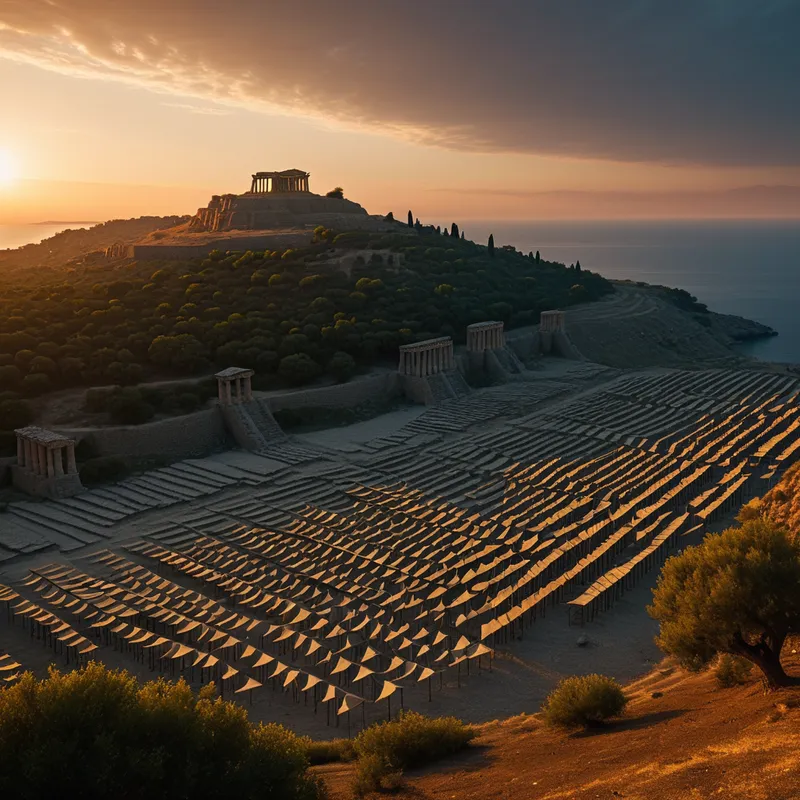
The Trojan War from Greek myth Myth Meaning & Symbolism
A decade-long siege sparked by a golden apple, a stolen queen, and divine pride, revealing the human cost of obsession and the hollow victory of conquest.
The Tale of The Trojan War from Greek myth
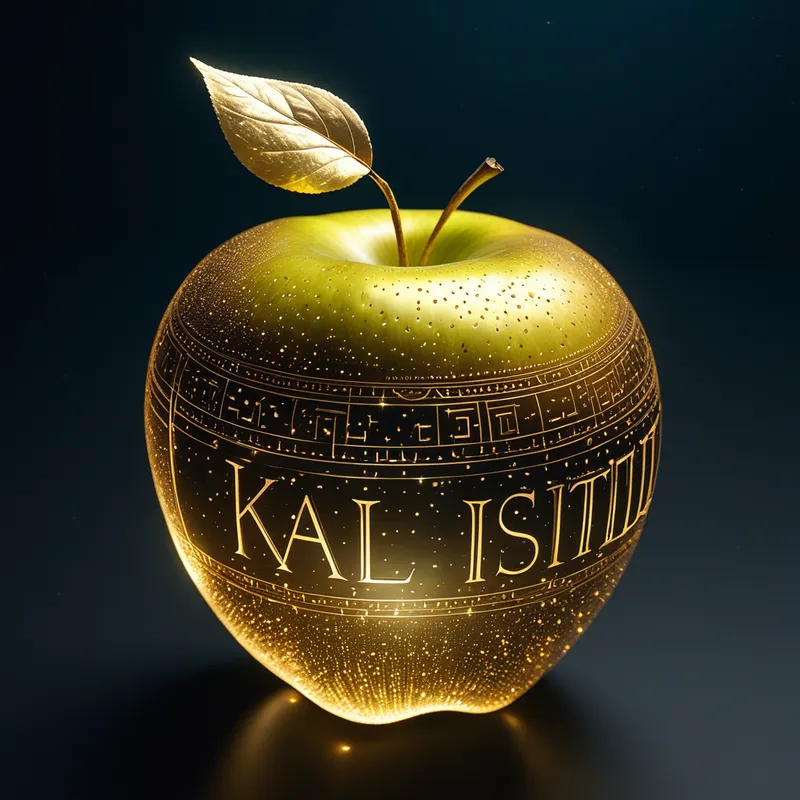
Hear now the song of rage and ruin, of a war spun on the spindle of the [Moirai](/myths/moirai “Myth from Greek culture.”/) but kindled by the vanity of gods. It began not with a trumpet’s blast, but at a wedding feast where Eris, the uninvited goddess of strife, cast a single golden apple inscribed “For the Fairest” into the midst of the revelry. And so the great chain was forged. Three goddesses—Hera, Athena, and Aphrodite—claimed the prize, and the shepherd-prince Paris was made the judge. Offered power, wisdom, or the love of [the world](/myths/the-world “Myth from Tarot culture.”/)’s most beautiful woman, he chose Aphrodite’s gift: Helen, wife of King Menelaus of Sparta.
Thus did Paris sail to Sparta and, under Aphrodite’s spell, steal Helen away across the wine-dark sea to the high-walled city of Troy. A thousand ships were launched to bring her back, a fleet that blotted out [the horizon](/myths/the-horizon “Myth from Various culture.”/), led by Agamemnon, brother of the cuckolded king. For ten long years, the Achaeans camped on the Trojan plain. The dust of their chariots choked the sun; the clang of bronze on bronze was the land’s only song. Here, the hero Achilles raged in his tent over a slight to his honor, while the noble Trojan prince Hector defended his home with a heavy heart.
The gods themselves took sides, hurling thunderbolts and weaving deceptions. Achilles’ wrath, once turned inward, finally found its mark on the battlefield, where he slew Hector and dragged his body in the dust—a sacrilege that echoed in the hollow victory. But even the swift-footed Achilles could not outrun his fate, felled by Paris’s arrow guided to his vulnerable heel. The war ground on, a bloody stalemate of pride and grief, until the cunning of [Odysseus](/myths/odysseus “Myth from Greek culture.”/) conceived a final, terrible ruse.
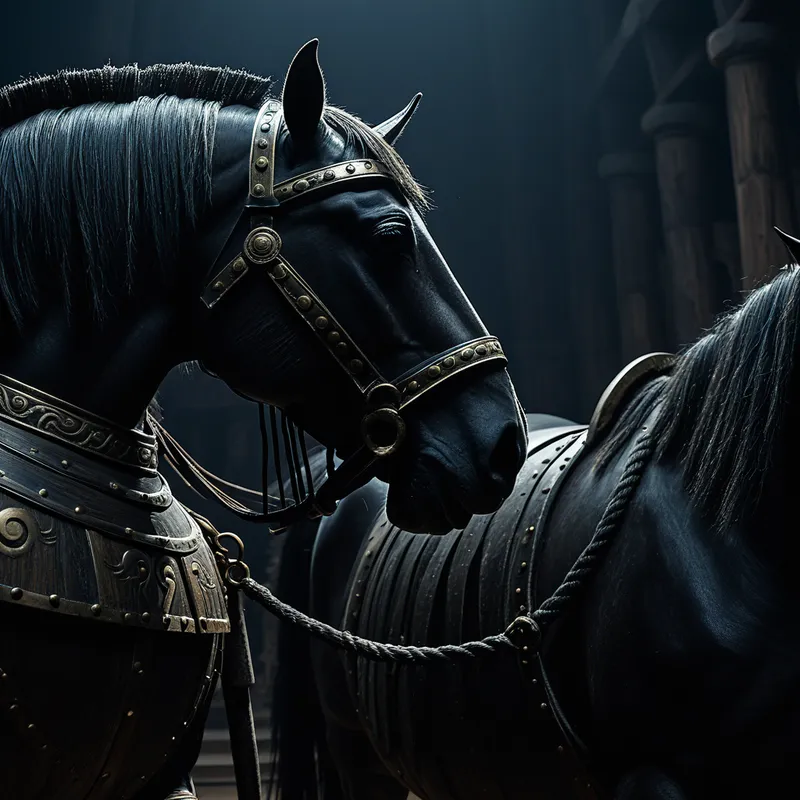
The Greeks built a colossal wooden horse, an offering to Athena, and pretended to sail away. The Trojans, believing the siege over, dragged the hollow idol inside their impregnable walls. That night, as the city slept in drunken celebration, a hidden door opened in the horse’s belly. Greek warriors poured silently into the streets, their swords gleaming in the firelight. They opened the gates to their returning army, and Troy was consumed—not by an army outside its walls, but by the deception it had welcomed within. The palaces fell, the altars were defiled, and the screams of Priam’s kingdom were swallowed by the roaring flames. Helen was reclaimed, but the victors, scattered by vengeful gods on their homeward voyages, found only ashes in their [triumph](/myths/triumph “Myth from Roman culture.”/). The war for a symbol had destroyed the reality of two worlds.
Cultural Origins & Context
This epic is not a single story but a vast tapestry woven over centuries. Its primary threads are the Iliad and [the Odyssey](/myths/the-odyssey “Myth from Greek culture.”/), composed in the 8th century BCE but recounting a legendary conflict believed to have occurred in the 12th century BCE. For the ancient Greeks, [the Trojan War](/myths/the-trojan-war “Myth from Greek culture.”/) was their foundational national saga, a mytho-historical event that defined the heroic age. It was performed by bards (rhapsodes) at festivals and in the courts of kings, serving as a communal memory, a religious text, and a manual of aristocratic values—arete (excellence), timē (honor), and the inescapable weight of moira (fate).
The story functioned as a cultural mirror. It explored the tensions between individual glory and communal duty, the capricious interference of the divine in human affairs, and the catastrophic cost of hubris (excessive pride). It provided an origin story for the Greek diaspora and a cautionary tale about the fragility of civilization. The war was [the crucible](/myths/the-crucible “Myth from Alchemical culture.”/) in which Greek identity was forged, setting the civilized, ordered (but often fractious) Greek world against the wealthy, fortified, and ultimately doomed East, represented by Troy.
Symbolic Architecture
At its core, the Trojan War is a myth about the [psyche](/myths/psyche “Myth from Greek culture.”/) besieged by its own desires and the illusions it constructs. The golden [apple](/symbols/apple “Symbol: An apple symbolizes knowledge, temptation, and the duality of good and evil, often representing the pursuit of wisdom with potential consequences.”/) of Eris represents the primal, disruptive spark of envy and comparison that ignites conflict within [the self](/myths/the-self “Myth from Jungian culture.”/). The three goddesses are archetypal forces vying for supremacy: Hera (sovereignty and [structure](/symbols/structure “Symbol: Structure in dreams often symbolizes stability, organization, and the framework of one’s life, reflecting how one perceives their environment and personal life.”/)), Athena (strategic intellect), and Aphrodite (eros and binding desire). Paris’s [choice](/symbols/choice “Symbol: The concept of choice often embodies decision-making, freedom, and the multitude of paths available in life.”/) is not between women, but between ruling principles of existence. His selection of Aphrodite signifies the triumph of immediate, captivating desire over wisdom or power—a choice that sets the entire world aflame.
The walls of Troy are not merely stone; they are the formidable defenses of a conscious identity, a persona believed to be impregnable.
The war itself symbolizes the protracted, exhausting inner conflict that follows such a choice—the [decade](/symbols/decade “Symbol: A ten-year period representing a distinct era of personal or collective experience, often symbolizing cycles, progress, or nostalgia.”/)-long struggle between competing parts of the self (the Greek [host](/symbols/host “Symbol: The symbol of a ‘host’ often represents nurturing, hospitality, or the willingness to offer support and guidance to others.”/) of disciplined aggression versus the Trojan [defense](/symbols/defense “Symbol: A protective mechanism or barrier against perceived threats, representing boundaries, security, and resistance to external or internal challenges.”/) of cherished attachments). [The Trojan Horse](/myths/the-trojan-horse “Myth from Greek culture.”/) is the ultimate [symbol](/symbols/symbol “Symbol: A symbol can represent an idea, concept, or belief, serving as a powerful tool for communication and understanding.”/) of the unconscious content, the disguised and unintegrated [shadow](/symbols/shadow “Symbol: The ‘shadow’ embodies the unconscious, repressed aspects of the self and often represents fears or hidden emotions.”/), which is welcomed into the [heart](/symbols/heart “Symbol: The heart symbolizes love, emotion, and the core of one’s existence, representing deep connections with others and self.”/) of the citadel precisely because it appears as a gift, a [solution](/symbols/solution “Symbol: A solution symbolizes resolution, clarity, and the overcoming of obstacles, often representing a sense of accomplishment.”/), or a victory. Its hollow [interior](/symbols/interior “Symbol: The interior symbolizes one’s inner self, thoughts, and emotions, often reflecting personal growth, vulnerabilities, and secrets.”/), filled with destructive potential, represents the latent [trauma](/symbols/trauma “Symbol: A deeply distressing or disturbing experience that overwhelms the psyche, often manifesting in dreams as unresolved emotional wounds or psychological injury.”/), deception, or complex that, once admitted, destroys from within.
The Dreamer’s Resonance
When this mythic pattern stirs in the modern dreamer, it often signals a state of prolonged psychic siege. Dreaming of an unassailable wall, a relentless external enemy, or a feeling of being trapped in a decade-long struggle points to an inner conflict that has reached a stalemate. The conscious ego (Troy) is under attack by powerful, perhaps repressed, forces (the Greek army) it cannot fully defeat or understand.
A dream featuring a deceptive gift, a beautiful but dangerous stranger (a Helen-figure), or a hollow, wooden structure may be the psyche’s representation of the “Trojan Horse” moment. It is a warning that a seemingly beneficial idea, relationship, or belief system has been admitted into the inner sanctum and carries a hidden, destructive payload. The somatic experience is often one of deep unease, a sense of betrayal from within, or the terrifying realization that the defenses one has relied upon are fundamentally compromised. The dream invites the dreamer to ask: What illusion have I welcomed? What part of myself am I at war with, and what deceptive peace have I made?

Alchemical Translation
The alchemical journey modeled by the Trojan War is one of necessary dissolution for the possibility of renewal. [The ego](/myths/the-ego “Myth from Jungian culture.”/)’s proud citadel, built on a foundation of chosen desires (Paris’s judgment) and defended at all costs (Hector’s heroism), must ultimately fall. This is not a failure, but a crucial stage in individuation: the [nigredo](/myths/nigredo “Myth from Alchemical culture.”/), the blackening, the destruction of the old, rigid form.
The fire that burns Troy is the same fire that purifies gold. The conquest is not of a city, but of the illusion of separateness from one’s own depths.
The hero’s task here is not Achilles’s rage nor Hector’s duty, but the Odyssean endurance through the aftermath. The “victory” leaves the heroes scattered and lost, forced on long, perilous journeys home (the Odyssey). This represents the long, integrative work that follows a major psychic collapse. The conscious identity has been breached and its contents laid waste. The alchemical work is to sift through those ashes—the grief for lost parts of the self (Hector, Achilles, Priam), the recognition of one’s own capacity for deception (the Horse), and the acceptance of the role fate and divine folly (the gods’ game) play in one’s life.
The ultimate transmutation is the release of identification with the impregnable fortress. One does not rebuild Troy. Instead, like the survivors, one must learn to navigate a wider, more mysterious, and less certain world, carrying the wisdom of [the fall](/myths/the-fall “Myth from Biblical culture.”/). The golden apple of strife is metabolized into the gold of self-knowledge—the understanding that the deepest conflicts are internal, and the greatest walls are those we build ourselves.
Associated Symbols
Explore related symbols from the CaleaDream lexicon: