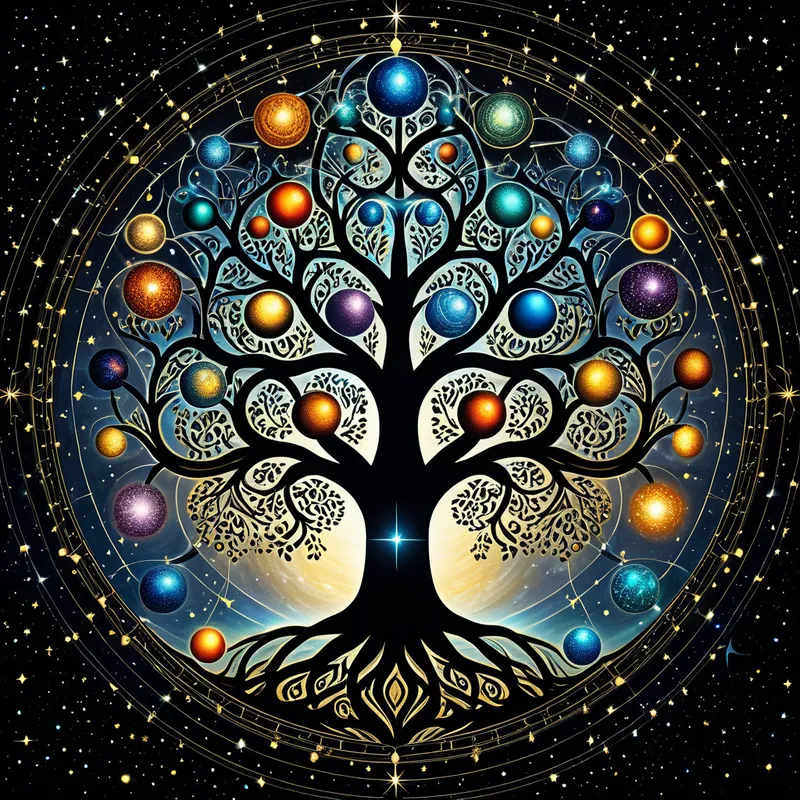
The Tree of Life Kabbalistic Myth Meaning & Symbolism
A sacred map of ten luminous spheres, charting the descent of divine light into matter and the soul's perilous ascent back to its source.
The Tale of The Tree of Life Kabbalistic
Before the world was world, before the word was spoken, there was Ein Sof. A boundless, endless light, so perfect and complete it had no need to be known. But within that infinite stillness, a desire stirred—a desire to be known, to be revealed. And so, from the heart of the boundless, a single point of concentrated will emerged. A vessel was formed, a perfect sphere to receive the light. This was Keter.
The light poured forth, a torrent of pure being. But the vessel, in its pristine perfection, could not hold it. It shattered. A cataclysm of holy sparks, a roaring cascade of divine substance, fell through the void. This was the Breaking of the Vessels. From the shards, new vessels were formed—spheres within spheres, each one denser, each one further from the source, each one a filter for the relentless, creative light. They arranged themselves in a pattern of three pillars: a pillar of Mercy on the right, a pillar of Severity on the left, and between them, the delicate pillar of Balance.
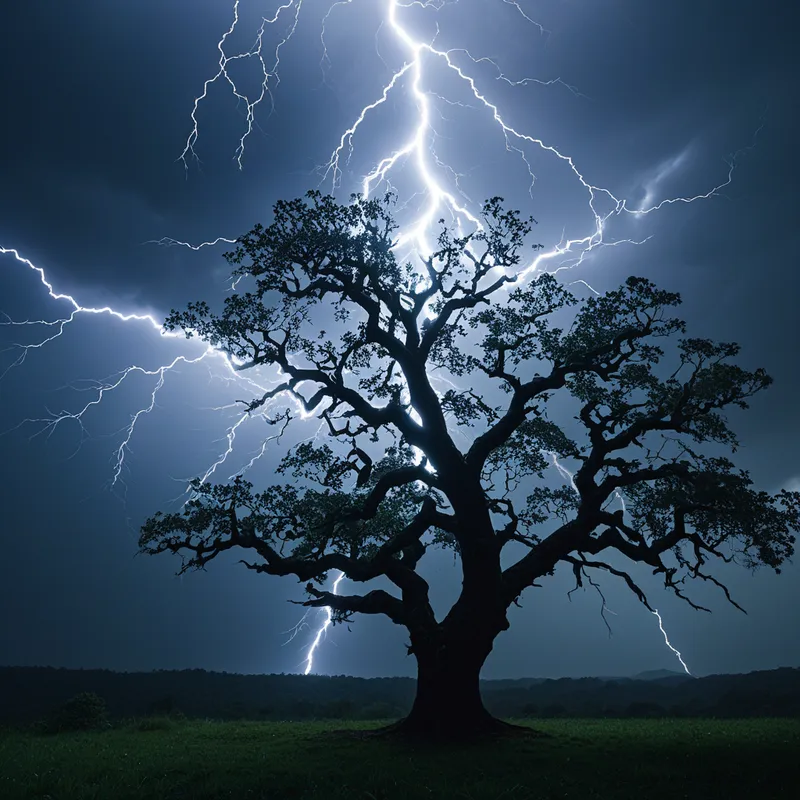
Down, down, down the light flashed, like lightning across a midnight sky. It touched Chokhmah, the father, and Binah, the mother. From their union, the first feeling was born: Chesed. But love without boundary is a flood, so it was met by its counterpart, Gevurah. Between them, Tiferet arose, the radiant sun, the heart of the entire tree.
The descent continued. The light flowed into Netzach, the driving force of nature, and Hod, the structure of intellect. They found their meeting place in Yesod, the moon, the gatherer of all that came before. Finally, the light, now clothed in layer upon layer of form and feeling, reached its destination: Malkhut. The princess in exile. The world of stone, leaf, blood, and breath. Here, the divine light sleeps, hidden in every atom, waiting.
But the story does not end in slumber. For a path was opened. Not the lightning flash of descent, but the winding, serpentine path of return. Twenty-two paths, corresponding to the letters of the sacred alphabet, connect the spheres. They are the roads the soul must walk. The seeker, standing in Malkhut, looks up at the towering tree, its crown lost in the brilliance of Keter. Their journey is to gather the scattered sparks, to repair the broken vessels within themselves, and to climb, sphere by sphere, restoring the light to its source, making the hidden divine once again known.
Cultural Origins & Context
The myth of the Tree of Life is not a folktale with a single author, but a living, evolving map of reality born from Jewish esoteric tradition. Its roots are in the Zohar and earlier Heikhalot literature, but its systematic form crystallized in medieval Spain and Safed. It was never a story for the multitude, but a secret wisdom (Kabbalah means “to receive”) passed from master to initiated disciple. Its tellers were rabbis and mystics like Moses de León and Isaac Luria, who saw it not as mere allegory, but as the literal architecture of creation and consciousness. Its societal function was dual: to explain the paradox of a perfect God and an imperfect world (theodicy), and to provide a contemplative technology for achieving Tikkun Olam—the repair of the world—beginning with the repair of one’s own soul.
Symbolic Architecture
The [Tree](/symbols/tree “Symbol: In dreams, the tree often symbolizes growth, stability, and the interconnectedness of life.”/) is a symbolic [blueprint](/symbols/blueprint “Symbol: A blueprint represents the foundational plan or design for something, often symbolizing potential, structure, and the mapping of one’s inner self or future.”/) of the [cosmos](/symbols/cosmos “Symbol: The entire universe as an ordered, harmonious system, often representing the totality of existence, spiritual connection, and the unknown.”/), the [human](/symbols/human “Symbol: The symbol of a human represents individuality, complexity of emotions, and social relationships.”/) [soul](/symbols/soul “Symbol: The soul represents the essence of a person, encompassing their spirit, identity, and connection to the universe.”/), and the process of [revelation](/symbols/revelation “Symbol: A sudden, profound disclosure of truth or insight, often through artistic or musical means, that transforms understanding.”/) itself. It is a [mandala](/symbols/mandala “Symbol: A sacred geometric circle representing wholeness, the cosmos, and the journey toward spiritual integration.”/) of order emerging from divine [chaos](/symbols/chaos “Symbol: In Arts & Music, chaos represents raw creative potential, uncontrolled expression, and the breakdown of order to forge new artistic forms.”/).
The Tree of Life is the universe in exile, and the soul remembering its address.
Each Sephirah represents a specific divine attribute, a stage in the process of [emanation](/symbols/emanation “Symbol: A spiritual or divine energy flowing outward from a source, often representing creation, influence, or the manifestation of the sacred into the material world.”/), and a facet of the human psyche. Keter is the supra-conscious will, the spark of the infinite. Chokhmah is the flash of [insight](/symbols/insight “Symbol: A sudden, deep understanding of a complex situation or truth, often arriving unexpectedly and illuminating hidden connections.”/), the masculine seed of thought. [Binah](/symbols/binah “Symbol: In Kabbalah, the third Sephirah representing divine understanding, the feminine principle, and the womb of creation.”/) is the [womb](/symbols/womb “Symbol: A symbol of origin, potential, and profound transformation, representing the beginning of life’s journey and the unconscious source of creation.”/) that gives it form, the analytical mind. The lower spheres map our emotional and instinctual [life](/symbols/life “Symbol: The symbol of ‘Life’ represents a journey of growth, interconnectedness, and existential meaning, encompassing both the joys and challenges that define human experience.”/): the boundless love of Chesed, the focused discipline of Gevurah, the synthesized [identity](/symbols/identity “Symbol: Identity represents the sense of self, encompassing personal beliefs, cultural background, and social roles.”/) of Tiferet. Malkhut is the embodied self, the ego in the physical world, which contains—but has forgotten—the entire tree above it. The myth of the shattering vessels (Shevirat HaKelim) symbolizes the fundamental [trauma](/symbols/trauma “Symbol: A deeply distressing or disturbing experience that overwhelms the psyche, often manifesting in dreams as unresolved emotional wounds or psychological injury.”/) of existence: the [fragmentation](/symbols/fragmentation “Symbol: The experience of breaking apart, losing cohesion, or being separated into pieces. Often represents disintegration of self, relationships, or reality.”/) of wholeness into the multiplicity of experience, and the embedding of divine light within the “shells” (Kelipot) of [material](/symbols/material “Symbol: Material signifies the tangible aspects of life, often representing physical resources, desires, and the physical world’s influence on our existence.”/) [reality](/symbols/reality “Symbol: Reality signifies the state of existence and perception, often reflecting one’s understanding of truth and life experiences.”/).
The Dreamer’s Resonance
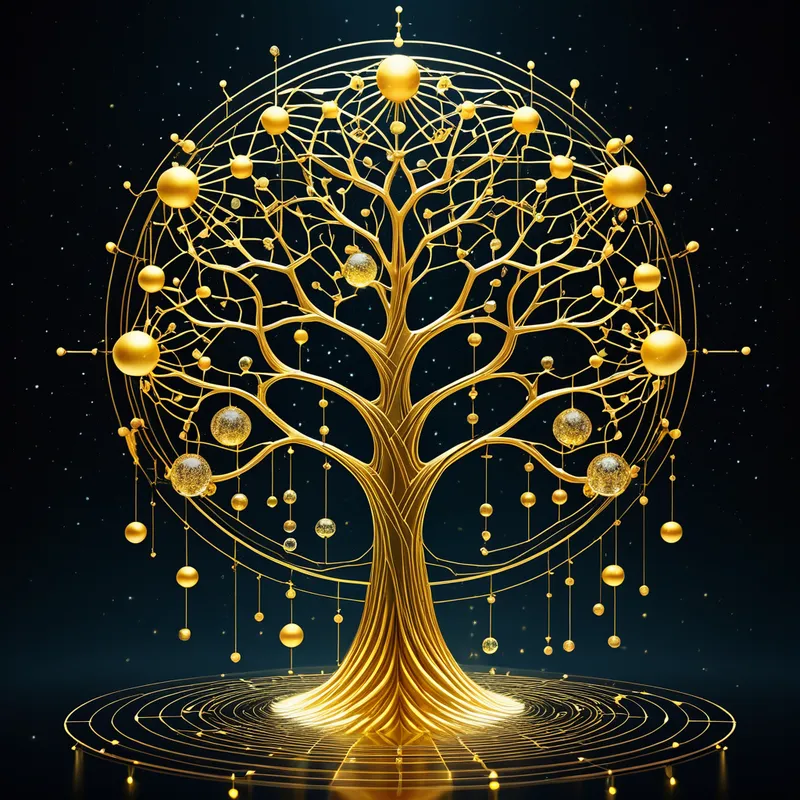
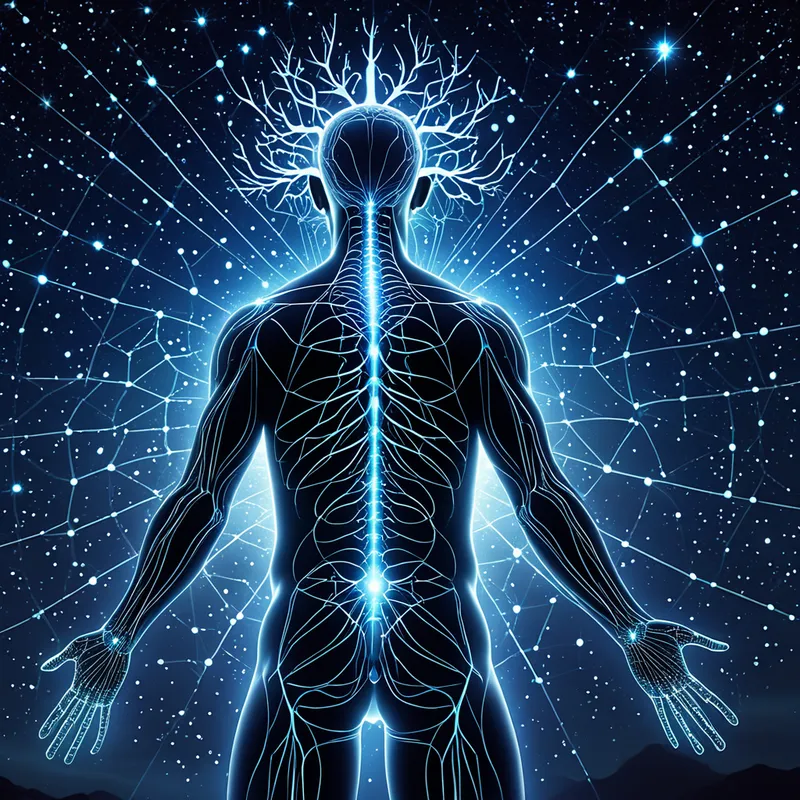
When this myth appears in modern dreams, it rarely manifests as a literal tree. Instead, one dreams of intricate ladders, corporate organizational charts that feel sacred, spinal columns lit with chakras, or complex circuit boards that seem alive. The dreamer is undergoing a process of psychic integration and mapping. They are confronting the inherent structure of their own being. A dream of ascending a precarious staircase between platforms of light speaks to the journey from one Sephirah to another. A dream of repairing something shattered with gold lacquer (Kintsugi) is the work of Tikkun. The somatic feeling is often one of vertical alignment—a tension between the crown of the head and the base of the spine—and a profound longing for a coherence that feels both deeply personal and cosmically ordained. The dreamer is not fantasizing; they are intuiting the architecture of their own psyche.
Alchemical Translation
For the modern individual, the Tree models the alchemical process of individuation—the journey from a fragmented, ego-bound state to an integrated Self. We all begin in Malkhut, identified solely with our physical reality and social persona. The lightning flash of descent is our personal history: the innate potential (Keter) that became specific talents (Chokmah/Binah), which then shaped our emotional patterns (Chesed to Yesod).
Individuation is the conscious re-ascent of the Tree: the reclamation of every disowned spark, the balancing of every opposite, until the ego becomes a transparent vessel for the Self.
The work is one of conscious re-ascent. To move from Malkhut to Yesod is to confront the unconscious foundations of identity—our instincts and complexes. To balance Chesed and Gevurah within Tiferet is to integrate our capacity for mercy and discipline into a centered, compassionate heart. Each sphere represents a piece of our wholeness that we have either inflated or repressed. The “serpentine” path of return is the non-linear, often confusing, path of therapy, shadow-work, and creative expression. The ultimate goal is not to escape to Keter, but to bring its infinite potential into conscious relationship with our embodied life in Malkhut, thus healing the primordial rift between spirit and matter within ourselves.
Associated Symbols
Explore related symbols from the CaleaDream lexicon:
- Tree of Life — The central symbol itself, representing the structured emanation of the divine into the manifest world and the map for the soul’s return journey.
- Light — The divine essence that flows through the Tree, representing consciousness, revelation, and the sparks of holiness trapped in matter after the shattering.
- Crown — Corresponds directly to Keter, the highest sphere, symbolizing pure potential, the divine will, and the origin point of all creation.
- Journey — The essential movement on the Tree, both the catastrophic descent of the lightning flash and the arduous, intentional ascent of the soul along the 22 paths.
- Order — The fundamental principle of the Tree’s architecture, representing the divine logic and structured harmony that underlies the apparent chaos of existence.
- Mirror — Each Sephirah reflects the ones above and below, and the entire Tree is a reflection of the macrocosm in the human microcosm.
- Bridge — The 22 connecting paths between the spheres, which serve as bridges between different states of consciousness and aspects of the self.
- Key — The knowledge of the Tree and its paths is seen as a key to unlocking the mysteries of creation, the Torah, and the depths of the soul.
- Temple — The entire structure of the Tree is often envisioned as a celestial temple or palace, with each sphere being a hall or chamber of divine presence.
- Circle — Represents the cyclical nature of emanation and return, and the unity of the Sephiroth which are ultimately aspects of a single, undivided light.
- Root — While often shown as a downward-growing tree, its roots are in the infinite Ein Sof, anchoring the entire structure in the divine unknown.
- Fruit-Laden Tree — Symbolizes Malkhut, the sphere of manifestation, which bears the fruit of all the divine energies flowing from the spheres above it.