The Tower Myth Meaning & Symbolism
A lightning bolt of divine truth shatters a proud, false edifice, casting its rulers into chaos to be reborn on the raw, holy ground of reality.
The Tale of The Tower
Hear now the tale of the proud spire that sought to kiss the heavens, and of the sky that answered.
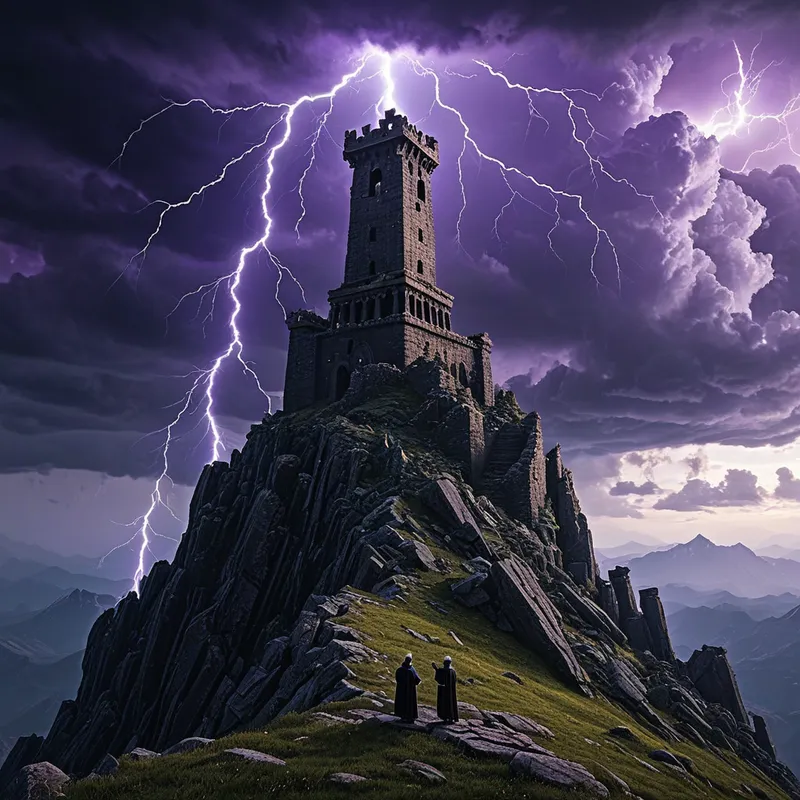
It stood not as a tree grows, from the dark, nourishing earth, but as a defiance, a spike driven into the flank of a sacred mountain. This was the Tower of Babel, though it bore many names in many dreams. Its stones were quarried from the bedrock of certainty, each block mortared with the cement of doctrine. Its windows were narrow, designed not to see out, but to let in only a sliver of light that would illuminate the approved texts upon its inner walls. At its pinnacle, upon a throne of polished onyx, sat the King of the Mind, clad in the robes of temporal authority. Beside him stood the High Priest of the Soul, holding a scepter of interpreted divinity.
Together, they believed they had calculated God. They had mapped the heavens with their charts and contained the mystery within their liturgies. From their height, they looked down upon the winding roads of doubt, the messy villages of instinct, and the wild forests of the unconscious, and called them chaos. Their tower was order. It was permanence. It was a monument to the triumph of their will over the formless clay of existence.
But the sky, which they thought they owned, was watching. It gathered itself, not in anger, but in a terrible, necessary truth. A cloud, black as the void before creation, boiled over the mountain peak. From its heart, a spark was kindled—not of fire, but of pure, unmediated knowing. It was a lightning bolt of divine clarity, a single, searing syllable of a truth that cannot be argued.
The strike was not random. It found the flaw in the architecture, the keystone of pride that held the entire illusion aloft. The sound was not a crash, but a great, tearing crack, as if the world itself had snapped a bone. Stone screamed as it split. Gilded lies melted and ran like wax. The throne of onyx shattered.
And the two lords of the tower? They did not fall. They were cast out. The force of the revelation was an expulsion, a birth into a terrifying freedom. Crown and mitre, scepter and scroll, became meaningless weight as they tumbled, arms flailing, through the roaring wind and lashing rain. They saw, in that endless moment of descent, the raw, unadorned face of the mountain they had built upon and ignored. They saw the lightning-scorched earth, holy and bare.
The tower did not merely collapse; it was unmade. What returned to the ground was not building material, but dust and memory. The storm passed. The silence that followed was absolute, clean, and vast. On the scorched earth, where the foundation had been, two figures stirred, not as rulers, but as men—stripped, shocked, and utterly, profoundly awake.
Cultural Origins & Context
The image of Le Maison Dieu, "The House of God," emerged in the rich visual lexicon of Renaissance Europe, most famously in the Marseille Tarot. This was not a folk tale told by bards, but a philosophical and spiritual argument rendered in woodcut and paint. It lived in the hands of cartomancers, philosophers, and seekers, part of a Major Arcana that mapped the soul's journey from innocence to integration.
Its societal function was that of a memento mori for the psyche. In an age of rising humanism, burgeoning scientific inquiry, and profound religious schism, the Tower served as a stark counterpoint to the archetype of The Pope or the stability of The Emperor. It was a whispered warning against the idolatry of one's own intellect or dogma, a visual parable that true divinity cannot be housed in human construction. It was passed down not through epic poetry, but through silent contemplation of the card, a mirror held up to the viewer's own most rigidly held structures.
Symbolic Architecture
The Tower is the archetype of catastrophic enlightenment. Its symbols are not gentle metaphors but stark, physical facts.
The Tower itself is the psyche's fortress: a complex of rigid beliefs, inflated identity, and defensive structures built over a lifetime. It is the career we think defines us, the ideology we cling to, the self-image we polish and defend. Its height represents not achievement, but isolation from the grounding earth of instinct and the boundless sky of spirit.
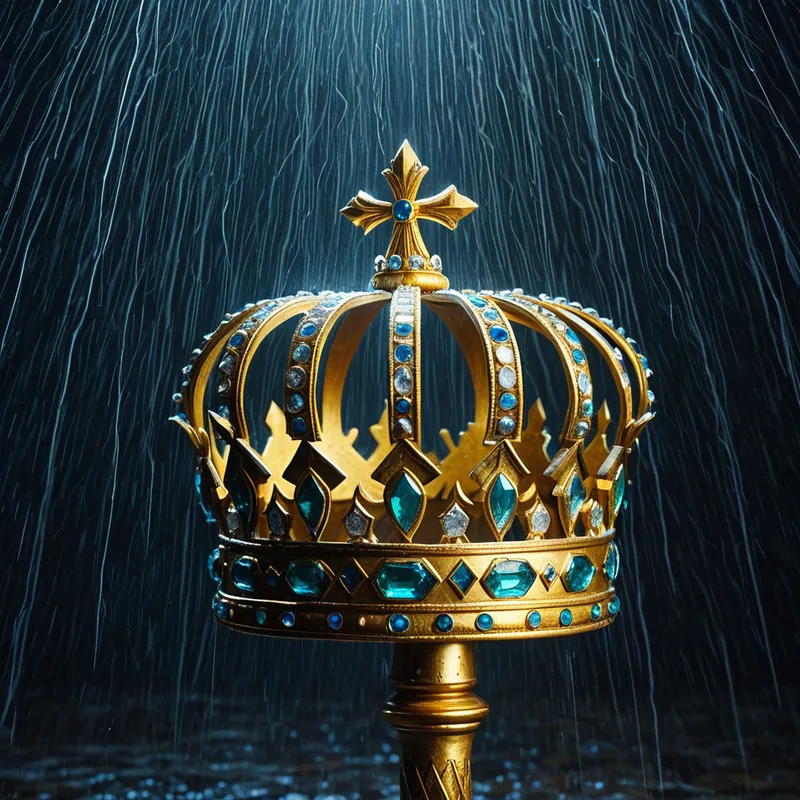
The Crown being struck away is the dethronement of the conscious ego, the "I" that believes it is in control. The Lightning Bolt is the sudden, involuntary influx of truth from the Self (the total, unified psyche). It is the devastating insight, the unforeseen crisis, the betrayal that shatters a worldview. It is not punishment, but correction.
The lightning bolt does not destroy reality; it destroys only the illusion that was obscuring it.
The Falling Figures represent the conscious mind (King) and the spiritual dogma (Priest) being forcibly reunited with the parts of life they had denied—the body, emotion, chaos, the unconscious. The fall is a brutal but necessary descent into a more complete humanity.
The Stormy Sky and Barren Earth frame the event. They are the raw, unmediated forces of the cosmos and the foundational, often ignored, truth of one's own nature. The Tower's destruction reveals them, making the world seem both more terrifying and more real.
The Dreamer's Resonance
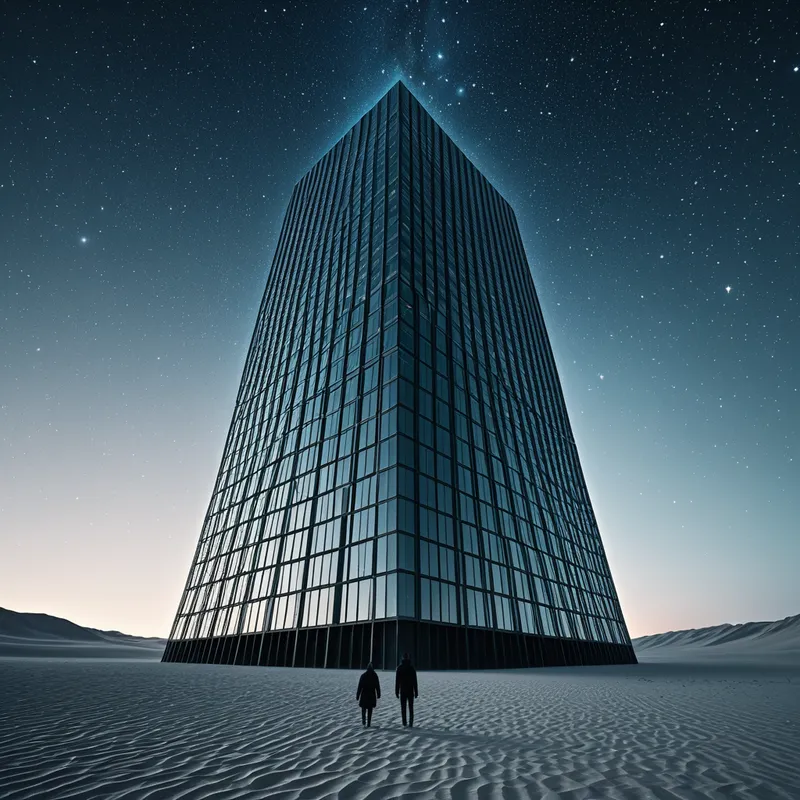
When the Tower appears in the modern dreamscape, it rarely manifests as a medieval keep. It is the dream of the corporate headquarters collapsing, the family home burning, the sleek spaceship breaking apart in the void. The somatic experience is one of sudden, adrenal shock—a jolt awake with a pounding heart. Psychologically, the dreamer is in a process of involuntary deconstruction.
This is the psyche's immune response to a psychic structure that has become toxic or obsolete. Perhaps a long-held ambition is revealed as empty. A foundational relationship proves false. A core belief about oneself is contradicted by undeniable experience. The dream is not prophetic of external disaster, but descriptive of an internal one already underway. The feeling upon waking is often a paradoxical mix of terror and a strange, clean relief. The prison walls have fallen, even if the dreamer now stands exposed in an open field. The process is one of ego death, where the familiar identity is shattered to make way for something less certain, but potentially more authentic.
Alchemical Translation
In the alchemical opus, the stage of Nigredo follows the initial conjunction. It is the dark night, the dissolution, where the composite matter breaks down into its primal constituents. The Tower is the mythic enactment of this stage in the individuation process.
The conscious personality, having built a seemingly stable compound of persona and adapted attitudes, must be broken apart for any genuine transformation to occur. The lightning bolt is the catalyzing agent—often an eruption from the unconscious in the form of a powerful emotion, a life crisis, or a profound insight that cannot be integrated into the old framework.
The goal is not to rebuild the same tower with better materials. It is to discover that the holy ground needs no tower.
The "triumph" here is the triumph of reality over illusion. The alchemical gold is not found in the gleaming spire, but in the acceptance of the scorched earth. The figures who survive the fall are humbled, but they are also liberated from the immense labor of maintaining a lie. They are now free to build, not from a blueprint of shoulds and musts, but from the direct, immediate experience of what is. The Tower's destruction clears the psychic landscape, making space for the next archetype in the sequence: The Star, which shines not on a monument, but on a naked soul drinking from the waters of the unconscious. It is the myth of the necessary disaster, the crisis that is, in its essence, a brutal and merciful act of grace.
Associated Symbols
Explore related symbols from the CaleaDream lexicon: