The Thirteen Baktuns Myth Meaning & Symbolism
The Maya creation myth of four failed worlds and a fifth, sustained by sacred sacrifice, measured in the vast cycles of the Long Count calendar.
The Tale of The Thirteen Baktuns
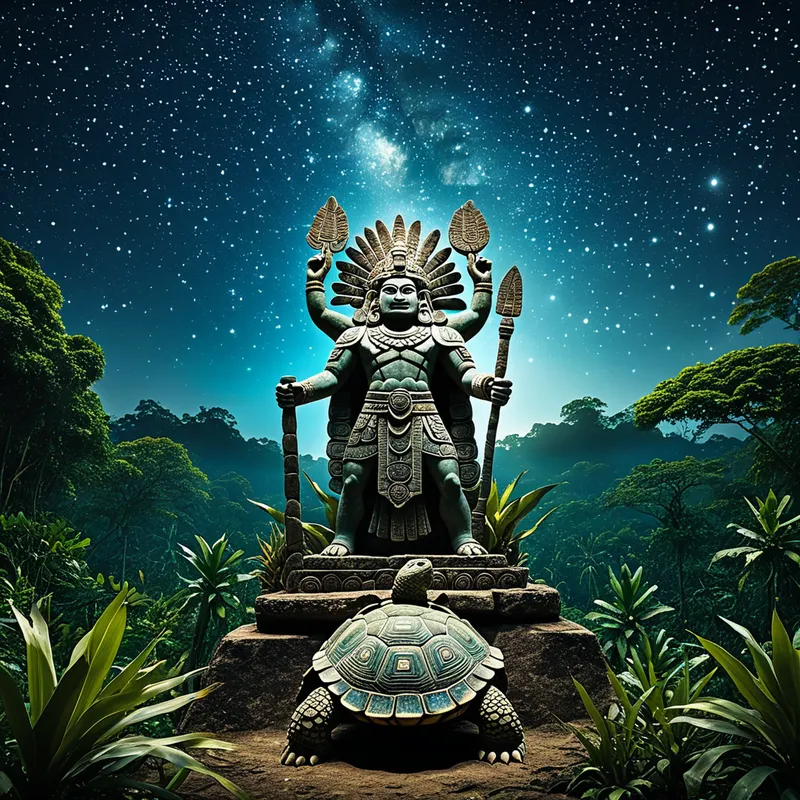
Listen. Before the first dawn, there was only the dark, silent sea of the sky and the restless, murmuring sea below. In that primordial void, the Heart of Sky, Huracán, spoke the first word. “Earth!” It was a command that rippled through the nothingness. And from the mist, the Bacabs emerged, ancient giants of stone and strength. They planted the First World Tree, and upon its branches, the first creatures were shaped from mud.
But these beings had no hearts. Their speech was a senseless babble, their faces slid from their skulls in the rain. They could not remember the names of the gods. Seeing this failure, Huracán summoned a great flood. The waters rose, a black deluge of disappointment, and washed the mud-men back into the silent deep.
Undaunted, the gods tried again. They fashioned beings of wood in the Second World. They walked, they spoke, they multiplied. But they had no blood, no memory, no gratitude. Their hearts were empty, hollow as dry gourds. They forgot to raise their hands in praise. So the gods sent a resinous rain that gummed their joints, and set their own tools, their grinding stones and cooking pots, to rise against them. The very animals of the forest turned on their creators, tearing them apart, until the survivors were chased into the trees, chattering mindlessly—the first monkeys.
The Third and Fourth Worlds were attempts of greater subtlety, but each ended in catastrophe—a rain of fire, a flood of blood—because the beings within could not hold the sacred count of time, could not offer the essential reciprocity that fuels the cosmos. The gods were weary. The great cycle of the Baktun turned, and turned again, measuring these failures.
Then, in the place of council, [Kukulkan](/myths/kukulkan “Myth from Mesoamerican culture.”/) spoke. “Let us seek the substance of true life.” In the mythic dawn of the Fifth World, the gods gathered at a place called Seven Macaw. The Seven Macaw shone falsely, his jewels blinding. The Hero Twins, Hunahpu and Xbalanque, had to humble him, to clear the sky for the true sun.
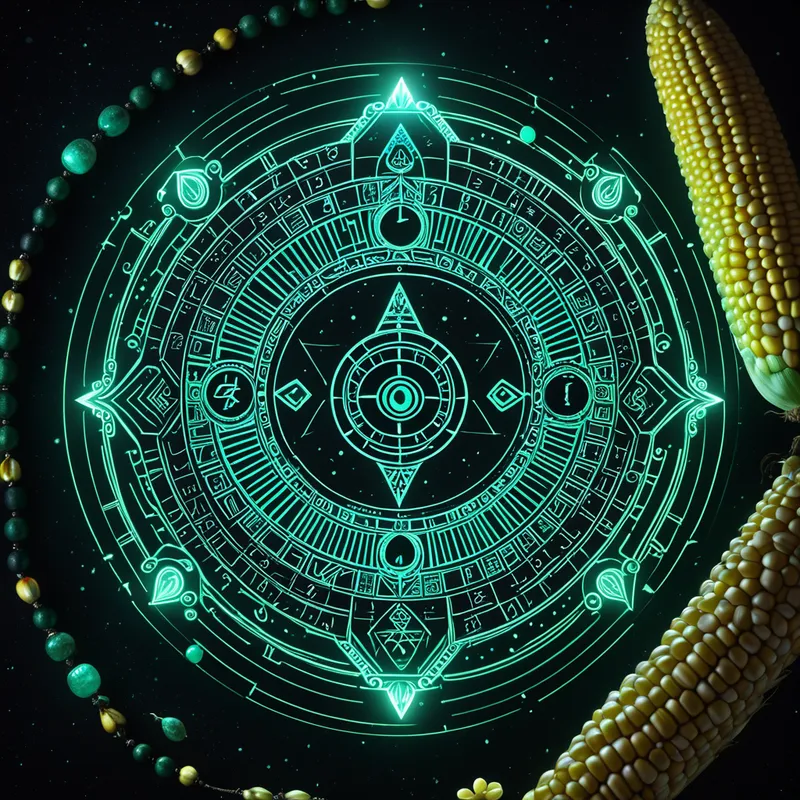
Now came the moment of essence. In the deep green darkness of Xibalba, the Lords of Death had defeated the fathers of the Twins. To create beings who could honor the gods, the gods themselves had to give. They bled. From their fingers, from their limbs, sacred blood fell upon white maize, the perfect grain. From this dough of sacrifice and sustenance, the first true people were formed. The Fourth Sun set in a final, glorious cataclysm. And as the Fifth Sun—our sun—rose over the waters, it illuminated the first four humans of maize: Jaguar Quitze, Jaguar Night, Mahucutah, and True Jaguar. They could see to the ends of the universe. They could give thanks. And the great count of the Thirteen Baktuns, the full measure of a World Age, began its slow, majestic turn, sustained by the memory of that sacred offering.
Cultural Origins & Context
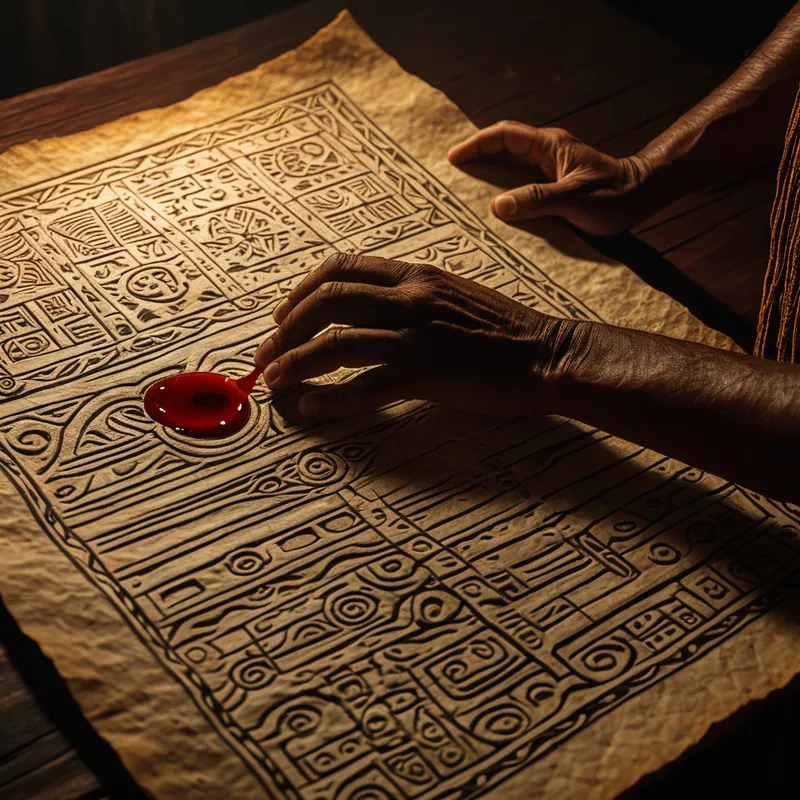
This is not a single story, but a cosmological framework woven from threads found in the Popol Vuh, carved on stelae, and painted on ceramic vessels. It is the mythic backbone of the Maya Long Count calendar, a vast chronological system that measured time in nested cycles: 20 days made a uinal, 18 uinals made a tun, 20 tuns made a katun, and 20 katuns made a Baktun. A full “Great Cycle” consisted of 13 Baktuns—approximately 5,125 years.
This myth was the domain of priest-astronomers and the royal scribes. It was not merely a story of the past but an active, living map of time itself. Its telling, through ritual and inscription, served to anchor the king and the community within the cosmic order. The completion of a katun or Baktun was marked by monumental ceremonies—the erection of stelae, bloodletting rituals, and sacred ballgames—to ensure the sun would continue its journey and the world would not slip back into the chaos of the previous failed creations. The myth explained the precariousness and the sacred duty of existence: the present world is the fifth attempt, and it endures only through mindful participation in the cycles of sacrifice and renewal.
Symbolic Architecture
At its core, the myth of the Thirteen Baktuns is a grand [allegory](/symbols/allegory “Symbol: A narrative device where characters, events, or settings represent abstract ideas or moral qualities, conveying deeper meanings through symbolic storytelling.”/) for the process of creation through iterative failure and essential sacrifice. Each failed world represents an incomplete psychological or spiritual state: the mud-man (form without [consciousness](/symbols/consciousness “Symbol: Consciousness represents the state of awareness and perception, encompassing thoughts, feelings, and experiences.”/)), the [wood](/symbols/wood “Symbol: Wood symbolizes strength, growth, and the connection to nature and the environment.”/)-man ([action](/symbols/action “Symbol: Action in dreams represents the drive for agency, motivation, and the ability to take control of situations in waking life.”/) without [soul](/symbols/soul “Symbol: The soul represents the essence of a person, encompassing their spirit, identity, and connection to the universe.”/)), and so on.
The cosmos is not built on a foundation of perfection, but on the resilient bedrock of learned failure.
The [number](/symbols/number “Symbol: Numbers in dreams often symbolize meaning, balance, and the quest for understanding in the dreamer’s life, reflecting their mental state or concerns.”/) thirteen is paramount. It is the number of the highest [heaven](/symbols/heaven “Symbol: A symbolic journey toward ultimate fulfillment, spiritual transcendence, or connection with the divine, often representing life’s highest aspirations.”/) in Maya cosmology, the number of joints in the [human](/symbols/human “Symbol: The symbol of a human represents individuality, complexity of emotions, and social relationships.”/) [body](/symbols/body “Symbol: The body in dreams often symbolizes the dreamer’s self-identity, personal health, and the relationship they have with their physical existence.”/) (as observed by the Maya), and the completion of a cosmic cycle. It symbolizes a full, integrated totality. The four previous failed worlds correspond to the four directions, the four elements, the four stages of trial necessary to forge a fifth, balanced [reality](/symbols/reality “Symbol: Reality signifies the state of existence and perception, often reflecting one’s understanding of truth and life experiences.”/). The substance of the final creation—maize and [blood](/symbols/blood “Symbol: Blood often symbolizes life force, vitality, and deep emotional connections, but it can also evoke themes of sacrifice, trauma, and mortality.”/)—symbolizes the ultimate [alchemy](/symbols/alchemy “Symbol: A transformative process of purification and creation, often symbolizing personal or spiritual evolution through difficult stages.”/): the ephemeral ([grain](/symbols/grain “Symbol: Represents sustenance, growth cycles, and the foundation of civilization. Symbolizes life’s harvest, patience, and transformation from seed to nourishment.”/)) is fused with the vital ([life](/symbols/life “Symbol: The symbol of ‘Life’ represents a journey of growth, interconnectedness, and existential meaning, encompassing both the joys and challenges that define human experience.”/)-force) to create a being capable of both sustenance and [spirit](/symbols/spirit “Symbol: Spirit symbolizes the essence of life, vitality, and the spiritual journey of the individual.”/), of receiving and giving.
The [Hero](/symbols/hero “Symbol: A hero embodies strength, courage, and the ability to overcome significant challenges.”/) Twins [journey](/symbols/journey “Symbol: A journey in dreams typically signifies adventure, growth, or a significant life transition.”/) through Xibalba represents the necessary descent into the [underworld](/symbols/underworld “Symbol: A symbolic journey into the unconscious, representing exploration of hidden aspects of self, transformation, or confronting repressed material.”/) of the unconscious, the confrontation with psychological “Lords of [Death](/symbols/death “Symbol: Symbolizes transformation, endings, and new beginnings; often associated with fear of the unknown.”/)” (fear, illusion, arrogance), to retrieve the wisdom needed for a successful creation above.
The Dreamer’s Resonance
When this myth stirs in the modern dreamer, it often manifests as dreams of cyclical catastrophe or profound renewal. One may dream of great floods washing away cities of clay, or of fires consuming forests of brittle, wooden figures that resemble people. These are not prophecies, but somatic echoes of the psyche’s own “failed worlds”—outmoded selves, rigid identities, or belief systems that have lost their vitality and must be dissolved.
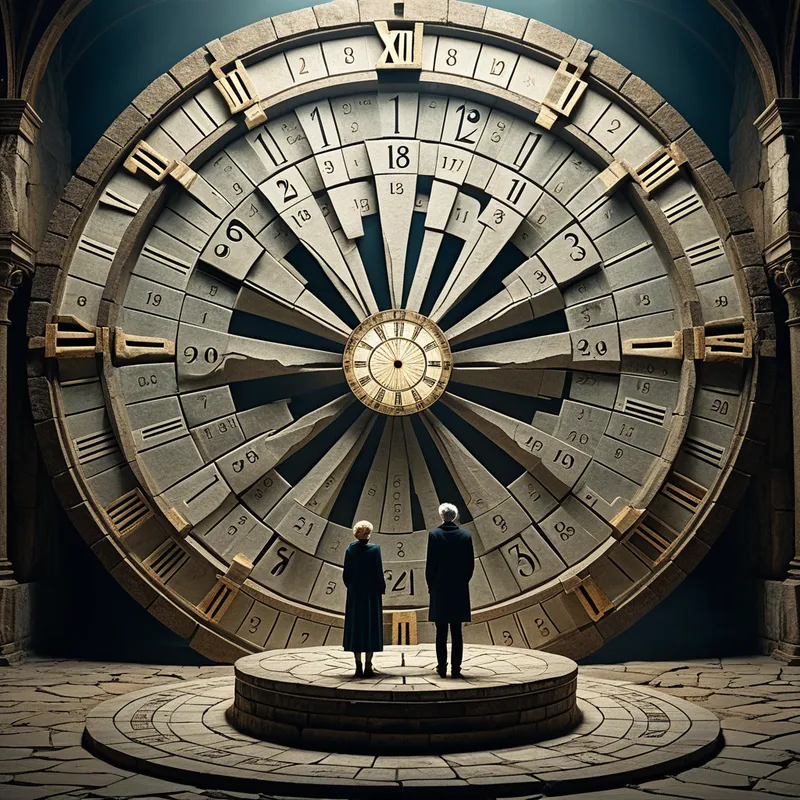
Dreams of watching a vast, intricate clock or calendar reach a culminating point, often accompanied by anxiety or awe, speak directly to the Baktun’s completion. The psyche is signaling a major transitional phase. The dreamer may be at the end of a long personal “cycle”—a career, a relationship, a way of life—and the unconscious is preparing the ground for the next “world age” of the self. The feeling is one of immense pressure and potential, the terrifying freedom that comes with the completion of a long-count.
Alchemical Translation
For the individual, the Thirteen Baktuns model the arduous path of individuation—the process of becoming a fully integrated, conscious Self. We do not create our authentic being on the first attempt. We build provisional selves: the mud-self of childhood conditioning, the wooden-self of rigid persona, each eventually collapsing under the weight of its own inadequacy. These are necessary failures.
Individuation is the Fifth World, built not from the raw material of innocence, but from the sacred substance of conscious sacrifice.
The “blood” the gods offer is symbolic of what we must willingly sacrifice: our ego’s insistence on control, our cherished illusions, our psychic inertia. The “maize” is the nourishing, grounded potential of our deepest nature. The alchemical act is to blend these—to offer up our limited self (sacrifice) to feed our potential self (sustenance). This creates a being with “true sight,” capable of self-reflection and genuine relationship with the inner and outer worlds.
Completing one’s personal “Thirteen Baktuns” means moving through the full cycle of experience, integrating shadow and light, failure and success, until one arrives at a state of conscious wholeness. It is the understanding that our present, conscious life is the “Fifth World,” sustained not by chance, but by the ongoing, mindful reciprocity we maintain with the depths of our own soul.
Associated Symbols
Explore related symbols from the CaleaDream lexicon:
- Blood — The sacred, vital essence offered by the gods to animate the maize-people, representing the ultimate sacrifice and the life-force required for true consciousness.
- Flood — The cleansing, dissolving waters that end the failed worlds, symbolizing the necessary dissolution of outmoded psychic structures to make way for new creation.
- Tree — The First World Tree planted by the Bacabs, representing the axis mundi, the cosmic center, and the structure upon which reality is woven.
- Maize — The perfect, sustaining grain that forms the body of humanity in the Fifth World, symbolizing nourishment, potential, and the grounded substance of life.
- Sun — The Fifth Sun whose rise inaugurates the current age, representing consciousness, cyclical renewal, and the light of a new world sustained by sacrifice.
- Journey — The epic passage of the Hero Twins through Xibalba, mirroring the soul’s necessary descent into the unconscious to retrieve wisdom and power.
- Sacrifice — The core divine act of bloodletting that enables creation, representing the principle that life and consciousness are fueled by willing offering and reciprocity.
- Circle — The shape of the Baktun cycle and of time itself, representing completion, eternity, and the cyclical nature of creation, destruction, and rebirth.
- Underworld — Xibalba, the place of trial and death where the old is destroyed and the seeds of the new are tested, symbolizing the transformative crucible of the unconscious.
- Mirror — The reflective surface used by the Maya for scrying, representing self-reflection, the true sight granted to the maize-people, and the revelation of hidden realities.
- Destiny — The path set in motion by the completion of the Baktuns, representing the unfolding of a grand, cyclical pattern within which individual fate is woven.
- Rebirth — The emergence of the Fifth World from the ashes of the Fourth, symbolizing the psyche’s capacity for total renewal after a period of catastrophic change.