The Tagalog Creation Story Myth Meaning & Symbolism
A cosmic battle between sky and sea deities births the archipelago, modeling the primal conflict and reconciliation necessary for creation and consciousness.
The Tale of The Tagalog Creation Story
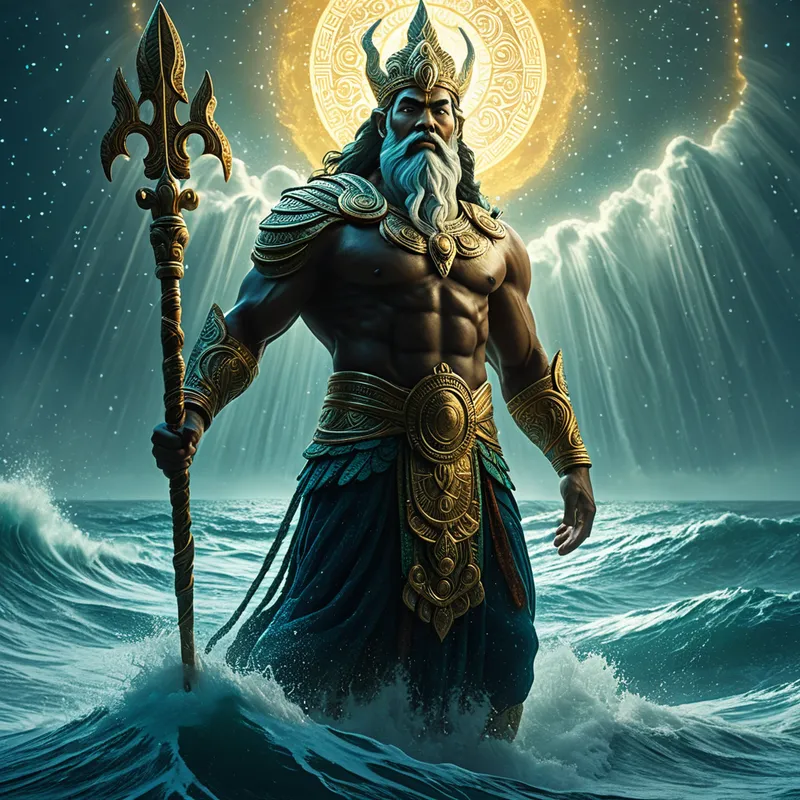
In the time before time, there was only the great, yawning Kawalan. No land, no sky as we know it, only a formless, silent potential. From this nothingness, two immense presences stirred into being. From the heights came [Bathala](/myths/bathala “Myth from Filipino culture.”/), a being of luminous order, of thought and structure. His domain was the vast, empty expanse above, a canvas awaiting the first stroke of light. From the depths rose Aman Sinaya, a being of raw, churning power, of emotion and boundless motion. Her realm was the dark, fathomless waters below, a womb of untamed possibility.
For an eternity, they existed in a tense, separate peace. Bathala looked down from his crystalline clarity. Aman Sinaya surged up from her watery chaos. But peace, in the face of such absolute opposition, is a fragile thing. A spark of challenge, a ripple of defiance, passed between them. It began not with words, but with a fundamental clash of essence. Bathala, seeking to impose his order, cast down great pillars of light and jagged bolts of his will. Aman Sinaya, in her wild fury, answered with titanic waves that sought to drown the very light, hurling tempests and whirlpools into the void.
The cosmos became their battlefield. The silent Kawalan roared with the sound of their strife. Lightning, the spear of the sky, met the tsunami, the fist of the sea. It was a war of pure principles, a cataclysm that seemed destined to churn forever in sterile conflict. Yet, within this violent dance, something new began to form. Where Bathala’s shattered light fell into Aman Sinaya’s tumultuous waters, it did not vanish. Where her spray was flung into his realm, it did not evaporate. Instead, they began to mix. The debris of their conflict—the foam, the spray, the fallen shards of celestial matter—began to coalesce.
From this alchemy of opposition, the first islands emerged. Luzviminda was born not from a gentle word, but from the furious meeting of sky and sea. The land was their contested ground, their compromise written in stone and soil. Seeing this unexpected child of their conflict, a shift occurred. The rage did not vanish, but it transformed. The relentless attacks softened into a rhythmic exchange. Bathala’s light warmed the new land; Aman Sinaya’s waters cradled its shores. They reached a stalemate, not of exhaustion, but of recognition.
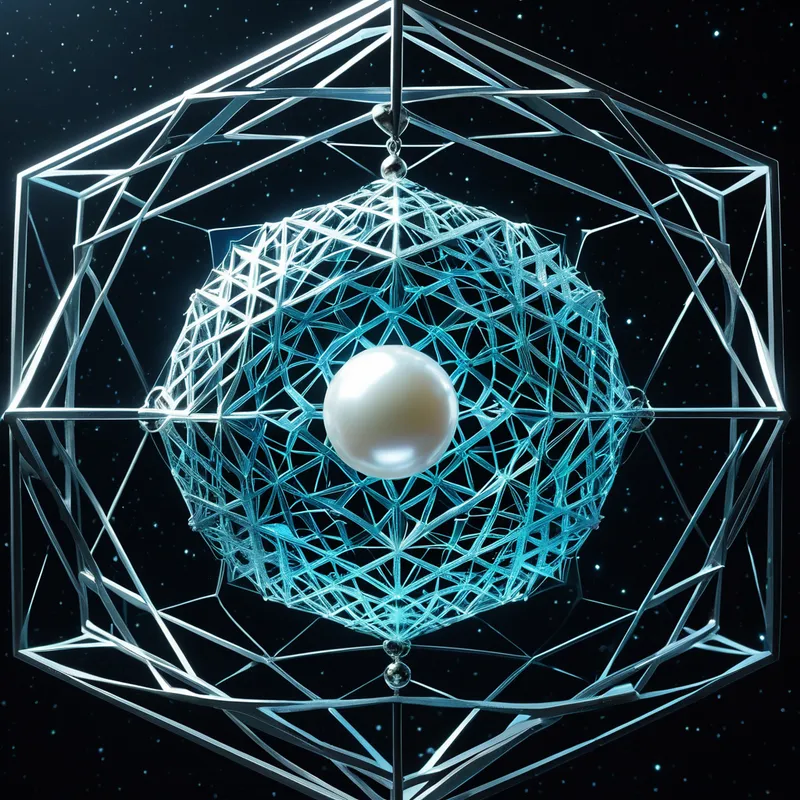
To seal this hard-won truce, to symbolize the new order born from chaos, they created a final, joint offering. From the deepest, most tranquil part of the sea, Aman Sinaya brought forth a perfect, luminous pearl. Bathala bathed it in the purest, most gentle light of the sky. Together, they placed this pearl upon the first shore, a token of their reconciled powers. And from this pearl, infused with both celestial order and aquatic vitality, sprang the first human beings: Malakas (Strong) and Maganda (Beautiful). They emerged not from a single parent, but from the sacred union of two opposing worlds, destined to walk the land that was born from struggle.

Cultural Origins & Context
This creation narrative originates from the oral traditions of the Tagalog peoples of central Luzon in the Philippine archipelago. It was not a single, fixed text, but a living story passed down through generations of Babaylan (spiritual leaders) and community elders, often recited during significant rituals, initiations, or communal gatherings. Its function was multifaceted: it was a cosmological map, explaining the origin of the distinctive island geography; a social charter, establishing humanity’s divine yet dual heritage; and a theological framework, personifying the fundamental forces of the world as deities with whom one could relate, appease, and negotiate.
The myth reflects a pre-colonial worldview deeply attuned to environmental balance. The central conflict between Bathala and Aman Sinaya mirrors the very real, ever-present dynamic between the typhoons (Bathala’s domain) and the oceans (Aman Sinaya’s realm) that shape life in the archipelago. The story taught that creation and sustenance are not born from perpetual peace, but from the dynamic, sometimes violent, tension between opposing yet necessary forces. It legitimized both the orderly structure of society (Bathala) and the unpredictable, fertile power of nature and emotion (Aman Sinaya).
Symbolic Architecture
At its [heart](/symbols/heart “Symbol: The heart symbolizes love, emotion, and the core of one’s existence, representing deep connections with others and self.”/), this myth is not merely about the physical [birth](/symbols/birth “Symbol: Birth symbolizes new beginnings, transformation, and the potential for growth and development.”/) of islands, but about the psychological birth of [consciousness](/symbols/consciousness “Symbol: Consciousness represents the state of awareness and perception, encompassing thoughts, feelings, and experiences.”/) from the unconscious. Bathala represents [the principle](/symbols/the-principle “Symbol: A fundamental truth, law, or doctrine that serves as a foundation for a system of belief, behavior, or reasoning, often representing moral or ethical standards.”/) of Logos—[differentiation](/symbols/differentiation “Symbol: The process of distinguishing or separating parts of the self, emotions, or identity from a whole, often marking a developmental or psychological milestone.”/), order, light, and conscious [structure](/symbols/structure “Symbol: Structure in dreams often symbolizes stability, organization, and the framework of one’s life, reflecting how one perceives their environment and personal life.”/). Aman Sinaya embodies [the principle](/symbols/the-principle “Symbol: A fundamental truth, law, or doctrine that serves as a foundation for a system of belief, behavior, or reasoning, often representing moral or ethical standards.”/) of Eros—the undifferentiated, chaotic, fertile, and emotional [depths](/symbols/depths “Symbol: Represents the subconscious, hidden emotions, or foundational aspects of the self, often linked to primal fears or profound truths.”/) of the unconscious. The primordial Kawalan is the state of psychic undifferentiation, where self and other, conscious and unconscious, are not yet distinct.
Creation is not an act of a solitary will, but the child born from the sacred marriage of opposites.
Their war is the necessary, painful process of differentiation. The ego (Bathala) must assert itself against the overwhelming pull of the unconscious (Aman Sinaya). This conflict feels catastrophic, a world-ending struggle within the psyche. Yet, the myth reveals this struggle as generative. The land—the conscious [personality](/symbols/personality “Symbol: Personality in dreams often symbolizes the traits and characteristics of the dreamer, reflecting how they perceive themselves and how they believe they are perceived by others.”/), the “I” that can stand and reflect—is formed precisely from the [debris](/symbols/debris “Symbol: Fragments of what was once whole, representing destruction, aftermath, and the remnants of past structures or experiences.”/) of this conflict. Our stable ground of [identity](/symbols/identity “Symbol: Identity represents the sense of self, encompassing personal beliefs, cultural background, and social roles.”/) is made from the fragments of our inner battles. The [pearl](/symbols/pearl “Symbol: The pearl symbolizes purity, wisdom, and the beauty derived from overcoming adversity.”/), and the humans born from it, symbolize the transcendent function—the third, reconciling element that contains and transcends the duality of its parents. Malakas and Maganda represent the potential for a consciousness that acknowledges its dual heritage: strong in its structure, beautiful in its [connection](/symbols/connection “Symbol: Connection symbolizes relationships, communication, and bonds among individuals.”/) to the depths.
The Dreamer’s Resonance
When this mythic pattern stirs in the modern dreamer, it often manifests as dreams of titanic, elemental conflict. One may dream of being caught between a terrifying storm and a flooding sea, or of two immense, impersonal forces clashing while the dreamer is a helpless, yet fascinated, observer. Somatic sensations might include feeling tossed, pulled in two directions, or holding a tense, impossible balance.
Psychologically, this signals a profound process of inner reorganization. The conscious attitude (Bathala) and the unconscious contents (Aman Sinaya) are in open, potent conflict. The old, rigid order of the psyche is being challenged by rising, chaotic emotional or instinctual material. The dream is not a warning of destruction, but a depiction of the creative process itself. The dreamer is in the Kawalan, the fertile void where a new aspect of the self is being forged through struggle. The dream’s resolution—if it comes—may not be a victory, but the emergence of a new, solid “land” (a new perspective, skill, or understanding) or a precious, reconciling symbol (the pearl) that holds the key to integration.
Alchemical Translation
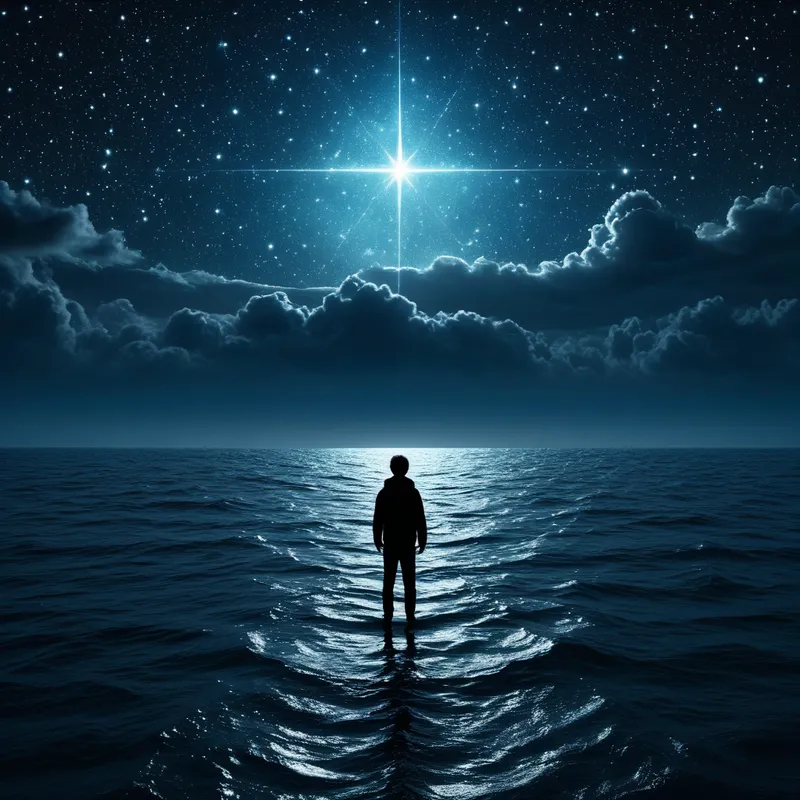
The journey of the Tagalog creation myth is a perfect map for the alchemical process of individuation. It begins with the Nigredo, the blackening: the chaotic, formless Kawalan and the subsequent brutal conflict, mirroring the depression, confusion, or inner civil war that often initiates deep psychological work.
The Self is not found by choosing a side in the inner war, but by becoming the shore where both sides meet and create new land.
The battle between Bathala and Aman Sinaya represents the Separatio and Coniunctio happening simultaneously. The forces must first be clearly separated and experienced in their full opposition (the war) before they can be truly united (the birth of the land and the pearl). The modern individual must allow this conflict, to let the ordered persona and the chaotic shadow engage, rather than suppressing one for the sake of the other.
The formation of the islands is the Albedo, the whitening: the emergence of conscious insight from the struggle. The pearl is the symbol of the Self—the total, integrated personality. It is formed in the deep, calm center (the unconscious) but requires the light of consciousness to be fully realized. To birth our own Malakas and Maganda—our strong and beautiful, conscious life—we must honor both the sky of our aspirations and the sea of our instincts, understanding that our very ground of being was forged in their sacred, creative strife.
Associated Symbols
Explore related symbols from the CaleaDream lexicon:
- Sky — Represents the domain of Bathala, the principle of consciousness, order, light, and transcendent authority in the myth.
- Ocean — Embodies the realm of Aman Sinaya, symbolizing the unconscious, chaos, fertility, emotion, and the primal, undifferentiated source of life.
- Land — The child of the sky-ocean conflict, representing the emergent ego, conscious identity, and the stable ground of being formed from reconciled opposites.
- Pearl — The transcendent symbol of reconciliation, born from the deep sea and blessed by the sky, containing the potential for wholeness and the genesis of humanity.
- Conflict — The necessary, generative struggle between opposing cosmic principles that precedes and enables all creation, both in the world and the psyche.
- Lightning — The weapon and expression of Bathala’s will, symbolizing sudden insight, divine wrath, and the penetrating power of consciousness.
- Storm — The manifestation of the active battle between sky and sea, representing psychic turmoil that is both destructive and creatively catalytic.
- Foam — The literal and symbolic material from which the first land forms, representing the fertile intersection where two opposites mix to generate new reality.
- Bridge — The implicit symbol in the reconciled relationship between Bathala and Aman Sinaya, and in the pearl that connects their realms to birth humanity.
- Creation — The core theme and outcome of the myth, depicting creation not as a singular act but as an ongoing process born from dynamic tension.
- Rebirth — The entire narrative models a rebirth of cosmos from chaos, and the emergence of human consciousness from the symbolic death of pure opposition.
- Goddess — Aman Sinaya as a powerful, sovereign feminine creative principle, equal and opposite to the masculine sky god, essential for the act of world-making.