The Steedfast Tin Soldier Myth Meaning & Symbolism
A one-legged tin soldier's silent, unwavering love for a paper ballerina leads him through a perilous odyssey, culminating in a final, fiery union.
The Tale of The Steadfast Tin Soldier
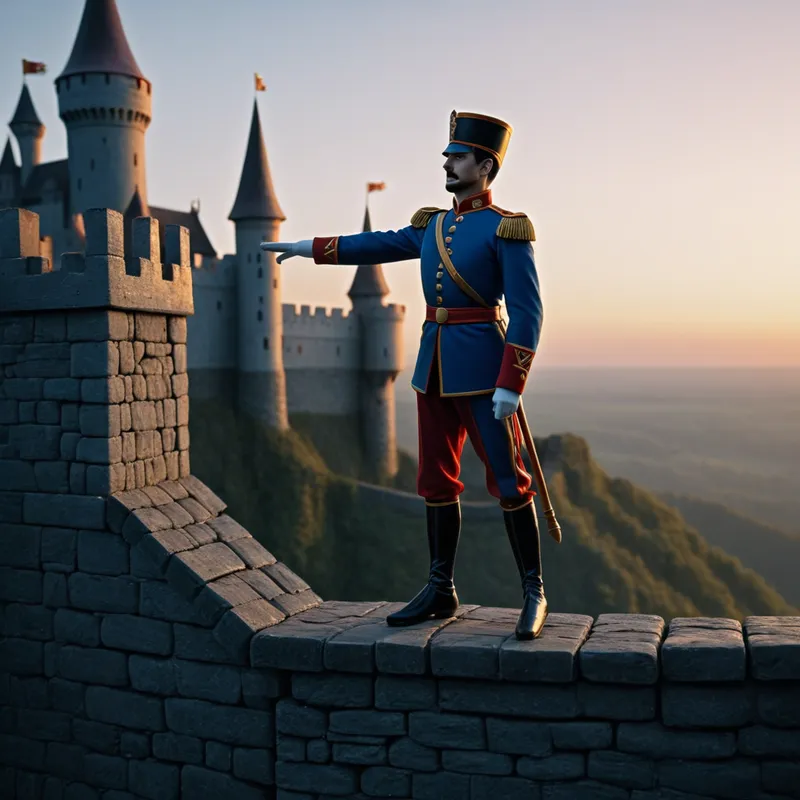
In the quiet kingdom of the nursery, when the last human footstep has faded and [the moon](/myths/the-moon “Myth from Tarot culture.”/) casts long shadows from the window, the toys awaken to their secret lives. On this night, a new citizen arrived among them: a soldier, cast from a single spoonful of tin. Twenty-four brothers stood proud and straight, but he was the twenty-fifth, the last poured, and the tin had run short. He stood firm on his one good leg, his rifle shouldered, his expression forever fixed in stoic duty.
And in that first glance, his tin heart—though he was not supposed to have one—was claimed. Across the room, poised in a forever-pirouette in the doorway of a paper castle, was a ballerina. She wore a dress of spun gauze, a blue ribbon across her shoulder, and one leg was lifted so high behind her it seemed to vanish into the air. The soldier believed she, too, had but one leg, and in that perceived flaw, he found his twin soul. He resolved to love her, silently, steadfastly.
But the nursery holds its own jealous spirits. A Jack-in-the-box, carved into a scowling face, watched the soldier’s gaze and hissed, “Tin soldier, keep your eyes to yourself!” The soldier did not answer. He was steadfast.
Fate, however, is a clumsy child. A breeze, a stumble, and the soldier toppled from the windowsill. He plunged down, down, through the cold air, to land between cobblestones in [the world](/myths/the-world “Myth from Tarot culture.”/) below. Here began his odyssey. Two street urchins found him, placed him in a paper boat, and set him sailing down the raging torrent of a gutter. Rats gnashed their teeth from sewer grates, but he stared straight ahead, unflinching, as the current swept him into a dark tunnel.
He sailed into the belly of a great fish, a world of absolute blackness and pressing damp. Yet still he stood, rifle shouldered. And then, a miracle of digestion and chance: the fish was caught, taken to market, and cut open in the very kitchen of the house from which he fell. There he was, returned, placed once more upon the table.
His first and only act was to look for her. And there she was, still in her eternal dance. She looked at him, and he at her. It was a communion without words, a recognition that spanned worlds.
Then, the cruel, careless hand of a child swept him into the fireplace. Heat, terrible and orange, washed over him. He felt himself melting, his form dissolving, but he did not waver. He turned his gaze, one last time, towards the ballerina. A draft caught her, and she flew from her castle, a fluttering leaf of paper and grace, straight into the flames beside him.
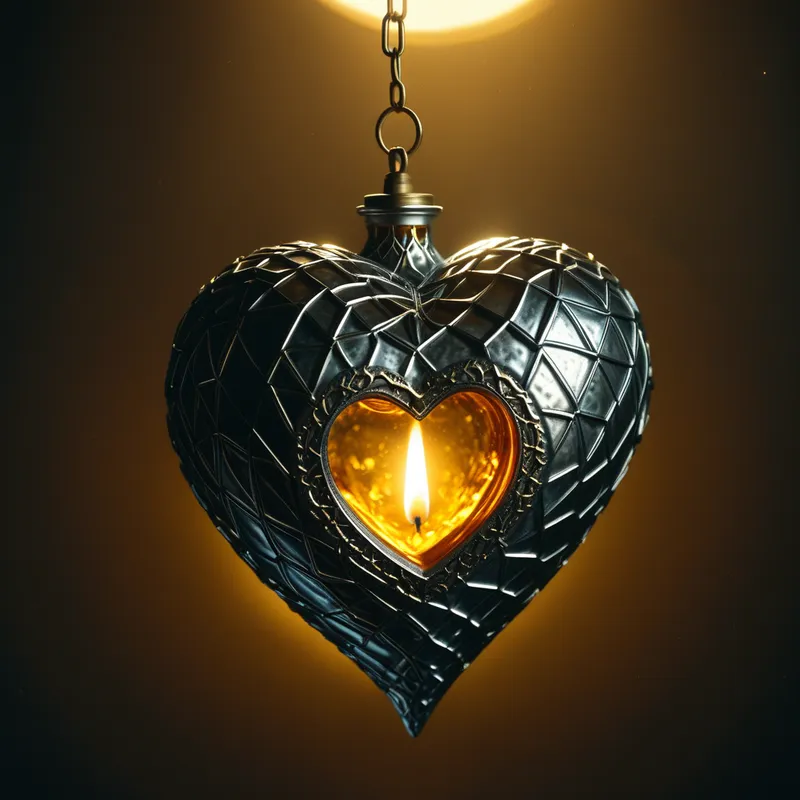
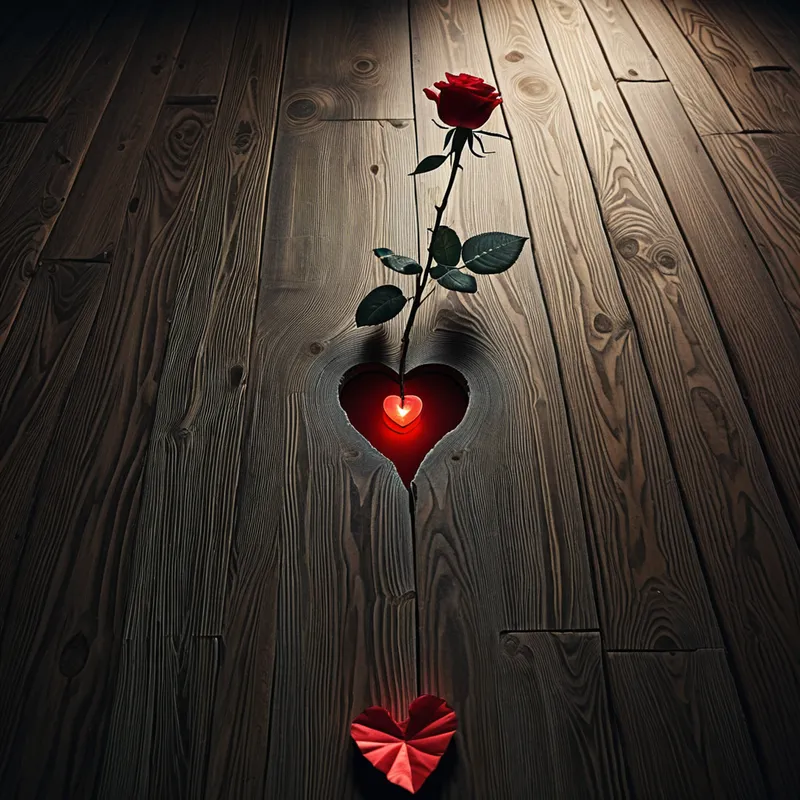
In the morning, when the maid raked the ashes, she found not two separate forms, but a single lump of tin, shaped like a heart. And at its center, nestled like a secret, was the ballerina’s spangle, burned black but still shining.

Cultural Origins & Context
This tale emerges from the rich oral and literary tradition of European fairy tales, crystallized in the 19th century by the Danish writer Hans Christian Andersen. Unlike folktales collected from peasant oral tradition, Andersen’s stories are “art fairy tales,” deeply personal literary creations that borrow the symbolic language of folklore to explore profound psychological and existential themes. “The Steadfast Tin Soldier” (1838) belongs to this genre.
Andersen, an outsider himself—tall, awkward, and from a poor background—often infused his stories with a deep sense of melancholy, longing, and the dignity of the marginalized. The tale was part of a burgeoning Romantic sensibility that valued inner feeling, constancy, and the tragic beauty of unfulfilled yearning. It functioned not just as children’s entertainment but as a societal mirror, reflecting on themes of fate, social standing (the soldier is “lesser” due to his missing leg), silent suffering, and the idea that true worth is internal and immutable. It was passed down not around a village hearth, but through published books, becoming a shared cultural touchstone for the paradox of fragility and endurance.
Symbolic Architecture
The myth is a perfect [vessel](/symbols/vessel “Symbol: A container or structure that holds, transports, or protects something essential, representing the self, emotions, or life journey.”/) for the [soul](/symbols/soul “Symbol: The soul represents the essence of a person, encompassing their spirit, identity, and connection to the universe.”/)’s [journey](/symbols/journey “Symbol: A journey in dreams typically signifies adventure, growth, or a significant life transition.”/) through a world of [accident](/symbols/accident “Symbol: An accident represents unforeseen events or mistakes that can lead to emotional turbulence or awakening.”/) and [indifference](/symbols/indifference “Symbol: A state of emotional detachment or lack of interest, often signaling avoidance, protection, or disconnection from feelings or situations.”/). The [soldier](/symbols/soldier “Symbol: A soldier in dreams often symbolizes duty, sacrifice, and the struggle for self-discipline. It can also indicate feelings of loyalty or conflict, both externally and within oneself.”/) is not an active [hero](/symbols/hero “Symbol: A hero embodies strength, courage, and the ability to overcome significant challenges.”/) but a passive, enduring one. His heroism is in his stance, his unwavering orientation towards the object of his love and duty, despite all forces of [chaos](/symbols/chaos “Symbol: In Arts & Music, chaos represents raw creative potential, uncontrolled expression, and the breakdown of order to forge new artistic forms.”/).
The steadfastness is not in the body, which is subject to melting, but in the gaze, which remains fixed until the end.
His missing leg symbolizes a fundamental wound, a perceived incompleteness that becomes the very [source](/symbols/source “Symbol: The origin point of something, often representing beginnings, nourishment, or the fundamental cause behind phenomena.”/) of his [identity](/symbols/identity “Symbol: Identity represents the sense of self, encompassing personal beliefs, cultural background, and social roles.”/) and his [fate](/symbols/fate “Symbol: Fate represents the belief in predetermined outcomes, suggesting that some aspects of life are beyond human control.”/). The ballerina represents the [Anima](/symbols/anima “Symbol: The feminine archetype within the male unconscious, representing soul, creativity, and connection to the inner world.”/), the soul-[image](/symbols/image “Symbol: An image represents perception, memories, and the visual narratives we create in our minds.”/) of [beauty](/symbols/beauty “Symbol: This symbol embodies aesthetics, harmony, and the appreciation of life’s finer qualities.”/), art, and transcendent grace. Their mutual “flaw” (his missing leg, her raised leg) creates a sympathetic [resonance](/symbols/resonance “Symbol: A deep, sympathetic vibration or connection, often in sound or feeling, that amplifies and harmonizes across systems.”/), a feeling of belonging that transcends the need for [action](/symbols/action “Symbol: Action in dreams represents the drive for agency, motivation, and the ability to take control of situations in waking life.”/) or speech.
The journey—[the fall](/myths/the-fall “Myth from Biblical culture.”/), the [gutter](/symbols/gutter “Symbol: A drainage channel representing hidden aspects, waste, or neglected emotions. It symbolizes what society discards or what flows beneath awareness.”/), the fish—is a classic [katabasis](/myths/katabasis “Myth from Greek culture.”/), a descent into the chaotic, watery unconscious. The [gutter](/symbols/gutter “Symbol: A drainage channel representing hidden aspects, waste, or neglected emotions. It symbolizes what society discards or what flows beneath awareness.”/) is the urban [river](/symbols/river “Symbol: A river often symbolizes the flow of emotions, the passage of time, and life’s journey, reflecting transitions and movement in one’s life.”/) Styx, the fish is the devouring belly of the [whale](/symbols/whale “Symbol: Whales symbolize emotional depth, intuition, and communication, representing a profound connection to the subconscious mind.”/), a [symbol](/symbols/symbol “Symbol: A symbol can represent an idea, concept, or belief, serving as a powerful tool for communication and understanding.”/) of [death](/symbols/death “Symbol: Symbolizes transformation, endings, and new beginnings; often associated with fear of the unknown.”/) and [rebirth](/symbols/rebirth “Symbol: A profound transformation where old aspects of self or life die, making way for new beginnings, growth, and renewal.”/). He is purified by this journey and returned, only to face the ultimate alchemical [furnace](/symbols/furnace “Symbol: A furnace represents transformation through intense heat, purification, and the containment of powerful energy. It symbolizes both creative potential and destructive force.”/). The jealous [Jack-in-the-box](/symbols/jack-in-the-box “Symbol: The Jack-in-the-Box symbolizes surprise, unpredictability, and a playful confrontation with one’s fears or the unknown.”/) is the voice of the cynical ego or societal mockery that seeks to break constancy.
The [climax](/symbols/climax “Symbol: The peak moment in a narrative or musical composition, representing resolution, transformation, or ultimate expression.”/) is not a [rescue](/symbols/rescue “Symbol: The symbol of rescue embodies themes of salvation, support, and liberation from distressing circumstances.”/), but a conflagration. Their union is achieved not in [life](/symbols/life “Symbol: The symbol of ‘Life’ represents a journey of growth, interconnectedness, and existential meaning, encompassing both the joys and challenges that define human experience.”/), but in [dissolution](/symbols/dissolution “Symbol: The process of breaking down, dispersing, or losing form, often representing transformation, release, or the end of a state of being.”/). The tin [heart](/symbols/heart “Symbol: The heart symbolizes love, emotion, and the core of one’s existence, representing deep connections with others and self.”/) with the blackened spangle is the coniunctio, the final, indestructible symbol of a love that has been tested by [water](/symbols/water “Symbol: Water symbolizes the subconscious mind, emotions, and the flow of life, representing both cleansing and creation.”/), darkness, and fire, and has been transmuted into a permanent, if melancholic, form.
The Dreamer’s Resonance
When this myth stirs in the modern dreamer, it often signals a profound somatic and psychological process of endurance through passivity. One may dream of being frozen, unable to move or speak, while chaos unfolds. Or of a cherished but fragile object (a small figure, a keepsake) being swept away by a flood or lost in a vast, mechanical system.
The somatic feeling is one of clenched stillness in the gut or chest—a bearing of weight. Psychologically, the dreamer is likely navigating a situation where active agency feels impossible: a chronic illness, a period of grief, systemic injustice, or a silent, unrequited love. The dream is not advising action, but validating a profound, often overlooked, form of courage: the courage to remain, to hold one’s truth intact while the world does its worst. It asks the dreamer, “What is your ballerina? What image of beauty or integrity do you hold fast to, even as you feel yourself melting?”
Alchemical Translation
The myth is a precise map of the alchemical process of individuation, where the base metal of [the ego](/myths/the-ego “Myth from Jungian culture.”/) is transmuted into the gold of [the Self](/myths/the-self “Myth from Jungian culture.”/). The soldier begins as [nigredo](/myths/nigredo “Myth from Alchemical culture.”/)—the blackening, the flawed, cast-off figure. His descent is the [solutio](/myths/solutio “Myth from Alchemical culture.”/)—dissolution in the waters of the unconscious, where his rigid identity is stripped and tested.
The furnace of the psyche does not destroy love; it forges the vessel that can finally contain it.
His return is the albedo—the whitening, a purification and return with new insight. But the final stage is the [rubedo](/myths/rubedo “Myth from Alchemical culture.”/)—the reddening, the fiery ordeal of the heart. This is the critical transmutation. The ego’s love, which was a silent, stoic admiration from afar, must be sacrificed in the flames of actual suffering and loss. Only through this total dissolution of form can the true union occur. The lump of tin in the shape of a heart is the [lapis philosophorum](/myths/lapis-philosophorum “Myth from Alchemical culture.”/), the philosopher’s stone. It is the achieved Self—no longer a soldier, no longer a dancer, but a new, unified substance born of their sacrifice.
For the modern individual, the myth teaches that wholeness is not found by fixing one’s missing leg, but by embracing the journey that flaw dictates. Our deepest commitments are not proven in victory, but in the steadfast, silent orientation we maintain through the gutter, the dark belly, and the final fire. The [triumph](/myths/triumph “Myth from Roman culture.”/) is not survival, but the creation of an indestructible symbol—the heart-fused-with-spangle—that remains in the ashes as a testament to what was truly forged there.
Associated Symbols
Explore related symbols from the CaleaDream lexicon: