The Spirit of the Keris Myth Meaning & Symbolism
A myth of a sacred blade forged in fire and spirit, binding human destiny to ancestral power and the volcanic soul of the earth.
The Tale of The Spirit of the Keris
In the time when the world was younger and the gods walked closer to the earth, there was a silence in the heart of Java. It was the silence of the mountain before it speaks with fire, of the metal sleeping deep in the womb of the earth. This silence was broken only by the rhythmic breath of the empu.
His name is lost to the wind, but his purpose was etched in the stars: to forge a vessel. Not a cup, not a crown, but a blade that could hold a whisper of the cosmos itself. For forty days and forty nights, he fasted. He bathed in sacred springs and spoke prayers into the smoke of rare incense. He did not seek to master the elements, but to invite them. To court them.
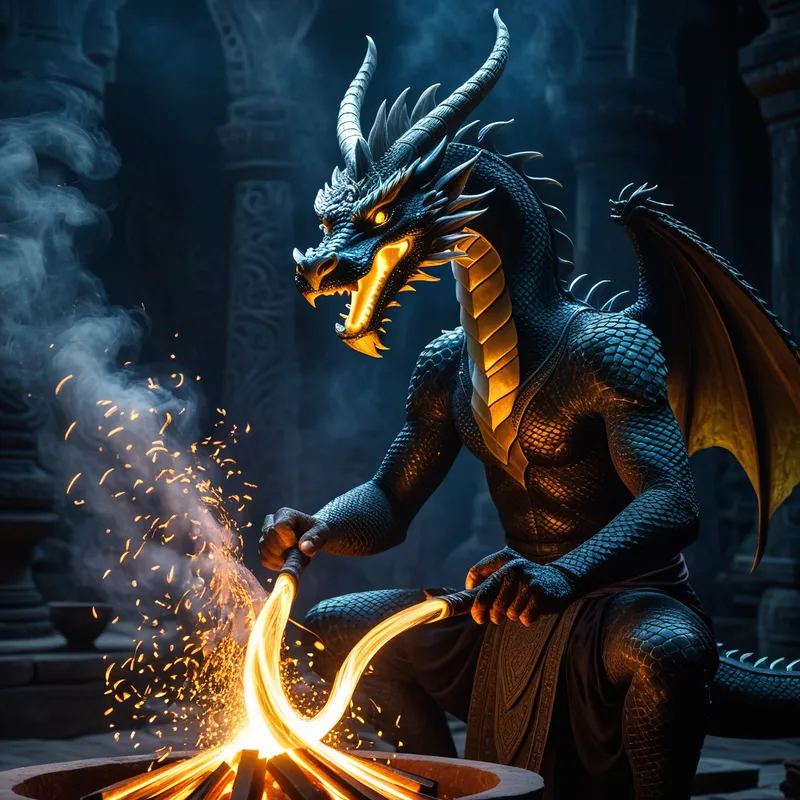
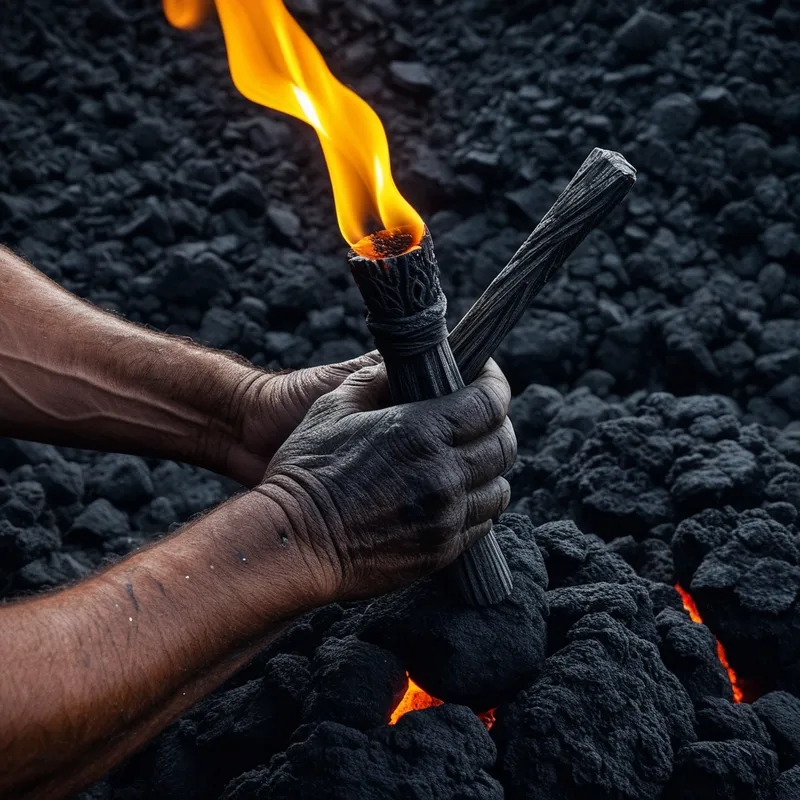
Finally, under a moon that hung like a silver gong in the sky, he entered the forge. The fire was not of common wood, but of special charcoal, and its heart was fed by his own focused will. He took the iron, the pamor, and the steel—materials born from the belly of the volcano and the heart of falling stars. As the metals fused in the crucible, he did not merely hammer. He chanted. Each strike was a syllable of an ancient name, a beat in the rhythm of creation.
The air grew thick, charged. The flames began to dance not just with heat, but with intention. From the convergence of smoke, star-metal, and the empu’s unwavering spirit, a presence gathered. It was the wahyu, the divine inspiration, but also something more—a raw, unformed consciousness drawn from the land itself, from the memory of lava flows and the patience of stone. This was the isi, the spirit-to-be.
The empusaw it in the shimmer above the metal. It had no fixed form: at once a coiling naga, a wisp of monsoon cloud, a flicker of ancestral memory. He did not flinch. With hands that blistered and a voice grown hoarse, he sang to it. He offered it not commands, but a home. A purpose. A partnership in the world of form.
The spirit swirled, testing his resolve, feeling the heat of his sacrifice. It could have scattered to the winds or turned the forge against him. But in the empu’s eyes, it saw not greed, but reverence. Not a desire to own, but a will to collaborate in making something true. And so, in a final, silent pact witnessed only by the fire and the night, the spirit descended. It flowed into the liquid metal, weaving itself into the very grain of the steel, the intricate patterns of the pamor.
When the empu quenched the red-hot blade, it was not in water, but in a mixture of well water and the water of young coconuts. The steam hissed a secret language. As the blade cooled, the spirit settled, its volatile energy tempered, its essence forever bound to the physical form of the keris. The first keris was born. It was not a dead tool, but a sleeping entity—a concentrated point of will, history, and cosmic potential, waiting for the hand it was destined to guide.
Cultural Origins & Context
This myth is not a single story with one author, but a living cosmology embedded in the practice of keris-making, primarily from Java, Bali, and other parts of the archipelago. It was passed down not through books, but through the direct, often secretive, lineage of the empu to his apprentices. The telling was in the doing—in the rituals, the taboos, the specific days chosen for forging, and the meditative state required.
The keris itself is far more than a weapon; it is a pusaka, a spiritual heirloom. The myth of its ensouled creation explains its profound social and personal function. A keris was believed to contain the spiritual essence of its lineage—the prowess of warriors, the wisdom of kings, the protection of ancestors. It was a physical anchor for intangible power. The myth served to elevate craftsmanship to a sacred, priestly act, ensuring that the creation of such powerful objects was undertaken with the utmost spiritual and ethical preparation. It was a societal safeguard, embedding the notion that true power must be forged with sacrifice and integrity, or it would become a dangerous, unstable force.
Symbolic Architecture
At its core, the myth is a [blueprint](/symbols/blueprint “Symbol: A blueprint represents the foundational plan or design for something, often symbolizing potential, structure, and the mapping of one’s inner self or future.”/) for conscious creation and the [integration](/symbols/integration “Symbol: The process of unifying disparate parts of the self or experience into a cohesive whole, often representing psychological wholeness or resolution of internal conflict.”/) of opposites. The keris is the ultimate [symbol](/symbols/symbol “Symbol: A symbol can represent an idea, concept, or belief, serving as a powerful tool for communication and understanding.”/) of this [synthesis](/symbols/synthesis “Symbol: The process of combining separate elements into a unified whole, representing integration, resolution, and the completion of a personal journey.”/): fire and [water](/symbols/water “Symbol: Water symbolizes the subconscious mind, emotions, and the flow of life, representing both cleansing and creation.”/), [earth](/symbols/earth “Symbol: The symbol of Earth often represents grounding, stability, and the physical realm, embodying a connection to nature and the innate support it provides.”/) (iron) and sky ([meteorite](/symbols/meteorite “Symbol: A meteorite symbolizes unexpected change, impact, and the cosmic connection to the universe.”/)), [spirit](/symbols/spirit “Symbol: Spirit symbolizes the essence of life, vitality, and the spiritual journey of the individual.”/) (isi) and matter ([steel](/symbols/steel “Symbol: Steel symbolizes strength, resilience, and endurance, suggesting a solid foundation or a formidable presence in one’s life.”/)), male ([blade](/symbols/blade “Symbol: A sharp-edged tool or weapon symbolizing cutting action, separation, precision, or violence. It represents both creative power and destructive force.”/)) and female (sheath).
The empu does not conquer the spirit; he provides a disciplined vessel for its wild intelligence. This is the sacred contract between human consciousness and the autonomous, creative forces of the unconscious.
The empu represents the disciplined ego, the part of the psyche that can focus [intention](/symbols/intention “Symbol: Intention represents the clarity of purpose and direction in one’s life and can symbolize motivation and commitment within a dream context.”/), endure hardship, and apply form. The unformed spirit is the raw, archetypal [energy](/symbols/energy “Symbol: Energy symbolizes vitality, motivation, and the drive that fuels actions and ambitions.”/) of the Self—powerful, numinous, and potentially chaotic. The forging process is the individuation [journey](/symbols/journey “Symbol: A journey in dreams typically signifies adventure, growth, or a significant life transition.”/): the ego must engage with this profound inner force, not out of arrogance, but with humility and [ritual](/symbols/ritual “Symbol: Rituals signify structured, meaningful actions carried out regularly, reflecting cultural beliefs and emotional needs.”/) respect. The resulting keris symbolizes the psychic [artifact](/symbols/artifact “Symbol: An object from the past carrying historical, cultural, or personal significance, often representing legacy, memory, or hidden knowledge.”/) born from this union—a unique, integrated [aspect](/symbols/aspect “Symbol: A distinct feature, quality, or perspective of something, often representing a partial view of a larger whole.”/) of the [personality](/symbols/personality “Symbol: Personality in dreams often symbolizes the traits and characteristics of the dreamer, reflecting how they perceive themselves and how they believe they are perceived by others.”/) that carries power and [purpose](/symbols/purpose “Symbol: Purpose signifies direction, meaning, and intention in life, often reflecting personal ambitions and core values.”/). The pamor patterns are the visible map of this inner [marriage](/symbols/marriage “Symbol: Marriage symbolizes commitment, partnership, and the merging of two identities, often reflecting one’s feelings about relationships and social obligations.”/), the unique “fingerprint” of the [soul](/symbols/soul “Symbol: The soul represents the essence of a person, encompassing their spirit, identity, and connection to the universe.”/)‘s [journey](/symbols/journey “Symbol: A journey in dreams typically signifies adventure, growth, or a significant life transition.”/) through the fire of transformation.
The Dreamer’s Resonance
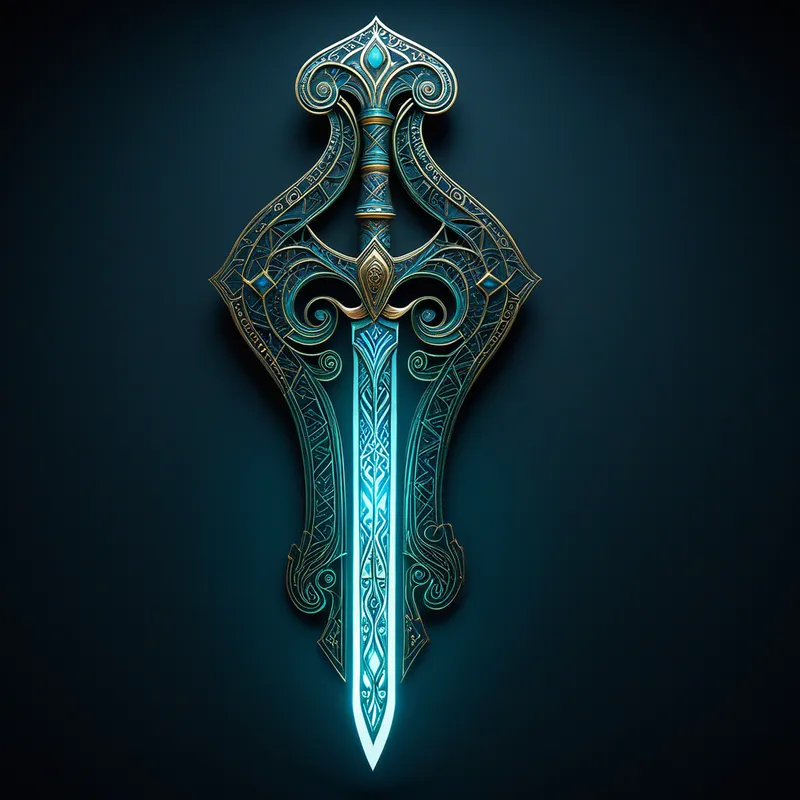
When this myth pattern stirs in the modern dreamer, it often signals a profound call to forge one’s own “blade”—to give form to a potent but unintegrated aspect of the Self. Dreams may feature images of smithies, molten metal, or finding a mysterious, ornate dagger.
Somatically, this can feel like a gathering of intense, focused energy—a creative pressure or a sense of destiny that demands expression. Psychologically, it is the process of confronting one’s own raw, spiritual power (the isi). This can initially manifest as anxiety, restless energy, or a feeling of being possessed by a powerful drive or emotion. The dreamer is in the “forge.” The question posed by the myth is: Will you avoid this heat, or will you engage with it consciously? Will you let this power remain a chaotic, internal force, or will you undertake the difficult, sacrificial work of giving it a conscious form—through art, a life decision, a committed practice, or deep psychological work?
Alchemical Translation
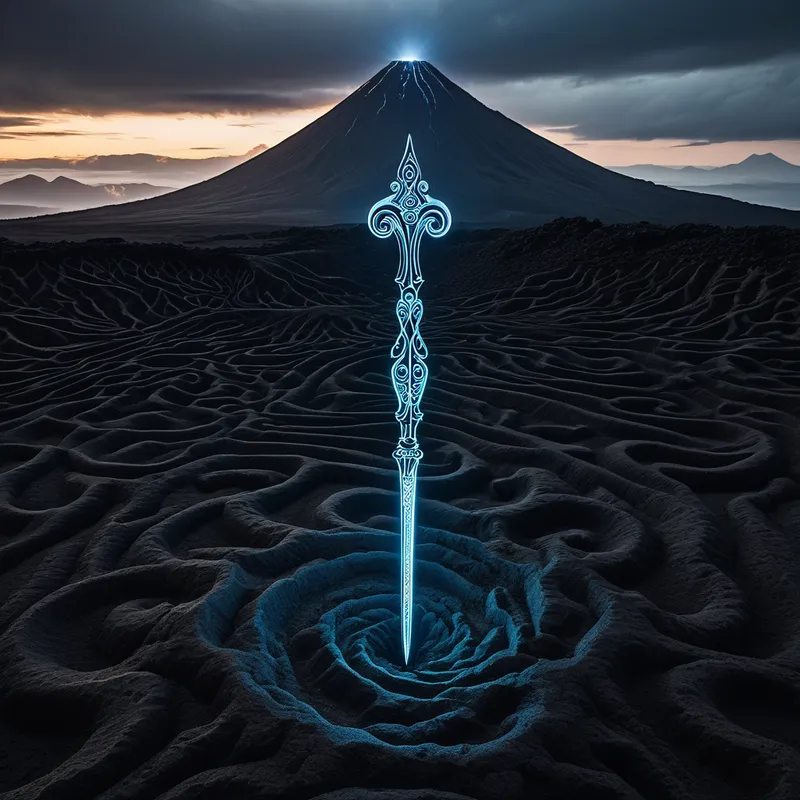
The myth of the Keris Spirit is a perfect allegory for the alchemical opus, the great work of psychic transmutation. The base materials (iron, random psychic impulses) are subjected to the nigredo—the blackening, the fasting, the isolation, and the fire of the forge (confrontation with the shadow, intense feeling). The inviting of the spirit represents the albedo—the whitening, where the conscious mind opens to the illuminating, yet often terrifying, contents of the unconscious.
The quenching is the critical moment of integration. The red-hot, transformed psyche must be plunged into the waters of feeling and relatedness to be tempered. Without this, the insight remains brittle, fanatical, and dangerous.
The final, polished keris symbolizes the rubedo—the reddening, the birth of the “philosopher’s stone,” which in psychological terms is the achieved state of greater wholeness. The individual now carries within them a forged center, a “spiritual spine” of great resilience and purpose. They have not eliminated their inner daemon (the spirit); they have given it a conscious partnership. The keris is not wielded lightly; it is drawn only when necessary, symbolizing that this integrated power is to be used with discernment and ethical responsibility, not for petty egoic gains, but in service to one’s authentic destiny and the greater good.
Associated Symbols
Explore related symbols from the CaleaDream lexicon:
- Spirit — The isi or essence invited into the blade, representing the raw, autonomous life-force of the unconscious that seeks conscious form and partnership.
- Fire — The transformative element of the forge, symbolizing the purifying, shaping, and often painful heat of psychological ordeal and creative passion necessary for change.
- Sacrifice — The empu’s fasting, focus, and ordeal, representing the necessary surrender of comfort and ego required to engage with profound inner forces.
- Dragon — A common manifestation of the keris spirit, embodying immense primal power, wisdom, and the chthonic energies of the earth that must be integrated.
- Ancestral Spirit — The keris as a pusaka connects the wielder to lineage, representing the inheritance of both gifts and burdens from the psychological and cultural past.
- Forge — The sacred container of transformation, analogous to the therapeutic space or the focused mind where raw experience is worked into coherent meaning.
- Metal — The base material of the self, shaped and fused under pressure, symbolizing the enduring strength and unique character forged through life’s trials.
- Water — The tempering medium, representing the necessary cooling through emotion, compassion, and relatedness to prevent the forged insight from becoming destructive.
- Ritual — The prescribed actions of the empu, symbolizing the conscious, respectful framework needed to safely navigate encounters with numinous psychic content.
- Destiny — The keris is forged for a specific purpose and often a specific wielder, reflecting the myth’s theme of aligning individual will with a larger, soul-driven fate.
- Shadow — The unintegrated spirit before forging represents aspects of the self perceived as other, dangerous, or chaotic, which hold immense power when consciously engaged.
- Bridge — The keris itself acts as a bridge between the human and spiritual worlds, the conscious and unconscious, and the individual to their ancestral lineage.