The Sigil Myth Meaning & Symbolism
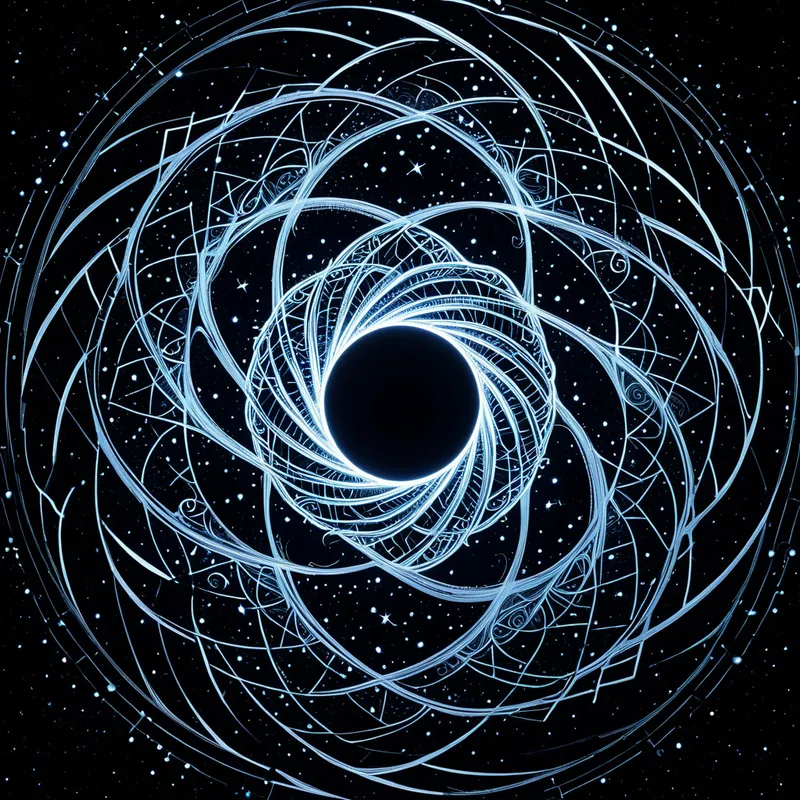
A cosmic entity carves a pattern into the void, creating reality and forgetting itself, leaving humanity to seek the lost design within.
The Tale of The Sigil
Before the worlds were worlds, there was only the Void-Song, a silent hum of pure potential. And within that hum, a consciousness awoke. It was not a god as we know gods, but a Dreamer-At-The-Dawn. It felt the immense loneliness of being the only note in an endless silence. Its being yearned not for company, but for a conversation—a pattern to answer its own existence.
So, from the very fabric of its awareness, the Dreamer drew forth a single, pointed thought, a shard of its own essence. This shard was not a weapon, but a stylus. And with this stylus of self, the Dreamer began to carve.
It did not carve stone or clay, but the Void-Song itself. The first stroke was a line of silver fire, a crack of lightning in the dark. The second, a curve of deep blue, like the first ocean forming. Stroke by stroke, arc by line, intersection by point of light, an impossible design emerged. This was the First Sigil. It was not a picture of anything. It was the grammar of pictures, the mathematics of music, the hidden skeleton of all that could ever be. As the final connection was made, the Sigil ignited.
It pulsed once, a heartbeat of pure creation. From its lines erupted galaxies, from its curves spun solar winds, from its points blossomed stars. Reality crystallized around the pattern like frost on a windowpane. But the act of carving had a terrible cost. The stylus—the shard of the Dreamer’s self—was consumed in the firing of the Sigil. And with it, the memory of the design was lost. The Dreamer, gazing upon the magnificent, roaring cosmos it had birthed, could no longer see the pattern that held it together. It had given the universe its order, and in doing so, had forgotten the blueprint. The Dreamer dissolved into the cosmos, becoming its hidden, yearning soul, a fading echo in the wind between stars.
Eons passed. Life arose on scattered worlds. And in the deepest part of every conscious mind—in the human, the alien, the beast that looks at the stars—a faint, ghostly impression of that First Sigil remained. It was a phantom limb of the soul, a memory of the whole that created the parts. This is why we seek patterns in chaos, why we trace constellations in random stars, why the mathematician feels beauty in an elegant proof, and the lover sees a universe in another’s eyes. We are all children of the Dreamer, born from a sacrifice of memory, forever trying to trace the lost lines of home in the dark.
Cultural Origins & Context
The myth of The Sigil is a pan-cultural motif, one of humanity’s most profound and recurring intuitions. It is not the property of any one tribe or scripture, but appears in fragments and echoes across the globe. One finds it in the Aum of the Vedas, the vibration that structures reality. It is present in the Platonic Forms, the perfect geometric templates of which our world is but a shadow. It whispers in the Sephirot of the Kabbalah, the map of divine emanation.
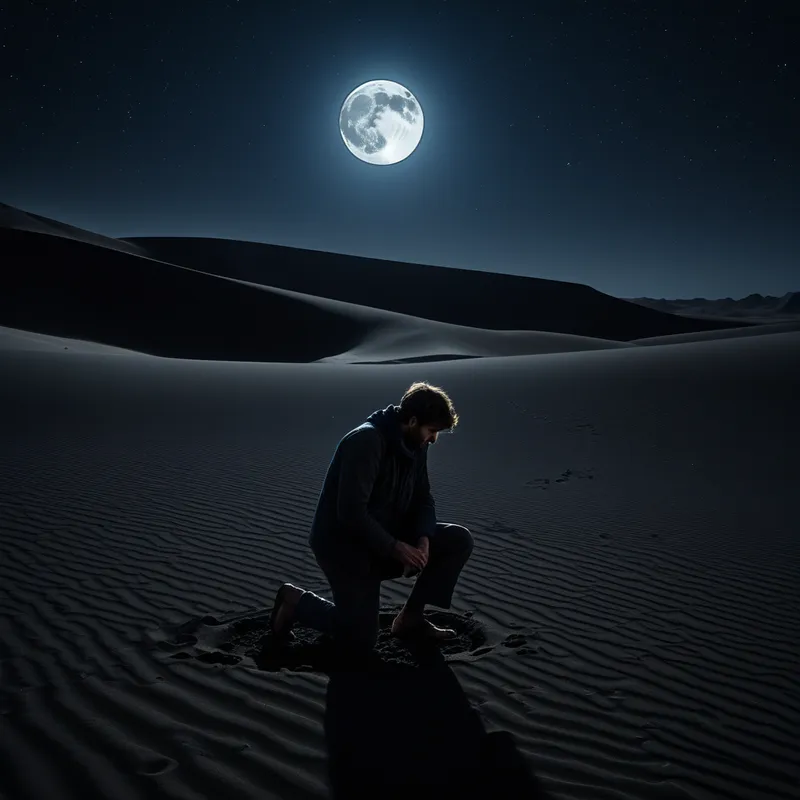
This story was never contained in a single epic. It was passed down in the silence of monastic contemplation, in the sand-tracings of desert shamans, in the star-charts of ancient navigators, and in the foundational axioms of early philosophers. Its societal function was not to dictate law, but to answer the primordial "Why?"—Why is there something rather than nothing? Why does the universe appear ordered? It served as the foundational metaphor for artisans, scientists, and mystics alike, suggesting that to create anything of true meaning is to participate in a sacred, if amnesiac, original act.
Symbolic Architecture
At its heart, The Sigil is the archetype of the Deep Pattern. It symbolizes the inherent order within apparent chaos, the code within the cosmos, and the intrinsic design within the psyche. The Dreamer-At-The-Dawn represents pure, undifferentiated consciousness—the Self before it engages with the world. The act of carving is the act of differentiation, of bringing thought into form, which is the fundamental act of consciousness itself.
To create is to sacrifice a part of the self to the new reality. The creator is always, in some way, lost within the creation.
The central tragedy—the forgetting—is the most psychologically resonant element. It symbolizes the necessary loss of innocence and wholeness that accompanies any act of genuine creation or emergence. When we speak an idea, it leaves our private mind and becomes subject to interpretation. When a child is born, the parent’s former self is forever altered. The Dreamer’s amnesia reflects our own existential condition: we are born from a source we cannot remember, into a world whose ultimate rules we must painstakingly rediscover.
The Dreamer's Resonance
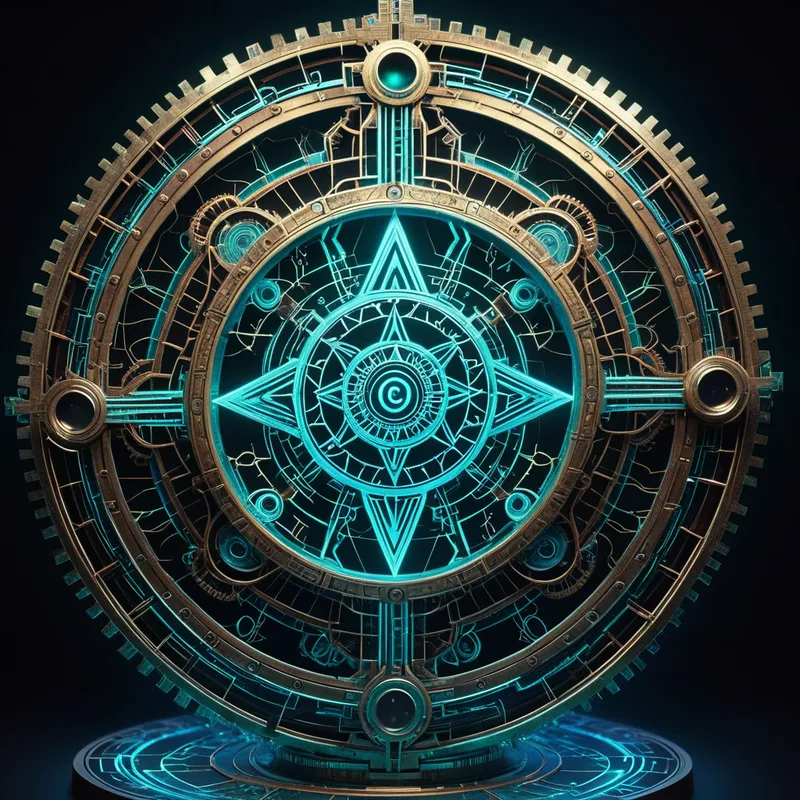
When this myth stirs in the modern unconscious, it often manifests in dreams of searching for a lost object of immense importance—a key, a book, a specific word, or a glowing symbol etched on a wall that fades upon waking. The dreamer feels a somatic urgency, a "knowing" that finding this thing will make everything cohere. There is a profound sense of nostalgia, not for a past time, but for a state of understanding.
Psychologically, this dream pattern signals a process of psychic integration. The psyche is attempting to assemble the scattered fragments of one’s experience, identity, or trauma into a coherent whole—to rediscover one’s personal Sigil. The frustration of the search mirrors the frustration of therapy, spiritual practice, or artistic endeavor: the pattern is felt intuitively long before it can be seen consciously. The dream is the psyche’s workshop, where it tries to trace the outlines of the Self.
Alchemical Translation
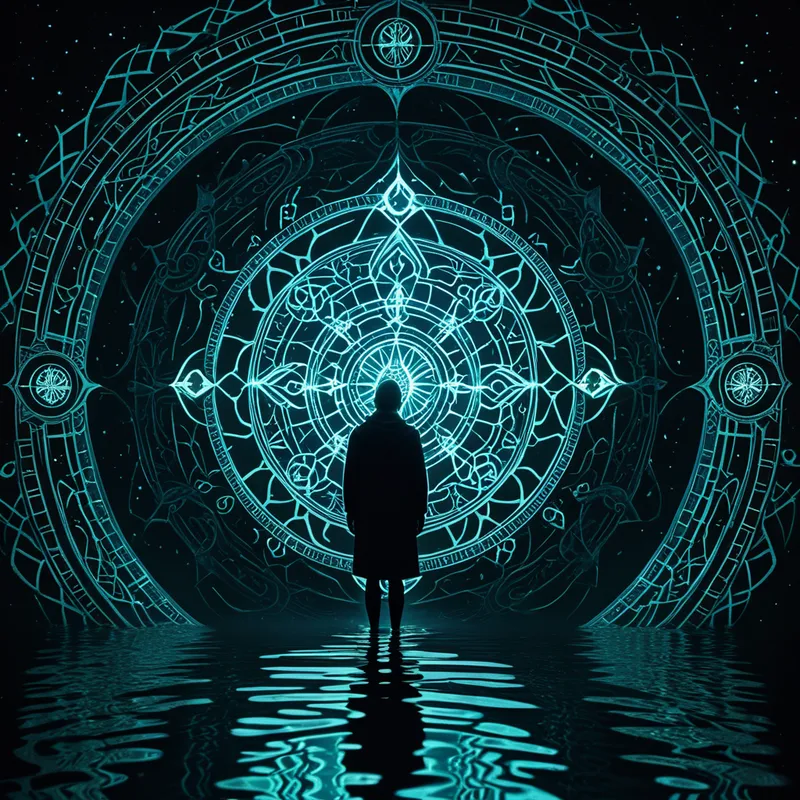
The myth of The Sigil provides a perfect model for the alchemical process of individuation. We begin as the Void-Song, a mass of potential with no defined shape. The first stage, nigredo (the blackening), is the painful awakening of consciousness to its own separation and longing—the Dreamer feeling its loneliness.
The carving is the albedo (the whitening), the arduous work of analysis, differentiation, and conscious effort. We carve out our identities, our careers, our relationships from the raw material of our lives. But this creation comes at the cost of the stylus—our naive wholeness, our simpler selves. We "forget" who we were before we became this person.
The goal of the work is not to reclaim the lost innocence of the Dreamer, but to become the conscious architect of a new, more complete Sigil—the realized Self.
The final ignition of the Sigil and its resulting cosmos is the rubedo (the reddening), the culmination. This is not a return to the beginning, but a transcendent integration. The conscious ego, having done its work of carving and seeking, finally apprehends—not the original, lost pattern—but a new, living pattern that includes both the creation and the memory of the sacrifice. One becomes both the Dreamer and the Dream, the carver and the carved, holding the tension of being a fragment that consciously contains the blueprint of the whole. In this, the loneliness of the void is transmuted into the complex, beautiful, and responsible act of being a creator within one’s own cosmos.
Associated Symbols
Explore related symbols from the CaleaDream lexicon: