The Shield of Achilles Myth Meaning & Symbolism
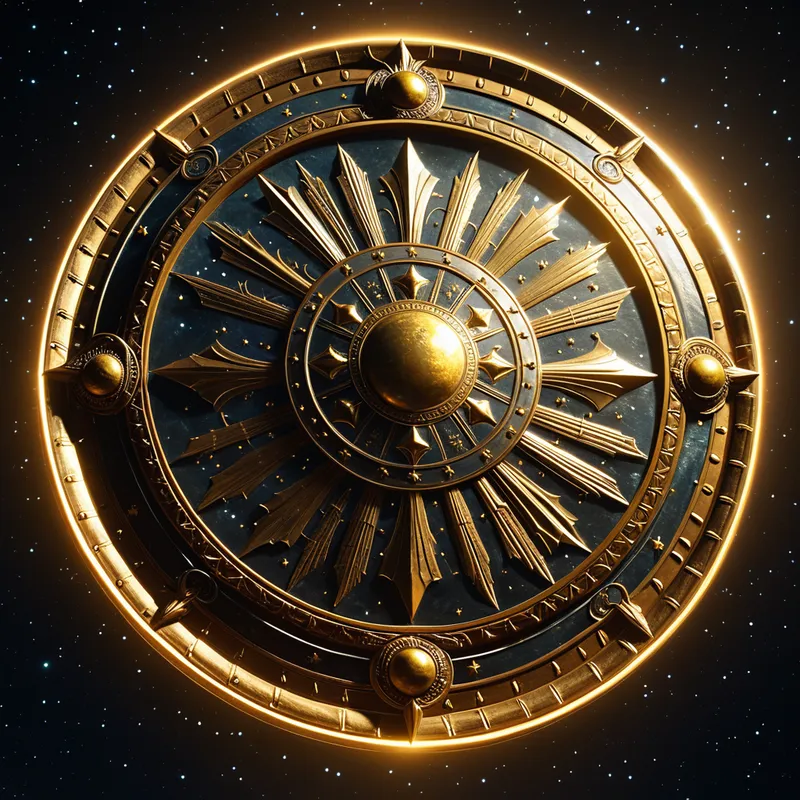
The god Hephaestus forges a divine shield for Achilles, depicting the entire cosmos, a world of life and peace set against the hero's impending death and rage.
The Tale of The Shield of Achilles
Hear now, of the rage of Achilles, and of the divine artifice that briefly held its reflection. In the tenth year of the war before Troy, a darkness had fallen upon the son of [Thetis](/myths/thetis “Myth from Greek culture.”/). His beloved Patroclus lay dead, slain by Hector, while Achilles’s own glorious armor was stripped away as a spoil of war. A grief sharper than any spear-point pierced him, a fury that shook the very foundations of the Achaean camp. He would return to the slaughter, but he would not go unprotected.
His divine mother, hearing his lament, ascended from [the sea](/myths/the-sea “Myth from Greek culture.”/) foam to the high halls of Olympus. She did not go to the thunderous throne of Zeus, but to the smoky, clanging heart of the divine realm: the forge of [Hephaestus](/myths/hephaestus “Myth from Global/Universal culture.”/). There, the artificer god, his strong back gleaming with sweat in the eternal firelight, listened to Thetis’s plea. He remembered her kindness when she and her sister [nymphs](/myths/nymphs “Myth from Greek culture.”/) cared for him after his great fall from heaven. “Be at ease,” his voice rumbled like stone on stone. “Would that I had the power to hide him from dreadful death, but I shall fashion armor such as no mortal has ever borne.”
And so the god of the forge set to work. He did not merely hammer metal; he summoned the cosmos to his anvil. Twenty bellows, worked by golden automata, breathed fire at his command. He took bronze, tin, silver, and precious gold, metals that held the memory of stars. Upon a massive, five-layered disc, he began his creation, not with scenes of war, but with the whole of existence.
He hammered out [the earth](/myths/the-earth “Myth from Hindu culture.”/), [the sky](/myths/the-sky “Myth from Persian culture.”/), and the sea, and the unwearying sun, [the moon](/myths/the-moon “Myth from Tarot culture.”/) at the full, and all the constellations that crown the heavens. He placed two beautiful cities: in one, a wedding feast and a legal dispute, life in its civic order. In the other, an army besieged its walls, and a bloody ambush unfolded by a river—life in its conflict. He wrought a field, rich and dark, where ploughmen drove their teams, and a king stood silently, staff in hand, rejoicing in the good work. He fashioned a vineyard, heavy with grapes, where youths and maidens carried the sweet fruit in baskets, while a boy among them played a lyre. He showed a herd of cattle attacked by lions, and a sheepfold in a tranquil valley. And around the outermost rim, he fixed the great stream of [Oceanus](/myths/oceanus “Myth from Greek culture.”/), the boundary of all things.
The shield was a world entire, a glittering, breathing microcosm held upon the arm of a man. When Thetis, like a mist, brought the armor down to her grieving son, it flashed with the light of a falling star. Achilles saw it, and his rage, already a furnace, found a new, terrible fuel. He donned the greaves, the corselet, the helmet, and took up the shield that held all of life within its circle. And as he strode toward the Scaean Gates, [the world](/myths/the-world “Myth from Tarot culture.”/) of peace and harvest and dance upon his arm, he went forth to bring nothing but death.
Cultural Origins & Context
This myth is not a standalone tale but the breathtaking centerpiece of [Homer](/myths/homer “Myth from Greek culture.”/)’s Iliad, an epic poem crystallized in the 8th century BCE but rooted in an older oral tradition. For generations, aoidoi (bards) would have performed these verses, perhaps expanding and refining the description of the shield as a showcase of their poetic skill. In a culture with a profound oral tradition, such a detailed, static object described in flowing verse is a masterstroke—a “word-picture” that allows the audience’s mind to rest from the relentless action and contemplate a larger order.
The shield’s description (in Book 18) serves a critical societal function. In the midst of a poem about the rage, grief, and brutality of war, it presents a complete vision of the polis (city-state) and the cosmic order that sustains it. It shows the Greeks their own idealized world: [justice](/myths/justice “Myth from Tarot culture.”/), agriculture, marriage, festival, and the arts. It is a reminder of what is being fought for, and more poignantly, of what Achilles himself has chosen to abandon. The shield is a cultural anchor, asserting that even amidst the chaos of the greatest heroic conflict, the cycles of human life—planting, harvesting, judging, celebrating—endure.
Symbolic Architecture
The [Shield](/symbols/shield “Symbol: A symbol of protection, defense, and boundaries, representing personal security, resilience, and the need to guard against external threats or emotional harm.”/) of Achilles is perhaps the most profound symbolic object in Western literature. It is not a tool of war but a mirror of existence.
The shield represents the total psyche—the Self in Jungian terms—containing all opposites in a dynamic, unified whole.
Achilles, the embodiment of singular, destructive [passion](/symbols/passion “Symbol: Intense emotional or physical desire, often linked to love, creativity, or purpose. Represents life force and deep engagement.”/) (his menis, or [wrath](/symbols/wrath “Symbol: Intense, often destructive anger representing repressed emotions, moral outrage, or survival instincts.”/)), carries upon his arm the totality of everything his rage seeks to negate: [peace](/symbols/peace “Symbol: Peace represents a state of tranquility and harmony, both internally and externally, often reflecting a desire for resolution and serenity in one’s life.”/), law, [community](/symbols/community “Symbol: Community in dreams symbolizes connection, support, and the need for belonging.”/), and creativity. The two cities symbolize the eternal [human](/symbols/human “Symbol: The symbol of a human represents individuality, complexity of emotions, and social relationships.”/) [tension](/symbols/tension “Symbol: A state of mental or emotional strain, often manifesting physically as tightness, pressure, or unease, signaling unresolved conflict or anticipation.”/) between conflict and [concord](/symbols/concord “Symbol: A musical term for harmonious agreement between notes, representing balance, unity, and peaceful resolution in dreams.”/), the very poles between which Achilles’s own [soul](/symbols/soul “Symbol: The soul represents the essence of a person, encompassing their spirit, identity, and connection to the universe.”/) is torn. The pastoral and agricultural scenes speak of [fertility](/symbols/fertility “Symbol: Symbolizes creation, growth, and abundance, often representing new beginnings, potential, and life force.”/), time, and cyclical renewal—realities utterly [alien](/symbols/alien “Symbol: Represents the unknown, otherness, and the exploration of new ideas or experiences.”/) to the [linear](/symbols/linear “Symbol: Represents order, predictability, and a direct, step-by-step progression. It symbolizes a clear path from cause to effect.”/), [death](/symbols/death “Symbol: Symbolizes transformation, endings, and new beginnings; often associated with fear of the unknown.”/)-bound trajectory of the tragic [hero](/symbols/hero “Symbol: A hero embodies strength, courage, and the ability to overcome significant challenges.”/).
Psychologically, Achilles is a man possessed by a complex, identified entirely with his [warrior](/symbols/warrior “Symbol: A spiritual archetype representing inner strength, discipline, and the struggle for higher purpose or self-mastery.”/)’s anger and his personal [grief](/symbols/grief “Symbol: A profound emotional response to loss, often manifesting as deep sorrow, yearning, and a sense of emptiness.”/). The shield, crafted by the divine Hephaestus, represents the transcendent function. It is a gift from the unconscious (the divine [realm](/symbols/realm “Symbol: The symbol of ‘Realm’ often signifies the boundaries of one’s consciousness, experiences, or emotional states, suggesting aspects of reality that are either explored or ignored.”/), the forge beneath [consciousness](/symbols/consciousness “Symbol: Consciousness represents the state of awareness and perception, encompassing thoughts, feelings, and experiences.”/)) that holds the [pattern](/symbols/pattern “Symbol: A ‘Pattern’ in dreams often signifies the underlying structure of experiences and thoughts, representing both order and the repetitiveness of life’s situations.”/) for wholeness. It does not stop his rage—the conscious ego is too entrenched—but it frames it within a vastly larger context. The hero goes to his [fate](/symbols/fate “Symbol: Fate represents the belief in predetermined outcomes, suggesting that some aspects of life are beyond human control.”/) bearing the [image](/symbols/image “Symbol: An image represents perception, memories, and the visual narratives we create in our minds.”/) of the world he will never inhabit, making his [choice](/symbols/choice “Symbol: The concept of choice often embodies decision-making, freedom, and the multitude of paths available in life.”/) both more tragic and more meaningful.
The Dreamer’s Resonance
When this myth appears in modern dreams, it rarely manifests as a literal, Homeric shield. Instead, one might dream of a complex, circular object—a [mandala](/myths/mandala “Myth from Buddhist culture.”/), a intricate clock, a holographic globe, or a tablet covered in myriad scenes. The dreamer is often holding it, observing it, or trying to understand its overwhelming detail.
This dream signals a critical moment of psychic overload and potential integration. The dreamer in waking life is likely consumed by a singular, powerful affect: a burning grievance, an all-consuming project, a period of profound mourning, or a rigid identity (the “warrior” in their career, the “victim” in a relationship). The shield-dream presents the counter-message from [the Self](/myths/the-self “Myth from Jungian culture.”/): “Your current focus is but one scene within a vast tapestry.” The somatic sensation is often one of awe mixed with anxiety—the weight of the object, the dizziness from its detail. The psychological process is the unconscious attempting to re-contextualize a narrow, identified consciousness by confronting it with the breathtaking complexity of the entire [psyche](/myths/psyche “Myth from Greek culture.”/), offering a path out of identification through the vision of a greater whole.
Alchemical Translation
The alchemical process modeled here is not of a base metal turning to gold, but of a fragmented psyche moving toward integration, or individuation. Achilles is the [prima materia](/myths/prima-materia “Myth from Alchemical culture.”/)—the raw, tortured substance. His descent into grief and isolation is the [nigredo](/myths/nigredo “Myth from Alchemical culture.”/), the blackening, the death of his old self (the hero who fought for glory).
Thetis’s journey to Olympus is the appeal to a higher, reconciling principle. Hephaestus, [the divine smith](/myths/the-divine-smith “Myth from Various culture.”/), is the archetypal agent of transformation. His forge is the alchemical vessel, and his act of creation is the coniunctio oppositorum—[the conjunction](/myths/the-conjunction “Myth from Alchemical culture.”/) of opposites. He does not take sides; he contains them. War and peace, city and field, vineyard and battlefield are all held in the same unbroken circle.
The shield itself is the lapis philosophorum, the Philosopher’s Stone—not a cure for death, but the symbolic embodiment of wholeness that makes one’s fate conscious and bearable.
For the modern individual, the “alchemical translation” is this: when consumed by a powerful, destructive, or isolating complex, the work is not necessarily to defeat it head-on (Achilles could not defeat his rage). The work is to forge the shield. That is, to consciously cultivate the vision that contains the opposite of your identification. If consumed by conflict, consciously contemplate peace and civic order. If lost in grief, deliberately engage with images of life and renewal. If identified as a victim, study the architecture of agency and creation. This is not denial, but the divine craftsmanship of the psyche—building the container that can hold the contradiction, thereby transforming its meaning and reducing its autonomous, destructive power. We may still have to walk toward our personal battles, but we do not have to walk into them empty-handed. We can carry the whole world with us.
Associated Symbols
Explore related symbols from the CaleaDream lexicon: