The Sealed Book Myth Meaning & Symbolism
A cosmic scroll, sealed with seven seals, holds the world's fate. Only a worthy sacrifice can break its seals and unleash its final, redemptive truth.
The Tale of The Sealed Book
Hear now of the vision granted in the Isle of Patmos, where the sea whispers secrets to the stone. A voice, like a trumpet blast, pierced the veil of the mundane and called a seer into the throne room of heaven. And what a sight met his eyes! A throne, blazing with emerald rainbows, and around it, four living creatures, each a constellation of eyes and wings, crying out without ceasing. Twenty-four elders, crowned in gold, cast their crowns before the presence.
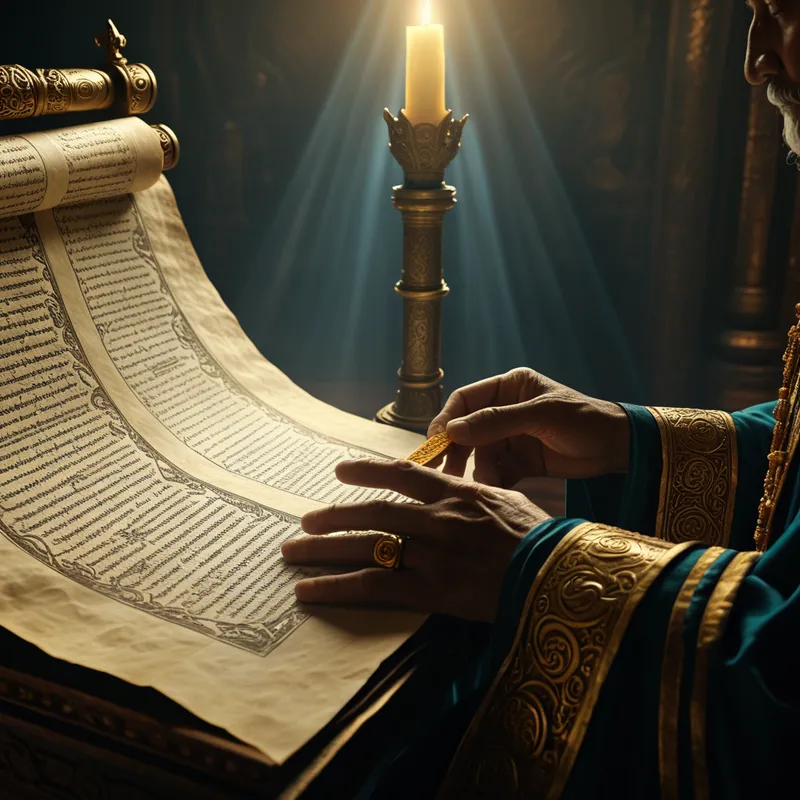
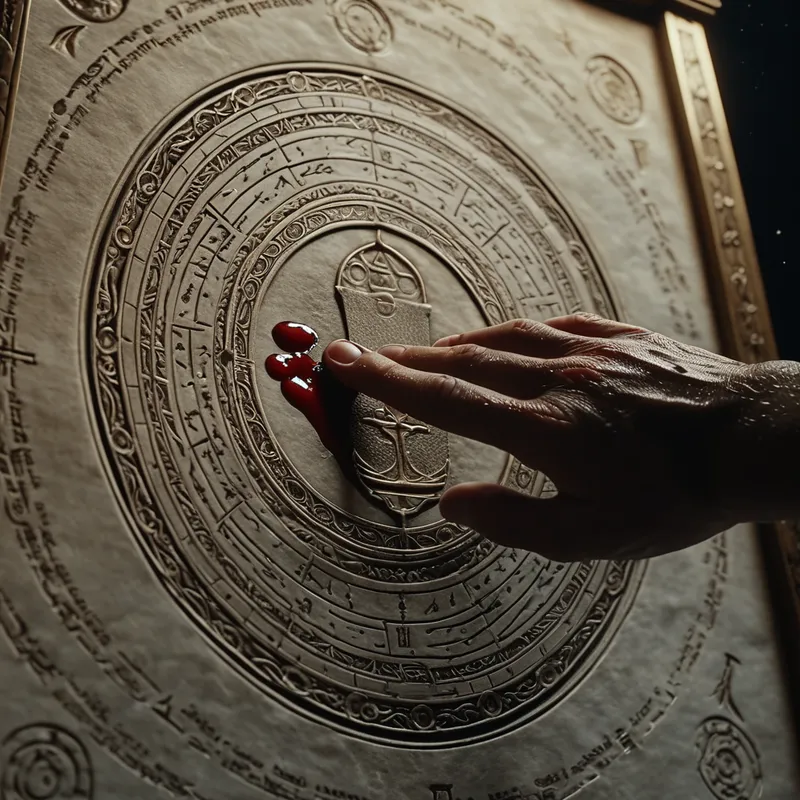
Then, in the right hand of the One upon the throne, he saw it. A book, written within and on the back. But it was shut fast, sealed not once, but seven times with seven seals of unbreakable wax. A mighty angel, his voice shaking the foundations of the cosmos, cried out, “Who is worthy to open the book and to loose its seals?”
Silence. A silence so profound it was a weight upon the soul. In all of heaven, on all the earth, and under the earth, no one was found worthy. Not the wisest elder, not the mightiest creature. The seer wept bitterly, for the book—the record of what was, what is, and what must be—remained closed. Destiny itself was locked away.
But then, one of the elders spoke, “Weep not. Behold, the Lion of the tribe of Judah, the Root of David, has prevailed to open the book and its seven seals.”
And the seer looked, and he saw not a roaring lion, but a Lamb. A Lamb standing as if it had been slain, bearing the marks of sacrifice, yet alive with a terrible, gentle power. It had seven horns and seven eyes, which are the seven Spirits of God sent out into all the earth. This Lamb came and took the book from the right hand of the One on the throne.
At that moment, the four living creatures and the twenty-four elders fell down before the Lamb. Each held a harp and golden bowls full of incense, which are the prayers of the saints. And they sang a new song, a song that had never been sung before: “You are worthy to take the book and to open its seals, for you were slain, and have redeemed us to God by your blood.”
As the Lamb broke the first seal, one of the four creatures thundered, “Come!” And a rider on a white horse, crowned for conquest, rode forth. With each subsequent seal broken, a new rider emerged: red for war, black for famine, pale for death. The cosmos trembled with the release of these forces. The sixth seal brought cosmic cataclysm—the sun black, the moon like blood, the stars falling. The seventh seal brought not an end, but a deeper beginning: a silence in heaven for half an hour, pregnant with the sounding of seven trumpets yet to come. The book was opened. The hidden architecture of time was laid bare, initiated by the one who was both sacrifice and sovereign.
Cultural Origins & Context
This myth originates from the final book of the Christian New Testament, the Apocalypse of John. Composed near the end of the 1st century CE, it is a work of apocalyptic literature, a genre born from periods of intense persecution and cultural crisis. It was not a dry theological treatise but a coded, visionary resistance literature, passed among persecuted communities in the Roman province of Asia.
The teller, John of Patmos, writes as a prophet-seer, channeling a divine vision. The societal function was multifaceted: to provide a theodicy (an explanation for suffering) for a marginalized group, to assure them of ultimate divine justice and victory, and to offer a symbolic map of cosmic history where their present tribulation was a necessary, though painful, chapter. The sealed book is the central mystery of this map—the divine plan that seems inaccessible and terrifying, yet is ultimately unlocked not by imperial power, but by paradoxical, sacrificial love.
Symbolic Architecture
The Sealed Book is the ultimate symbol of destiny or wholeness. Written “within and on the back” signifies a complete account, with no empty space—every moment, every potentiality is recorded. The seven seals represent the totality of obstacles, the complete and perfect set of conditions that must be met to access this wholeness.
The sealed knowledge is not withheld out of cruelty, but because its raw, unmediated truth would annihilate an unprepared consciousness.
The universal unworthiness to open it speaks to a profound psychological truth: the ego, in all its forms of wisdom, power, or piety, cannot force its way into the core of the Self. Intellectual might, social status, or moral achievement alone cannot unlock one’s deepest destiny. The weeping seer represents the despair of the conscious mind when it confronts this impasse.
The resolution is alchemical. The “Lion of Judah” (power, kingship) is revealed as the “Lamb slain” (vulnerability, sacrifice). The one who “prevails” does so not through domination, but through submission to a transformative ordeal. The Lamb’s wounds are not weaknesses but the very qualifications for the task. Psychologically, this represents the Self that integrates opposites: power and vulnerability, sovereignty and sacrifice, life and death. Only this integrated Self can handle the volatile contents of the sealed book—the full revelation of one’s own potential and the chaotic, creative/destructive forces of the psyche (the Four Horsemen).
The Dreamer's Resonance
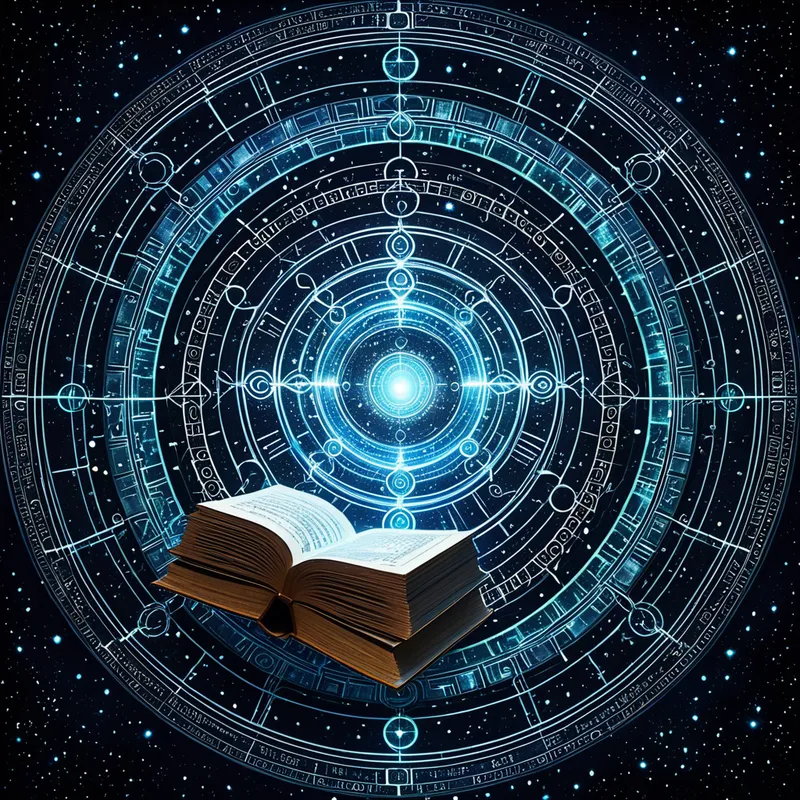
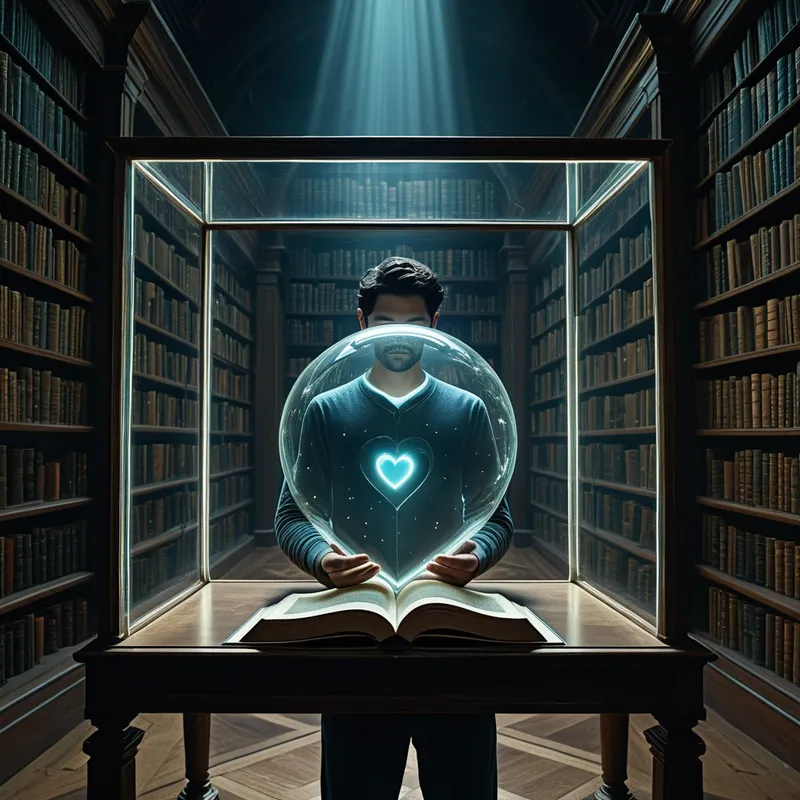
When this myth surfaces in modern dreams, it often manifests during a profound life transition or a crisis of meaning. The dreamer may find themselves in a vast, awe-inspiring library or archive, confronted with a book, file, or digital device that is locked, encrypted, or written in an incomprehensible code. They feel a crushing urgency to access it, coupled with a deep sense of personal inadequacy.
Somatically, this can feel like a pressure in the chest—the “book” is often felt as a knowledge locked within the heart-center. The dream signals that the conscious personality (the weeping seer) has reached the limit of its resources. It is facing the sealed record of its own unlived life, its repressed traumas, and its unloved potentials. The psychological process is one of confronting the shadow and acknowledging that the ego’s current strategies for control and understanding are insufficient. The dream is an invitation to stop striving and to await the emergence of a new, more integrated center of the personality—the Lamb-Self—that can bear the revelation.
Alchemical Translation
The myth models the individuation process with stark clarity. The first stage is the recognition of the sealed center: the intuitive sense that there is a core meaning, a true vocation, or a pattern to one’s suffering that remains frustratingly opaque.
The second is the failure of the heroic ego. We send forth all our inner “elders” (our rationality, our achievements, our personas) to open the book, and they all fail. This leads to the “bitter weeping” of depression, stagnation, or existential despair—a necessary humiliation of the ego.
The transmutation occurs when striving ceases and the central paradox is accepted: victory comes through surrender, wholeness through wounding.
The third stage is the emergence of the integrating symbol: the Lamb slain yet standing. Psychically, this is the moment of accepting one’s own wounding not as a flaw, but as the key to one’s unique authority. It is the integration of victim and victor. This new center of the psyche is then empowered to “break the seals.”
Each broken seal is a stage of profound psychic release. The white horse of conquest may be the courage to set a new direction. The red horse of war may be necessary inner conflict, slaying old identifications. The black horse of famine may be a period of austerity, where old psychological “food” is withdrawn. The pale horse of death is the final dissolution of an outworn sense of self. This process is terrifying and chaotic—it shakes the foundations of one’s inner world. But it is initiated and contained by the Lamb at the center, the symbol of a consciousness that has made peace with its own suffering and thus can orchestrate its own rebirth. The opening of the book is not the end of the journey, but the true beginning of reading one’s own life from the perspective of the Self.
Associated Symbols
Explore related symbols from the CaleaDream lexicon: