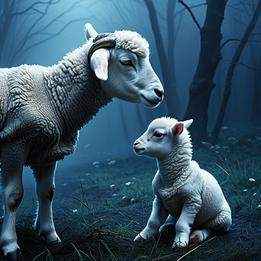
Lamb
A symbol of innocence, purity, sacrifice, and new beginnings, often representing vulnerability and gentleness.
Lamb Dream Meaning
A symbol of innocence, purity, sacrifice, and new beginnings, often representing vulnerability and gentleness.
Interpretive Themes
Innocence and Purity
highOften linked to childhood or new starts.
Sacrifice and Offering
highHistorical ritual significance common.
Vulnerability and Protection
mediumCan reflect personal fragility.
Rebirth and Renewal
mediumTies to cyclical natural patterns.
Gentleness and Peace
lowMay contrast with inner turmoil.
Cultural Lenses
Jungian Perspective
View Context →Represents the innocent, pure aspect of the Self or the divine child archetype, symbolizing potential for wholeness and integration of vulnerable parts of the psyche.
Freudian Perspective
View Context →May symbolize passive, submissive tendencies or unresolved childhood innocence, possibly linked to latent desires for purity or fear of corruption.
Gestalt Perspective
View Context →The lamb is a projection of the dreamer's own innocence or vulnerability; exploring its role reveals parts of the self needing acknowledgment or integration.
Cognitive Perspective
View Context →A mental schema for gentleness or sacrifice; dreaming of a lamb may process memories of vulnerability or cultural symbols learned from stories and media.
Evolutionary Perspective
View Context →Taps into ancient human associations with domestication and nurturing; symbolizes care for vulnerable offspring or social bonding through protective instincts.
Middle Eastern Perspective
View Context →Deeply tied to Abrahamic traditions as a ritual sacrifice (e.g., Eid al-Adha), symbolizing obedience, atonement, and divine provision, with modern ties to religious identity.
European Perspective
View Context →Historically linked to Christian iconography (Lamb of God), pastoral life, and spring festivals; modernly evokes rustic innocence or literary symbolism (e.g., pastoral poetry).
East Asian Perspective
View Context →In Chinese culture, associated with filial piety and gentleness (e.g., zodiac sign); in Buddhism, may symbolize compassion and non-harm, with modern cute (kawaii) connotations.
African Perspective
View Context →In many traditions, a symbol of wealth, status, and ritual offering in ceremonies; modernly represents community ties, hospitality, and connection to pastoral heritage.
Latin American Perspective
View Context →Blends indigenous, Catholic, and folk traditions; often appears in nativity scenes and festivals, symbolizing humility, sacrifice, and cultural syncretism in daily life.
Modern Western Perspective
View Context →Common in media as a metaphor for innocence or victimhood; also commercialized for purity (e.g., lamb imagery in branding), reflecting societal values on gentleness.
Global/Universal Perspective
View Context →Widely recognized as a symbol of innocence, sacrifice, and new life across cultures, often appearing in myths, rituals, and art to convey themes of purity and vulnerability.
Want a deeper analysis?
Get a personalized interpretation of your entire dream including this symbol.
Interpret My DreamCommon Appearances & Contexts
| Context | Emotion | Interpretation |
|---|---|---|
| Context Holding a lamb | Emotion tenderness | Interpretation Nurturing instinct emerging. |
| Context Lost lamb | Emotion anxiety | Interpretation Feeling directionless or vulnerable. |
| Context Sacrificing a lamb | Emotion guilt | Interpretation Personal sacrifice weighing. |
| Context Lamb in field | Emotion peace | Interpretation Contentment with simplicity. |
| Context Lamb following you | Emotion responsibility | Interpretation Burden of care felt. |
| Context Lamb transforming | Emotion awe | Interpretation Personal growth occurring. |
| Context Lamb being threatened | Emotion fear | Interpretation Vulnerability under attack. |
| Context White lamb | Emotion purity | Interpretation Seeking moral clarity. |
| Context Lamb bleating | Emotion distress | Interpretation Inner voice calling. |
| Context Lamb with mother | Emotion security | Interpretation Need for protection. |
| Context Lamb in storm | Emotion panic | Interpretation Chaos overwhelming innocence. |
| Context Petting a lamb | Emotion calm | Interpretation Soothing inner turmoil. |
Interpret Your Full Dream
Beyond this symbol, every dream carries a unique story. Share your dream for a personalized AI-powered interpretation.