The Rubedo Phase Myth Meaning & Symbolism
The final, fiery ordeal of the alchemical work, where the purified soul emerges as a radiant, incorruptible essence of gold and spirit.
The Tale of The Rubedo Phase
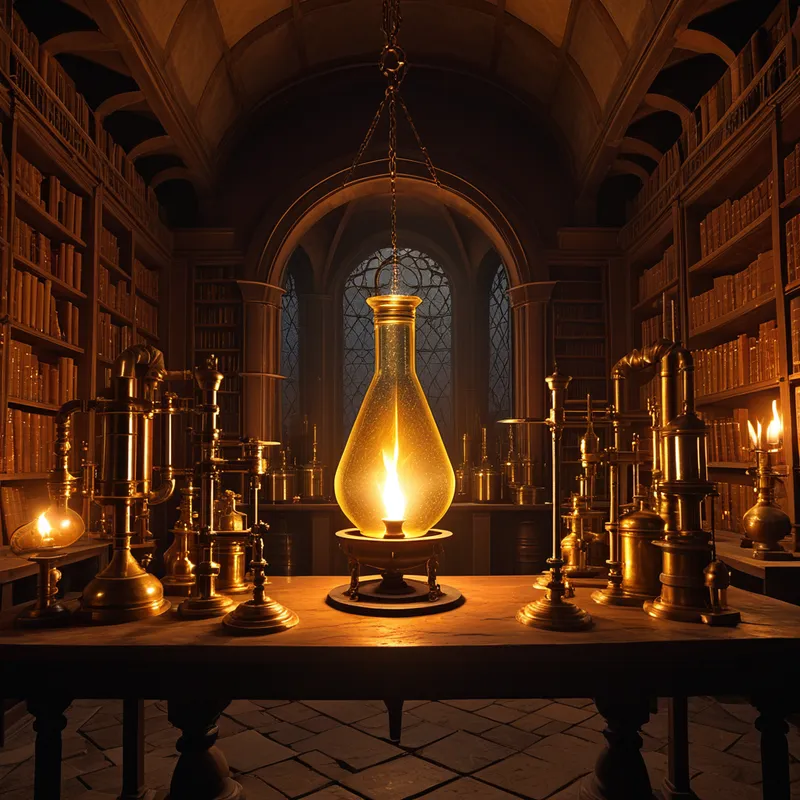
Listen, then, to the silence that follows the storm. The long night of the Nigredo has passed, its ashes settled. The patient, silvery dance of the Albedo has faded like mist under a strengthening sun. In the sealed vessel of the athanor—the alchemist’s soul-furnace—there remains only a substance that is no substance: a body that has died to itself, a spirit refined to its essence. It is the Citrinitas, a pale, promising gold, yet still volatile, still dreaming of its final form.
Then, from the depths of the furnace, a heat begins to rise that is not of coal or flame, but of a star being born. It is the advent of the Rubedo. The matter within the vessel does not merely grow hot; it becomes heat itself. It does not merely glow; it becomes light. A profound, ruby-red radiance suffuses the glass, pulsing like a heart of the world. This is not a fire that consumes, but a fire that reveals.
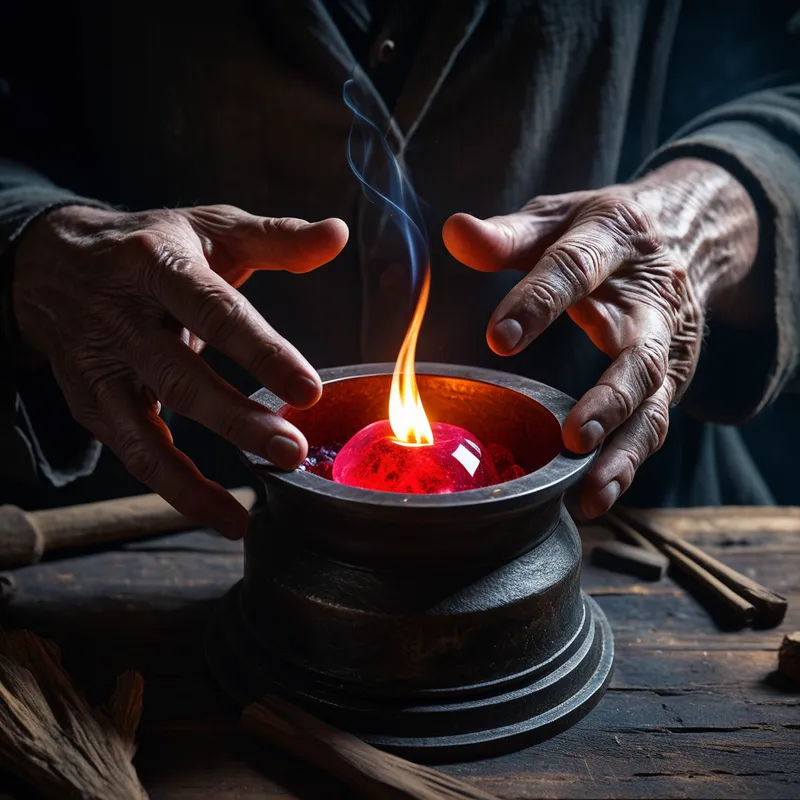
The alchemist, who has endured the despair of dissolution and the cold clarity of purification, now faces the ultimate trial: to hold the center of this inferno. To not look away as the last vestiges of the old self, the final impurities of fear and identity, are burned not into ash, but into transparency. The crucible screams a silent, high-frequency song of transmutation. Within, the substance churns, a miniature sun in its death-throes and birth-cries combined.
And then, a stillness. A convergence. The red light intensifies, condenses, and at its very core, a new quality emerges: the stable, serene, solar gold. The red and the gold are not two things, but one—the Rex and the Regina in a final, sacred marriage. The Rebis is born. From the vessel emerges not a powder or a stone, but a presence—the Lapis Philosophorum. It is radiant, heavy with meaning, incorruptible. It is the soul made substantial, and matter made divine. The long work is complete. The dawn, which was always implicit in the first darkness, has finally broken.
Cultural Origins & Context
The mythos of the Rubedo is not from a single culture, but from the underground river of European Hermeticism that flowed from Hellenistic Egypt through the Islamic Golden Age and into the medieval and Renaissance workshops of Europe. It was passed down in deliberately obscure texts like the Rosarium Philosophorum and the writings of figures such as Hermes Trismegistus. These were not simple recipes; they were encoded spiritual diaries, their true meaning protected by layers of allegory, bizarre imagery, and Decknamen (cover names).
The myth was told in whispers between adepts, in the flickering light of secret societies, and in the solitary vigil of the practitioner at their furnace. Its societal function was dual. Exoterically, it promised the literal creation of gold and the Elixir Vitae. Esoterically, and more importantly, it served as a precise map of the opus internum—the inner work of spiritual and psychological transformation. The Rubedo was the promised reward for a life of dedicated seeking, a symbol of the ultimate attainment that justified the immense suffering and discipline of the earlier stages. It modeled a path to a state of being that was whole, healed, and radiantly effective in the world.
Symbolic Architecture
The Rubedo is the symbol of achieved wholeness, the psychological endpoint of the individuation process. It represents the final integration of the conscious ego with the contents of the Self.
The fire of the Rubedo is not destruction, but the ultimate act of discernment; it burns away everything that is not essence, leaving only the indestructible diamond of the true personality.
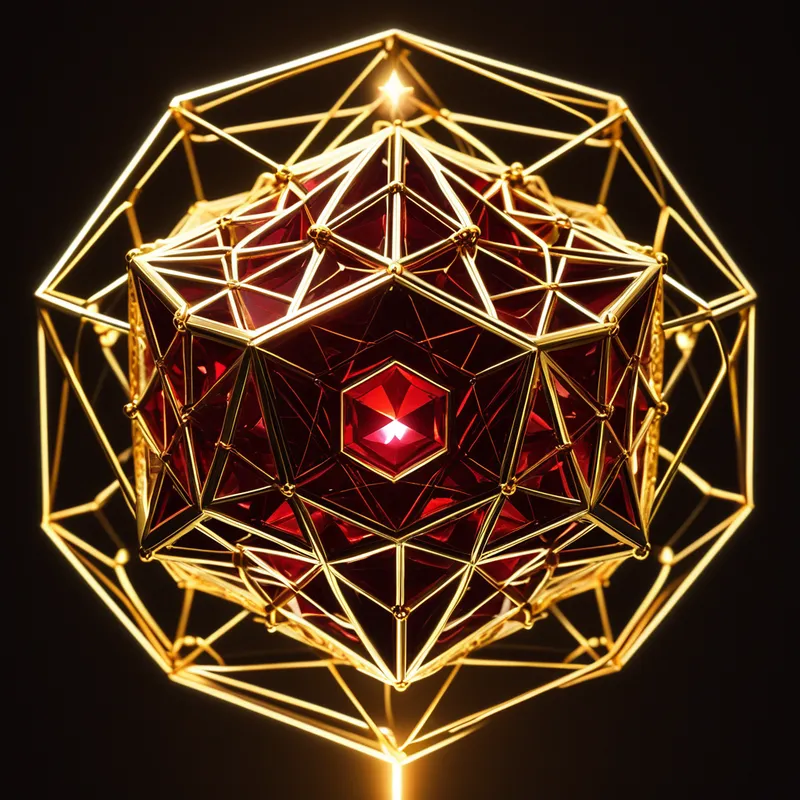
The red color is profoundly multivalent. It is the blood of sacrifice, the passion of life fully engaged, the warmth of embodied consciousness, and the blush of a new, healthy complexion in the "body" of the psyche. The emergence of gold within it signifies the dawn of a timeless, incorruptible value—the realization of one's intrinsic worth and unique, immutable core. The marriage of the Rex and Regina is the reconciliation of all fundamental opposites: logic and intuition, action and receptivity, spirit and matter. The resulting Lapis is not a static object, but a function: the ability to "transmute" base experience into psychological gold, to find meaning and value in all of life's raw materials.
The Dreamer's Resonance
When this myth stirs in the modern unconscious, it often manifests in dreams of intense, transformative heat or light that is not threatening but purifying. One might dream of a house on fire where they walk calmly through the flames, emerging unscathed and renewed. Or of a red sun rising inside their own chest, filling them with a serene, powerful warmth. There may be imagery of forging, of being in a crucible, or of finding a small, intensely heavy red-and-gold stone that feels profoundly significant.
Somatically, this can correlate with a period of intense psychological integration following a crisis or a long therapy. It is the "light at the end of the tunnel" feeling made visceral. The dreamer is going through the process of consolidating a new, more authentic identity. The fragmented parts acknowledged in the Nigredo and purified in the Albedo are now being fused together under the pressure of lived commitment. It is a somatic experience of "coming home" to oneself, often accompanied by a deep sense of calm authority and resilience that was previously unknown.

Alchemical Translation
For the modern individual, the journey to the Rubedo is the process of moving from a life of adaptation and reaction to a life of authentic expression and creation. The base metal is our inherited personality—the complexes, masks, and conditioned responses. The long incubation in the athanor is the often painful work of self-observation, shadow integration, and the withdrawal of projections.
The goal of the work is not to become spiritual at the expense of being human, but to become fully human, which is the ultimate spiritual achievement.
The Citrinitas is the dangerous moment of "spiritual inflation," where one mistakes intellectual understanding or a glimpse of wholeness for its full embodiment. The Rubedo’s fire is necessary to burn off this hubris, to ground the insight in the blood and bones of daily life. The triumph of the myth is not escape, but full incarnation. The Lapis Philosophorum that results is the mature personality—a person who has faced their own darkness, purified their intentions, and now operates from a centered, generative core. They possess the "stone": the ability to touch the leaden moments of despair, limitation, and banality and, through the quality of their conscious presence, transmute them into moments of connection, meaning, and golden insight. They have become the alchemist, the vessel, and the gold, all at once.
Associated Symbols
Explore related symbols from the CaleaDream lexicon: