The River God He Bo Myth Meaning & Symbolism
A proud river god demands tribute until a hero challenges his nature, forcing a divine transformation from chaotic force to ordered guardian.
The Tale of The River God He Bo
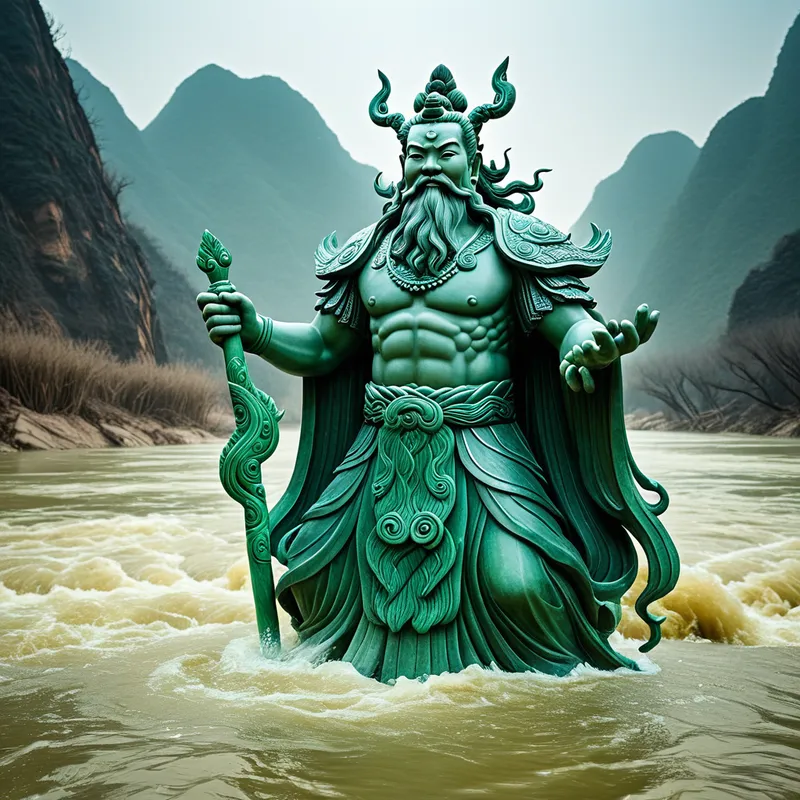
Hear now the tale of the great Yellow River, whose waters ran not just with silt, but with the tears of those who lived upon its banks. In the time when gods walked close to the earth, the river had a will, a voice, a terrible majesty. This was He Bo.
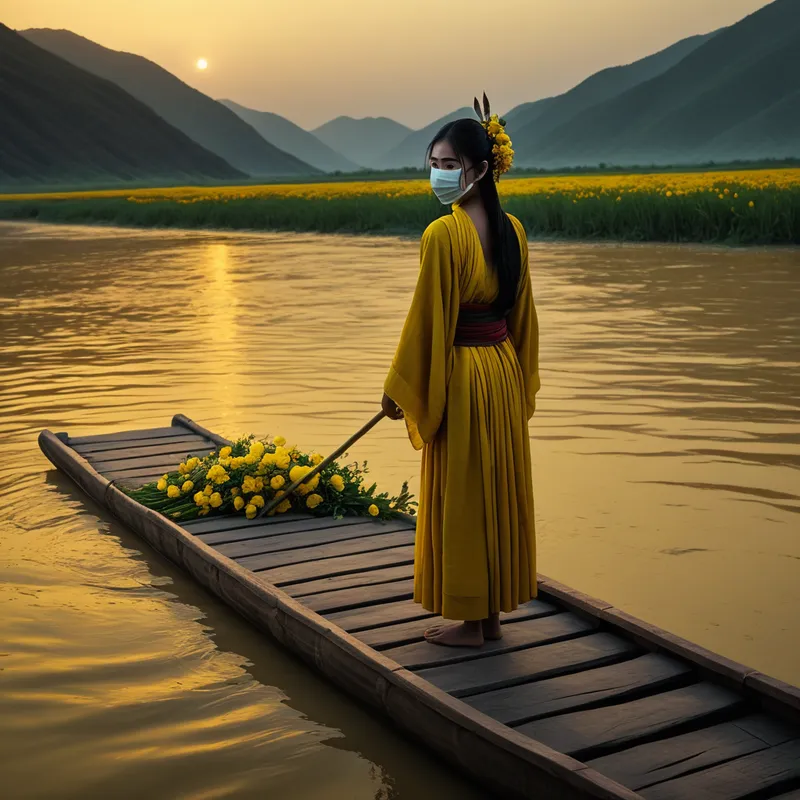
Each year, as the snows melted in the distant Kunlun mountains, the river would swell. It was not a gentle rise, but a roaring, brown-gold avalanche of water that swallowed fields, villages, and lives. The people whispered that this was He Bo’s hunger. To appease the god’s wrath and secure a year of safe passage and fertile silt, a grim pact was forged. Each season, the most beautiful maiden from the riverside villages would be chosen. Adorned with bridal silks and flowers, she was placed upon a carved wedding raft. With prayers and lamentations, the raft was pushed into the heart of the current, a sacrifice to the watery lord. The river would often calm thereafter, and the people would believe their offering had been accepted.
This was the way of things, the terrible price for life beside the great river. Until a hero arose, a man of both courage and cunning named Yu the Great. He had heard the weeping of the people and seen the emptiness in the eyes of the fathers who lost their daughters. Yu did not come with an army, but with a plan woven from observation and audacity.
He journeyed to the river’s most treacherous bend, where the waters churned like dragons fighting. There, he called out not in supplication, but in challenge. “O He Bo!” he cried, his voice cutting through the roar. “You claim the most beautiful for your bride, yet you have never shown your face! How can we know you are worthy of such gifts? Reveal yourself!”
The waters boiled. A great form coalesced from foam and current—a towering figure with a beard of frothing water, robes of swirling silt, and eyes that held the depth of river pools. He Bo emerged, proud and magnificent, expecting fear and worship. But Yu stood firm. “Great God,” said Yu, “you demand the best of us. Let us then see the best of you. Let us see the true order of your realm. Show me the map of your waters—where the deep channels run, where the hidden rocks lie, where your power is truly focused.”
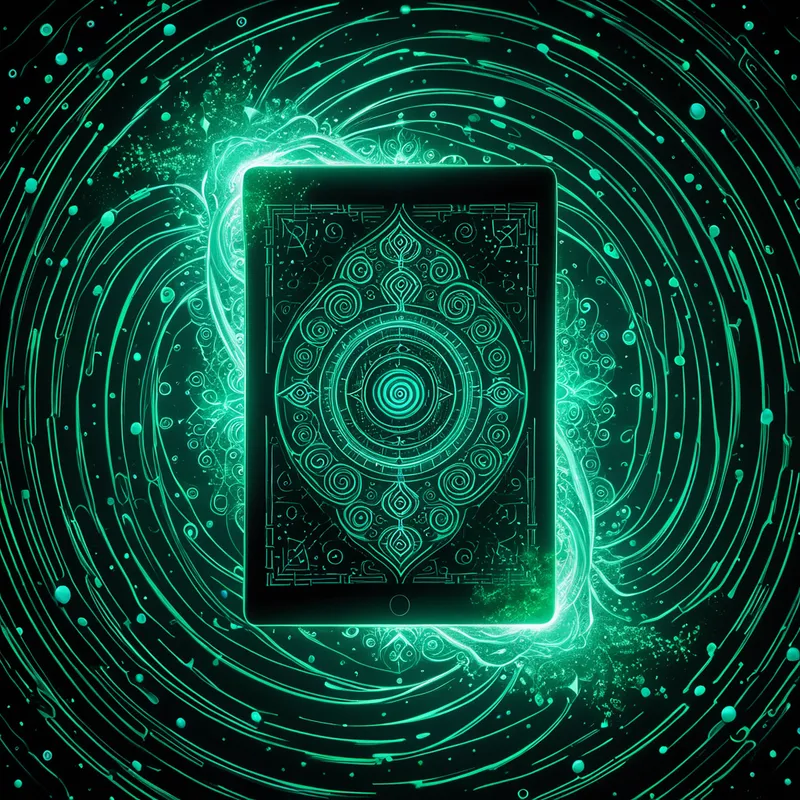
Flattered by the request for his divine knowledge, yet bound by the logic of the challenge, He Bo consented. From the depths, he produced a great River Chart, a luminous tablet that mapped the essence of the Yellow River—its currents, its floods, its secret pathways. As Yu studied the chart, he did not see a map of chaos, but a pattern. He saw how the river’s wild energy could be guided, not just feared; how banks could be reinforced, channels dredged, and floods mitigated.
With this divine knowledge in hand, Yu the Great began his legendary work. He organized the people. He built dikes and dug canals. He did not fight the river’s nature, but understood it, working with its flow rather than against its rage. The power of He Bo was not diminished, but its expression was transformed. No longer was the god a capricious taker of brides. Through Yu’s heroic mediation, He Bo became a guardian deity, his might channeled into the cyclical, life-giving flood that brought fertile soil, his chart a symbol of the harmony between human order and natural power. The sacrificial rafts ceased. The river, though still mighty, had found its place in the Dao.
Cultural Origins & Context
The myth of He Bo finds its roots not in the formal Taoist philosophical canon of Laozi or Zhuangzi, but in the deep, animistic soil of Chinese folk religion and hydrology. It is a story born from the most pressing reality of ancient North China: survival alongside the unpredictable, life-giving, and life-taking Yellow River. The myth was likely propagated by village elders and river folk, a cautionary and explanatory tale for the natural world’s most dominant force.
Its societal function was multifaceted. On one level, it explained the river’s ferocity—it had a conscious, divine will that required propitiation. On another, it justified a horrific social practice (human sacrifice) by framing it within a divine marital rite, giving tragic meaning to a profound loss. Most importantly, the myth’s resolution with Yu the Great models a pivotal shift in the Chinese cosmological view: from a worldview where humanity is passive before nature’s gods, to one where the heroic, wise human can engage with, understand, and ethically order the natural world. This aligns perfectly with the later Taoist ideal of wu wei—acting in accordance with the inherent patterns of nature, not against them. Yu doesn’t slay the god; he enlightens him, integrating his power into the human world.
Symbolic Architecture
At its core, the myth of He Bo is a [drama](/symbols/drama “Symbol: Drama signifies narratives, emotional expression, and the exploration of human experiences.”/) of unconscious power confronting conscious intelligence. He Bo represents the raw, untamed, and often tyrannical force of the unconscious—the [Shadow](/symbols/shadow “Symbol: The ‘shadow’ embodies the unconscious, repressed aspects of the self and often represents fears or hidden emotions.”/) in its most elemental form. He is a god, a numinous power, but one ruled by instinctual demand ([hunger](/symbols/hunger “Symbol: A primal bodily sensation symbolizing unmet needs, desires, or emotional voids. It represents craving for fulfillment beyond physical nourishment.”/), pride, possession). The annual sacrifice symbolizes the ego’s costly and unconscious appeasement of this inner tyranny—surrendering one’s “most beautiful” aspects (vitality, love, future) to placate an inner [chaos](/symbols/chaos “Symbol: In Arts & Music, chaos represents raw creative potential, uncontrolled expression, and the breakdown of order to forge new artistic forms.”/).
The river god is the psyche’s own wild, creative-destructive potential, demanding tribute because it has not been seen, known, or mapped.
Yu the Great embodies the emerging conscious principle, the [Hero](/symbols/hero “Symbol: A hero embodies strength, courage, and the ability to overcome significant challenges.”/) who does not flee or blindly worship, but who dares to look. His demand, “Show me your face,” is the essence of psychological confrontation. He asks for the [River](/symbols/river “Symbol: A river often symbolizes the flow of emotions, the passage of time, and life’s journey, reflecting transitions and movement in one’s life.”/) Chart—the inner [blueprint](/symbols/blueprint “Symbol: A blueprint represents the foundational plan or design for something, often symbolizing potential, structure, and the mapping of one’s inner self or future.”/), the [pattern](/symbols/pattern “Symbol: A ‘Pattern’ in dreams often signifies the underlying structure of experiences and thoughts, representing both order and the repetitiveness of life’s situations.”/) in the chaos. This is the [moment](/symbols/moment “Symbol: The symbol of a ‘moment’ embodies the significance of transient experiences that encapsulate emotional depth or pivotal transformations in life.”/) of [insight](/symbols/insight “Symbol: A sudden, deep understanding of a complex situation or truth, often arriving unexpectedly and illuminating hidden connections.”/), where raw [emotion](/symbols/emotion “Symbol: Emotion symbolizes our inner feelings and responses to experiences, often guiding our actions and choices.”/) or compulsion is translated into understandable [structure](/symbols/structure “Symbol: Structure in dreams often symbolizes stability, organization, and the framework of one’s life, reflecting how one perceives their environment and personal life.”/). The transformation of He Bo from a [bride](/symbols/bride “Symbol: A bride symbolizes new beginnings, commitment, and the transition into a partnership or a new phase in life.”/)-taking [monster](/symbols/monster “Symbol: Monsters in dreams often symbolize fears, anxieties, or challenges that feel overwhelming.”/) to a [guardian](/symbols/guardian “Symbol: A protector figure representing safety, authority, and guidance, often embodying parental, societal, or spiritual oversight.”/) of [fertility](/symbols/fertility “Symbol: Symbolizes creation, growth, and abundance, often representing new beginnings, potential, and life force.”/) signifies the [alchemy](/symbols/alchemy “Symbol: A transformative process of purification and creation, often symbolizing personal or spiritual evolution through difficult stages.”/) that occurs when the unconscious is made conscious: its [energy](/symbols/energy “Symbol: Energy symbolizes vitality, motivation, and the drive that fuels actions and ambitions.”/) is not destroyed, but integrated and redirected toward [life](/symbols/life “Symbol: The symbol of ‘Life’ represents a journey of growth, interconnectedness, and existential meaning, encompassing both the joys and challenges that define human experience.”/)-building purposes.
The Dreamer’s Resonance
When this myth stirs in the modern soul, it often surfaces in dreams of overwhelming, murky pressures. One may dream of being forced to offer something precious (a career opportunity, a relationship, one’s creativity) to a faceless institutional force or a flooding emotional crisis. The somatic feeling is one of drowning, of being pulled by a current too strong to resist. The “He Bo” in the dream could be a raging boss, a tidal wave of grief, or a dark, formless anxiety that demands constant appeasement through addictive behaviors or people-pleasing.
The psychological process here is the buildup of a tension between an unconscious complex (He Bo) that holds immense power and an ego that feels helplessly sacrificial. The dream is signaling that the old pact—the automatic sacrifice—is becoming untenable. It is a call for the inner Yu to awaken: to turn toward the flood, to name it, and to ask for its “map.” This means moving from passive victimhood to active inquiry into the source and structure of one’s inner turmoil.

Alchemical Translation
The individuation journey modeled by this myth is not one of slaying dragons, but of civilizing rivers. It is the process of psychic transmutation where primal, chaotic energy is transformed into structured, cultural, and life-affirming power.
The first alchemical stage is Recognizing the God. This is ceasing to see the inner turmoil as mere misfortune and acknowledging it as a numinous, albeit destructive, force within one’s own psyche—the Raging River of one’s nature.
The second is The Courageous Confrontation. This is the ego’s difficult decision to stop the automatic sacrifices (the people-pleasing, the repression, the addiction) and to stand in the torrent. It involves the heroic question: “What are you, really? Show me your nature.”
The Bridge is not built over the river, but from the understanding of its flow.
The third and crucial stage is Acquiring the Chart. This is the deep inner work of analysis, reflection, and pattern-recognition. It is journaling the flood of emotions to find their source. It is tracing the history of a rage to its original Wound. It is understanding the logic of one’s own chaos.
The final stage is Ordering the Waters. With the chart in hand, one begins the lifelong work of integration. This is building the dikes and canals of healthy boundaries, constructive habits, and creative outlets. The energy of the rage becomes determined action. The power of the grief becomes depth of compassion. The god is not banished; he is given a dignified role as the source of one’s fertile depth and resilient flow. The sacrifice ends because a conscious relationship has begun.
Associated Symbols
Explore related symbols from the CaleaDream lexicon:
- River — The central symbol of life force, time, and the unconscious mind in flux, representing both the destructive flood and the nourishing flow that must be understood.
- Sacrifice — The costly tribute paid to an unconscious power, signifying the loss of self that occurs when we appease inner demons instead of confronting them.
- Hero — Embodied by Yu the Great, this archetype represents the conscious ego’s courageous journey to confront chaos and retrieve order for the benefit of the whole community (psyche).
- Raging River — The specific manifestation of the river as untamed, emotional, and instinctual force, symbolizing a psyche in a state of unintegrated, destructive turmoil.
- God — Represents a numinous, autonomous complex within the psyche that holds supreme power over a domain of life until it is consciously engaged.
- Map — The River Chart symbolizes the inherent pattern, logic, or deep structure that exists within apparent chaos, which must be retrieved for transformation.
- Order — The principle brought by Yu, representing the conscious structure, discipline, and understanding that channels raw power into sustainable form.
- Bridge — Symbolizes the connection forged between the conscious ego and the unconscious god, enabling dialogue and passage where there was once only a dangerous gap.
- Wound — The underlying trauma or brokenness that often fuels the chaotic, demanding behavior of the inner “god,” the original injury that must be healed.
- Taoist Alchemy — The overarching process of inner transformation depicted in the myth, where base, leaden chaos is transmuted into golden, ordered harmony.
- River Flow — The ideal state achieved after integration: the powerful but directed movement of psychic energy in accordance with its natural course and purpose.