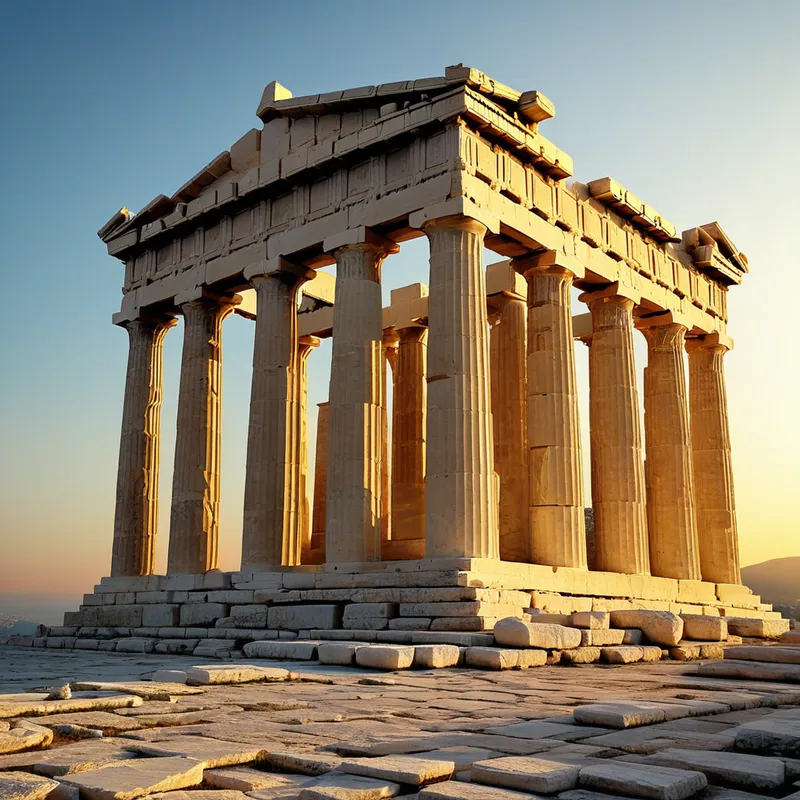
The Parthenon Myth Meaning & Symbolism
The myth of the Parthenon's founding, where Athena's gift of the olive tree secures her patronage of Athens, embodying wisdom over raw power.
The Tale of The Parthenon
Hear now, and let your mind travel to a time when the world was young to the gods, and the air above the Attic plain hummed with potential. Upon the great, flat-topped rock they called the Acropolis, a contest was brewing—a contest that would decide the fate of a people yet unnamed.
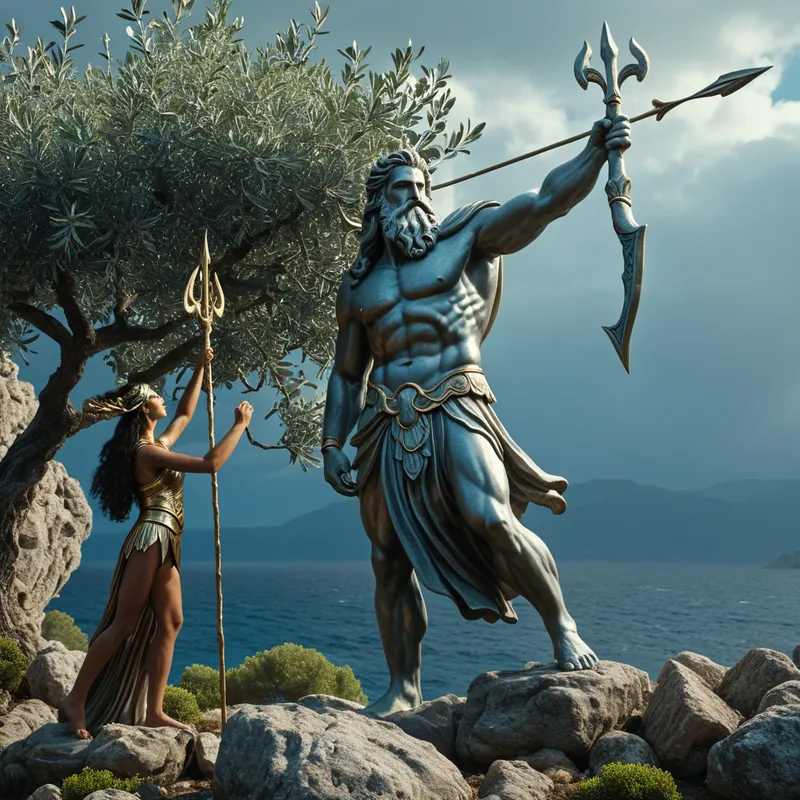
The sea-god Poseidon, brother of Zeus, strode forth first. His beard was the foam of tempests, his eyes the grey of a churning deep. He raised his three-pronged spear, the trident, and with a roar that shook the very bones of the mountain, he struck the bare limestone. The rock cracked open, not with the sweet gift of freshwater, but with a gushing, thunderous geyser of salt water—a symbol of his naval dominion, a promise of trade and naval power, but also of the sea’s unforgiving, briny wrath.
Then came she. Athena, daughter sprung fully formed from the mind of Zeus. No thunder accompanied her step, only a profound, listening silence. Clad not for war, but in the simple peplos of a citizen, she approached the scarred rock. She knelt, and with a touch as gentle as a thought, she planted something in the fissure. From it sprang a sapling, its leaves a shimmering silver-green. It grew before the assembled eyes of the gods and the awestruck king, Cecrops. It was the first olive tree—a promise of wood, oil, food, and light. A gift not of conquest, but of cultivation; not of fear, but of sustained life.
The council of the Olympian gods deliberated. King Cecrops and his people witnessed. The salt spring spoke of raw, untameable force. The olive tree whispered of peace, industry, and the slow, patient work of civilization. The vote was cast. Athena was chosen. The city would bear her name: Athens.
And so, upon that sacred rock, the Athenians built her house. Not a palace, but a temple. They called it the Parthenon, for the Parthenos, the Virgin Athena. Within its cool, mathematical perfection of marble and light, they placed her image: a colossal statue of ivory and gold, the Athena Parthenos, holding in her outstretched hand a small, golden figure of Nike, Victory herself. The temple was not merely a building; it was the stone-and-mortar manifestation of the city’s soul, a perpetual offering to the wisdom that founded it, a bulwark of order against the encircling chaos of the sea and the wild.
Cultural Origins & Context
The myth of the contest for Athens is not a single, codified epic but a foundational aetiological myth woven into the fabric of Athenian identity. It was passed down through poets like Hesiod and depicted endlessly on pottery, in sculpture, and most famously in the sculptural program of the Parthenon itself. The west pediment of the temple originally depicted this very contest, a permanent public reminder of the city’s divine charter.
This story was central to the polis ideology. It explained why Athens was under Athena’s special protection and validated its political and cultural achievements as reflections of her divine attributes: strategic wisdom (metis), skilled craft (techne), and just law. The myth was performed and reaffirmed during major civic festivals like the Panathenaia, where a new woven robe (peplos) was presented to the ancient cult statue. The Parthenon was thus the ultimate cultural text, its architecture and art serving as a pedagogical tool to every citizen, teaching them the values upon which their society was ostensibly built.
Symbolic Architecture
The myth, and the temple that embodies it, is a profound symbol of the psychic shift from the primordial to the civilized, from the unconscious to the conscious.
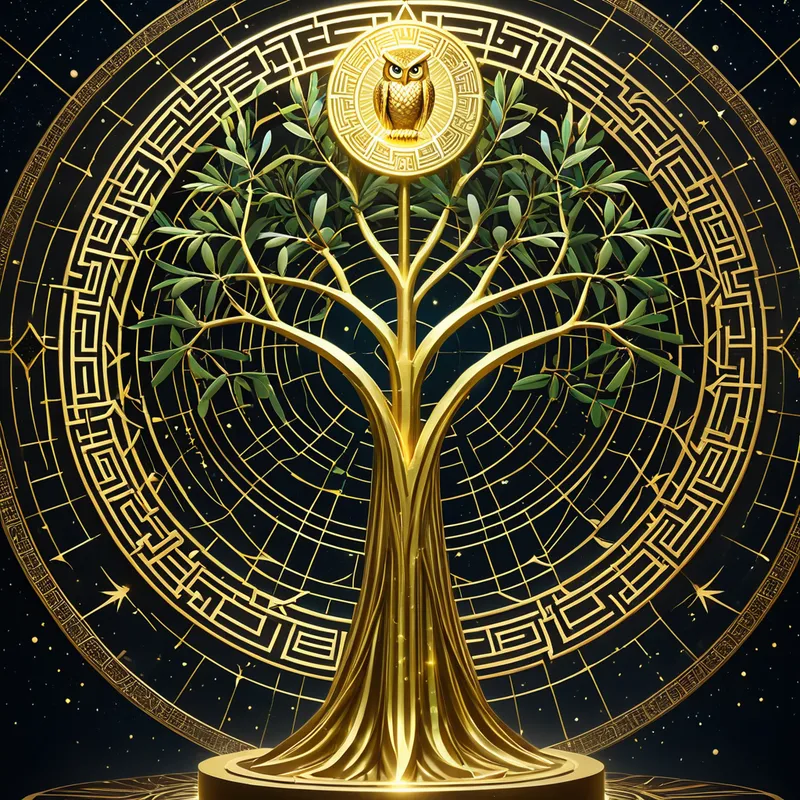
The olive tree is not merely a plant; it is the embodied idea of cultivated potential. It represents the conscious mind taking the raw stuff of nature (the rocky earth) and, through wisdom and patience, producing sustenance, light, and peace.
Poseidon represents the archaic, chthonic powers—the unconscious in its raw, emotional, and often destructive potency. His gift is immediate, impressive, but ultimately sterile and undrinkable. Athena represents the differentiating, ordering principle of consciousness. Her gift is slow-growing, requiring nurture, but it yields endless, renewable resources. The Parthenon itself, in its perfect Doric proportions and rational geometry, is the architectural analogue of this ordering principle. It is the temenos—the sacred, bounded space—carved out of the chaotic wilderness of the unconscious. The victory of Athena is the victory of the ego-consciousness establishing a realm of law, art, and reason, but a victory that forever acknowledges the powerful, salty sea of the unconscious at its gates.
The Dreamer’s Resonance
When this mythic pattern stirs in the modern dreamer, it often manifests as a choice between two foundational ways of being. One might dream of a raging, overwhelming sea threatening to engulf a pristine, structured space like a library or a home (Poseidon’s claim). Alternatively, one might dream of discovering a simple, potent object—a key, a seed, a book—in a place of conflict, an object that promises not escape, but a new, sustainable way forward (Athena’s gift).
Somatically, this can feel like a tension between a rising, chaotic energy in the gut or chest (the trident strike) and a sudden, clarifying coolness in the forehead or a sense of grounded calm (the planting of the tree). The dreamer is psychologically at a point of civic founding within their own psyche. They are being asked to choose between reacting with old, powerful, but ultimately destabilizing patterns (anger, impulsivity, domination) and responding with a new, thoughtful, creative strategy that builds long-term sovereignty over one’s inner realm.
Alchemical Translation
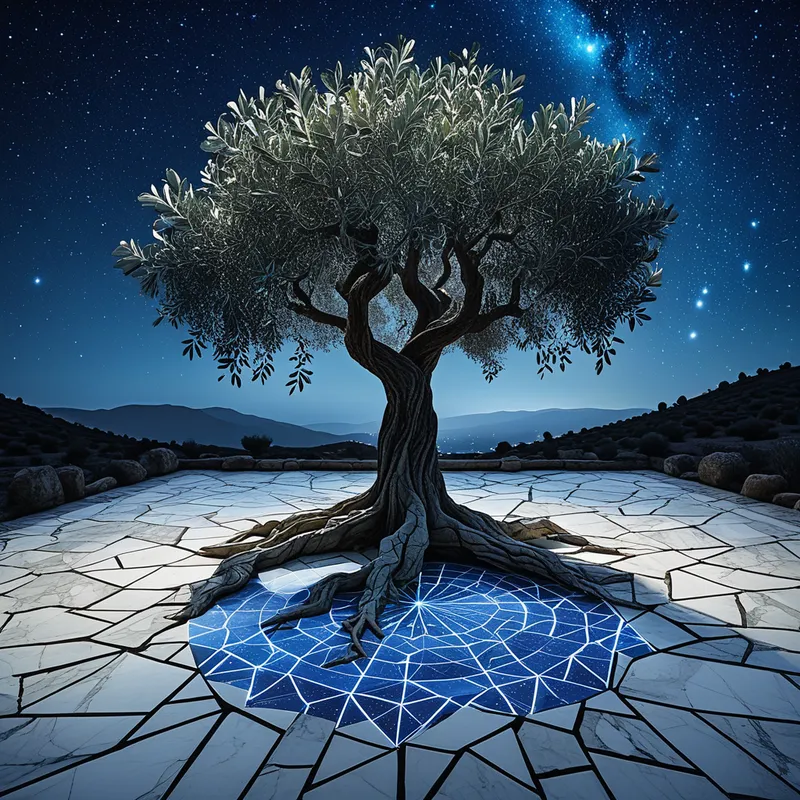
The alchemical process mirrored here is the coagulatio—the solidification of spirit into matter, the giving of durable form to insight. The psychic journey is one of individuation, where the personality moves from being subject to the turbulent, archetypal forces of the unconscious (Poseidon) to establishing a conscious relationship with them, governed by the ruling principle of the Senex, or wisdom (Athena).
The contest on the Acropolis is the internal debate where the soul must choose its patron. Will it be ruled by the reactive, emotional complexes of the past, or will it pledge itself to the difficult, creative work of building a conscious life?
The building of the inner Parthenon is the lifelong work of constructing a coherent, resilient psyche. Its columns are the principles we live by; its inner chamber (cella) houses our highest values and self-image (the Athena Parthenos within). This temple is not a fortress to keep the unconscious out. The sculpted metopes depicting battles with centaurs and giants show it is a place where those chaotic forces are confronted, ritualized, and integrated into the sacred narrative of the self. The final stage is not invulnerability, but a hard-won, wise sovereignty—a city of the soul that understands its founding myth and lives by the gift of the olive, ever-nourished by the deep, but no longer drowned by it.
Associated Symbols
Explore related symbols from the CaleaDream lexicon: