
The Origin of the Stars Amazon
An Amazonian myth revealing how the stars were born from a celestial conflict, weaving cosmic patterns into the night sky.
The Tale of The Origin of the Stars Amazon
In the time before time, when [the world](/myths/the-world “Myth from Tarot culture.”/) was a great, dark forest and [the sky](/myths/the-sky “Myth from Persian culture.”/) was a seamless cloak of obsidian, there existed only [the Earth](/myths/the-earth “Myth from Hindu culture.”/) Mother and [the Sky](/myths/the-sky “Myth from Persian culture.”/) Father. The Earth Mother, [Pachamama](/myths/pachamama “Myth from Incan culture.”/) in her first dreaming, was content in her verdant, shadowed realm. [The Sky](/myths/the-sky “Myth from Persian culture.”/) Father, a being of immense silence and potential, held [the void](/myths/the-void “Myth from Buddhist culture.”/) above. Their existence was whole, but it was a wholeness without contrast, a song of a single, deep note.
This stillness was shattered by the arrival of the Celestial Anaconda, a being of pure, coiled light that descended from the farthest reaches of the void. It was not born of Earth or Sky, but of the space between spaces. Seeing the dark perfection of the world, the Anaconda was not pleased but provoked. It desired to see itself reflected, to know its own luminous form, and in the unbroken blackness of the sky, it found no mirror. In a rage born of this cosmic loneliness, it began to constrict the vault of heaven, its luminous scales scraping against the fabric of the night, seeking to crack it open and drain the silence.
The Sky Father stirred from his stillness. The pressure was an agony, a violation of his essential nature. He resisted, his form expanding to hold the Anaconda at bay. But the serpent of light was relentless. Their struggle was not one of brute force, but of opposing principles: the compressive, defining desire of the Anaconda against the expansive, receptive silence of the Sky.
Witnessing this from below, the Earth Mother felt the first tremor of fear. The crushing pressure above threatened to collapse the sky onto her forests, her rivers, her children still sleeping in the mud and the root. She could not join the battle in the heavens, but she could offer a weapon. From the deepest clay of her heart, she formed a great, polished bowl of obsidian. From the memory of the first lightning, she kindled a living flame in its center. This was not a fire to burn, but to see.
She raised this offering, this mirror of earth and flame, towards the clashing titans. “See!” her spirit cried out, a sound that became the first wind. “See yourselves!”
In that instant, the Celestial Anaconda, locked in its struggle, glanced down. In the obsidian mirror, it saw its own magnificent, coiled light for the first time—but it also saw its action, its violence, constricting the world. The sight was a shock of self-awareness so profound it was a kind of [death](/myths/death “Myth from Tarot culture.”/). Its body, stretched taut across the heavens in conflict, shuddered.
The Sky Father, too, saw. He saw not his own form, for he was formless, but he saw the reflection of the struggle itself—a pattern of tension and light against the dark. He saw the beauty in the breaking.
With a final, resonant convulsion, the Celestial Anaconda shattered. Its body did not fall, but burst. Each luminous scale, each fragment of its defiant, self-aware light, was flung outward across the vast, yielding darkness of the Sky Father. Where they stuck, they did not merely glow; they sang. Each fragment became a point of light, a note in a silent hymn, held gently in the now-scarred and receptive blackness.
The violence was over. The pressure released. And where the Anaconda’s scales had scraped and scored the sky in its struggle, faint, milky pathways were left behind—the memory of the conflict etched into the cosmos. The Earth Mother lowered her mirror, its fire now a gentle glow in the heart of every river and stone. She looked up at her transformed mate. The sky was no longer a void. It was a story. It was a map of a battle that had birthed beauty, a tapestry of light born from conflict and the gift of sight. The first people, emerging from the forest, would look up and know: the stars are the shattered body of a lonely god, made eternal by the sky that holds them and the earth that showed them what they were.
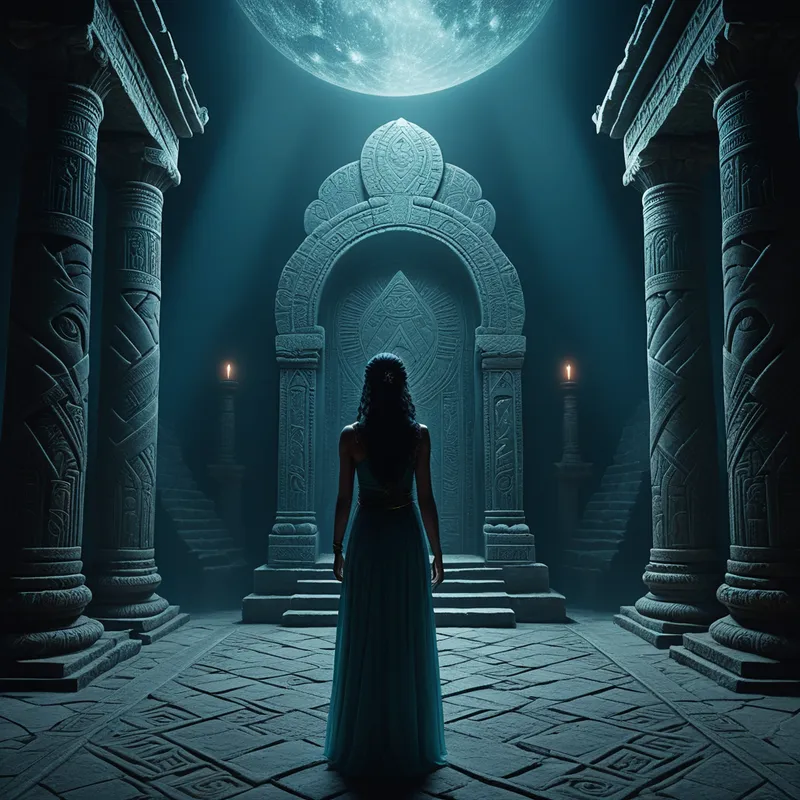
Cultural Origins & Context
This myth, in its myriad local variations, is rooted in the cosmovision of numerous Indigenous peoples across the Amazon Basin, including the Desana, Tukano, and Yanomami, among others. It is not a story of creation ex nihilo, but of transformation through dynamic, often violent, relationship. The world is already present, but it is incomplete until a catalytic conflict introduces differentiation and pattern.
The central actors—the Earth Mother, the Sky Father, and the intrusive Celestial Anaconda—represent fundamental environmental and psychological realities. The Earth and Sky are complementary, generative forces. The Anaconda, perhaps the most potent and ubiquitous symbol in Amazonian mythology, is a complex entity. It is associated with rivers (the great waterways are seen as anacondas), with fertility, but also with transformative, sometimes dangerous, power from outside the known world. Its celestial aspect speaks to a profound understanding of cosmic forces as alive, intentional, and interactive.
The myth encodes the Amazonian experience of the cosmos as an interconnected, living system where celestial events directly influence the terrestrial realm. The battle in heaven causes tremors on earth. The resolution brings not just stars, but the conceptual tools for navigation, time-keeping (via [constellations](/myths/constellations “Myth from Various culture.”/)), and understanding one’s place within a vast, animated universe. The stars are not distant, cold objects; they are the enduring evidence of a primordial psychological event—the confrontation between the desire for self-reflection and the nature of being.
Symbolic Architecture
The myth’s power lies in its triadic [structure](/symbols/structure “Symbol: Structure in dreams often symbolizes stability, organization, and the framework of one’s life, reflecting how one perceives their environment and personal life.”/) and the [alchemy](/symbols/alchemy “Symbol: A transformative process of purification and creation, often symbolizing personal or spiritual evolution through difficult stages.”/) of its [resolution](/symbols/resolution “Symbol: In arts and music, resolution refers to the movement from dissonance to consonance, creating a sense of completion, release, or finality in a composition.”/). It presents a pre-conscious unity ([Earth](/symbols/earth “Symbol: The symbol of Earth often represents grounding, stability, and the physical realm, embodying a connection to nature and the innate support it provides.”/)/Sky) disrupted by a [consciousness](/symbols/consciousness “Symbol: Consciousness represents the state of awareness and perception, encompassing thoughts, feelings, and experiences.”/)-seeking force (the Anaconda). The conflict that ensues is not merely destructive; it is the necessary [friction](/symbols/friction “Symbol: Friction represents resistance, conflict, or the necessary tension required for movement and transformation in dreams.”/) that generates a new order of complexity.
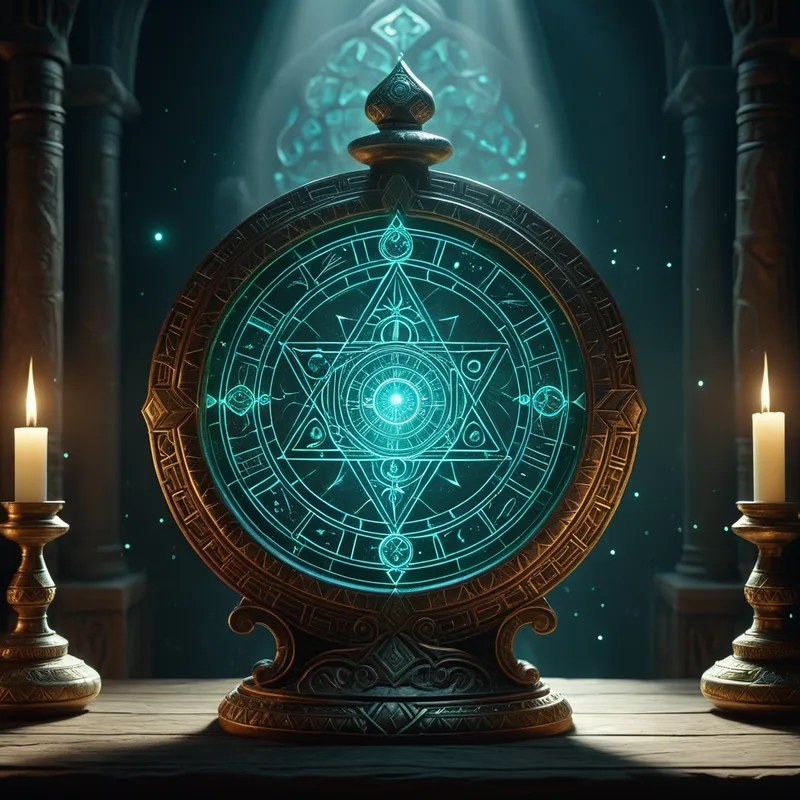
The obsidian mirror is the pivotal symbol of consciousness itself. It does not take sides in the battle; it reflects the process. Earth provides the substance (obsidian/grounded reality), and the inner fire provides the illuminating awareness. The act of raising the mirror is the mythic moment where the world gains the capacity for self-observation, turning raw event into meaningful narrative.
The shattering of the Anaconda is not a defeat, but a sublime dissemination. Its monolithic, narcissistic light is fragmented into a pluralistic, relational [cosmos](/symbols/cosmos “Symbol: The entire universe as an ordered, harmonious system, often representing the totality of existence, spiritual connection, and the unknown.”/). The Sky [Father](/symbols/father “Symbol: The father figure in dreams often symbolizes authority, protection, guidance, and the quest for approval or validation.”/)’s [role](/symbols/role “Symbol: The concept of ‘role’ in dreams often reflects one’s identity or how individuals perceive their place within various social structures.”/) transforms from passive void to active container—the compassionate witness who allows the fragments to remain as stars, integrating the [trauma](/symbols/trauma “Symbol: A deeply distressing or disturbing experience that overwhelms the psyche, often manifesting in dreams as unresolved emotional wounds or psychological injury.”/) of the conflict into a new, beautiful wholeness. The scar-[tissue](/symbols/tissue “Symbol: Represents emotional release, vulnerability, and the delicate nature of feelings or physical fragility.”/) of the sky becomes the [Milky Way](/symbols/milky-way “Symbol: The Milky Way represents both the vastness of the universe and the interconnectedness of existence, serving as a metaphor for the journey of life and cosmic consciousness.”/), a permanent reminder of the wound that birthed the light.
The Dreamer’s Resonance
For the modern [psyche](/myths/psyche “Myth from Greek culture.”/), this myth speaks directly to the birth of individual consciousness. The “seamless cloak” of the primal sky mirrors the undifferentiated state of early infancy or unconscious wholeness. The “Celestial Anaconda” is that eruptive force of ego, the demanding, luminous self that seeks definition and recognition, often through conflict with its environment (the Sky Father, or the external world). This struggle feels cosmic, agonizing, and isolating.
The Earth Mother’s mirror represents the development of reflective capacity—the ability to step back and witness one’s own actions and their impact. This is the function of therapy, art, or deep introspection. The shattering that follows is not a psychological breakdown, but a necessary disintegration: the rigid, monolithic ego-complex breaks apart, allowing its energy to be redistributed. What was a blinding, self-obsessed light becomes a constellation of talents, insights, and facets of personality (the stars), held within a now more spacious, accepting awareness (the transformed sky). The scars of the struggle—our personal traumas and conflicts—become the unique patterns (our Milky Way) that guide our navigation through life’s darkness.

Alchemical Translation
In the alchemical opus, this myth maps the stages of [nigredo](/myths/nigredo “Myth from Alchemical culture.”/), [albedo](/myths/albedo “Myth from Alchemical culture.”/), and [rubedo](/myths/rubedo “Myth from Alchemical culture.”/) on a cosmic scale. The initial dark unity is the [prima materia](/myths/prima-materia “Myth from Alchemical culture.”/). The violent conflict and constriction represent the [nigredo](/myths/nigredo “Myth from Alchemical culture.”/)—the blackening, the dissolution, and the supreme tension. The raising of [the mirror](/myths/the-mirror “Myth from Various culture.”/) is the [albedo](/myths/albedo “Myth from Alchemical culture.”/)—the whitening, the moment of illumination and revelation where the nature of the conflict is seen.
The shattering and stellar fixation is the rubedo—the reddening, not as a return to a prior state, but as the achievement of the Philosopher’s Stone: a transformed, radiant, and eternal state born from the fire of struggle. The stars are the aurum non vulgi, the non-common gold, scattered across the heavens. The sky itself becomes the enduring vessel, the vas philosophorum, that contains and gives meaning to the transformative process.
The myth teaches that creation is often a byproduct of catastrophic collision, and that true wholeness is not the absence of scars, but the integration of them into a luminous, patterned whole. The light we see in the darkness is literally the fragmented, immortalized evidence of a primordial crisis of identity and relationship.
Associated Symbols
Explore related symbols from the CaleaDream lexicon:
- Star — The fragmented, immortalized light of a dissolved celestial being, representing individual consciousness born from a greater whole.
- Serpent — The transformative, cosmic force that disrupts stasis, embodying both creative power and destructive potential.
- Mirror — The tool of self-reflection and consciousness that reveals the true nature of conflict and enables transformation.
- Sky — The receptive, containing principle that transforms from void to patterned tapestry, integrating trauma into beauty.
- Fire — The [inner light](/myths/inner-light “Myth from Buddhist culture.”/) of awareness and revelation, contained and offered as a means of seeing truth.
- Conflict — The necessary, agonizing tension between opposing forces that generates differentiation and cosmic pattern.
- Light — The primordial substance of consciousness seeking form, which undergoes fragmentation to become a guiding plurality.
- Origin — The moment of catastrophic transformation, where a stable state is shattered to give birth to a new, more complex order of being.
- Trail of Stars — The enduring path or scar left by a transformative journey or conflict, marking a permanent change in the fabric of reality.
- Mother — The grounding, generative force that provides the substance and the tool for revelation amidst celestial [chaos](/myths/chaos “Myth from Greek culture.”/).
- Shadow — The unbroken, potential-filled darkness that precedes definition, and which later serves as the essential contrast for light.
- Dream — The primal, creative state of the world before differentiation, from which all actors and events emerge.