The Olympic Games of ancient G Myth Meaning & Symbolism
A sacred truce is forged at Olympia, where mortals compete not for war but for glory, channeling divine strife into a celebration of disciplined human spirit.
The Tale of The Olympic Games of ancient G
Hear now the tale not of a single hero, but of the hero in every man. It begins not with a birth, but with a silence—a sacred, breath-held stillness that fell across the warring lands of Hellas. The air, thick with the scent of iron and old blood, grew quiet. Messengers, their staffs wreathed in the leaves of the wild olive, walked the roads. They spoke a single, impossible word: Ekecheiria. Truce.
To a grove by the Alpheus River they came, to the hallowed precinct of Zeus. Not as soldiers of Sparta or Athens, but as sons of Hellas, stripped of armor. The land itself was the arena: the flat plain of Olympia, dust rising in the relentless sun, cicadas screaming in [the sacred oak](/myths/the-sacred-oak “Myth from Celtic culture.”/) trees. The gods watched from the slopes of Olympus, their own eternal rivalries mirrored below.
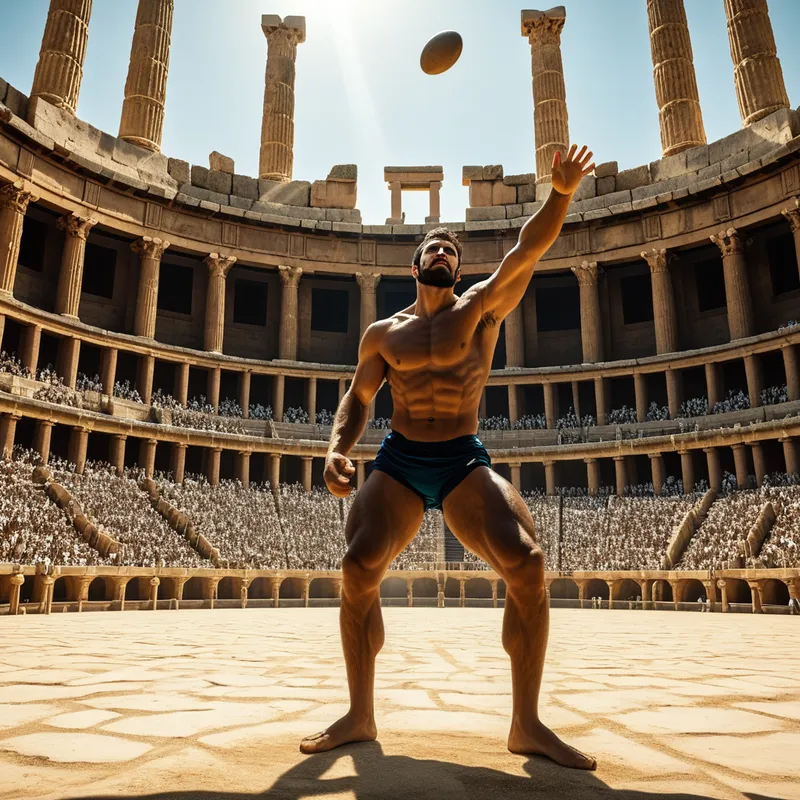
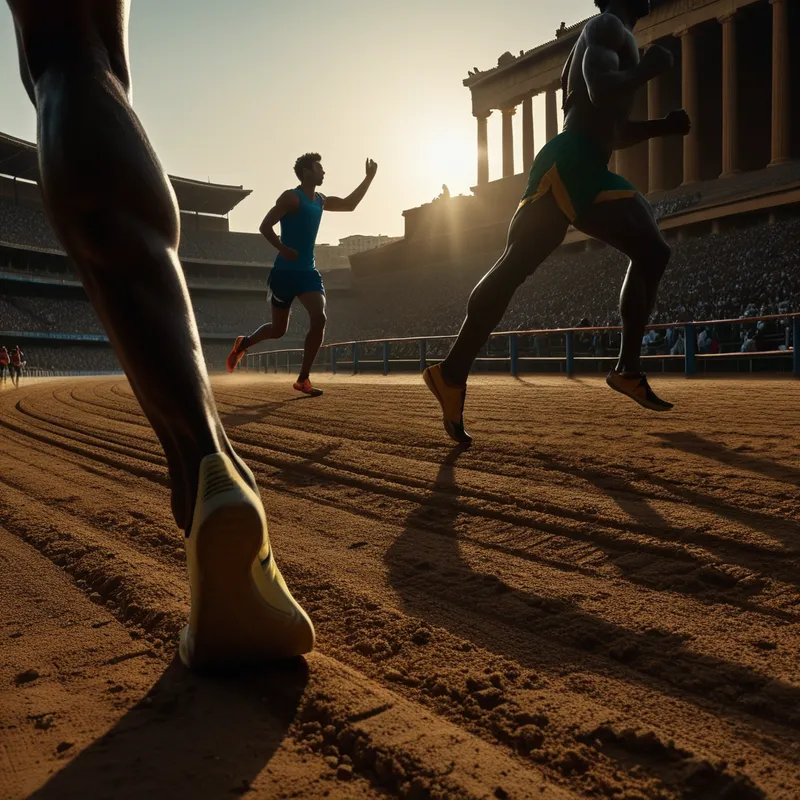
For five days, [the world](/myths/the-world “Myth from Tarot culture.”/) changed. The clash was not of spear on shield, but of flesh on earth, of will against limit. You could hear it: the grunt of the wrestler, the thud of the discus in the soft soil, the explosive gasp of the sprinter leaving the starting line. You could smell it: the sweat and dust, the pungent olive oil scraped from gleaming skin, the smoke of a hundred sacrifices at the great altar of Zeus. You could feel the tension—not of hatred, but of pure, agonizing effort. A man ran until his lungs burned like fire, wrestled until his vision blurred, threw the javelin not at an enemy, but at a measure of his own soul’s reach.
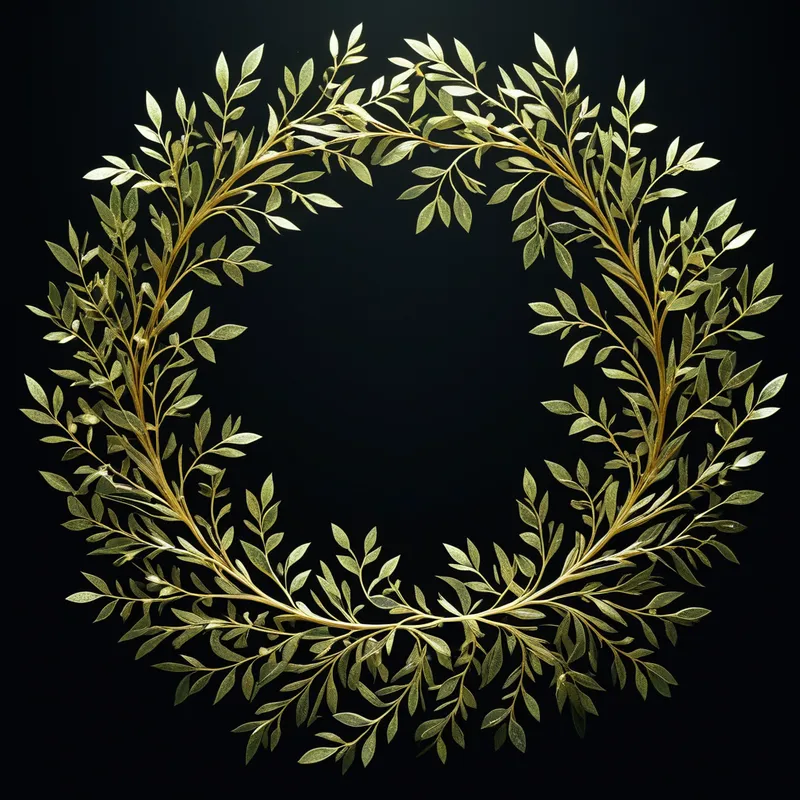
The victor knew no material prize. His reward was a simple crown, woven from the branches of the sacred wild olive tree by the hand of a young boy with a pure heart. But as the wreath was placed upon his brow, a [transfiguration](/myths/transfiguration “Myth from Christian culture.”/) occurred. He was no longer merely a man from Corinth or Thebes. For that moment, he was kallos, beauty; he was arete, excellence incarnate. He became a living offering to the divine order, proof that the chaos of human conflict could be channeled, for a time, into this sublime and terrible contest. The crowd’s roar was a wave that washed away the memory of battle, leaving only the pure, echoing note of human potential achieved. And then, the truce held, as the heroes returned home, their glory a shield more lasting than bronze.
Cultural Origins & Context
The ritual we call [the Olympic Games](/myths/the-olympic-games “Myth from Greek culture.”/) was not mere sport, but the beating heart of a complex religious and political organism. Its origins are lost in the heroic age, traditionally dated to 776 BCE, though its roots as a local footrace at a rural sanctuary to Zeus are far older. The Games were a Panhellenic festival, a rare institution that transcended the fierce particularism of the Greek city-state. For its duration, Olympia was neutral, holy ground, administered by the people of Elis.
The myth was not a single story told by a bard, but a lived, cyclical drama performed every four years—an Olympiad. It was passed down through the bodies of the athletes and the eyes of the spectators. Poets like Pindar were its mythographers, composing odes that wove the victor’s moment of glory into the tapestry of divine favor and heroic ancestry. Societally, it functioned as a pressure valve for Hellenic aggression, a diplomatic forum, a massive religious pilgrimage, and a brutal, public laboratory for the Greek ideals of physical and moral virtue.
Symbolic Architecture
At its core, the myth of the Games is a grand alchemical [vessel](/symbols/vessel “Symbol: A container or structure that holds, transports, or protects something essential, representing the self, emotions, or life journey.”/) for transforming base [human](/symbols/human “Symbol: The symbol of a human represents individuality, complexity of emotions, and social relationships.”/) instincts into golden [achievement](/symbols/achievement “Symbol: Symbolizes success, mastery, or reaching a goal, often reflecting personal validation, social recognition, or overcoming challenges.”/). The [stadium](/symbols/stadium “Symbol: A stadium often symbolizes a place of competition, performance, and public scrutiny.”/) is a [temenos](/myths/temenos “Myth from Greek culture.”/), a [ritual](/symbols/ritual “Symbol: Rituals signify structured, meaningful actions carried out regularly, reflecting cultural beliefs and emotional needs.”/) container where the raw, chaotic [energy](/symbols/energy “Symbol: Energy symbolizes vitality, motivation, and the drive that fuels actions and ambitions.”/) of strife (eris) is deliberately invited in, only to be subjected to sacred law and extreme discipline.
The victor’s wreath is not a crown of dominion, but a circle of peace; it symbolizes the moment where striving ends and perfection is, however fleetingly, touched.
The athlete is the ultimate [symbol](/symbols/symbol “Symbol: A symbol can represent an idea, concept, or belief, serving as a powerful tool for communication and understanding.”/) of the [psyche](/myths/psyche “Myth from Greek culture.”/) mastering the soma. His [event](/symbols/event “Symbol: An event within dreams often signifies significant life changes, transitions, or emotional milestones.”/) is a agon ([contest](/symbols/contest “Symbol: A contest often symbolizes competition, personal challenges, and the desire for validation or achievement.”/)), a [word](/symbols/word “Symbol: Words in dreams often represent communication, expression, and the power of language in shaping our realities.”/) that also means ordeal and struggle. He faces not an external [monster](/symbols/monster “Symbol: Monsters in dreams often symbolize fears, anxieties, or challenges that feel overwhelming.”/), but the internal ones: pain, [fatigue](/symbols/fatigue “Symbol: A state of extreme tiredness or exhaustion, often symbolizing depletion of physical, mental, or emotional resources.”/), doubt, and the [shadow](/symbols/shadow “Symbol: The ‘shadow’ embodies the unconscious, repressed aspects of the self and often represents fears or hidden emotions.”/) of his opponent. The sacred truce (Ekecheiria) represents the essential precondition for this inner work: one must declare a ceasefire with the outer world to engage in the profound battle with [the self](/myths/the-self “Myth from Jungian culture.”/). The prize—only glory, only a symbolic [wreath](/symbols/wreath “Symbol: A wreath commonly symbolizes completion, cyclical nature, and the binding of different life phases, often associated with celebration or remembrance.”/)—de-materializes success, pointing to a victory that is purely psychic and spiritual.
The Dreamer’s Resonance
When this myth stirs in the modern dreamscape, it rarely appears as a literal stadium. Instead, one dreams of being in a crucial, public test for which they feel desperately unprepared. They are at the starting block but cannot move. They are running a race, but the track elongates impossibly. They are meant to perform a feat of strength, but their body is made of lead.
These dreams signal an encounter with what we might call the Individuation Agon. The somatic feeling of paralysis or heaviness is the psyche’s representation of a profound inner resistance—often a conflict between an old, comfortable identity and a new, demanding potential trying to emerge. The public, watched aspect of the dream reflects the fear of judgment as one attempts to “measure up” to an internalized ideal of excellence or success. The dream is an invitation to recognize the sacred truce within: to temporarily suspend the inner civil war of self-criticism and fear, and simply engage with the discipline of becoming.

Alchemical Translation
The Olympic myth provides a complete map for psychic transmutation. First, one must declare the Sacred Truce. This is the conscious decision to step out of daily, reactive conflicts and create a bounded space (therapy, meditation, a creative practice) for inner work.
Next is the Stripping and Anointing. The athletes competed nude (gymnos, whence “[gymnasium](/myths/gymnasium “Myth from Greek culture.”/)”), anointed in oil. Psychologically, this is the vulnerable, honest confrontation with the bare self, without the armor of [persona](/myths/persona “Myth from Greek culture.”/) or social role. The oil represents both purification and a commitment to the endeavor.
Then, the Agon itself. This is the hard, repetitive, often painful work of confronting a complex, integrating a shadow aspect, or mastering a debilitating emotion. It is a contest against one’s own limitations.
The finish line is not a place of rest, but a threshold of transformation. To cross it is to have your elemental substance—your very identity—re-forged in the fire of extreme effort.
Finally, the Crowning. This is not external validation, but the internal, quiet knowledge of having met the challenge with integrity. The olive wreath, symbol of peace and Athena’s wisdom, signifies that the energy previously spent in internal or external conflict has been successfully transmuted into a cohesive, peaceful strength. The victor returns home changed, carrying an inner authority that alters their relationship to their world. The cycle ends, only to begin again, for the work of the soul, like the Olympiad, is eternal.
Associated Symbols
Explore related symbols from the CaleaDream lexicon: